Reaktionsgleichung
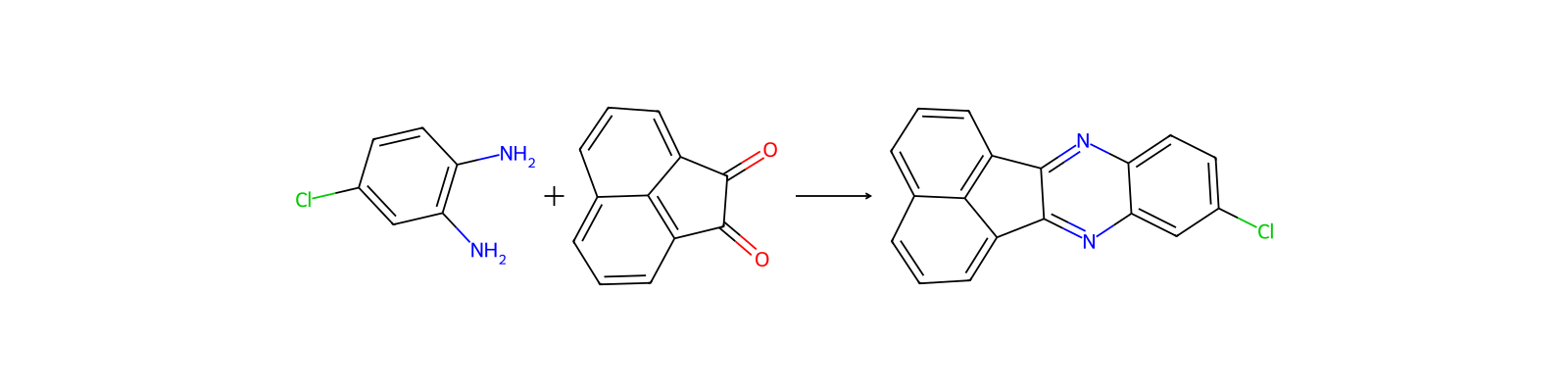
[Cl:1][C:2]1[CH:7]=[CH:6][C:5]([NH2:8])=[C:4]([NH2:9])[CH:3]=1.[C:10]1(=O)[C:20]2=[C:21]3[C:16](=[CH:17][CH:18]=[CH:19]2)[CH:15]=[CH:14][CH:13]=[C:12]3[C:11]1=O>>[Cl:1][C:2]1[CH:3]=[C:4]2[C:5](=[CH:6][CH:7]=1)[N:8]=[C:10]1[C:20]3[CH:19]=[CH:18][CH:17]=[C:16]4[C:21]=3[C:12]([C:11]1=[N:9]2)=[CH:13][CH:14]=[CH:15]4Komponenten
3


Versuchsvorschrift
When 0.05 mole each of 4-chloro-o-phenylenediamine and acenaphthenequinone were reacted by the method of Example 7(A), 13 g. (90 percent yield) of 9-chloroacenaphtho-[1,2-b]quinoxaline, mp = 224°-225° C., were obtained
Quellen und Nachweise
- ORD-Eintrag
- ord-1d41c99bd63a4e80b0a436f98af0feba
- Quelldatensatz
- uspto-grants-1977_12
- Patentnummer
- US04064127
Verknüpfte Notizen
Wird geladen…