Grundinformationen
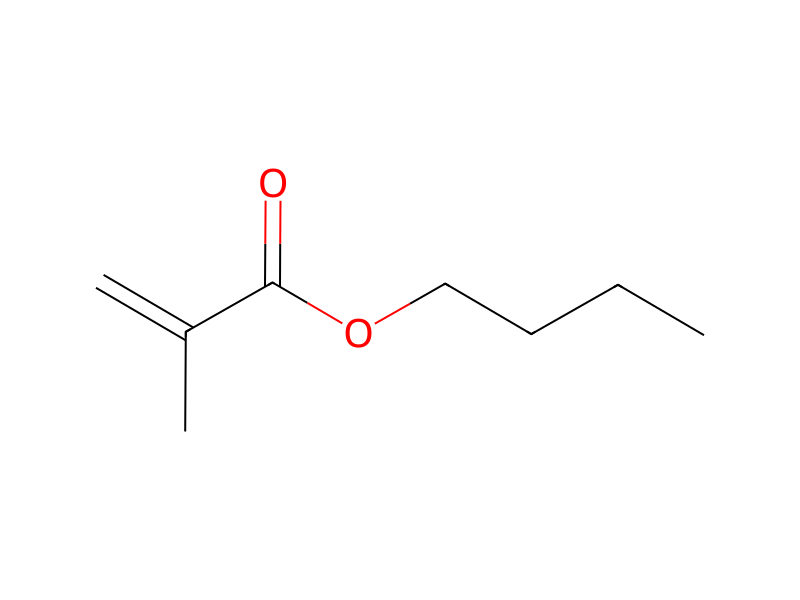
- Standard-SMILES
C=C(C)C(=O)OCCCC- InChIKey
SOGAXMICEFXMKE-UHFFFAOYSA-N- Summenformel
- C8H14O2
- Durchschnittliche Molmasse
- 142,2 g/mol
- Monoisotopische Masse
- 142,09937969
Überblick
Butyl, decyl, cetyl, eicosyl methacrylate appears as a colorless liquid with a mild odor. Less dense than water and insoluble in water. Hence floats on water. (USCG, 1999)
Namen und Bezeichner
- Bevorzugter Name
- Butyl Methacrylate
- IUPAC
- butyl 2-methylprop-2-enoate
- Lokaler Name
- Butylmethacrylat
- Englischer Name
- Butyl methacrylate
- Summenformel
- C8H14O2
- Molmasse
- 142.2
Namen und Synonyme
BUTYL METHACRYLATE97-88-1N-Butyl methacrylatebutyl 2-methylprop-2-enoateButylmethacrylateButylmethacrylaatButyl 2-methacrylateButil metacrilato2-Methyl-butylacrylat2-Methyl-butylacrylaat2-Methyl-butylacrylateMethacrylic acid, butyl ester
Weitere Namen anzeigen
bman-BMA2-Methyl-2-propenoic acid butyl esterbutilmetacrilato1-BUTYLMETHACRYLATE
2-Propenoic acid, 2-methyl-, butyl esterMethacrylate de butyleMethacrylsaeurebutylesterButylester kyseliny methakryloveDTXSID4024696R5QX287XXUNSC-20956DTXCID704696
Datenbank-Bezeichner
- CAS
97-88-1- PubChem CID
- 7354
- DTXSID
DTXSID4024696- ChEMBL
CHEMBL3183073- ChEBI
CHEBI:180322- UNII
- R5QX287XXU
- EC Number
- 202-615-1
- Nikkaji
- J3.577G
Eigenschaften
Berechnete Struktureigenschaften
- XLogP
- 2,9
- Polarare Oberfläche (TPSA)
- 26,3 Ų
- H-Brücken-Donoren
- 0
- H-Brücken-Akzeptoren
- 2
- Frei drehbare Bindungen
- 5
- Schwere Atome
- 10
- Formalladung
- 0
- Komplexität
- 127
Experimentelle und physikochemische Eigenschaften
Chemical ClassesFlammable agents - 2nd degree
PolymersPlastics & Rubber -> (Meth)acrylates
Cosmetics
Cosmetic ingredients (Butyl Methacrylate) -> CIR (Cosmetic Ingredient Review)
Viscosity controlling
SpringerMaterials PropertiesBoiling point
FragrancesFragrance Ingredient (Butyl methacrylate) -> IFRA transparency List
LogP
log Kow = 2.88
2.26-3.01
2.6
OdorFaint characteristic odor of esters
Density
0.8975 at 68 °F (USCG, 1999) - Less dense than water; will float
0.8936 g/cu cm at 20 °C
Liquid heat capacity: 0.460 BTU/lb-F at 70 °F; Liquid thermal conductivity: 1.048 BTU-in/hr-sq ft-F at 70 °F; Saturated vapor density: 0.00203 lb/cu ft at 70 °F
Relative density (water = 1): 0.9
0.8836 @ 20°C
Viscosity
3.116 cP at 70 °F
1.02 mm²/s at 24 °C
Color/FormColorless liquid
Solubility
Insoluble (NTP, 1992)
Very soluble in ethyl ether, ethanol
In water, 800 mg/L at 25 °C
Solubility in water, g/100ml at 25 °C: 0.08 (very poor)
Flash Point
126 °F (NTP, 1992)
54 °C
126 °F (52 °C) (open cup)
50 °C c.c.
Physikochemische Eigenschaften
- Schmelzpunkt
- -75 °C · -75 °C
- Siedepunkt
- 162 · 162-165 °C (lit.)
- Dichte
- 0.894 g/mL · 0.894 g/mL at 25 °C (lit.)
- Dampfdichte
- 4.91 · 4.91 (15 °C, vs air)
- Dampfdruck
- 2 mm · 2 mm Hg ( 20 °C)
- Brechungsindex
- 20 · n20/D 1.423(lit.)
- Flammpunkt
- 123 °F · 123 °F
- storage temp.
- 30 °C · Store below +30°C.
- Löslichkeit
- 0.36 g/l · 0.36g/l
- Aggregatzustand
- Liquid
- Farbe
- Clear
- Geruch (Odor)
- Moderate acrylate.
- Explosionsgrenze
- 2 · 2.00-8.00%(V)
- Wasserlöslichkeit
- 3 g/L · 3 g/L (20 ºC)
- BRN
- 773960 · 773960
- Henry's Law Constant
- 2 · 2.0×10-2 mol/(m3Pa) at 25℃, Duchowicz et al. (2020)
- Stabilität
- Stable (though if no stabilizers are present, it may polymerize; typically stabilized through the addition of HQME). Incompatible with strong reducing agents, strong oxidizing agents. Flammable. Water-reactive at high or low pH.
- Kosmetik-Inhaltsstoffe Funktionen
- VISCOSITY CONTROLLINGFILM FORMINGFRAGRANCE
- InChI
- 1S/C8H14O2/c1-4-5-6-10-8(9)7(2)3/h2,4-6H2,1,3H3
- InChIKey
- SOGAXMICEFXMKE-UHFFFAOYSA-N
- SMILES
- CCCCOC(=O)C(C)=C
- LogP
- 3 at · 3 at 25℃
- CAS Datenbank
- 97 · 97-88-1(CAS DataBase Reference)
- NIST chemische Informationen
- Butyl methacrylate(97-88-1)
- EPA chemische Informationen
- Butyl methacrylate (97-88-1)
- ECETOC JACC REPORT
- Butyl methacrylate (97-88-1)
Sicherheit und Regulatorisches
GHS-Klassifizierung
GHS Classification
Warning
H226: Flammable liquid and vapor [Warning Flammable liquids]
P210, P233, P240, P241, P242, P243, P261, P264, P264+P265, P271, P272, P280, P302+P352, P303+P361+P353, P304+P340, P305+P351+P338, P319, P321, P332+P317, P333+P317, P337+P317, P362+P364, P370+P378, P403+P233, P403+P235, P405, and P501 (click each P-code to see the statement)
This chemical does not meet GHS hazard criteria for < 0.1% (1 of 1075) of reports.
Warning
H226 (99.8%): Flammable liquid and vapor [Warning Flammable liquids]
Gefahrenhinweise
Regulatory Information
Chemical: 2-Propenoic acid, 2-methyl-, butyl ester
Hazard Traits - Carcinogenicity
Directive (EC) No 2/1995 (Repealed by Reg. EC No 1333/2008 (amended))
2-Propenoic acid, 2-methyl-, butyl ester is listed on the EPA's Chemical Data Reporting (CDR) system. Manufacturers and importers of 2-Propenoic acid, 2-methyl-, butyl ester are required to report information about their production and use of this chemical to the EPA under the Toxic Substances Control Act (TSCA). (40 eCFR Part 711)
Status: Active Update: 15-05-2023 https://echa.europa.eu/registration-dossier/-/registered-dossier/15151
2-Propenoic acid, 2-methyl-, butyl ester: HSNO Approval: HSR001103 Approved with controls
Other Safety InformationIMAP assessments - 2-Propenoic acid, 2-methyl-, butyl ester: Environment tier I assessment
DOT Label
Flammable Liquid
Flammable Liquid
Fire Hazards
Behavior in Fire: Containers may explode. (USCG, 1999)
Behavior in Fire: Containers may explode due to polymerization. (USCG, 1999)
· HIGHLY FLAMMABLE: Will be easily ignited by heat, sparks or flames.
Flammable. Above 50 °C explosive vapour/air mixtures may be formed.
Fire PotentialFlammable
Health Hazards
Inhalation may cause nausea because of offensive odor. Contact with liquid causes irritation of skin. Ingestion causes irritation of mouth and stomach. (USCG, 1999)
Inhalation may cause nausea because of offensive odor. Contact with liquid causes irritation of eyes and mild irritation of skin. Ingestion causes irritation of mouth and stomach. (USCG, 1999)
· May cause toxic effects if inhaled or absorbed through skin.
Hazards Summary
A skin, eye, and respiratory tract irritant; May cause skin sensitization; [ICSC] An irritant; May cause skin sensitization; [MSDSonline] Danger of skin sensitization; [MAK] n-Butyl methacrylate, stabilized (UN2227) has warning of explosive polymerization; [ERG 2016] See ACRYLIC RESINS (MONOMERS).
DOT ID and Guide2227 130P
FDA RequirementsHomopolymers and copolymers of butyl methacrylate is an indirect food additive for use only as a component of adhesives.
Reactive Group
Acrylates and Acrylic Acids
Acrylates and Acrylic Acids
EC ClassificationSymbol: Xi; R: 10-36/37/38-43; S: (2); Note: D
UN ClassificationUN Hazard Class: 3; UN Pack Group: III
Sicherheit und Schutzausrüstung
Fire Fighting
Fire Extinguishing Agents Not to Be Used: Water may be ineffective.
Excerpt from ERG Guide 130 [Flammable Liquids (Water-Immiscible / Noxious); polymerization hazard]:
Use foam, carbon dioxide. In case of fire: keep drums, etc., cool by spraying with water.
First Aid Measures
Fresh air, rest. Half-upright position. Refer for medical attention.
Remove contaminated clothes. Rinse and then wash skin with water and soap. Refer for medical attention .
Rinse with plenty of water (remove contact lenses if easily possible).
Rinse mouth. Do NOT induce vomiting. Refer for medical attention .
Accidental Release Measures
· CALL 911. Then call emergency response telephone number on shipping paper. If shipping paper not available or no answer, refer to appropriate telephone number listed on the inside back cover.
· ELIMINATE all ignition sources (no smoking, flares, sparks or flames) from immediate area.
First Aid
INHALATION: Remove to fresh air, give oxygen or artificial respiration as required.
EYES: First check the victim for contact lenses and remove if present. Flush victim's eyes with water or normal saline solution for 20 to 30 minutes while simultaneously calling a hospital or poison control center. Do not put any ointments, oils, or medication in the victim's eyes without specific instructions from a physician. IMMEDIATELY transport the victim after flushing eyes to a hospital even if no symptoms (such as redness or irritation) develop.
General First Aid:
Safe StorageFireproof. Separated from oxidants. Cool. Dry. Keep in the dark. Store only if stabilized. Store in an area without drain or sewer access.
Exposure Control and Personal Protection· Wear positive pressure self-contained breathing apparatus (SCBA).
Fire Fighting Procedures
Foam, dry chemical, carbon dioxide.
If material on fire or involved in fire: Do not extinguish fire unless flow can be stopped. Use water in flooding quantities as fog. Solid streams of water may spread fire. Cool all affected containers with flooding quantities of water. Apply water from as far a distance as possible. Use foam, dry chemical, or carbon dioxide. /Butyl methacrylate, combustible liquid, N.O.S.,and n-butyl methacrylate, stabilized/
Storage Conditions
Temp during storage must be kept low to minimize formation of peroxides and other oxidation products ... Storage temp below 30 °C are recommended for the polyfunctional methacrylates ... The methacrylate monomers should not be stored for longer than one year. Shorter storage times are recommended for the aminomethacrylates, ie, three months, and the polyfunctional methacrylates, ie, six months. Many of these cmpd are sensitive to UV light and should, therefore, be stored in the dark. The methacrylic esters may be stored in mild steel, stainless steel, or aluminum. /Methacrylic acid & derivatives/
Protect against physical damage. Before entering confined space where this chemical may be present, check to make sure that an explosive concentration does not exist. Outside or detached storage is preferred ... Store in tightly closed containers in a cool, well ventilated area away from incompatible materials ..., light, and heat. Butyl methacrylate should be kept refrigerated and inhibited with 10 ppm hydroquinone monomethylether. Metal containers involving the transfer of this chemical should be grounded and bonded. Drums must be equipped with self-closing valves, pressure vacuum bungs, and flame arresters. Use only non-sparking tools and equipment, especially when opening and closing containers of this chemical. Sources of ignition, such as smoking and open flames, are prohibited where this chemical is used, handled, or stored in a manner that could create a potential fire or explosion hazard.
Cleanup Methods
SRP: Wastewater from contaminant suppression, cleaning of protective clothing/equipment, or contaminated sites should be contained and evaluated for subject chemical or decomposition product concentrations. Concentrations shall be lower than applicable environmental discharge or disposal criteria. Alternatively, pretreatment and/or discharge to a permitted wastewater treatment facility is acceptable only after review by the governing authority and assurance that "pass through" violations will not occur. Due consideration shall be given to remediation worker exposure (inhalation, dermal and ingestion) as well as fate during treatment, transfer and disposal. If it is not practicable to manage the chemical in this fashion, it must be evaluated in accordance with EPA 40 CFR Part 261, specifically Subpart B, in order to determine the appropriate local, state and federal requirements for disposal.
Spill Handling: Evacuate and restrict persons not wearing protective equipment from area of spill or leak until cleanup is complete. Remove all ignition sources. Establish forced ventilation to keep levels below explosive limit. Absorb liquids in vermiculite, dry sand, earth, peat, carbon, or a similar material and deposit in sealed containers. Ventilate area of spill or leak after clean-up is complete. It may be necessary to contain and dispose of this chemical as a hazardous waste. If material or contaminated runoff enters waterways, notify downstream users of potentially contaminated waters.
Nonfire Spill Response
Excerpt from ERG Guide 130 [Flammable Liquids (Water-Immiscible / Noxious); polymerization hazard]:
Excerpt from ERG Guide 130 [Flammable Liquids (Water-Immiscible / Noxious); polymerization hazard]:
Disposal Methods
SRP: The most favorable course of action is to use an alternative chemical product with less inherent propensity for occupational harm/injury/toxicity or environmental contamination. Recycle any unused portion of the material for its approved use or return it to the manufacturer or supplier. Ultimate disposal of the chemical must consider: the material's impact on air quality; potential migration in soil or water; effects on animal and plant life; and conformance with environmental and public health regulations.
Options for disposal of waste or spilled material: large quantities can be returned to the manufacturer for recycle. Small quantities may be incinerated under controlled conditions in incinerators suitable for methacrylates. Combustion products include carbon monoxide, carbon dioxide, and water. The product must be disposed of as special waste in accordance with regulations for special waste.
Spillage Disposal
Personal protection: filter respirator for organic gases and vapours adapted to the airborne concentration of the substance. Do NOT let this chemical enter the environment. Collect leaking liquid in sealable containers. Absorb remaining liquid in sand or inert absorbent. Then store and dispose of according to local regulations.
Toxikologische Informationen
InteractionsSome compounds, such as the methyl, ethyl, n-propyl, or butyl methacrylates can produce inhibition of barium chloride-induced contraction of the isolated guinea pig ileum.
Ecotoxicity Values
LC50; Species: Oryzias latipes (Medaka); Conditions: semi-static; Concentration: 5.57 mg/L for 24 hr
LC50; Species: Pimephales promelas (Fathead minnow); Conditions: flow-through; Concentration: 11 mg/L for 96 hr
LC50; Species: Carassius auratus (goldfish); Conditions: static; Concentration: 112 mg/L for 72 hr
EC50; Species: Brachionus calyciflorus (Rotifer, age <2 hr); Conditions: freshwater, static, 25 °C, pH 7.5; Concentration: 128 mg/L for 48 hr (95% confidence interval: 640-193 mg/L); Effect: decreased reproduction, progeny counts/numbers />99.5% purity/
For more Ecotoxicity Values (Complete) data for n-Butyl methacrylate (9 total), please visit the HSDB record page.
Environmental Fate
TERRESTRIAL FATE: Based on a classification scheme(1), an estimated Koc value of 55(SRC), determined from a structure estimation method(2), indicates that n-butyl methacrylate is expected to have high mobility in soil(SRC). Volatilization of n-butyl methacrylate from moist soil surfaces is expected to be an important fate process(SRC) given an estimated Henry's Law constant of 5.0X10⁻⁴ atm-cu m/mole(SRC), based upon its vapor pressure, 2.12 mm Hg(3), and water solubility, 800 mg/L(4). n-Butyl methacrylate is expected to volatilize from dry soil surfaces(SRC) based upon its vapor pressure(3). Utilizing the Japanese MITI test, 88% of the theoretical BOD was reached in 4 weeks(5) indicating that biodegradation is an important environmental fate process in soil(SRC).
AQUATIC FATE: Based on a classification scheme(1), an estimated Koc value of 55(SRC), determined from a structure estimation method(2), indicates that n-butyl methacrylate is not expected to adsorb to suspended solids and sediment(SRC). Volatilization from water surfaces is expected(3) based upon an estimated Henry's Law constant of 5.0X10⁻⁴ atm-cu m/mole(SRC), derived from its vapor pressure, 2.12 mm Hg(4), and water solubility, 800 mg/L(5). Using this Henry's Law constant and an estimation method(3), volatilization half-lives for a model river and model lake are 5.6 hours and 5.4 days, respectively(SRC). According to a classification scheme(6), an estimated BCF of 37(SRC), from its log Kow of 2.88(7) and a regression-derived equation(8), suggests the potential for bioconcentration in aquatic organisms is moderate(SRC). Hydrolysis is not expected to be an important process(SRC) based on estimated hydrolysis half-lives of 80 and 8 years at pHs 7 and 8, respectively(9). Utilizing the Japanese MITI test, 88% of the theoretical BOD was reached in 4 weeks(10) indicating that biodegradation is an important environmental fate process in water(SRC).
ATMOSPHERIC FATE: According to a model of gas/particle partitioning of semivolatile organic compounds in the atmosphere(1), n-butyl methacrylate, which has a vapor pressure of 2.12 mm Hg at 25 °C(2), is expected to exist solely as a vapor in the ambient atmosphere. Vapor-phase n-butyl methacrylate is degraded in the atmosphere by reaction with photochemically-produced hydroxyl radicals(SRC); the half-life for this reaction in air is estimated to be 17 hours(SRC), calculated from its rate constant of 2.3X10⁻¹¹ cu cm/molecule-sec at 25 °C(SRC) that was derived using a structure estimation method(3). Vapor-phase n-butyl methacrylate is also degraded in the atmosphere by reaction with ozone(SRC); the half-life for this reaction in air is estimated to be 1 day(SRC), calculated from its rate constant of 1.1X10⁻¹⁷ cu cm/molecule-sec at 25 °C(SRC) that was derived using a structure estimation method(3). n-Butyl methacrylate does not contain chromophores that absorb at wavelengths >290 nm(4) and therefore is not expected to be susceptible to direct photolysis by sunlight(SRC).
Adverse EffectsSkin Sensitizer - An agent that can induce an allergic reaction in the skin.
Exposure RoutesThe substance can be absorbed into the body by inhalation.
Toxicity Summary
Based on available data, the CIR Expert Panel concluded that ... Butyl Methacrylate is safe as used in nail enhancement products when skin contact is avoided. Products containing these ingredients should be accompanied with directions to avoid skin contact, because of the sensitizing potential of Methacrylates.
Safe for use in cosmetics, with qualifications
Signs and Symptoms
Sore throat. Cough. Shortness of breath.
Redness.
Watering of the eyes. Redness. Pain.
Cough. Sore throat. Abdominal cramps. Nausea.
ICSC Environmental DataThe substance is harmful to aquatic organisms.
Soil Adsorption/Mobility
Using a structure estimation method based on molecular connectivity indices(1), the Koc of n-butyl methacrylate can be estimated to be 55(SRC). According to a classification scheme(2), this estimated Koc value suggests that n-butyl acrylate is expected to have high mobility in soil.
Atmospheric ConcentrationsINDOOR: n-Butyl methacrylate has been identified as a volatile component of furniture surface coatings, concentration not specified(1).
Human Toxicity Excerpts
/HUMAN EXPOSURE STUDIES/ ... In 542 dermatitis patients given covered patch tests with 1% EMA or 1% nBMA in petrolatum, one individual responded to EMA and another to both EMA and nBMA ... No reactions were seen in 22 contact dermatitis patients given 24-hr covered patch tests with esters within the category at a concentration of 1% in petrolatum ... The contact dermatitis of many of the tested individuals was attributed to (meth)acrylate exposure ... The prevalence of positive clinical challenge responses /was reported/ in dental clinicians that had been referred with dermatitis and suspected of having allergy to (meth)acrylates as 1.2% (51/4221) for MMA, 0.7% (16/2323) for EMA and 0.3% (1/347) for BMA ... The prevalence in a similar, pre-selected clinical cohort /was reported/ as 0.8% (9/1161) for MMA and 0.3% (2/625) for EMA ... The prevalence of positive clinical challenge tests in patients referred with dermatitis with previous contact with (meth)acrylates was reported as 4.8% (17/352) for MMA, 4.4% (11/246) for EMA and 0.6% (2/331) for BMA ... Cross-reactivity with common acrylates (i.e. between methacrylates and acrylates) has not been observed ... and methacrylic acid, the common hydrolysis product for these methacrylate esters, is not a contact allergen ... /Short chain alkyl-methacrylate esters/
/HUMAN EXPOSURE STUDIES/ ... In 542 dermatitis patients given covered patch tests with 1% EMA or 1% nBMA in petrolatum, one individual responded to EMA and another to both EMA and nBMA ... No reactions were seen in 22 contact dermatitis patients given 24-hr covered patch tests with esters within the category at a concentration of 1% in petrolatum ... The contact dermatitis of many of the tested individuals was attributed to (meth)acrylate exposure ... The prevalence of positive clinical challenge responses /was reported/ in dental clinicians that had been referred with dermatitis and suspected of having allergy to (meth)acrylates as 1.2% (51/4221) for MMA, 0.7% (16/2323) for EMA and 0.3% (1/347) for BMA ... The prevalence in a similar, pre-selected clinical cohort /was reported/ as 0.8% (9/1161) for MMA and 0.3% (2/625) for EMA ... The prevalence of positive clinical challenge tests in patients referred with dermatitis with previous contact with (meth)acrylates was reported as 4.8% (17/352) for MMA, 4.4% (11/246) for EMA and 0.6% (2/331) for BMA ... Cross-reactivity with common acrylates (i.e. between methacrylates and acrylates) has not been observed ... and methacrylic acid, the common hydrolysis product for these methacrylate esters, is not a contact allergen ... /Short chain alkyl-methacrylate esters/
/SIGNS AND SYMPTOMS/ Short Term Exposure: Contact can irritate the eyes and skin. Inhalation can irritate the respiratory tract with coughing, wheezing, and/or shortness of breath. Higher exposures can cause pulmonary edema, a medical emergency that can be delayed for several hours. This can cause death. Long Term Exposure: Butyl methacrylate may cause skin allergy.
/SIGNS AND SYMPTOMS/ Although there are notable exceptions to the rule, esters of organic acids are generally of low toxicity. Nonspecific irritative effects are commonly associated with the presence of a double bond in these esters which, if saturated, would be essentially harmless. Conjunctivitis and upper airway symptoms may occur and pulmonary edema is possible in case of massive over-exposure. These irritating unsaturated esters include the acrylates, methacrylates ... /Esters/
For more Human Toxicity Excerpts (Complete) data for n-Butyl methacrylate (10 total), please visit the HSDB record page.
Artificial Pollution Sources
n-Butyl methacrylate's production and use in dental technology, acrylic surface coatings(1), as a monomer for resins, solvent coatings, adhesives, oil additives, in emulsions for textiles, and in leather and paper finishing(2) may result in its release to the environment through various waste streams(SRC).
Regulatorische Informationen
FDA RequirementsHomopolymers and copolymers of butyl methacrylate is an indirect food additive for use only as a component of adhesives.
TSCA Requirements
Pursuant to section 8(d) of TSCA, EPA promulgated a model Health and Safety Data Reporting Rule. The section 8(d) model rule requires manufacturers, importers, and processors of listed chemical substances and mixtures to submit to EPA copies and lists of unpublished health and safety studies. Butyl methacrylate is included on this list. Effective date 4/13/89; Sunset date: 12/19/95.
Section 8(a) of TSCA requires manufacturers of this chemical substance to report preliminary assessment information concerned with production, exposure, and use to EPA as cited in the preamble in 51 FR 41329. Effective date 9/30/91; Reporting date: 11/27/91.
Sicherheitsdaten
- wgk
- 1
- tsca
- TSCA listed
- ridadr
- UN 2227 (n-BUTYL METHACRYLATE, STABILIZED)
- hs_code
- 29161490
- RTECS-Nr.
- OZ3675000
- risk_code
- 10-36/37/38-43
- Toxizität
- LD50 orally in Rabbit: > 2000 mg/kg LD50 dermal Rabbit > 2000 mg/kg
- hazard_code
- Xi
- safety_code
- 16-36/37/39-26
- hazard_class
- 3
- packing_group
- III
- Speicherklasse
- 3 - Flammable liquids
- Giftige Stoffe Daten
- 97-88-1(Hazardous Substances Data)
- Hazard Classifications
- Eye Irrit. 2Flam. Liq. 3Skin Irrit. 2Skin Sens. 1STOT SE 3
- Selbstentzündungstemperatur
- 562 °F
Chemie und Industrie
Pharmakologische Informationen
Mechanism of Action
The cause of the lacrimatory action of esters containing unsaturated acids is undoubtedly the result of some mechanism ... in which the neighboring keto group has a polarizing effect on double bond, making it capable of adding /to/ nucleophilic agents such as SH groups /from certain enzymes/. /Unsaturated aliphatic esters/
Metabolism/Metabolites
n-BMA, like MMA, is rapidly metabolized by body carboxylesterases ... Hydrolysis of n-BMA yields methacrylic acid and n-butanol which are further metabolized by physiological pathways, methacroyl CoA being a physiological substrate of the valine pathway.
Butyl methacrylate interacts with cytochrome P450 to form type 1 spectral complex.
In vitro hydrolysis of n-BMA was studied using a porcine liver esterase preparation. The Michaelis Menten constant, Km, and Vmax were on the order of 30 uM and 1.49 nmol/min, indicating that n-BMA is readily hydrolyzed by liver esterases. When compared to other methacrylic acid esters, increased chain length of the ester increased substrate affinity but decreased the turnover of the enzymatic hydrolysis.
Acrylates and methacrylates are detoxified predominantly via conjugation with glutathione via the Michael addition reaction or glutathione-S-transferase. They are also likely to be hydrolyzed via carboxylesterases. The lower molecular weight esters are rapidly metabolized and eliminated, therefore, will not likely cause cumulative toxicity.
For more Metabolism/Metabolites (Complete) data for n-Butyl methacrylate (7 total), please visit the HSDB record page.
Absorption, Distribution and Excretion
Recent studies have confirmed that alkyl-methacrylate esters are rapidly hydrolyzed by ubiquitous carboxylesterases ... First pass (local) hydrolysis of the parent ester has been shown to be significant for all routes of exposure. For example, no parent ester can be measured systemically following skin exposure to EMA and larger esters, as the lower rate of absorption for these esters is within the metabolic capacity of the skin ... Parent ester will also be effectively hydrolyzed within the G.I. tract and within the tissues of the upper respiratory tract (particularly the olfactory tissue). Systemically absorbed parent ester will be effectively removed during the first pass through the liver ... resulting in their relatively rapid elimination from the body ... /Short chain alkyl-methacrylate esters/
Verwendung und Herstellung
Uses
CIR ingredient: Butyl Methacrylate
Used as a monomer for resins, and in coatings, adhesives, and oil additives; Also used in emulsions for textiles, for leather and paper finishing, and to make contact lenses; [HSDB]
Pulp and Paper Processing [Category: Industry]
Monomer for resins, solvent coatings, adhesives, oil additives; emulsions for textiles; leather and paper finishing.
Butyl methacrylate monomer & polymer are used in dental technology, as components in oil dispersible pesticides & as copolymers, for example, in paraffin embedding media; monomer also used for the manufacture of contact lenses and for acrylic surface coatings.
ImpuritiesTypical impurities include Methyl acrylic acid (MAA) (CAS 79-41-4) or MMA (CAS 80-62-6) (depending whether the direct esterification or trans-esterification route is used), the unreacted alcohol and water.
U.S. Production
2023: 10,000,000 - <50,000,000 lb
(1972) > 4.54 X 10+5 g
(1975) > 4.54 X 10+5 g
(1993) 2.61 X 10+7 kg (2.61 X 10+10 g)
2-Propenoic acid, 2-methyl-, butyl ester is listed as a High Production Volume (HPV) chemical (65FR81686). Chemicals listed as HPV were produced in or imported into the U.S. in >1 million pounds in 1990 and/or 1994. The HPV list is based on the 1990 Inventory Update Rule. (IUR) (40 CFR part 710 subpart B; 51FR21438).
For more U.S. Production (Complete) data for n-Butyl methacrylate (6 total), please visit the HSDB record page.
Consumption PatternsAutomotive coatings 46% (9.5% is after market), toners 28%, lubricants 11%, architectural paints 2%, other lacquers and enamels 2.6%, powder coatings 9.6%, floor polishes 1%
Consumer UsesIntermediate
Industry UsesBinder
Methods of Manufacturing
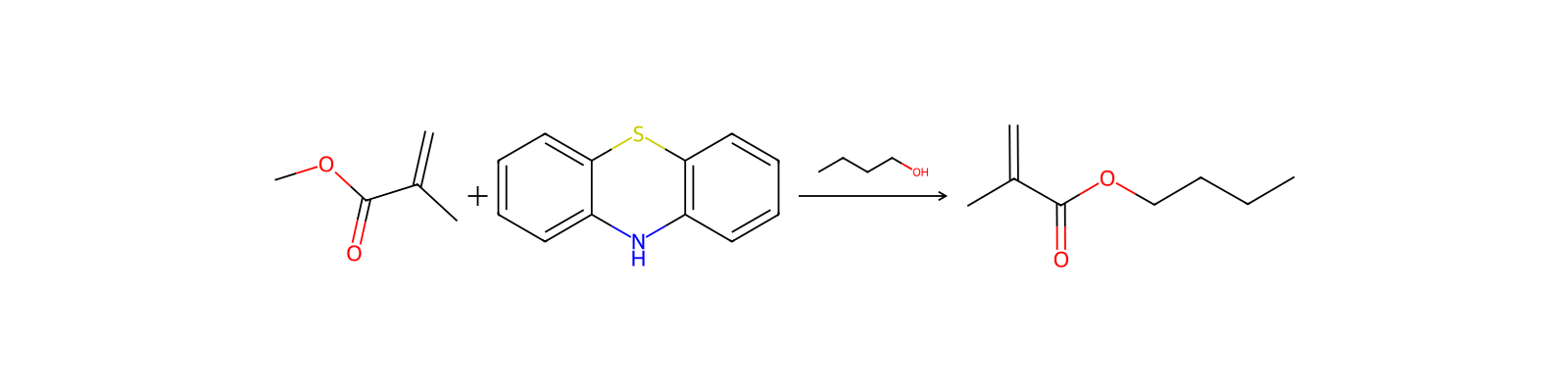
Reaction of methacrylic acid or methyl methacrylate with butanol.
The methacrylates can be synthesized by catalytic oxidation of isobutylene and subsequent esterification with the appropriate alcohol, or by reacting acetone with hydrocyanic acid and subsequent esterification in sulfuric acid with the appropriate alcohol. /Methacrylic esters/
Formulations/Preparations
Technical grade (inhibited)
Inhibitor of polymerization: 9-15 ppm monomethyl ether or 90-120 ppm hydroquinone.
Household ProductsCosmetics product ingredient: Butyl methacrylate
Use Classification
Fragrance Ingredients
Cosmetics -> Viscosity controlling
General Manufacturing Information
Wholesale and Retail Trade
2-Propenoic acid, 2-methyl-, butyl ester: ACTIVE
Alkyl mercury compounds have been used as seed disinfectants and for fungicides. They have also been used in organic synthesis. /Mercury alkyl compounds/
Methyl methacrylate, and in general the methacrylic esters, polymerize much less readily than the corresponding ordinary acrylates. Nonetheless, they are stabilized by adding hydroquinone or pyrogallol, particularly in the presence of metallic copper. /Methacrylates/
Anwendungen
BeschreibungButyl methacrylate (BMA) is the organic compound with the formula C4H9O2CC(CH3)=CH2. A colorless liquid, it is a common monomer for the preparation of methacrylate polymers. It is typically polymerized under free-radical conditions.Butyl methacrylate is a versatile, plasticizing methacrylate monomer that acts as an important building block in many copolymer compositions. Serving as a base for acrylic resins, BMA provides exceptional weather resistance, high gloss, color retention, and durability. BMA contributes more intermediate glass transition and hardness values, with a glass transition temperature (Tg) of 20 °C.
Verwendenn-Butyl methacrylate is used as a monomer for resins, solvent coatings, adhesives, oil additives, emulsions for textiles, leather, and paper finishing and in the manufacture of contact lenses . It is also used in dental resins, oil dispersible pesticides, and acrylic surface coatings and as copolymers, for example, in paraffin embedding media .
Vor- und nachgelagerte Produkte
Vorgelagerte Rohstoffe
Nachgelagerte Produkte
Zugehörige Reaktionen
76



Verknüpfte Notizen
Wird geladen…