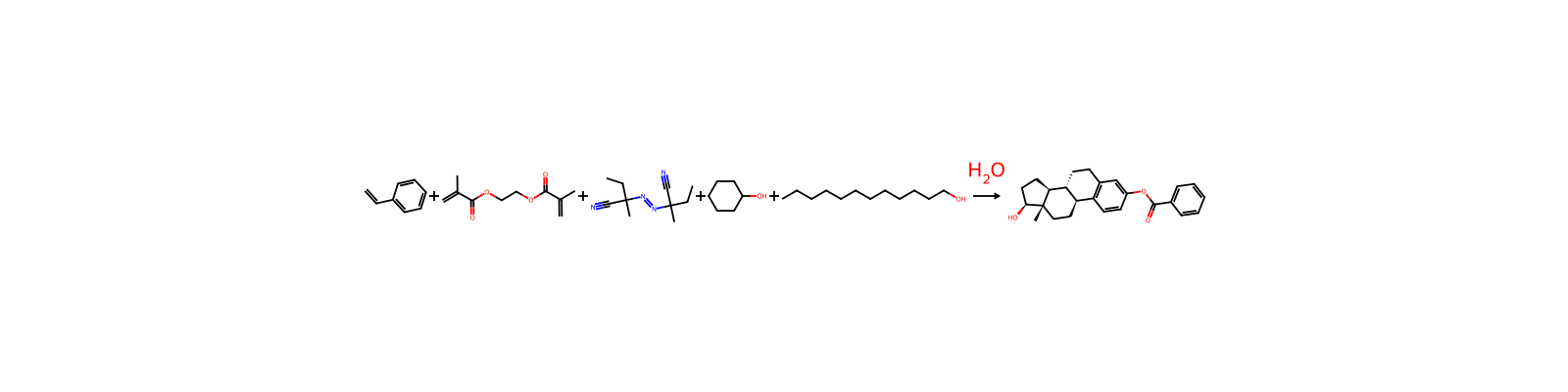
Ethylendimethacrylat
Ethylene glycol dimethacrylate

Grundinformationen
- CAS
97-90-5- Standard-SMILES
C=C(C)C(=O)OCCOC(=O)C(=C)C- InChIKey
STVZJERGLQHEKB-UHFFFAOYSA-N- Summenformel
- C10H14O4
- Durchschnittliche Molmasse
- 198,22 g/mol
- Monoisotopische Masse
- 198,08920893
Überblick
Ethylene glycol dimethacrylate is the enoate ester that is the 1,2-bis(methacryloyl) derivative of ethylene glycol. It has a role as a cross-linking reagent, an allergen and a polymerisation monomer. It is functionally related to a methacrylic acid and an ethylene glycol.
Namen und Bezeichner
- Bevorzugter Name
- Ethylene glycol dimethacrylate
- IUPAC
- 2-(2-methylprop-2-enoyloxy)ethyl 2-methylprop-2-enoate
- Lokaler Name
- Ethylendimethacrylat
- Englischer Name
- Ethylene dimethacrylate
- Summenformel
- C10H14O4
- Molmasse
- 198.22
Namen und Synonyme
Ethylene glycol dimethacrylate97-90-5Ethylene dimethacrylateGlycol dimethacrylateETHYLENE METHACRYLATEDiglycol dimethacrylateEthanediol dimethacrylate1,2-Bis(methacryloyloxy)ethaneEthylenedimethyacrylateEthyldiol metacrylateEGDMASartomer SR 206
Weitere Namen anzeigen
EDMAEthylene glycol dimethylacrylateGLYCOL HEMA-METHACRYLATEethane-1,2-diyl bis(2-Methylacrylate)Ethylene Glycol Dimethacrylate (stabilized with HQ)sr206TGM 1
Ageflex EGDMMethacrylic acid, ethylene esterEthylene glycol bis(methacrylate)1,2-Ethanediol dimethacrylateEthyldiol methacrylateMethacrylic acid ethylene esterSR 206DTXSID1026615
Datenbank-Bezeichner
- CAS
97-90-5
Eigenschaften
Berechnete Struktureigenschaften
- XLogP
- 1,9
- Polarare Oberfläche (TPSA)
- 52,6 Ų
- H-Brücken-Donoren
- 0
- H-Brücken-Akzeptoren
- 4
- Frei drehbare Bindungen
- 7
- Schwere Atome
- 14
- Formalladung
- 0
- Komplexität
- 237
Experimentelle und physikochemische Eigenschaften
PolymersPlastics & Rubber -> (Meth)acrylates
Cosmetics
Cosmetic ingredients (Ethylene glycol dimethacrylate) -> CIR (Cosmetic Ingredient Review)
Cosmetic ingredients (Glycol Dimethacylate) -> CIR (Cosmetic Ingredient Review)
SpringerMaterials PropertiesViscosity
LogP
2.4
1.22
Density
1.055 at 20 °C/20 °C
Relative density (water = 1): 1.05
1.055 @ 20°C
Viscosity3.03 mm²/s at 20 °C
Solubility
> 10% in benzene
> 10% in ethanol
> 10% in ligroin
Solubility in water, g/l at 20 °C: 1.1 (slightly soluble)
Flash Point101 °C c.c.
Boiling Point
Sicherheit und Regulatorisches
Sicherheitsangaben dienen nur zur Orientierung und ersetzen weder das Sicherheitsdatenblatt (SDB) des Lieferanten noch geltende Vorschriften oder eine fachliche Bewertung.
GHS-Klassifizierung
GHS Classification
Warning
H317: May cause an allergic skin reaction [Warning Sensitization, Skin]
P261, P271, P272, P280, P302+P352, P304+P340, P319, P321, P333+P317, P362+P364, P403+P233, P405, and P501 (click each P-code to see the statement)
This chemical does not meet GHS hazard criteria for < 0.1% (1 of 1326) of reports.
Warning
H317 (> 99.9%): May cause an allergic skin reaction [Warning Sensitization, Skin]
Gefahrenhinweise
Regulatory Information
Chemical: 2-Propenoic acid, 2-methyl-, 1,2-ethanediyl ester
2-Propenoic acid, 2-methyl-, 1,1'-(1,2-ethanediyl) ester is listed on the EPA's Chemical Data Reporting (CDR) system. Manufacturers and importers of 2-Propenoic acid, 2-methyl-, 1,1'-(1,2-ethanediyl) ester are required to report information about their production and use of this chemical to the EPA under the Toxic Substances Control Act (TSCA). (40 eCFR Part 711)
Status: Active Update: 05-05-2023 https://echa.europa.eu/registration-dossier/-/registered-dossier/14351
Ethylene glycol dimethacrylate: Does not have an individual approval but may be used under an appropriate group standard
Fire HazardsCombustible.
Hazards Summary
Allergic contact dermatitis reported in dental technicians, dental assistants, and a manufacturing worker (making rear-view mirrors) ; [Kanerva, p. 1749] A lachrymator; [CHEMINFO] An eye and respiratory tract irritant; Not a sensitizer in one study of guinea pigs; Emergency treatment: Acrylates, multifunctional; [HSDB] May polymerize; An eye and respiratory tract irritant; May cause skin sensitization; [ICSC] Danger of skin sensitization; [MAK] An irritant; May cause skin sensitization; [Aldrich MSDS]
Chemie und Industrie
Pharmakologische Informationen
Metabolism/MetabolitesSMALL QUANTITIES OF METHACRYLATES MAY READILY BE METABOLIZED BY SAPONIFICATION INTO THE ALCOHOL AND METHACRYLIC ACID. THE LATTER MAY FORM AN ACETYL-COENZYME A DERIVATIVE, WHICH THEN ENTERS THE NORMAL LIPID METABOLISM. /METHACRYLATES/
MeSH Pharmacological Classification
Reagents with two reactive groups, usually at opposite ends of the molecule, that are capable of reacting with and thereby forming bridges between side chains of amino acids in proteins; the locations of naturally reactive areas within proteins can thereby be identified; may also be used for other macromolecules, like glycoproteins, nucleic acids, or other.
Verwendung und Herstellung
Uses
CIR ingredient: Ethylene glycol dimethacrylate
CIR ingredient: Glycol Dimethacylate
In polymers for dental restorative resins; in synthetic wound dressings; as rate-controlling barrier in slow release capsules; in acrylic nail preparation; as curing agent for acrylics and rubbers; [HSDB]
Plastic Composites Manufacturing [Category: Industry]
/SRP/: IN POLYMERS FOR DENTAL RESTORATIVE RESINS; IN SYNTHETIC WOUND DRESSINGS; AS RATE-CONTROLLING BARRIER IN SLOW RELEASE CAPSULES; IN ACRYLIC NAIL PREPN.
CROSSLINKING AGENT FOR THERMOSET & UV CURABLE ACRYLICS.
U.S. Production
2023: 2,500,000 - <4,000,000 lb
(1979) PROBABLY GREATER THAN 4.54X10+6 G
(1981) PROBABLY GREATER THAN 2.27X10+6 G
Consumer UsesMonomers
Industry UsesIntermediate
Methods of Manufacturing
TRANSESTERIFICATION OR ESTERIFICATION OF ETHYLENE GLYCOL WITH AN EXCESS OF EITHER METHYL METHACRYLATE OR METHACRYLIC ACID
Zugehörige Reaktionen
39


Notizen zur Verbindung
Wird geladen…