
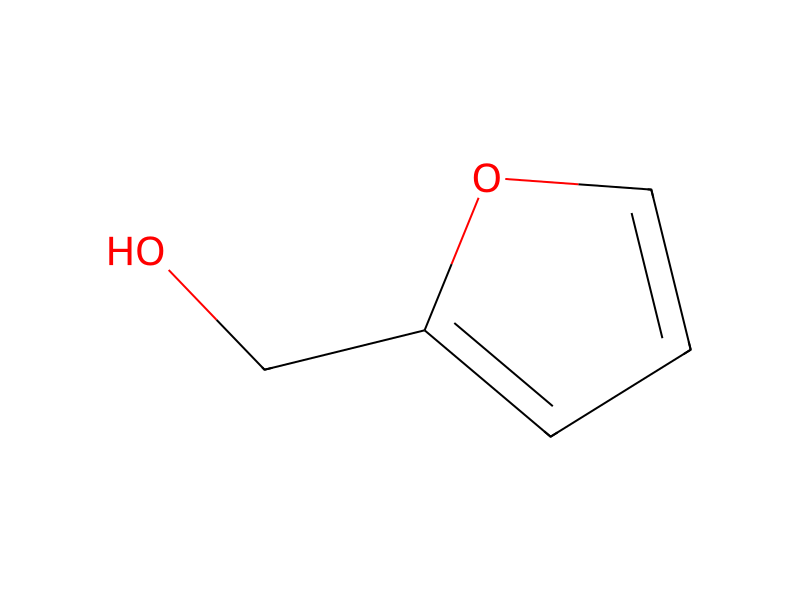
Grundinformationen
- Standard-SMILES
OCc1ccco1- InChIKey
XPFVYQJUAUNWIW-UHFFFAOYSA-N- Summenformel
- C5H6O2
- Durchschnittliche Molmasse
- 98,1 g/mol
- Monoisotopische Masse
- 98,03677943
Überblick
Furfuryl Alcohol can cause cancer according to The Environmental Protection Agency (EPA).
Namen und Bezeichner
- Bevorzugter Name
- Furfuryl Alcohol
- IUPAC
- furan-2-ylmethanol
- Lokaler Name
- Furfurylalkohol
- Englischer Name
- Furfuryl alcohol
- Summenformel
- C5H6O2
- Molmasse
- 98.1
Namen und Synonyme
FURFURYL ALCOHOL98-00-02-Furanmethanol2-Furylmethanolfuran-2-ylmethanol2-Furancarbinol2-Furanylmethanol2-FurylcarbinolFurfural alcoholFurfuralcohol2-Furfuryl alcoholFurfuranol
Weitere Namen anzeigen
FAFURANMETHANOLHPFA2-furanemethanolFEMA 2491
Furyl alcohol2-Hydroxymethylfuran5-HydroxymethylfuranFurylcarbinolalpha-Furylcarbinol2-FurfurylalkoholFurfurylcarbMethanol, (2-furyl)-
Datenbank-Bezeichner
- CAS
98-00-0- PubChem CID
- 7361
- DTXSID
DTXSID2025347- ChEMBL
CHEMBL308187- ChEBI
CHEBI:207496- UNII
- D582054MUH
- EC Number
- 202-626-1
- Nikkaji
- J3.578E
Eigenschaften
Berechnete Struktureigenschaften
- XLogP
- 0,3
- Polarare Oberfläche (TPSA)
- 33,4 Ų
- H-Brücken-Donoren
- 1
- H-Brücken-Akzeptoren
- 2
- Frei drehbare Bindungen
- 1
- Schwere Atome
- 7
- Formalladung
- 0
- Komplexität
- 54
Experimentelle und physikochemische Eigenschaften
Chemical ClassesFlammable agents - 2nd degree
PolymersOther Classes -> Alcohols and Polyols, Other
CosmeticsCosmetics ingredient -> Other (Specify)
SpringerMaterials PropertiesSchoenflies notation
FragrancesFragrance substance (Furfuryl alcohol) -> IFRA amendment 48
LogP
log Kow= 0.28
0.28
0.28
OdorFaint burning odor
TasteBitter
Food AdditivesFLAVOR ENHANCER, FLAVORING AGENT OR ADJUVANT -> FDA Substance added to food
Density
1.13 at 68 °F (USCG, 1999) - Denser than water; will sink
1.1296 g/cu cm at 20 °C
Relative density (water = 1): 1.13
1.126-1.136
1.13
1.1296 @ 20°C
Flavoring AgentsEU Flavoring substances
Viscosity
4.62 mPa at 25 °C
4.09 mm²/s at 25 °C
Physikochemische Eigenschaften
- Schmelzpunkt
- -29 °C · -29 °C (lit.)
- Siedepunkt
- 170 °C · 170 °C (lit.)
- Dichte
- 1.135 g/mL · 1.135 g/mL at 25 °C (lit.)
- Dampfdichte
- 3.4 · 3.4 (vs air)
- Dampfdruck
- 0.5 mm · 0.5 mm Hg ( 20 °C)
- Brechungsindex
- 20 · n20/D 1.486(lit.)
- FEMA
- 2491 · 2491 | FURFURYL ALCOHOL
- Flammpunkt
- 149 °F · 149 °F
- storage temp.
- 30 °C · Store below +30°C.
- Löslichkeit
- alcohol: soluble
- pka
- 14.02 · 14.02±0.10(Predicted)
- Aggregatzustand
- Liquid
- Farbe
- Clear yellow
- PH
- 6 · 6 (300g/l, H2O, 20℃)
- Geruch (Odor)
- Mildly irritating. Very mild, warm-oily, “burnt” odor.
- Biologische Quelle
- synthetic
- Geruchsart
- bready
- Odor Threshold
- 8 ppm · 8 ppm
- Explosionsgrenze
- 1.8 · 1.8-16.3%(V)
- Wasserlöslichkeit
- MISCIBLE
- Spezifische Wärmekapazität
- 2.08 J/ · Cp(liquid): 2.08 J/(g·K), at 25℃
- Merck
- 14 · 14,4305
- JECFA Number
- 451 · 451
- BRN
- 106291 · 106291
- Henry's Law Constant
- 1.3 · 1.3×102 mol/(m3Pa) at 25℃, Duchowicz et al. (2020)
- Major Application
- cleaning productscosmeticsflavors and fragrancesfood and beveragespersonal care
- InChI
- 1S/C5H6O2/c6-4-5-2-1-3-7-5/h1-3,6H,4H2
- InChIKey
- XPFVYQJUAUNWIW-UHFFFAOYSA-N
- SMILES
- OCc1ccco1
- LogP
- 0.3 at · 0.3 at 25℃
- Oberflächenspannung
- 39.6 mN/m · 39.6mN/m at 293.15K
- CAS Datenbank
- 98 · 98-00-0(CAS DataBase Reference)
- NIST chemische Informationen
- 2 · 2-Furanmethanol(98-00-0)
- EPA chemische Informationen
- 2 · 2-Furanmethanol (98-00-0)
Sicherheit und Regulatorisches
GHS-Klassifizierung
GHS Classification
Danger
H302: Harmful if swallowed [Warning Acute toxicity, oral]
P203, P260, P261, P264, P264+P265, P270, P271, P280, P301+P317, P302+P352, P304+P340, P305+P351+P338, P316, P317, P318, P319, P321, P330, P337+P317, P362+P364, P403+P233, P405, and P501 (click each P-code to see the statement)
Danger
H301 (16.6%): Toxic if swallowed [Danger Acute toxicity, oral]
P203, P260, P261, P262, P264, P264+P265, P270, P271, P280, P284, P301+P316, P301+P317, P302+P352, P304+P340, P305+P351+P338, P316, P317, P318, P319, P320, P321, P330, P332+P317, P337+P317, P361+P364, P362+P364, P403+P233, P405, and P501 (click each P-code to see the statement)
Gefahrenhinweise
Regulatory Information
Chemical: 2-Furanmethanol
Hazard Traits - Carcinogenicity
Regulation (EC) No 1831/2003 (amended)
2-Furanmethanol is listed on the EPA's Chemical Data Reporting (CDR) system. Manufacturers and importers of 2-Furanmethanol are required to report information about their production and use of this chemical to the EPA under the Toxic Substances Control Act (TSCA). (40 eCFR Part 711)
Furfuryl Alcohol is listed in the dataset of EPA Human Health Benchmarks for Pesticides under the Safe Drinking Water Act (40 eCFR 141)
Status: Active Update: 06-08-2021 https://echa.europa.eu/registration-dossier/-/registered-dossier/14780
Other Safety InformationIMAP assessments - 2-Furanmethanol: Environment tier I assessment
DOT LabelPoison
Fire Hazards
Excerpt from ERG Guide 153 [Substances - Toxic and/or Corrosive (Combustible)]:
· Combustible material: may burn but does not ignite readily.
Combustible. Above 75 °C explosive vapour/air mixtures may be formed.
Fire PotentialModerate, when exposed to heat; can react with oxidizing materials.
Health Hazards
Inhalation causes headache, nausea, and irritation of nose and throat. Vapor irritates eyes; liquid causes inflammation and corneal opacity. Contact of skin with liquid causes dryness and irritation. Ingestion causes headache, nausea, and irritation of mouth and stomach. (USCG, 1999)
· TOXIC and/or CORROSIVE; inhalation, ingestion or skin contact with material may cause severe injury or death.
Hazards Summary
Asthma reported in a foundry mold making worker; [Malo] Furfuryl alcohol causes hypoactivity and respiratory tract lesions in high-dose inhalation studies of rats and mice. It causes liver damage in animals fed 1 mg/day for 60 days. Potential for sensitization, but insufficient data for DSEN or RSEN notations; [ACGIH] A skin, eye, and respiratory tract irritant; [ICSC] Causes lacrimation and defatting of skin; [ICSC]
DOT ID and Guide
2874 153
2874 153
FDA RequirementsFurfuryl alcohol is an indirect food additive for use only as a component of adhesives.
Reactive GroupAlcohols and Polyols
UN ClassificationUN Hazard Class: 6.1; UN Pack Group: III
Special Reports
Toxicology & Carcinogenesis Studies of Furfuryl Alcohol in F344/N Rats and B6C3F1 Mice p.6 Technical Report Series No. 482 (1999) NIH Publication No. 99-3972 U.S. Department of Health and Human Services, National Toxicology Program, National Institute of Environmental Health Sciences, Research Triangle Park, NC 27709
Sicherheit und Schutzausrüstung
Fire Fighting
Excerpt from ERG Guide 153 [Substances - Toxic and/or Corrosive (Combustible)]:
Use alcohol-resistant foam, water spray, powder, carbon dioxide.
First Aid Measures
Fresh air, rest. Refer immediately for medical attention.
Wear protective gloves when administering first aid. Remove contaminated clothes. Rinse skin with plenty of water or shower. Refer for medical attention .
Rinse with plenty of water for several minutes (remove contact lenses if easily possible). Refer for medical attention.
Rinse mouth. Refer for medical attention .
Accidental Release Measures
· CALL 911. Then call emergency response telephone number on shipping paper. If shipping paper not available or no answer, refer to appropriate telephone number listed on the inside back cover.
· ELIMINATE all ignition sources (no smoking, flares, sparks or flames) from immediate area.
First Aid
EYES: First check the victim for contact lenses and remove if present. Flush victim's eyes with water or normal saline solution for 20 to 30 minutes while simultaneously calling a hospital or poison control center. Do not put any ointments, oils, or medication in the victim's eyes without specific instructions from a physician. IMMEDIATELY transport the victim after flushing eyes to a hospital even if no symptoms (such as redness or irritation) develop.
General First Aid:
(General first aid procedures)
Safe StorageSeparated from strong oxidants, acids and food and feedstuffs. Well closed. Ventilation along the floor.
Exposure Control and Personal Protection· Wear positive pressure self-contained breathing apparatus (SCBA).
Fire Fighting ProceduresTo fight fire use alcohol foam, carbon dioxide, dry chemical ... .
Storage Conditions... SHOULD BE STORED IN A COOL, WELL VENTILATED PLACE, OUT OF THE DIRECT RAYS OF THE SUN, AWAY FROM AREAS OF HIGH FIRE HAZARD ... .
Nonfire Spill ResponseExcerpt from ERG Guide 153 [Substances - Toxic and/or Corrosive (Combustible)]:
Disposal Methods
SRP: The most favorable course of action is to use an alternative chemical product with less inherent propensity for occupational exposure or environmental contamination. Recycle any unused portion of the material for its approved use or return it to the manufacturer or supplier. Ultimate disposal of the chemical must consider: the material's impact on air quality; potential migration in soil or water; effects on animal, aquatic, and plant life; and conformance with environmental and public health regulations.
Incineration in a mixture with a more flammable solvent. Recommendable method: Incineration. Not recommendable method: Evaporation.
Spillage Disposal
Personal protection: chemical protection suit including self-contained breathing apparatus. Collect leaking liquid in sealable non-plastic containers. Absorb remaining liquid in inert absorbent. Wash away remainder with plenty of water. Do NOT wash away into sewer.
Preventive Measures
The worker should immediately wash the skin when it becomes contaminated.
Work clothing that becomes wet or significantly contaminated should be removed and replaced.
SRP: The scientific literature for the use of contact lenses in industry is conflicting. The benefit or detrimental effects of wearing contact lenses depend not only upon the substance, but also on factors including the form of the substance, characteristics and duration of the exposure, the uses of other eye protection equipment, and the hygiene of the lenses. However, there may be individual substances whose irritating or corrosive properties are such that the wearing of contact lenses would be harmful to the eye. In those specific cases, contact lenses should not be worn. In any event, the usual eye protection equipment should be worn even when contact lenses are in place.
The explosion hazards associated with the use of acidic catalysts to polymerize furfuryl alcohol may be avoided by using as catalyst the condensation product of 1,3-phenylenediamine and 1-chloro-2,3-epoxypropane.
SRP: Contaminated protective clothing should be segregated in such a manner so that there is no direct personal contact by personnel who handle, dispose, or clean the clothing. Quality assurance to ascertain the completeness of the cleaning procedures should be implemented before the decontaminated protective clothing is returned for reuse by the workers. Contaminated clothing should not be taken home at end of shift, but should remain at employee's place of work for cleaning.
Toxikologische Informationen
Body Burden
Furfuryl alcohol was detected in 2 of 8 samples of mother's milk volatiles with two samples collected at each of four sites, Bayonne, NJ, Jersey City, NJ, Pittsburgh, PA, and Baton Rouge, LA; positive samples were from Jersey City and Baton Rouge(1).
Target OrgansEyes, skin, respiratory system, central nervous system
Ecotoxicity ValuesLC50 Daphnia magna (Water flea) 115 mg/L/24 hr; static /formulated product/
Environmental Fate
TERRESTRIAL FATE: Based on a classification scheme(1), an estimated Koc value of 34(SRC), determined from a log Kow of 0.28(2) and a regression-derived equation(3), indicates that furfuryl alcohol is expected to have very high mobility in soil(SRC). The pKa of furfuryl alcohol is 9.55(4), indicating that this compound will primarily exist in its neutral form in the environment(5). Volatilization of furfuryl alcohol from moist soil surfaces is not expected to be an important fate process(SRC) given an estimated Henry's Law constant of 7.9X10⁻⁸ atm-cu m/mole(SRC), derived from its vapor pressure, 0.609 mm Hg(6), and an assigned value for water solubility of 1X10+6 mg/L (miscible)(7). Furfuryl alcohol may volatilize from dry soil surfaces(SRC) based upon its vapor pressure(6). Furfuryl alcohol may be susceptible to biodegradation in terrestrial environments based on the observed degradation of 75-79% in 2 weeks(8) and 97% in 5 days (acclimated for 20 days)(9) in aerobic screening tests with activated sludge inoculum.
AQUATIC FATE: Based on a classification scheme(1), an estimated Koc value of 34(SRC), determined from a log Kow of 0.28(2) and a regression-derived equation(3), indicates that furfuryl alcohol is not expected to adsorb to suspended solids and sediment(SRC). Volatilization from water surfaces is not expected(3) based upon an estimated Henry's Law constant of 7.9X10⁻⁸ atm-cu m/mole(SRC), derived from its vapor pressure, 0.609 mm Hg(4), and an assigned value for water solubility of 1X10+6 mg/L (miscible)(5). The pKa of furfuryl alcohol is 9.55(6), indicating that this compound will primarily exist in its neutral form in the environment(7). According to a classification scheme(8), an estimated BCF of 3.2(SRC), from its log Kow(2) and a regression-derived equation(9), suggests the potential for bioconcentration in aquatic organisms is low(SRC). Furfuryl alcohol may be susceptible to biodegradation in aquatic environments based on the observed degradation of 75-79% in 2 weeks(10) and 97% in 5 days (acclimated for 20 days)(11) in aerobic screening tests with activated sludge inoculum.
ATMOSPHERIC FATE: According to a model of gas/particle partitioning of semivolatile organic compounds in the atmosphere(1), furfuryl alcohol, which has a vapor pressure of 0.609 mm Hg at 25 °C(2), is expected to exist solely as a vapor in the ambient atmosphere. Vapor-phase furfuryl alcohol is degraded in the atmosphere by reaction with photochemically-produced hydroxyl radicals(SRC); the half-life for this reaction in air is estimated to be 3.7 hours(SRC), calculated from its rate constant of 1.0X10⁻¹⁰ cu cm/molecule-sec at 25 °C(SRC) that was derived using a structure estimation method(3). Furfuryl alcohol absorbs light at wavelengths >290 nm(4) and therefore may be susceptible to direct photolysis by sunlight(5).
Food Survey Values
Furfuryl alcohol was found in canned cream, canned kernel, frozen kernel, and fresh kernel forms of cooked sweet corn at concentrations of 1000, 350, 8, and 5 ppb, respectively(1). Concentrations of 500 and 5,900 ug/kg furfuryl alcohol were detected in microwave-oven produced popcorn volatiles(2). Furfuryl alcohol was detected at 2,000 and 2,300 ppb in rice cake volatiles(3). Furfuryl alcohol was detected in the volatiles of three commercial fermented soybean curd brands collected at local markets in Hong Kong at concentrations of 382.5, 412.7, and 1927.6 ug/kg dry sample(4). Furfuryl alcohol was qualitatively detected in the volatiles of raw beef(5). The volatile flavor components of roasted peanuts contained furfuryl alcohol concentrations ranging from 9.54X10⁻⁴ to 4.93X10⁻³ ug/g(6). Furfuryl alcohol was detected at concentrations of 0.19, 1.21, 1.93, and 8.89 ppb in the volatiles of water-boiled duck meat, duck fatty tissue, Cantonese style roasted duck, and Cantonese style roasted duck gravy, respectively(7). Furfuryl alcohol was detected at a concentration of less than the quantitation limit of 10 ppb in nectarine volatiles(8). It was qualitatively detected in the mixture of volatile components from roasted filberts(9), fried bacon, pork, and smoke flavors(10), heated sukyaki mixture (beef, vegetables, and sugar and soy sauce seasonings) and individual sukyaki ingredients (beef and soy sauce)(11), fried chicken (12), and mountain Beaufort cheese(13). It has been listed as a constituent of the compounds which contribute to the aroma of coffee(14).
Adverse EffectsNeurotoxin - Acute solvent syndrome
Exposure Routes
The substance can be absorbed into the body by inhalation, through the skin and by ingestion.
inhalation, skin absorption, ingestion, skin and/or eye contact
Milk Concentrations
Furfuryl alcohol was detected in 2 of 8 samples of mother's milk volatiles with two samples collected at each of four sites, Bayonne, NJ, Jersey City, NJ, Pittsburgh, PA, and Baton Rouge, LA; positive samples were from Jersey City and Baton Rouge(1).
Signs and Symptoms
Cough. Sore throat. Dizziness. Headache. Nausea.
MAY BE ABSORBED! Dry skin. Redness.
Redness. Pain.
Burning sensation. Headache. Nausea.
irritation eyes, mucous membrane; dizziness; nausea, diarrhea; diuresis; resp, body temperature depression; vomiting; dermatitis
Ongoing Test Status
The following link will take the user to the National Toxicology Program (NTP) Test Agent Search Results page, which tabulates all of the "Standard Toxicology & Carcinogenesis Studies", "Developmental Studies", and "Genetic Toxicity Studies" performed with this chemical. Clicking on the "Testing Status" link will take the user to the status (i.e., in review, in progress, in preparation, on test, completed, etc.) and results of all the studies that the NTP has done on this chemical. [http://ntp-apps.niehs.nih.gov/ntp_tox/index.cfm?fuseaction=ntpsearch.searchresults&searchterm=98-00-0]
Effluent Concentrations
Wastewater leachate collected from the Love Canal, Niagara Falls, NY landfill in 1978 contained an estimated 76.7 mg/L of furfuryl alcohol(1). Mean emission factors of furfuryl alcohol in smoldering smoke from wood and from the self-sustained smoldering smoke from bark, litter, and duff (collected from ponderosa pine in northwestern Montana) fires were 0.28, 0.87, 0.1, and 0.044 g/kg dry mass of fuel consumed, respectively(2). No furfuryl alcohol was detected in the smoldering smoke from needles, bark, litter, duff, and humus fires(2). Furfuryl alcohol was qualitatively detected in kitchen waste exudate from household waste collected in Denmark(3). Furfuryl alcohol was qualitatively detected in 4 of >4000 samples of effluent from 4 of 46 industrial categories (pulp and paper, synfuels, publicly-owned treatment works, and rum industries)(4).
Soil Adsorption/Mobility
The Koc of furfuryl alcohol is estimated as 34(SRC), using a log Kow of 0.28(1) and a regression-derived equation(2). According to a classification scheme(3), this estimated Koc value suggests that furfuryl alcohol is expected to have very high mobility in soil. The pKa of furfuryl alcohol is 9.55(4), indicating that this compound will primarily exist in its neutral form in the environment(5).
Regulatorische Informationen
FDA RequirementsFurfuryl alcohol is an indirect food additive for use only as a component of adhesives.
Sicherheitsdaten
- F
- 8
- OEB
- A
- OEL
- TWA: 10 ppm (40 mg/m3), STEL: 15 ppm (60 mg/m3) [skin]
- wgk
- 1
- IDLA
- 75 ppm
- tsca
- TSCA listed
- ridadr
- UN 2874
- hs_code
- 2932 13 00
- RTECS-Nr.
- LU9100000
- risk_code
- 20/21/22-48/20-40-36/37-23-21/22
- Toxizität
- LC50 (4 hr) in rats: 233 ppm (Jacobson)
- hazard_code
- Xn,T
- safety_code
- 23-36/37/39-63-45-36/37-24/25
- hazard_class
- 6.1
- packing_group
- III
- Speicherklasse
- 6.1A - Combustible acute toxic Cat. 1 and 2very toxic hazardous materials
- Giftige Stoffe Daten
- 98-00-0(Hazardous Substances Data)
- Hazard Classifications
- Acute Tox. 2 InhalationAcute Tox. 4 DermalAcute Tox. 4 OralCarc. 2Eye Irrit. 2STOT RE 2 InhalationSTOT SE 3
- Selbstentzündungstemperatur
- 915 °F
Chemie und Industrie
Pharmakologische Informationen
Metabolism/Metabolites
Furfuryl alcohol is oxidized to furoic acid, which is excreted as the glycine conjugate furoyl glycine ... . Furoyl glycine was the major end product in the urine of rats after feeding furfuryl alcohol.
Furfuryl alcohol is first metabolized by oxidation to the aldehyde (furfural) and then to the corresponding acid (furoic acid), followed by decarboxylation to CO2, excreted as the unchanged acid, conjugated with glycine, or condensed with acetic acid. Furoylglycine was identified as the major urinary metabolite in rats after an oral dose of furfuryl alcohol. Furoic acid and furanacrylic acid were also identified as minor metabolites.
Following oral administration of 0.275, 2.75, and 27.5 mg/kg (14)Cfurfuryl alcohol in rats, at least 86 to 89% was absorbed. ... No furfuryl alcohol was identified in the urine. Furoylglycine was the major urinary metabolite (73 to 80% of dose), and furoic acid (1 to 6%) and furanacrylic acid (3 to 8%) were the minor metabolites.
... The major metabolite was furoylglycine and the minor metabolites were furoic-acid and furanacrylic-acid for both FAL and FOL. The extent and rate of excretion of the metabolites were unaffected by dose.
Furfuryl alcohol has known human metabolites that include 2-Sulfoxymethylfuran.
Absorption, Distribution and Excretion
... /Investigators/ suggest that furfuryl alcohol is distributed equally through most or all of the body water ... though it appears to have a slight predilection for the brain.
When [C14] furfuryl alcohol at doses up to 27.5 mg/kg bw ... were administered to rats by gavage in corn oil, 83-89% of the radiolabel was excreted in the urine and 2-4% in the feces, and 7% was exhaled as C14-carbon dioxide within 24 hours. Residual radiolabel was distributed primarily to the liver and kidneys, the amount generally being proportional to the dose.
The urine appeared to be the major route of elimination /in rats/ (up to 90%), followed by feces (2.0-4.0% and exhaled CO2 (7.0%).
The comparative metabolism and disposition of furfural (FAL) and furfuryl alcohol (FOL) /in male Fisher 344 rats/ were investigated following oral administration of approximately 0.001, 0.01, and 0.1 of the LD50, corresponding to approximately 0.127, 1.15, and 12.5 mg/kg for FAL and 0.275, 2.75, and 27.5 mg/kg for FOL. At all doses studied, at least 86-89% of the dose of FAL or FOL was absorbed from the gastrointestinal tract. FAL and FOL were extensively metabolized prior to excretion. The major route of excretion was in urine, where 83-88% of the dose was excreted, whereas 2-4% was excreted in the feces. Approximately 7% of the dose from rats treated with FAL at 12.5 mg/kg was exhaled as 14CO2. At 72 hr following administration, the pattern of tissue distribution of radioactivity was similar for both FAL and FOL. Liver and kidney contained the highest, and brain the lowest concentrations of radioactivity. Generally, the concentrations of radioactivity in tissues were proportional to the dose. Almost all of the urinary radioactivity was tentatively identified. No FAL or FOL was detected in urine.
Cellular LocationsCytoplasm
Verwendung und Herstellung
Uses
Used as a solvent and as an intermediate in the manufacturing of resins and wetting agents; [Merck Index # 4305] Used as a solvent for tanning agents, dyes, and resins; also used in sealants, cements, and furan and urea-formaldehyde polymers; [HSDB] The most important use is in making poly(furfuryl alcohol) resins to bind sand-based cores and molds in foundries and to produce plastics, cements, mortars, binders, and adhesives. Resins made from furfuryl alcohol are chemical-resistant and nonburning. [ACGIH]
Molding and Core Making [Category: Foundry]
As a solvent for cellulose ethers & esters, ester gum, dyes, coumarone & natural resins; in mfr of phenolic resins & dark-colored thermosetting resins; liq propellant.
Chemical intermediate for tetrahydrofurfuryl alcohol
Used to tan hides /not commercially wide-spread/.
Solvent; manufacture of wetting agents, resins
U.S. Production
2023: 25,000,000 - <40,000,000 lb
This chemical is listed as a High Production Volume (HPV) (65FR81686). Chemicals listed as HPV were produced in or imported into the U.S. in >1 million pounds in 1990 and/or 1994. The HPV list is based on the 1990 Inventory Update Rule. (IUR) (40 CFR part 710 subpart B; 51FR21438).
(1974) 2.4X10+10 GRAMS
(1986) >50 million-100 million pounds
(1990) >50 million-100 million pounds
For more U.S. Production (Complete) data for FURFURYL ALCOHOL (7 total), please visit the HSDB record page.
Consumption PatternsCLOSE TO 100% AS A REACTANT IN FURAN RESIN PRODUCTION (1974)
Consumer UsesThickening agent
Industry UsesBinder
IFRA Fragrance Standards
Furfuryl alcohol
2-Furancarbinol; 2-Furanmethanol; Furfuralcohol; Furfuryl alcohol; α-Furylcarbinol; 2-Furylcarbinol; 2-Furylmethanol; 2-Hydroxymethylfuran
IFRA_STD_143.pdf
48
IFRA 51st Amendment - Guidance for the use of IFRA Standards
Prohibition: This material should not be used as a fragrance ingredient
Methods of Manufacturing
US 2041184 (to Quaker Oats)
Continuous vapor-phase hydrogenation of furfural.
By the catalytic reduction of furfural using nickel and copper chromium oxide catalysts.
Formulations/PreparationsGrade: Technical, refined.
Household Products
Cosmetics product ingredient: Furfuryl alcohol
Information on 2 consumer products that contain Furfuryl alcohol in the following categories is provided:
Use Classification
Flavouring Agent -> FLAVOURING_AGENT -> JECFA Functional Classes
Flavoring Agents -> JECFA Flavorings Index
Flavouring Agent -> FLAVOURING_AGENT -> JECFA Functional Classes
Flavouring Agent -> FLAVOURING_AGENT -> JECFA Functional Classes
Flavouring Agent -> FLAVOURING_AGENT -> JECFA Functional Classes
General Manufacturing Information
Plastics Material and Resin Manufacturing
2-Furanmethanol: ACTIVE
The polymer is used as a mortar for bonding acid-proof brick and chemical masonry.
Anwendungen
OccurrenceReported found in roasted almonds, cooked apple, apple juice, roasted barley, beans, beef fat, canned beef stew, beer, brandy, white bread, cocoa, cocoa bean, roasted coffee, roasted flberts, honey, heated skim milk, dried mushrooms, roasted onion, yellow passion fruit, roasted peanuts, pineapple, popcorn, potato chips, roasted sesame seeds, cheeses, milk, meats, grape wines, cognac, whiskies, soybean products, coconut, corn oil, shrimps, clams and other sources
VerwendenFurfuryl Alcohol has been obtained by yeast reduction of furfural. Furfuryl Alcohol is used as solvent and in the manufacturing of wetting agents, resins.
Darstellung
synthetischeUsually prepared from furfural that is obtained by the processing of corncobs; oil obtained by steam distillation of roasted coffee bean meal consists of 50% furfuryl alcohol; prepared industrially by the catalytic reduction of furfural using nickel and Cu-CrO catalysts.
Vor- und nachgelagerte Produkte
Vorgelagerte Rohstoffe
Nachgelagerte Produkte
Anbieter50 Anbieter
国药集团化学试剂有限公司86-21-63210123 · [email protected]
梯希爱(上海)化成工业发展有限公司021-67121386 · [email protected]
上海阿拉丁生化科技股份有限公司400-6206333 13167063860 · [email protected]
Shandong chuangyingchemical Co., Ltd.18853181302 · [email protected]
温州共赢化学有限公司+86-0086-577-64498589 +86-15355981851 · [email protected]
河北创海生物科技有限公司+86-86-13131129325 · [email protected]
Baoji Guokang Healthchem co.,ltd+8615604608665 15604608665 · [email protected]
Dayang Chem (Hangzhou) Co.,Ltd.+86-0571-88938639 17705817739 · [email protected]
Syntechem Co.,Ltd[email protected]
上海迈瑞尔生化科技有限公司4006356688 18621169109 · [email protected]
阿法埃莎(中国)化学有限公司400-6106006 · [email protected]
上海德默医药科技有限公司400-021-7337 2355568890 · [email protected]
安耐吉化学&3A(安徽泽升科技股份有限公司)400-0056266 · [email protected]
上海瀚鸿科技股份有限公司021-54306202 13764082696 · [email protected]
上海柯维化学技术有限公司021-64609169 18901607656 · [email protected]
天津万象恒远科技有限公司15722085254 · [email protected]
吉良化学21-62165282 · [email protected]
合肥天健化工有限公司551-65418679 15856988503;15837135945 · [email protected]
山东西亚化学有限公司13355009207 13355009207 · [email protected]
玛雅试剂+86 (573) 82222445 (0)18006601000 452520369 · [email protected]
四川库利南科技有限公司400-1166-196 18981987031 · [email protected]
Xiamen AmoyChem Co., Ltd+86-86-5926051114 · [email protected]
斯百全化学(上海)有限公司021-021-021-67601398-809-809-809 15221380277 · [email protected]
艾科试剂4008-755-333 18080918076 · [email protected]
青岛保税区鲁联国际贸易有限公司0532-83893697 18561902820 · [email protected]
上海思域化工科技有限公司86-21-34053660 · [email protected]
赛默飞世尔科技(中国)有限公司800-810-5118 · [email protected]
北京伊诺凯科技有限公司400-810-7969 010-59572699 · [email protected]
上海遐瑞医药科技有限公司+86 21 61551611
TCI AMERICA800-4238616 · [email protected]
TOKYO CHEMICAL INDUSTRY CO., LTD.03-36680489 · [email protected]
TCI Europe320-37350700 · [email protected]
无锡中坤生化科技有限公司+86 0510-85629785
山东新华制药股份有限公司0533- 2196801 18853385675 · [email protected]
上海将来实业股份有限公司021-61552785 · [email protected]
HBCChem, Inc.+1-510-219-6317 · [email protected]
成都迈斯克医药科技有限公司028-84552636 18084815636 · [email protected]
成都零六生物科技有限公司400-1166-196 13458535857 · [email protected]
雷丁试剂0510-85629785 18013409632 · [email protected]
上海御略医药科技有限公司021-60345187 13671753212 · [email protected]
上海麦克林生化科技股份有限公司15221275939 15221275939 · [email protected]
上海有朋化工有限公司021-69005955 13701776567 · [email protected]
上海凯赛化工有限公司021-33516722 13701817765 · [email protected]
上海彤源化工有限公司021-021-69182866 13701855675 · [email protected]
成都润泽本土化工有限公司13096311329 028-88469284 616445927 · [email protected]
凯试(上海)科技有限公司021-50135380 · [email protected]
上海蓝润化学有限公司021-69515658 ; 69515628 13701998368 · [email protected]
上海容立化学科技有限公司021-69992220 13701886816 · [email protected]
上海康拓化工有限公司021-69185552 13701777608 · [email protected]
池州凯隆进出口贸易有限公司[email protected]
Ergänzende Hinweise
DefinitionChEBI: A member of the class of furans bearing a hydroxymethyl substituent at the 2-position.
Zugehörige Reaktionen
150


Verknüpfte Notizen
Wird geladen…