
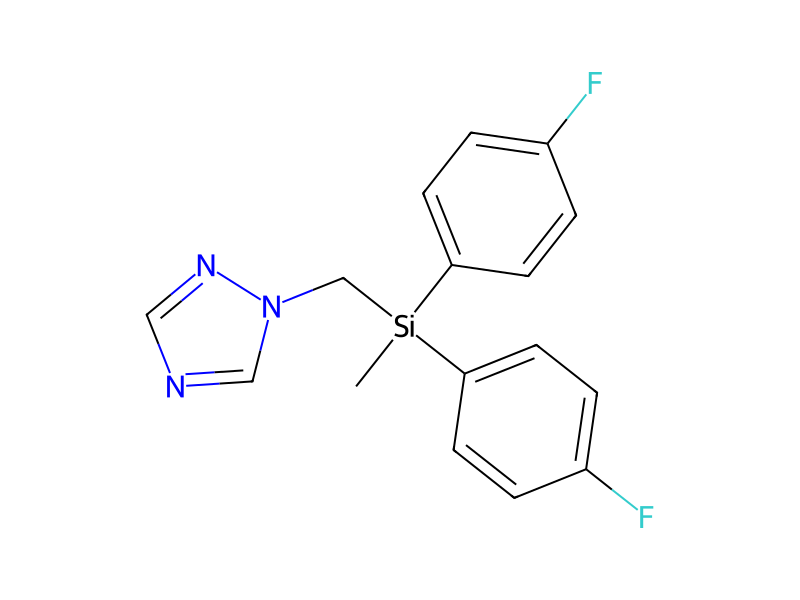
Grundinformationen
- Standard-SMILES
C[Si](Cn1cncn1)(c1ccc(F)cc1)c1ccc(F)cc1- InChIKey
FQKUGOMFVDPBIZ-UHFFFAOYSA-N- Summenformel
- C16H15F2N3Si
- Durchschnittliche Molmasse
- 315,39 g/mol
- Monoisotopische Masse
- 315,10033035
Namen und Bezeichner
- Bevorzugter Name
- Flusilazole
- IUPAC
- bis(4-fluorophenyl)-methyl-(1,2,4-triazol-1-ylmethyl)silane
- Englischer Name
- Flusilazole
- Summenformel
- C16H15F2N3Si
- Molmasse
- 315.4
Namen und Synonyme
Flusilazole85509-19-9NustarFlusilazolOlympPunchFluzilazolSanctionDPX-H 6573DTXSID3024235F3WG2VVD87Bis(4-fluorophenyl)methyl(1H-1,2,4-triazol-1-ylmethyl)silane
Weitere Namen anzeigen
FlusiazoleMTDHLyric3D3AEG1Cursor
DPX-H65731-((Bis(4-fluorophenyl)(methyl)silyl)methyl)-1H-1,2,4-triazoleDTXCID704235CHEBI:819221-{[bis(4-fluorophenyl)(methyl)silyl]methyl}-1H-1,2,4-triazole1H-1,2,4-Triazole, 1-((bis(4-fluorophenyl)methylsilyl)methyl)-bis(4-fluorophenyl)(methyl)(1H-1,2,4-triazol-1-ylmethyl)silane1H-1,2,4-Triazole, 1-[[bis(4-fluorophenyl)methylsilyl]methyl]-
Datenbank-Bezeichner
- CAS
85509-19-9- PubChem CID
- 73675
- DTXSID
DTXSID3024235- ChEMBL
CHEMBL1900522- ChEBI
CHEBI:81922- UNII
- F3WG2VVD87
- EC Number
- 617-717-5
- Nikkaji
- J791.573J
Eigenschaften
Berechnete Struktureigenschaften
- Polarare Oberfläche (TPSA)
- 30,7 Ų
- H-Brücken-Donoren
- 0
- H-Brücken-Akzeptoren
- 4
- Frei drehbare Bindungen
- 4
- Schwere Atome
- 22
- Formalladung
- 0
- Komplexität
- 333
Experimentelle und physikochemische Eigenschaften
LogP3.70
Melting Point48 °C
Physical DescriptionSolid
Ionization Efficiency
Positive
3.88
2.7
Agilent XCT
Electrospray ionization
formic acid (5.3nM)
Kovats Retention Index
2184.1;2194.3
2202;2192.3;2185.6;2190.8
Collision Cross Section174.9 Ų [M+H]+ [CCS Type: DT; Buffer gas: N2; Ionization: ESI+; Dataset: TOXCAST; Source Identifier: DTXSID3024235];176.6 Ų [M+H]+ [CCS Type: DT; Buffer gas: N2; Ionization: APCI+; Dataset: TOXCAST; Source Identifier: DTXSID3024235]
Physikochemische Eigenschaften
- Schmelzpunkt
- 55 ° · 55°
- Siedepunkt
- 393 °C · 393 °C [760mmHg]
- Dichte
- 1.17 · 1.17
- Dampfdruck
- 3.9 x · 3.9 x l0-8 Pa (25 °C)
- Brechungsindex
- 1.563 · 1.563
- Flammpunkt
- 192 °C · 192°C
- storage temp.
- 0 · 0-6°C
- Löslichkeit
- 100 mg/mL · DMSO : 100 mg/mL (317.07 mM; Need ultrasonic)
- pka
- 2.5 at · 2.5 at 25℃
- Wasserlöslichkeit
- 900 mg · 900 mg l-1 (pH 1.1), 50 mg l-1 (pH 5.7), 45 mg l-1 (pH 7.8) at 25 °C
- Aggregatzustand
- Solid
- Farbe
- White to off-white
- Biologische Quelle
- mouse
- Merck
- 13 · 13,4232
- BRN
- 5824097 · 5824097
- Henry's Law Constant
- 2.7 · 2.7×101 mol/(m3Pa) at 25℃, Barcelo and Hennion (1997)
- Major Application
- agriculturecleaning productscosmeticsenvironmentalfood and beveragespersonal care
- InChI
- 1S/C16H15F2N3Si/c1-22(12-21-11-19-10-20-21,15-6-2-13(17)3-7-15)16-8-4-14(18)5-9-16/h2-11H,12H2,1H3
- InChIKey
- FQKUGOMFVDPBIZ-UHFFFAOYSA-N
- SMILES
- C[Si](Cn1cncn1)(c2ccc(F)cc2)c3ccc(F)cc3
- CAS Datenbank
- 85509 · 85509-19-9(CAS DataBase Reference)
- EPA chemische Informationen
- Flusilazole (85509-19-9)
Sicherheit und Regulatorisches
GHS-Klassifizierung
GHS Classification
Danger
H302: Harmful if swallowed [Warning Acute toxicity, oral];H351: Suspected of causing cancer [Warning Carcinogenicity];H360D ***: May damage the unborn child [Danger Reproductive toxicity];H411: Toxic to aquatic life with long lasting effects [Hazardous to the aquatic environment, long-term hazard]
P203, P264, P270, P273, P280, P301+P317, P318, P330, P391, P405, and P501 (click each P-code to see the statement)
Danger
Gefahrenhinweise
Regulatory Information
Hazard Traits - Reproductive Toxicity;Authoritative List - EC Annex VI CMRs - Cat. 1B;Report - if used as a fragrance or flavor ingredient
Regulation (EC) No 396/2005 (amended)
Flusilazole is listed in the dataset of EPA Human Health Benchmarks for Pesticides under the Safe Drinking Water Act (40 eCFR 141)
06/133/EC, Reg. (EU) 2022/801, Reg. (EU) No 540/2011
Flusilazole: Does not have an individual approval but may be used as a component in a product covered by a group standard. It is not approved for use as a chemical in its own right.
Hazard Classes and Categories
Acute Tox. 4 (100%);Carc. 2 (100%);Repr. 1B (65.1%);Repr. 1B (34.9%);Aquatic Chronic 2 (100%)
Carcinogenicity - category 2;Reproductive toxicity - category 1B;Acute toxicity - category 4;Hazardous to the aquatic environment (chronic) - category 2
Carc. 2;Repr. 1B;Acute Tox. 4 *;Aquatic Chronic 2
Toxikologische Informationen
Target OrgansHepatic
Health EffectsFlusilazole can cause testicular Leydig-cell tumours and bladder tumours in rats and hepatocellular tumours in mouse. An increased gestation length and increased placental weight have been found in the reproductive toxicity studies.
Toxicity Summary
Flusilazole has a dose-related inhibition of serum testosterone and estradiol concentrations in rats. This inhibition of testosterone and estradiol biosynthesis may disrupt the hypothalamus–pituitary–testis axis, resulting in overstimulation of the testicular endocrine tissues and increase the risk of Leydig-cell tumours.
Signs and Symptoms
Symptoms include weight loss, weakness, lethargy, alopecia and diarrhoea. At higher dose, prostration, salivation, laboured breathing, convulsions, and loss of righting reflex would be expected. Flusilazole can also cause mild erythema at the site of application.
EPA IRIS Information
NuStar
Hepatic
7 x 10 ^-4 mg/kg-day
Carcinogen ClassificationNot listed by IARC.
Toxicity DataLD50 (rat, oral) =1110 mg/kg (m)
LD50 (rat, dermal) >2000 mg/kg
RAIS Toxicity Values
0.02
OPP
0.002
OPP
EPA Human Health Benchmarks for Pesticides
Flusilazole
0.02
600
Females 13-49 yrs
0.002
10
Hazard Quotient Level 0.1 or Cancer Risk Level 1E-06
1.30e+02
1.60e+03
3.10e+01
4.00e+03
5.10e+00
2.00e-03
Hazard Quotient Level 3 or Cancer Risk Level 1E-04
3.80e+02
4.90e+03
9.40e+01
4.00e+03
2.00e-03
Volatile
Regulatorische Informationen
Regulatory Information
Hazard Traits - Reproductive Toxicity;Authoritative List - EC Annex VI CMRs - Cat. 1B;Report - if used as a fragrance or flavor ingredient
Regulation (EC) No 396/2005 (amended)
Flusilazole is listed in the dataset of EPA Human Health Benchmarks for Pesticides under the Safe Drinking Water Act (40 eCFR 141)
06/133/EC, Reg. (EU) 2022/801, Reg. (EU) No 540/2011
Flusilazole: Does not have an individual approval but may be used as a component in a product covered by a group standard. It is not approved for use as a chemical in its own right.
Sicherheitsdaten
- wgk
- 3
- ridadr
- UN 2588
- RTECS-Nr.
- XZ4105000
- risk_code
- 61-22-40-51/53
- Toxizität
- LD50 in male, female rats (mg/kg): 1110, 674 orally; in rabbits >2000 dermally (Fort, Moberg)
- hazard_code
- T;N,N,T
- safety_code
- 53-45-61
- Speicherklasse
- 6.1C - Combustible acute toxic Cat.3toxic compounds or compounds which causing chronic effects
- Hazard Classifications
- Acute Tox. 4 OralAquatic Chronic 2Carc. 2Repr. 1B
Chemie und Industrie
Pharmakologische Informationen
MeSH Pharmacological ClassificationChemicals that kill or inhibit the growth of fungi in agricultural applications, on wood, plastics, or other materials, in swimming pools, etc.
Cellular LocationsMembrane
Verwendung und Herstellung
UsesThis is a man-made compound that is used as a pesticide.
Use ClassificationFungicides
Anwendungen
VerwendenFlusilazole is a silicon-containing triazole fungicide. Flusilazole is used to control fungal infections on a variety of fruit and vegetable crops
Vor- und nachgelagerte Produkte
Vorgelagerte Rohstoffe
Anbieter50 Anbieter
湖北博杰生物科技有限公司0713-2060728 15629612610
上海阿拉丁生化科技股份有限公司400-6206333 13167063860 · [email protected]
Career Henan Chemica Co+86-0371-86658258 +86-13203830695 · [email protected]
济南百隆化学有限公司[email protected] · [email protected]
武汉英诺医药科技有限公司+86-027-59232304 15387063101 · [email protected]
上海麦克林生化科技股份有限公司021-50706066 15221275939 · [email protected]
湖北科麦迪化工有限公司18372743325
江苏智芯廷科技有限公司18221391031 · [email protected]
咸宁深蓝生物医药研发有限公司18171815831 · [email protected]
苏州启航生物科技有限公司18151111370 · [email protected]
杭州品高化工有限公司0571-87658025 · [email protected]
温州共赢化学有限公司+86-0086-577-64498589 +86-15355981851 · [email protected]
陕西缔都化学有限公司029-029-81123119 17391733320 · [email protected]
T&W GROUP021-61551611 13296011611 · [email protected]
Dayang Chem (Hangzhou) Co.,Ltd.+86-0571-88938639 17705817739 · [email protected]
衢州明锋化工有限公司0570-3062502 13819002126;13819008176 · [email protected]
湖北辰心化工有限公司18696113233 · [email protected]
Syntechem Co.,Ltd[email protected]
安耐吉化学&3A(安徽泽升科技有限公司)021-58432009 400-005-6266 · [email protected]
上海德默医药科技有限公司400-021-7337 2355568890 · [email protected]
梯希爱(上海)化工贸易有限公司021-61109150 · [email protected]
湖北魏氏化学试剂股份有限公司027-59102966 18717199209 · [email protected]
广东方信生物科技有限公司0751-2838688 13376594225 · [email protected]
InvivoChem中国13549236410 · [email protected]
上海钰康生物科技有限公司+86-18930848214 +86-021-56762820 · [email protected]
北京博奥森生物技术有限公司400-901-9800 18611424007 · [email protected]
武汉丰泰威远科技有限公司+86-27-8746-5837 +86-18627785180 · [email protected]
武汉丰泰威远科技有限公司027-87465837 19945049750 · [email protected]
上海毕楷科技有限公司18516304666
四川库利南科技有限公司400-1166-196 18981987031 · [email protected]
天津希恩思生化科技有限公司400 638 7771 · [email protected]
成都思天德生物科技有限公司028-83243028 19136088901 · [email protected]
深圳振强药物研发有限公司0755-66853366 13670046396 · [email protected]
武汉普洛夫生物科技有限公司17612776928 · [email protected]
湖北薪和化工有限公司027-83258456 15392830626 · [email protected]
南京生利德生物科技有限公司025-57798810 18652991625 · [email protected]
苏州亚科科技股份有限公司0512-87182055 13451648594 · [email protected]
上海将来实业股份有限公司021-61552785 · [email protected]
天津阿尔塔科技有限公司022-65378550-8551 · [email protected]
天津普西唐生物医药科技有限公司010-60605840 · [email protected]
杭州杰恒化工有限公司0571-87396432 · [email protected]
上海孚一生物科技有限公司+86 (21) 61124340
凯试(上海)科技有限公司021-50135380 · [email protected]
TargetMol中国(陶术生物)021-021-33632979 15002134094 · [email protected]
上海陶术生物科技股份有限公司+1-781-999-5354; +1-00000000000 · [email protected]
安世达(山东)新材料科技有限公司18053179586
湖北宜好生物科技有限公司18995688786 · [email protected]
泰安嘉岳生物化工有限公司15318151873 · [email protected]
广东翁江化学试剂有限公司0751-2886766 13927870850 · [email protected]
湖北辰心化工有限公司17362916295
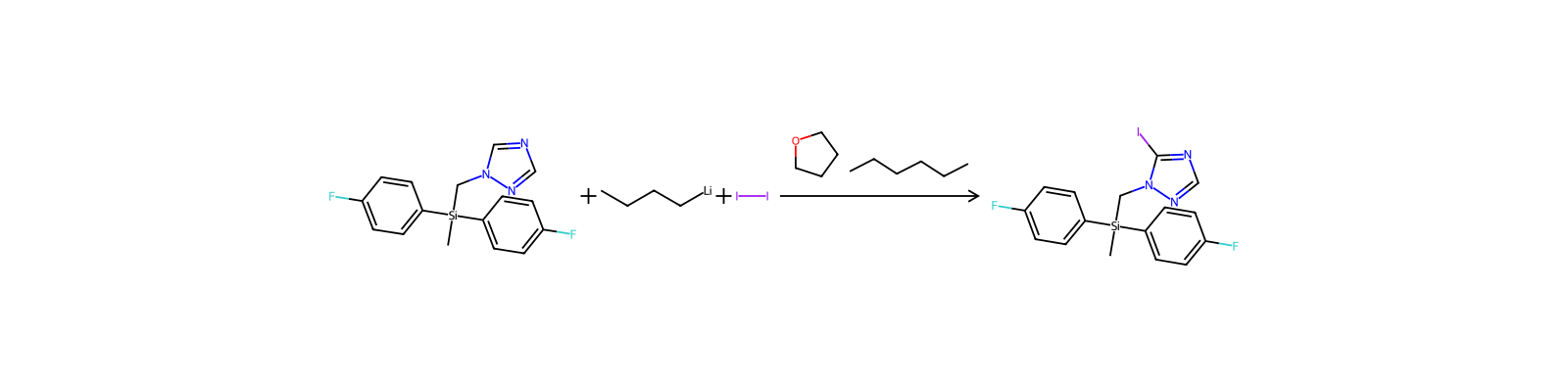
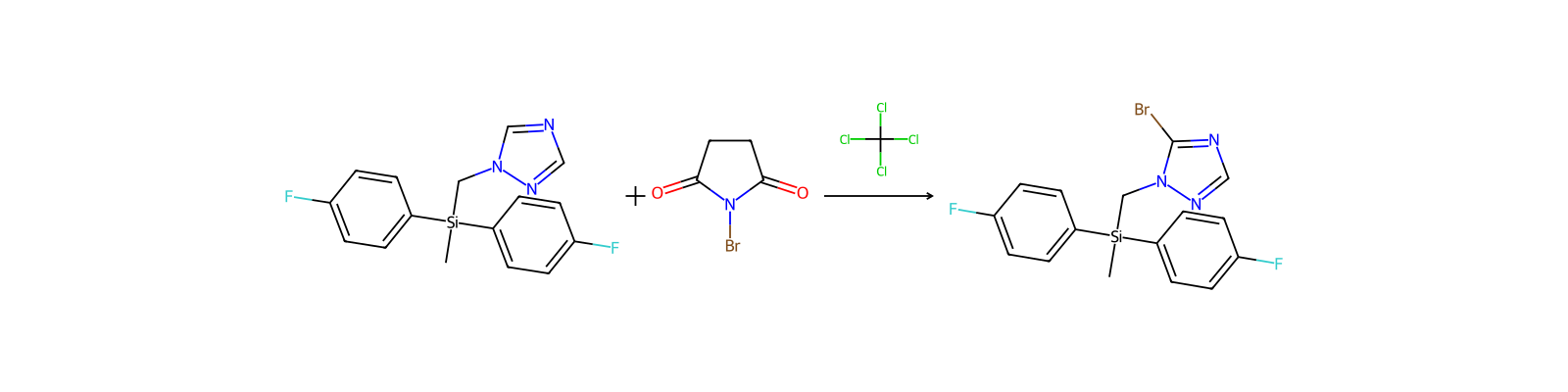
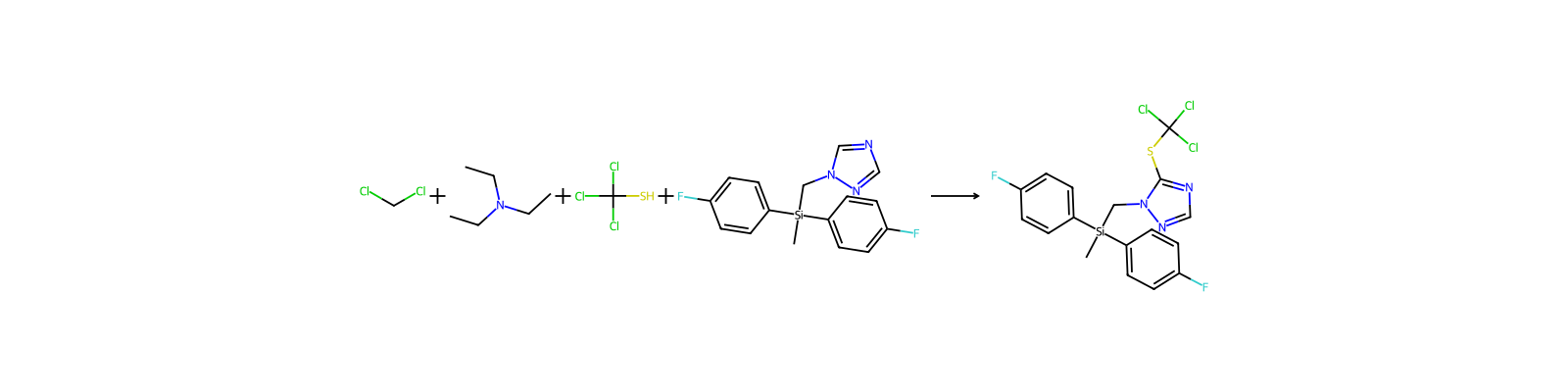
Zugehörige Reaktionen
10




Verknüpfte Notizen
Wird geladen…