StartseiteMCPWorkbenchSkills
StartseiteWorkbenchBenachrichtigungenMein Bereich
llms.txt · MCP-AnleitungDatenschutz · Nutzungsbedingungen · Supportv1.8.0
  1. Startseite
  2. /Verbindung

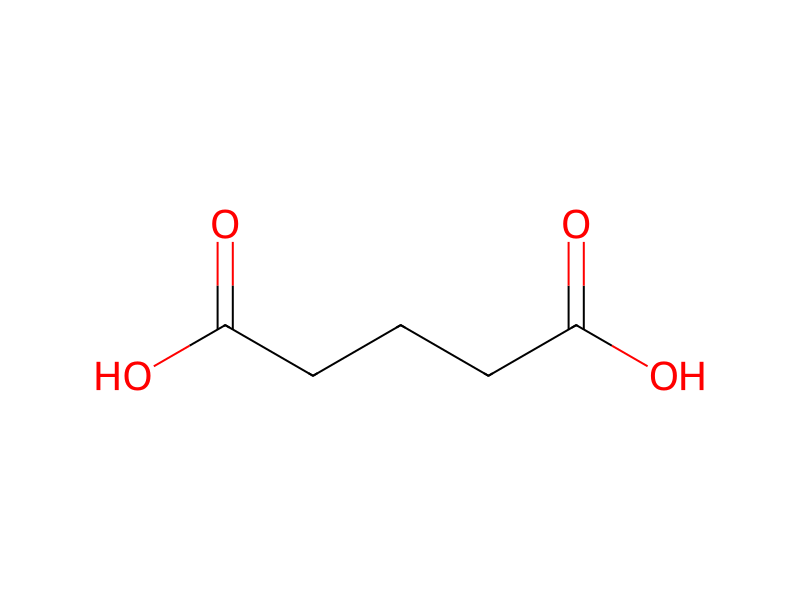
Glutarsure

Glutaric Acid
HCID 743
Neue NotizNeue ReaktionAnfrage stellen
Druckvorschau
GrundinformationenÜberblickNamen und BezeichnerEigenschaftenSicherheit und RegulatorischesChemie und IndustrieZugehörige ReaktionenNotizen zur Verbindung
TeilstruktursucheÄhnliche Strukturen suchen

Grundinformationen

CAS
110-94-1
Standard-SMILES
O=C(O)CCCC(=O)O
InChIKey
JFCQEDHGNNZCLN-UHFFFAOYSA-N
Summenformel
C5H8O4
Durchschnittliche Molmasse
132,11 g/mol
Monoisotopische Masse
132,04225874

Überblick

Glutaric acid appears as colorless crystals or white solid. (NTP, 1992)

Namen und Bezeichner

Bevorzugter Name
Glutaric Acid
IUPAC
pentanedioic acid
Lokaler Name
Glutarsure
Englischer Name
Glutaric acid
Summenformel
C5H8O4
Molmasse
132.11

Namen und Synonyme

GLUTARIC ACIDPentanedioic acid110-94-11,5-Pentanedioic acidglutarate1,3-Propanedicarboxylic acidPentandioic acidn-Pyrotartaric acidDTXSID2021654CHEBI:17859H849F7N00BNSC-9238
Weitere Namen anzeigen
glutaricG1utaric Acid1,5-PENTADIOIC ACIDGlutarsureutaric acidGlutarsaurelutaric acid
DTXCID401654hydron;pentanedioateRefChem:5863CHEBI:24329203-817-2Pentanedioatepropane-1,3-dicarboxylic acidMFCD00004410

Datenbank-Bezeichner

CAS
110-94-1
PubChem CID
743
DTXSID
DTXSID2021654
ChEMBL
CHEMBL1162495
ChEBI
CHEBI:17859
UNII
H849F7N00B
EC Number
203-817-2
Nikkaji
J40.077G

Eigenschaften

Berechnete Struktureigenschaften

XLogP
-0,3
Polarare Oberfläche (TPSA)
74,6 Ų
H-Brücken-Donoren
2
H-Brücken-Akzeptoren
4
Frei drehbare Bindungen
4
Schwere Atome
9
Formalladung
0
Komplexität
104

Experimentelle und physikochemische Eigenschaften

Chemical ClassesOther Classes -> Organic Acids
DrugsPharmaceuticals -> Listed in ZINC15
CosmeticsCosmetic ingredients (Glutaric Acid) -> CIR (Cosmetic Ingredient Review)
PesticidesEnvironmental transformation -> Pesticide transformation products (metabolite, successor)
LogP · 3 Einträge

-0.29

-0.47/-0.08 (calculated)

-0.29

Density · 3 Einträge

1.424 at 77 °F (NTP, 1992) - Denser than water; will sink

1.429 @ 15 °C/4 °C

1.4 g/cm³

Flavoring AgentsEU Flavoring substances
Color/Form · 2 Einträge

LARGE, MONOCLINIC PRISMS

COLORLESS CRYSTALS

Solubility · 5 Einträge

greater than or equal to 100 mg/mL at 70 °F (NTP, 1992)

Sicherheit und Regulatorisches

Sicherheitsangaben dienen nur zur Orientierung und ersetzen weder das Sicherheitsdatenblatt (SDB) des Lieferanten noch geltende Vorschriften oder eine fachliche Bewertung.

GHS-Klassifizierung

GHS Classification · 5 Einträge

This chemical does not meet GHS hazard criteria for 3.7% (13 of 350) of reports.

Danger

H314 (49.7%): Causes severe skin burns and eye damage [Danger Skin corrosion/irritation]

P260, P264, P264+P265, P280, P301+P330+P331, P302+P361+P354, P304+P340, P305+P351+P338, P305+P354+P338, P316, P317, P321, P337+P317, P363, P405, and P501 (click each P-code to see the statement)

Aggregated GHS information provided per 350 reports by companies from 11 notifications to the ECHA C&L Inventory. Each notification may be associated with multiple companies.

Gefahrenhinweise

Regulatory Information · 5 Einträge

Chemical: Pentanedioic acid

Commission Regulation (EC) No 1565/2000 (Repealed by Com. Implementing Reg. (EU) No 872/2012)

Pentanedioic acid is listed on the EPA's Chemical Data Reporting (CDR) system. Manufacturers and importers of Pentanedioic acid are required to report information about their production and use of this chemical to the EPA under the Toxic Substances Control Act (TSCA). (40 eCFR Part 711)

Status: Active Update: 16-11-2021 https://echa.europa.eu/registration-dossier/-/registered-dossier/19290

Glutaric acid: Does not have an individual approval but may be used under an appropriate group standard

Other Safety InformationIMAP assessments - Pentanedioic acid: Human health tier I assessment
Fire Hazards · 2 Einträge

Flash point data for this chemical are not available; however, it is probably combustible. (NTP, 1992)

Combustible.

Health HazardsSYMPTOMS: This compound may cause irritation to the skin and eyes.

Chemie und Industrie

Pharmakologische Informationen

Metabolism/Metabolites · 1 Eintrag

RAT LIVER MITOCHONDRIA METABOLIZED GLUTARATE VERY SLOWLY COMPARED WITH GLUTARYL-COENZYME A (COA). GLUTARYL-COA DEHYDROGENASE, WHICH CATALYZES THE STOICHIOMETRIC CONVERSION OF GLUTARYL-COA TO 1 MOLE EACH OF CARBON DIOXIDE AND CROTONYL-COA OR ITS INTERMEDIATE METABOLITE, WAS PURIFIED APPROX 44- AND 100-FOLD FROM BOVINE LIVER AND KIDNEY MITOCHONDRIA, RESPECTIVELY. THE KM FOR GLUTARYL-COA WAS 3.3 MUM.

Tissue LocationsPlacenta
Cellular LocationsCytoplasm

Verwendung und Herstellung

Uses · 6 Einträge

CIR ingredient: Glutaric Acid

Present in green sugar beets and water extracts of crude wool; [Merck Index] Used to make polymers, for biochemical research, and to treat animal diabetes; [HSDB]

IN ORGANIC SYNTHESIS

CHEM INT FOR POLYMERS, EG, POLYAMIDES & POLYESTERS

CHEM INT FOR ITS ESTERS & ANHYDRIDE

MEDICATION

U.S. Exports · 2 Einträge

(1979) No Data

(1981) No Data

U.S. Imports · 2 Einträge

(1979) No Data

(1981) No Data

U.S. Production · 3 Einträge

2023: 25,000,000 - <40,000,000 lb

(1977) AT LEAST 4.54X10+9 GRAMS

(1981) No Data

Consumer UsesNot Known or Reasonably Ascertainable
Industry UsesIntermediate
Methods of Manufacturing · 2 Einträge

MANUFACTURED FROM CYCLOPENTANONE BY OXIDATIVE RING FISSION WITH HOT 50% NITRIC ACID IN THE PRESENCE OF VANADIUM CYANIDE. LAB PREPN BY ACID HYDROLYSIS OF TRIMETHYLENE CYANIDE...OR OF METHYLENEDIMALONIC ESTER.

Zugehörige Reaktionen

80
Reaktionsaufzeichnung erstellen
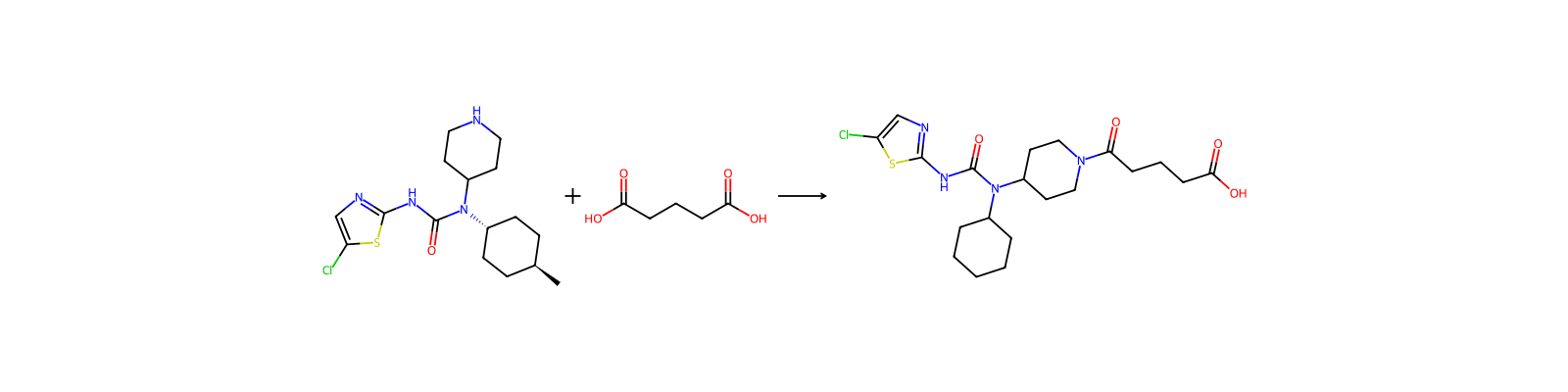
Reaktionsgleichung von HRID 9745
HRID 9745als Produktuspto-grants-2006_08
Reaktionsgleichung von HRID 99453
HRID 99453als ProduktTraining data from https://doi.org/10.1039/C8SC04228D (2/10)
Reaktionsgleichung von HRID 159400
HRID 159400als EduktTraining data from https://doi.org/10.1039/C8SC04228D (9/10)
Reaktionsgleichung von HRID 253934
HRID 253934als Eduktuspto-grants-2011_01
Reaktionsgleichung von HRID 430418
HRID 430418als Eduktuspto-grants-2001_11
Reaktionsgleichung von HRID 462907
HRID 462907als Eduktuspto-grants-1985_05
Reaktionsgleichung von HRID 462908
HRID 462908als Eduktuspto-grants-1985_05
Reaktionsgleichung von HRID 462909
HRID 462909als Eduktuspto-grants-1985_05
Seite 1 von 10

Notizen zur Verbindung

Wird geladen…

Auf dieser SeiteGrundinformationenÜberblickNamen und BezeichnerEigenschaftenSicherheit und RegulatorischesChemie und IndustrieZugehörige ReaktionenNotizen zur Verbindung
Weitere Aktionen
Neue NotizNeue ReaktionAnfrage stellen

SOLUBILITY IN WATER (G/L): @ 0 DEG: 429; @ 20 DEG: 639; @ 50 DEG: 957; @ 65 DEG: 1118; FREELY SOL IN ABSOLUTE ALCOHOL, ETHER; SOL IN BENZENE, CHLOROFORM; SLIGHTLY SOL IN PETROLEUM ETHER

SOL IN CONCENTRATED SULFURIC ACID

1600.0 mg/mL

Solubility in water, g/100ml at 20 °C: 63.9

Boiling Point · 3 Einträge

576 to 579 °F at 760 mmHg (decomposes) (NTP, 1992)

200 °C @ 20 MM HG

303.00 °C. @ 760.00 mm Hg

Decomposition302-304 °C
Melting Point · 4 Einträge

207.5 °F (NTP, 1992)

97.5-98 °C

95.8 °C

98 °C

Physikochemische Eigenschaften

Schmelzpunkt
95 · 95-98 °C (lit.)
Siedepunkt
200 °C/20 · 200 °C/20 mmHg (lit.)
Dichte
1 · 1,429 g/cm3
Dampfdruck
0.022 hPa · 0.022 hPa (18.5 °C)
Brechungsindex
106 · nD106 1.41878
Flammpunkt
200 °C/20mm · 200°C/20mm
storage temp.
30 °C · Store below +30°C.
Löslichkeit
5 mg/mL, · water: soluble5mg/mL, clear to slightly hazy, colorless to faintly yellow
pka
4.31 · 4.31(at 25℃)
Aggregatzustand
Crystalline Powder
Farbe
Orange
PH
3.7 · 3.7(1 mM solution);3.17(10 mM solution);2.66(100 mM solution)
Wasserlöslichkeit
430 g/L · 430 g/L (20 ºC)
Merck
14 · 14,4473
BRN
1209725 · 1209725
Henry's Law Constant
3.8 · 3.8×107 mol/(m3Pa) at 25℃, Burkholder et al. (2019)
Stabilität
Stable. Incompatible with bases, oxidizing agents, reducing agents.
Kosmetik-Inhaltsstoffe Funktionen
BUFFERING
InChI
1S/C5H8O4/c6-4(7)2-1-3-5(8)9/h1-3H2,(H,6,7)(H,8,9)
InChIKey
JFCQEDHGNNZCLN-UHFFFAOYSA-N
SMILES
OC(=O)CCCC(O)=O
LogP
-0.26 at · -0.26 at 25℃
CAS Datenbank
110 · 110-94-1(CAS DataBase Reference)
NIST chemische Informationen
Pentanedioic acid(110-94-1)
EPA chemische Informationen
Pentanedioic acid (110-94-1)
Hazards Summary
A skin, eye, and respiratory tract irritant; [ICSC] May cause skin and eye irritation; [CAMEO] Causes diarrhea and weight loss in high-dose animal feeding studies; [RTECS] An eye irritant; [MSDSonline]
Reactive GroupAcids, Carboxylic
EPA Safer ChemicalChemical: Glutaric acid
Reactivity Profile · 1 Eintrag

GLUTARIC ACID is a carboxylic acid. Carboxylic acids donate hydrogen ions if a base is present to accept them. They react in this way with all bases, both organic (for example, the amines) and inorganic. Their reactions with bases, called "neutralizations", are accompanied by the evolution of substantial amounts of heat. Neutralization between an acid and a base produces water plus a salt. Carboxylic acids with six or fewer carbon atoms are freely or moderately soluble in water; those with more than six carbons are slightly soluble in water. Soluble carboxylic acid dissociate to an extent in water to yield hydrogen ions. The pH of solutions of carboxylic acids is therefore less than 7.0. Many insoluble carboxylic acids react rapidly with aqueous solutions containing a chemical base and dissolve as the neutralization generates a soluble salt. Carboxylic acids in aqueous solution and liquid or molten carboxylic acids can react with active metals to form gaseous hydrogen and a metal salt. Such reactions occur in principle for solid carboxylic acids as well, but are slow if the solid acid remains dry. Even "insoluble" carboxylic acids may absorb enough water from the air and dissolve sufficiently in it to corrode or dissolve iron, steel, and aluminum parts and containers. Carboxylic acids, like other acids, react with cyanide salts to generate gaseous hydrogen cyanide. The reaction is slower for dry, solid carboxylic acids. Insoluble carboxylic acids react with solutions of cyanides to cause the release of gaseous hydrogen cyanide. Flammable and/or toxic gases and heat are generated by the reaction of carboxylic acids with diazo compounds, dithiocarbamates, isocyanates, mercaptans, nitrides, and sulfides. Carboxylic acids, especially in aqueous solution, also react with sulfites, nitrites, thiosulfates (to give H2S and SO3), dithionites (SO2), to generate flammable and/or toxic gases and heat. Their reaction with carbonates and bicarbonates generates a harmless gas (carbon dioxide) but still heat. Like other organic compounds, carboxylic acids can be oxidized by strong oxidizing agents and reduced by strong reducing agents. These reactions generate heat. A wide variety of products is possible. Like other acids, carboxylic acids may initiate polymerization reactions; like other acids, they often catalyze (increase the rate of) chemical reactions This compound reacts with bases, oxidizing agents and reducing agents. (NTP, 1992)

Chemical DangersThe solution in water is a medium strong acid.
Air and Water ReactionsWater soluble.
Hazard Classes and CategoriesSkin Corr. 1A (49.7%)

Sicherheit und Schutzausrüstung

Fire Fighting · 2 Einträge

Fires involving this material can be controlled with a dry chemical, carbon dioxide or Halon extinguisher. A water spray may also be used. (NTP, 1992)

Use water spray, powder.

First Aid Measures · 4 Einträge

Fresh air, rest.

Remove contaminated clothes. Rinse skin with plenty of water or shower.

First rinse with plenty of water for several minutes (remove contact lenses if easily possible), then refer for medical attention.

Rinse mouth. Give one or two glasses of water to drink. Refer for medical attention .

First Aid · 1 Eintrag

EYES: First check the victim for contact lenses and remove if present. Flush victim's eyes with water or normal saline solution for 20 to 30 minutes while simultaneously calling a hospital or poison control center. Do not put any ointments, oils, or medication in the victim's eyes without specific instructions from a physician. IMMEDIATELY transport the victim after flushing eyes to a hospital even if no symptoms (such as redness or irritation) develop.

Safe StorageSeparated from bases.
Exposure Control and Personal Protection2.0 [mg/m3], inhalable fraction[German Research Foundation (DFG)]
Nonfire Spill Response · 1 Eintrag

SMALL SPILLS AND LEAKAGE: If you spill this chemical, you should dampen the solid spill material with water, then transfer the dampened material to a suitable container. Use absorbent paper dampened with water to pick up any remaining material. Seal your contaminated clothing and the absorbent paper in a vapor-tight plastic bag for eventual disposal. Wash all contaminated surfaces with a soap and water solution. Do not reenter the contaminated area until the Safety Officer (or other responsible person) has verified that the area has been properly cleaned.

Spillage DisposalSweep spilled substance into covered containers. If appropriate, moisten first to prevent dusting. Then wash away with plenty of water.
Eye PreventionWear safety spectacles or safety goggles.
Fire PreventionNO open flames.
Inhalation RiskEvaporation at 20 °C is negligible; a harmful concentration of airborne particles can, however, be reached quickly when dispersed.
Skin PreventionProtective gloves.
Ingestion PreventionDo not eat, drink, or smoke during work.

Toxikologische Informationen

InteractionsLITHIUM CHLORIDE (1.15 G) OR LITHIUM CARBAMATE (1.5-4 G) INCREASED THE RENAL EXCRETION OF GLUTARATE IN MANIC DEPRESSIVE PATIENTS. THE EFFECTS OF LITHIUM ARE PROBABLY CAUSED BY DECREASED RENAL TUBULAR RESORPTION.
Health EffectsChronically high levels of glutaric acid are associated with at least 3 inborn errors of metabolism including: Glutaric Aciduria Type I and Glutaric Aciduria Type III.
Exposure RoutesThe substance can be absorbed into the body by inhalation of its aerosol.
Toxicity Summary · 2 Einträge

Safe in the present practices of use and concentration. Ingredient, concentration, and use information are available in documents discoverable at https://cir-reports.cir-safety.org

Accumulation of glutaric acid in the body has been shown to be toxic. The accumulation of glutaric acid ranging from slightly or intermittently elevated urinary glutaric acid to gross organic aciduria occurs in glutaric aciduria. Glutaric aciduria type 1 is an autosomal-recessive disorder resulting from a deficiency of mitochondrial glutaryl-CoA dehydrogenase which is involved in the metabolism of lysine, hydroxylysine, and tryptophan.

Signs and Symptoms · 4 Einträge

Cough. Sore throat.

Redness. Pain.

Pain. Redness.

Abdominal pain.

Natural Pollution SourcesOCCURS IN GREEN SUGAR BEETS; IS FOUND IN WATER EXTRACTS OF CRUDE WOOL.
Carcinogen ClassificationNo indication of carcinogenicity to humans (not listed by IARC).

Sicherheitsdaten

wgk
1
tsca
TSCA listed
hs_code
29171990
RTECS-Nr.
MA3740000
risk_code
36-36/37/38
hazard_code
Xi
safety_code
26-37/39-36-39
Speicherklasse
8A - Combustible corrosive hazardous materials
Giftige Stoffe Daten
110-94-1(Hazardous Substances Data)
Hazard Classifications
Eye Dam. 1Skin Corr. 1A

OXIDATION OF CYCLOPENTANONE WITH 50% NITRIC ACID IN THE PRESENCE OF VANADIUM PENTOXIDE OR WITH AIR IN THE PRESENCE OF A CATALYST; BY-PRODUCT IN THE PRODUCTION OF ADIPIC ACID FROM CYCLOHEXANE BY OXIDATION WITH AIR & NITRIC ACID

Use Classification · 3 Einträge

EPA Safer Chemical Functional Use Classes -> Processing Aids and Additives

Safer Chemical Classes -> Green circle - The chemical has been verified to be of low concern

Environmental transformation -> Pesticide transformation products (metabolite, successor)

General Manufacturing Information · 5 Einträge

Petroleum Lubricating Oil and Grease Manufacturing

Pentanedioic acid: ACTIVE

15,000 CU M/HR OFFGAS CONTAINING 10-15% SULFUR DIOXIDE & 0.5-2 MG H2S/CU M IS SCRUBBED IN 4 SUCCESSIVE PACKED COLUMNS @ 35 °C WITH 40-55 CU M/HR 30% AQ GLUTARIC ACID.

A COMPOSITION FOR NEUTRALIZING OR DESTROYING A SUSCEPTIBLE VIRUS ON INFECTED TISSUE OF A LIVING MAMMAL CONTAINS AN EFFECTIVE CONCN OF GLUTARIC ACID IN PHARMACEUTICAL VEHICLE AS WELL AS PAPER OR CLOTH COATED OR IMPREGNATED WITH THE VIRUCIDE.

GLUTARIC ACID MAY BE AN ESSENTIAL PRECURSOR IN THE BIOSYNTHESIS OF BIOTIN BY A SPECIES OF AGROBACTERIUM.

Anwendungen · 2 Einträge

OccurrenceGlutaric acid occurs in washings from fleece and, together with malonic acid, in the juice of unripened sugar beet.

VerwendenGlutaric acid is used as the raw material for organic synthesis, pharmaceutical intermediate and synthetic resin. It serves as a precursor in the production of polyester polyols, polyamides, ester plasticizers and corrosion inhibitors. It is useful to decrease polymer elasticity and in the synthesis surfactants and metal finishing compounds. It acts as an intermediate during the catabolism of lysine in mammals.

Darstellung · 1 Eintrag

synthetischeglutaric acid is produced as a by-product of the production process of adipic acid (about 2% of the output of an adipic acid plant is glutaric); Glutaric acid can be produced through various chemical routes, for example, from cyclopentane by oxidation with molecular oxygen and cobalt (III) catalysts or by ozonolysis; and from cyclopentanol–cyclopentanone by oxidation with oxygen and Co(CH3CO2)2, with potassium peroxide in benzene, or with N2O4 or nitric acid. Together with succinic acid, glutaric acid is formed as a by-product during oxidation of cyclohexanol–cyclohexanone in the adipic acid production process.

Vor- und nachgelagerte Produkte

Vorgelagerte Rohstoffe

Adipinsureoxidized paraffin(wax)Paraffinwachse und KohlenwasserstoffwachseDihydropyran2,3-DihydrofuranDistickstofftetroxidPropan-1,3-diolGlutaronitrilAmmoniumchloridSalpetersureCyclohexanonCyclopentanonKaliumcyanidgamma-Butyrolacton6-oxohexanoic acidBernsteinsureCyclopentanolCyclopentan

Nachgelagerte Produkte

BuspironCinmethylinAzelainsureGlutarsureanhydridBaclofenLaccaic acid
Ergänzende Hinweise · 1 Eintrag

DefinitionChEBI: glutaric acid is an alpha,omega-dicarboxylic acid that is a linear five-carbon dicarboxylic acid. It has a role as a human metabolite and a Daphnia magna metabolite. It is an alpha,omega-dicarboxylic acid and a dicarboxylic fatty acid. It is a conjugate acid of a glutarate(1-) and a glutarate.