
α-Chlor-4-nitrotoluol
4-Nitrobenzyl chloride
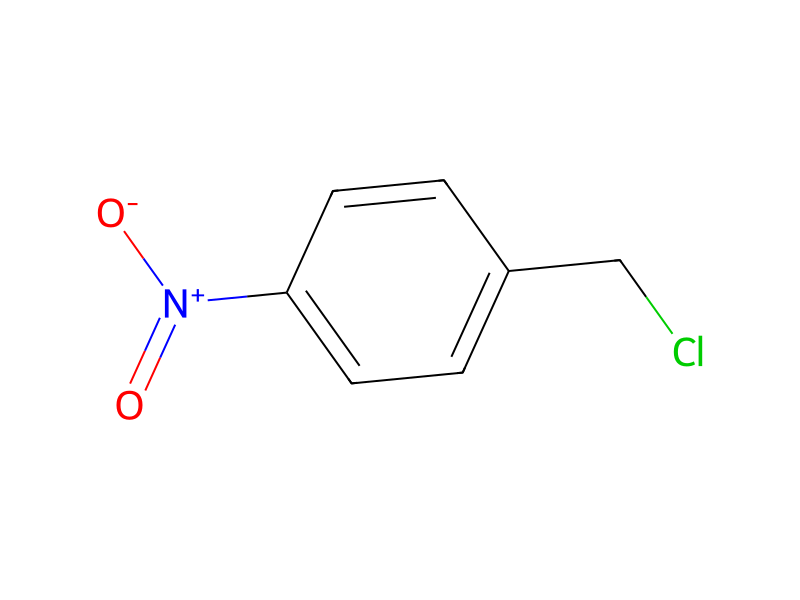
Grundinformationen
- CAS
100-14-1- Standard-SMILES
O=[N+]([O-])c1ccc(CCl)cc1- InChIKey
KGCNHWXDPDPSBV-UHFFFAOYSA-N- Summenformel
- C7H6ClNO2
- Durchschnittliche Molmasse
- 171,58 g/mol
- Monoisotopische Masse
- 171,00870611
Überblick
Benzene, 1-(chloromethyl)-4-nitro- is a solid. (EPA, 1998)
Namen und Bezeichner
- Bevorzugter Name
- 4-Nitrobenzyl chloride
- IUPAC
- 1-(chloromethyl)-4-nitrobenzene
- Lokaler Name
- α-Chlor-4-nitrotoluol
- Englischer Name
- 4-Nitrobenzyl chloride
- Summenformel
- C7H6ClNO2
- Molmasse
- 171.58
Namen und Synonyme
4-Nitrobenzyl chloride100-14-11-(Chloromethyl)-4-nitrobenzenep-Nitrobenzyl chlorideBenzene, 1-(chloromethyl)-4-nitro-alpha-Chloro-p-nitrotoluenep-(Chloromethyl)nitrobenzene4-(Chloromethyl)nitrobenzeneDTXSID40257454-nitrophenylmethyl chlorideToluene, alpha-chloro-p-nitro-3BLD9LVT3X
Weitere Namen anzeigen
p-nitrochlorideAKOS BBS-00003951NitrochlorobenzylNitrobenzylchlorideNitrobenzyl chloridà-chloro-4-nitrotolueneα-Chloro-4-nitrotoluene
BENZENE, 1-CHLOROMETHYL-4-NITRO-NSC-9803DTXCID105745CHEBI:87406para-nitrobenzyl chlorideRefChem:525941202-822-7alpha-Chloro-4-nitrotoluene
Datenbank-Bezeichner
- CAS
100-14-1- PubChem CID
- 7482
- DTXSID
Eigenschaften
Berechnete Struktureigenschaften
- XLogP
- 2,5
- Polarare Oberfläche (TPSA)
- 45,8 Ų
- H-Brücken-Donoren
- 0
- H-Brücken-Akzeptoren
- 2
- Frei drehbare Bindungen
- 1
- Schwere Atome
- 11
- Formalladung
- 0
- Komplexität
- 138
Experimentelle und physikochemische Eigenschaften
Chemical ClassesNitrogen Compounds -> Nitros, Aromatic
SpringerMaterials PropertiesDensity
Density1.5647 (NTP, 1992) - Denser than water; will sink
Color/FormPlates or needles from alcohol
Solubility
Insoluble (NTP, 1992)
Sol in alcohol, ether, acetone, benzene
Boiling Point230 °C @760 [mm Hg]
Melting Point
159.8 °F (EPA, 1998)
71 °C
71 °C
Vapor Pressure0.05 [mm Hg] @25 °C
Refractive IndexIndex of refraction: 1.5647 at 62 °C
Physical Description
Benzene, 1-(chloromethyl)-4-nitro- is a solid. (EPA, 1998)
Sicherheit und Regulatorisches
Sicherheitsangaben dienen nur zur Orientierung und ersetzen weder das Sicherheitsdatenblatt (SDB) des Lieferanten noch geltende Vorschriften oder eine fachliche Bewertung.
GHS-Klassifizierung
GHS Classification
Danger
H302 (100%): Harmful if swallowed [Warning Acute toxicity, oral]
P260, P264, P270, P280, P301+P317, P301+P330+P331, P302+P361+P354, P304+P340, P305+P354+P338, P316, P321, P330, P363, P405, and P501 (click each P-code to see the statement)
Aggregated GHS information provided per 48 reports by companies from 5 notifications to the ECHA C&L Inventory. Each notification may be associated with multiple companies.
Warning
H302: Harmful if swallowed [Warning Acute toxicity, oral]
Gefahrenhinweise
Regulatory Information4-Nitrobenzyl chloride: Does not have an individual approval but may be used under an appropriate group standard
DOT LabelCorrosive
Fire HazardsIncompatible with sodium hydroxide. (EPA, 1998)
Health HazardsPoisonous if swallowed or dust is inhaled. (EPA, 1998)
Hazards SummaryPoisonous by ingestion and inhalation; [CAMEO] Corrosive; Causes burns; A lachrymator; May cause pneumonitis and pulmonary edema after inhalation of high concentrations; [MSDSonline]
Reactive GroupHalogenated Organic Compounds
Reactivity Profile
Incompatible with sodium hydroxide. [EPA, 1998]. A halogenated aromatic nitro compound. Aromatic nitro compounds range from slight to strong oxidizing agents. If mixed with reducing agents, including hydrides, sulfides and nitrides, they may begin a vigorous reaction that culminates in a detonation. The aromatic nitro compounds may explode in the presence of a base such as sodium hydroxide or potassium hydroxide even in the presence of water or organic solvents. The explosive tendencies of aromatic nitro compounds are increased by the presence of multiple nitro groups.
Chemie und Industrie
Pharmakologische Informationen
Metabolism/Metabolites4-nitrobenzyl chloride has known human metabolites that include 4-nitrobenzyl-glutathione and S-(4-Nitrobenzyl)glutathione.
Verwendung und Herstellung
U.S. Exports(1987) No Data
U.S. Imports(1987) No Data
U.S. Production(1987) No Data
General Manufacturing InformationBenzene, 1-(chloromethyl)-4-nitro-: ACTIVE
Anwendungen
Verwenden4-Nitrobenzyl chloride was used to prepare unsymmetrically N,N′-bis(substituted) 4,13-diaza-18-crown-6-ether derivatives.
Vor- und nachgelagerte Produkte
Nachgelagerte Produkte
Zugehörige Reaktionen
145


Notizen zur Verbindung
Wird geladen…