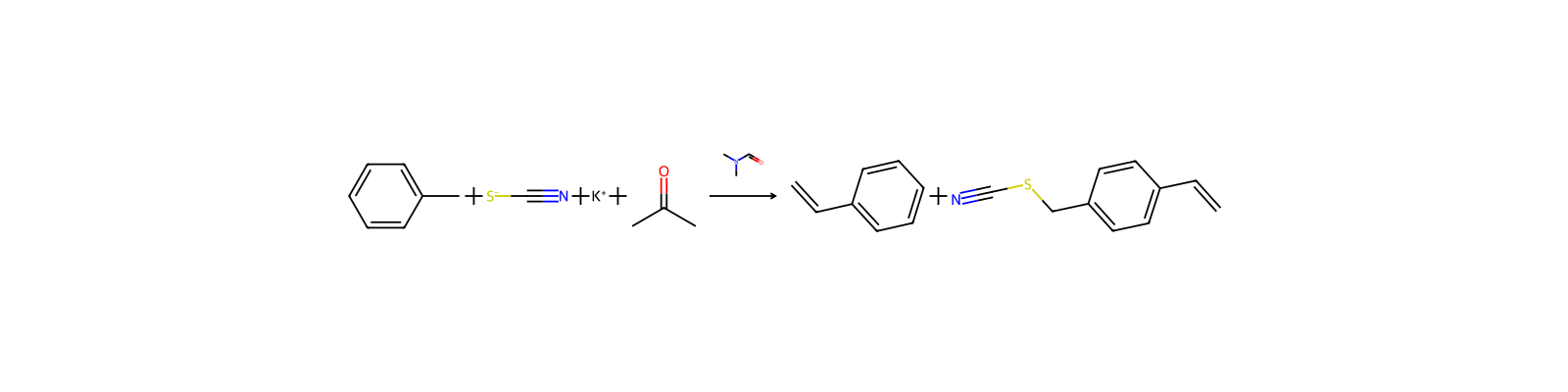
Styrol
Styrene
Daten werden ergänzt – lade die Seite später neu, um den aktuellen Stand zu sehen

Grundinformationen
- CAS
100-42-5- Standard-SMILES
C=Cc1ccccc1- InChIKey
PPBRXRYQALVLMV-UHFFFAOYSA-N- Summenformel
- C8H8
- Durchschnittliche Molmasse
- 104,15 g/mol
- Monoisotopische Masse
- 104,06260026
Namen und Bezeichner
- Bevorzugter Name
- Styrene
- IUPAC
- styrene
- Lokaler Name
- Styrol
- Englischer Name
- Styrene
- Summenformel
- C8H8
- Molmasse
- 104.15
Namen und Synonyme
STYRENE100-42-5EthenylbenzenePhenylethyleneVinylbenzeneStyrolBenzene, ethenyl-CinnameneStyrene monomerPhenyletheneStyrolenePhenethylene
Weitere Namen anzeigen
SMOligosaccharidemethyl 2-methylprop-2-enoate
VinylbenzolStyroleVinyl benzeneStyropol SOCinnamolStyrenBenzene, vinyl-Cinnamenol
Datenbank-Bezeichner
- CAS
100-42-5、79637-11-9、98444-30-5- PubChem CID
- 7501
- DTXSID
DTXSID2021284- ChEMBL
CHEMBL285235- ChEBI
CHEBI:27452- UNII
- 44LJ2U959V
- EC Number
- 202-851-5、616-714-6、619-344-3
- Nikkaji
- J4.006A
Eigenschaften
Berechnete StruktureigenschaftenWird ergänzt
- XLogP
- 2,9
- Polarare Oberfläche (TPSA)
- 0 Ų
- H-Brücken-Donoren
- 0
- H-Brücken-Akzeptoren
- 0
- Frei drehbare Bindungen
- 1
- Schwere Atome
- 8
- Formalladung
- 0
- Komplexität
- 68
Physikochemische Eigenschaften
- Schmelzpunkt
- 30 °C · −30 °C (−22 °F; 243 K)
- Siedepunkt
- 145 °C · 145 °C (293 °F; 418 K)
- Dichte
- 0.909 g/cm3 · 0.909 g/cm3
- Dampfdichte
- 3.6 · 3.6 (vs air)
- Dampfdruck
- 12.4 mm · 12.4 mm Hg ( 37.7 °C)
- Brechungsindex
- 1.5469 · 1.5469
- Flammpunkt
- 31 °C · 31 °C (88 °F; 304 K)
- storage temp.
- 20 °C · Store at <= 20°C.
- Löslichkeit
- 0.24 g/l · 0.24g/l
- pka
- 14 · >14 (Schwarzenbach et al., 1993)
- Aggregatzustand
- oily liquid
- Farbe
- colorless
- Wichte
- 0.909 · 0.909
- Geruch (Odor)
- 0.1 % · at 0.10 % in triacetin. sweet balsam floral plastic
- Geruchsart
- balsamic
Sicherheit und Regulatorisches
Sicherheitsangaben dienen nur zur Orientierung und ersetzen weder das Sicherheitsdatenblatt (SDB) des Lieferanten noch geltende Vorschriften oder eine fachliche Bewertung.
Sicherheitsdaten
- OEB
- A
- OEL
- TWA: 50 ppm (215 mg/m3), STEL: 100 ppm (425 mg/m3)
- wgk
- 2
- IDLA
- 700 ppm
- tsca
- TSCA listed
- ridadr
- UN 2055 (STYRENE MONOMER, STABILIZED)
- hs_code
- 2902 50 00
- RTECS-Nr.
- WL3675000
- risk_code
- 10-20-36/38-40-36/37/38-39/23/24/25-23/24/25-11-48/20-63
- Toxizität
- LD50 in mice (mg/kg): 660 ± 44.3 i.p.; 90 ± 5.2 i.v.
- hazard_code
- Xn,T,F
- safety_code
- 23-36-26-16-45-36/37-7-46
- hazard_class
- 3
- packing_group
- III
- Speicherklasse
- 3 - Flammable liquids
- Giftige Stoffe Daten
- 100-42-5(Hazardous Substances Data)
- Hazard Classifications
- Acute Tox. 4 InhalationAquatic Chronic 3Asp. Tox. 1Eye Irrit. 2Flam. Liq. 3Repr. 2Skin Irrit. 2STOT RE 1 InhalationSTOT SE 3
- Selbstentzündungstemperatur
- 914 °F
Chemie und Industrie
Anwendungen
BeschreibungStyrene has a characteristic, sweet, balsamic, almost floral odor that is extremely penetrating. Styrene occurs naturally in plants. It was first isolated from a resin called storax obtained from the inner bark of the Oriental sweet gum tree (Liquidambar orientalis) by Bonastre. In 1839, the German apothecary Eduard Simon prepared styrene by distilling it from storax and called it styrol. Simon observed it solidifi ed into a rubbery substance after being stored and believed it had oxidized into styrol oxide. Subsequent analysis showed the solid did not contain oxygen and it was renamed metastyrol. This was the first written record of polymerization in chemistry. In 1845, the English chemist, John Blyth, and the German chemist, August Wilhelm von Hofmann (1818 1892), observed that styrene was converted to polystyrene by sunlight and that styrene could be polymerized to polystyrene by heating in the absence of oxygen. It took another 70 years for the polymerization of styrene to be described by Hermann Staudinger (1881 1965) in the 1920s. This laid the foundation for the commercial polystyrene industry that developed in the 1930s.
OccurrenceReported found in cranberry and bilberry, currants, grape, parsley, milk and dairy products, whiskey, cocoa, coffee, tea, roasted filberts and roasted peanuts. Also reported found in fresh apple, guava fruit, pineapple, vinegar, butter, fish oil, black tea, roasted filbert, roasted peanut, soybean, plum brandy, apple brandy, Brazil nut, rice bran, Bourbon vanilla, grapes, peach, strawberry, onion, peas, bell pepper, cassia leaf, cheeses, parsley, milk, boiled and scrambled egg, lean fish, fish oil, cooked chicken and beef, rum, malt and Scotch whiskey, cider, grape, wine, cocoa, coffee, honey, cloudberry, plum, rose apple, beans, trassi, walnut, buckwheat, soursop, watercress, kiwifruit, wild rice, sapodilla fruit, nectarine, okra, crab, crayfish and pawpaw.
VerwendenStyrene (monomer) is a viscous, highly flammable liquid that evaporates easily and polymerizes readily to polystyrene unless a stabilizer is added. Styrene is used in multiple industries, especially in reinforced plastics (e.g., fiberglass boats), and is widely used to make plastics and rubber, packaging materials (e.g., packing peanuts ), insulation for buildings, plastic pipes, food containers (e.g., takeout containers), and carpet backing) (ATSDR, 2010).
Darstellung
Zugehörige Reaktionen
1.526





Notizen zur Verbindung
Wird geladen…