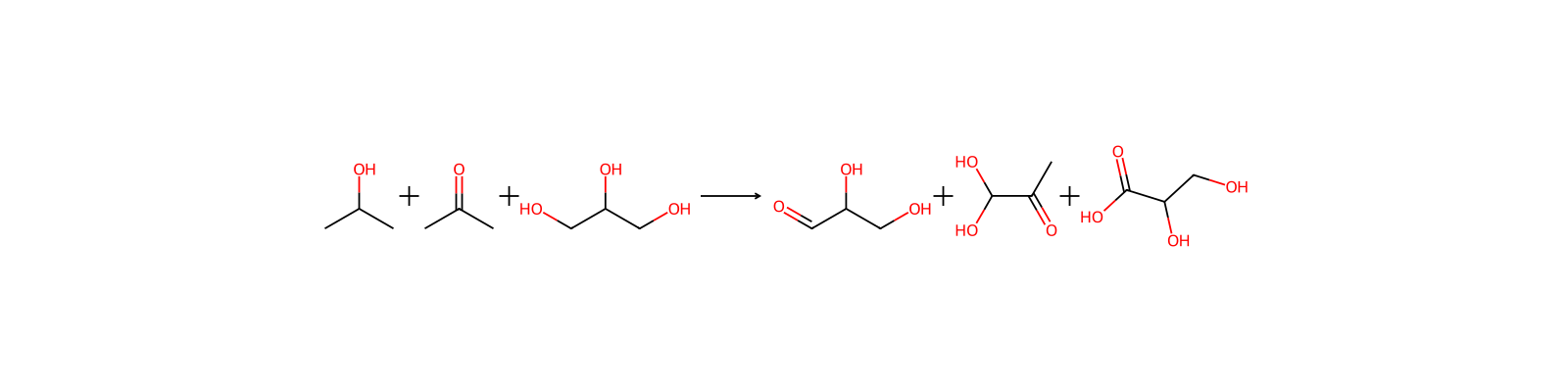
Glyceric acid

Grundinformationen
- CAS
473-81-4- Standard-SMILES
O=C(O)C(O)CO- InChIKey
RBNPOMFGQQGHHO-UHFFFAOYSA-N- Summenformel
- C3H6O4
- Durchschnittliche Molmasse
- 106,08 g/mol
- Monoisotopische Masse
- 106,02660867
Überblick
Glyceric acid is a trionic acid that consists of propionic acid substituted at positions 2 and 3 by hydroxy groups. It has a role as a fundamental metabolite. It is functionally related to a propionic acid. It is a conjugate acid of a glycerate.
Namen und Bezeichner
- Bevorzugter Name
- Glyceric acid
- IUPAC
- 2,3-dihydroxypropanoic acid
- Englischer Name
- DL-Glyceric acid
- Summenformel
- C3H6O4
- Molmasse
- 106.08
Namen und Synonyme
GLYCERIC ACID473-81-42,3-Dihydroxypropanoic acidPropanoic acid, 2,3-dihydroxy-70KH64UX7Galpha,beta-Hydroxypropionic acidDTXSID80861979CHEBI:33508RefChem:663205GlyTouCan:G83093ZMDTXCID50219004G83093ZM
Weitere Namen anzeigen
DL-Glyceric Acid (40% in Water, ca. 5.2mol/L)RARECHEM AL BE 0724DL-Glyceric acid ,97%DL-GLYCERICACID20%INWATERα,β-dihydroxypropionic acidDL-GLYCERIC ACID: 40% IN WATER2,3-Dihydroxypropanoic acid(20% in water)
207-472-9DL-Glyceric acid600-19-1DL-2,3-Dihydroxypropionic Acid(+-)-Glyceric acidbeta-Hydroxylactic acidC3H6O4UNII-70KH64UX7G
Datenbank-Bezeichner
- CAS
473-81-4、600-19-1- PubChem CID
- 752
- DTXSID
DTXSID80861979- ChEBI
CHEBI:33508- UNII
- 70KH64UX7G
- EC Number
- 207-472-9、676-425-6
- Nikkaji
- J5.966H
Eigenschaften
Berechnete Struktureigenschaften
- XLogP
- -1,5
- Polarare Oberfläche (TPSA)
- 77,8 Ų
- H-Brücken-Donoren
- 3
- H-Brücken-Akzeptoren
- 4
- Frei drehbare Bindungen
- 2
- Schwere Atome
- 7
- Formalladung
- 0
- Komplexität
- 69,3
Experimentelle und physikochemische Eigenschaften
Collision Cross Section112.8 Ų [M-H]-
Physikochemische Eigenschaften
- storage temp.
- Refrigerator
- Löslichkeit
- DMSO (Slightly), Water (Slightly)
- pka
- 1 · pK1:3.64 (25°C)
- Aggregatzustand
- Clear Colourless Liquid
Sicherheit und Regulatorisches
Sicherheitsangaben dienen nur zur Orientierung und ersetzen weder das Sicherheitsdatenblatt (SDB) des Lieferanten noch geltende Vorschriften oder eine fachliche Bewertung.
GHS-Klassifizierung
GHS Classification
Warning
H315 (100%): Causes skin irritation [Warning Skin corrosion/irritation]
P261, P264, P264+P265, P271, P280, P302+P352, P304+P340, P305+P351+P338, P319, P321, P332+P317, P337+P317, P362+P364, P403+P233, P405, and P501 (click each P-code to see the statement)
The GHS information provided by 1 company from 1 notification to the ECHA C&L Inventory.
Gefahrenhinweise
Regulatory Information
Chemical: Propanoic acid, 2,3-dihydroxy-
Propanoic acid, 2,3-dihydroxy-: Does not have an individual approval but may be used under an appropriate group standard
Other Safety InformationEvaluation - Chemicals that are unlikely to require further regulation to manage risks to environment
EPA Safer ChemicalChemical: Propanoic acid, 2,3-dihydroxy-
Hazard Classes and CategoriesSkin Irrit. 2 (100%)
Toxikologische Informationen
Health EffectsChronically high levels of D-glyceric acid are associated with D-glyceric acidura.
Toxicity Summary
Glyceric acid is a compound that is secreted excessively in the urine by patients suffering from D-glyceric aciduria and D-glycerate anemia. Deficiency of human glycerate kinase leads to D-glycerate acidemia/D-glyceric aciduria. Accumulation of glyceric acid in the body has been shown to be toxic.
Chemie und Industrie
Verwendung und Herstellung
UsesThis is an endogenously produced metabolite found in the human body. It is used in metabolic reactions, catabolic reactions or waste generation.
Use Classification
EPA Safer Chemical Functional Use Classes -> Processing Aids and Additives
Safer Chemical Classes -> Green circle - The chemical has been verified to be of low concern
Vor- und nachgelagerte Produkte
Vorgelagerte Rohstoffe
Nachgelagerte Produkte
Zugehörige Reaktionen
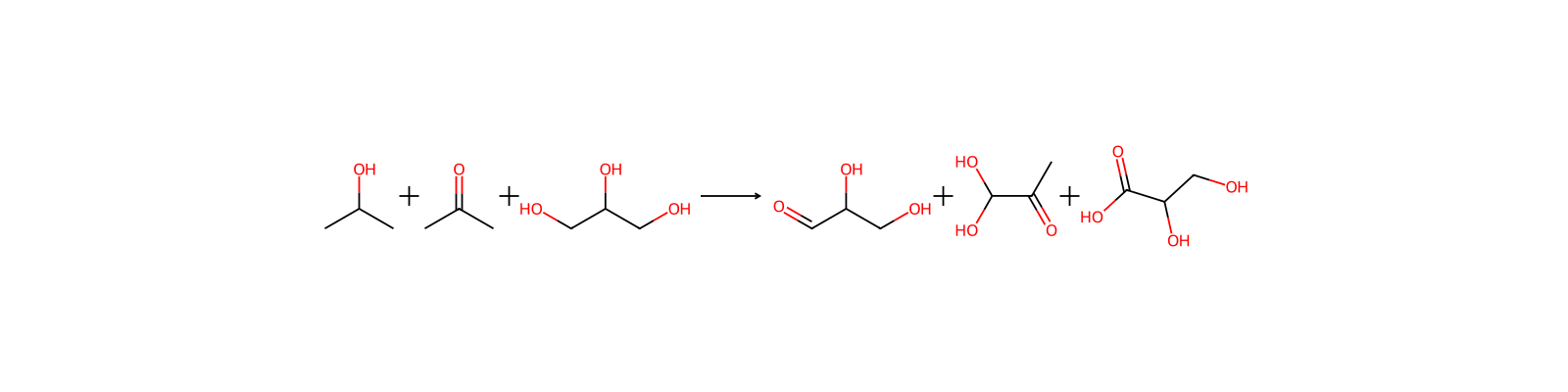
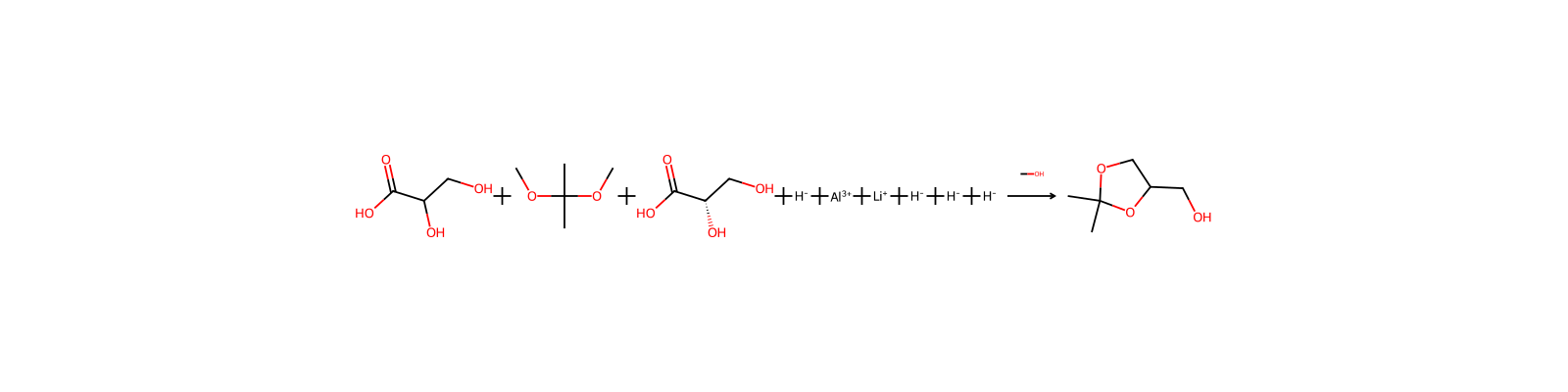
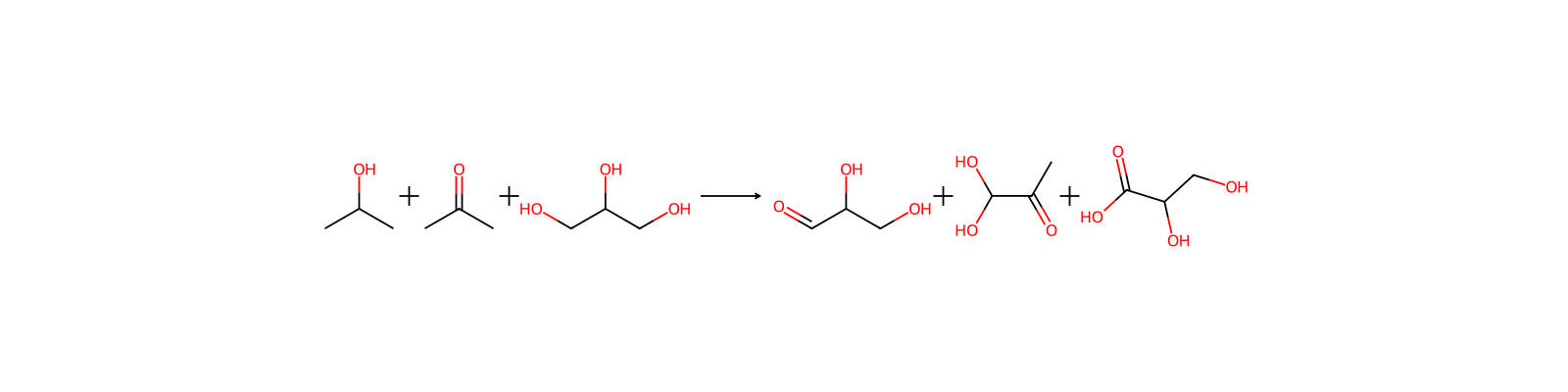
19




Notizen zur Verbindung
Wird geladen…