StartseiteMCPWorkbenchSkills
StartseiteWorkbenchBenachrichtigungenMein Bereich
llms.txt · MCP-AnleitungDatenschutz · Nutzungsbedingungen · Supportv1.8.0
  1. Startseite
  2. /Verbindung

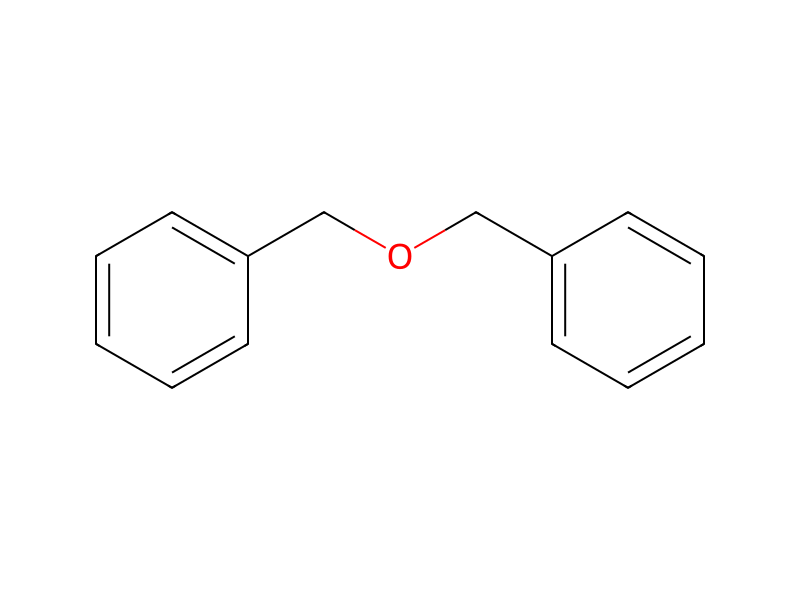
Dibenzylether

Dibenzyl ether

HCID 7657
Neue NotizNeue ReaktionAnfrage stellen
Druckvorschau

Daten werden ergänzt – lade die Seite später neu, um den aktuellen Stand zu sehen
GrundinformationenÜberblickNamen und BezeichnerEigenschaftenSicherheit und RegulatorischesChemie und IndustrieZugehörige ReaktionenNotizen zur Verbindung
TeilstruktursucheÄhnliche Strukturen suchen

Grundinformationen

CAS
103-50-4
Standard-SMILES
c1ccc(COCc2ccccc2)cc1
InChIKey
MHDVGSVTJDSBDK-UHFFFAOYSA-N
Summenformel
C14H14O
Durchschnittliche Molmasse
198,26 g/mol
Monoisotopische Masse
198,10446507

Überblick

Dibenzyl ether is a colorless liquid with a mild odor.

Namen und Bezeichner

Bevorzugter Name
Dibenzyl ether
IUPAC
phenylmethoxymethylbenzene
Lokaler Name
Dibenzylether
Englischer Name
Benzyl ether
Summenformel
C14H14O
Molmasse
198.26

Namen und Synonyme

DIBENZYL ETHERBenzyl ether103-50-4Benzyl oxideDibenzyletherPlastikator BABA (plasticizer)Plasticator BAEther, dibenzylFEMA No. 2371FEMA Number 23711,1-(Oxybis(methylene))bisbenzene
Weitere Namen anzeigen
(Oxybis(Methylene))dibenzeneFEMA 2371benzyloxideibenzyletherDibenzylatherDibenzyl etheplasticatorba
DTXSID5025819Benzene, 1,1'-(oxybis(methylene))bis-Benzene, 1,1'-[oxybis(methylene)]bis-Benzene, 1,1'-oxybis(methylene-2O6CNO27RJDTXCID005819NSC-5931CHEBI:87411

Datenbank-Bezeichner

CAS
103-50-4
PubChem CID
7657
DTXSID
DTXSID5025819
ChEMBL
CHEMBL152299
ChEBI
CHEBI:87411
UNII
2O6CNO27RJ
EC Number
203-118-2
Nikkaji
J1.181I

Eigenschaften

Berechnete StruktureigenschaftenWird ergänzt

XLogP
3,3
Polarare Oberfläche (TPSA)
9,2 Ų
H-Brücken-Donoren
0
H-Brücken-Akzeptoren
1
Frei drehbare Bindungen
4
Schwere Atome
15
Formalladung
0
Komplexität
137

Experimentelle und physikochemische Eigenschaften

Chemical ClassesOther Classes -> Ethers, Other
SpringerMaterials Properties13C nuclear magnetic resonance spectrum
FragrancesFragrance Ingredient (Dibenzyl ether) -> IFRA transparency List
LogP · 2 Einträge

Log Kow = 3.31

3.31

Odor · 2 Einträge

FAINT, ALMOND ODOR

VERY SLIGHT ODOR OF BENZALDEHYDE

TasteMUSHROOM TASTE
Food AdditivesFLAVOR ENHANCER, FLAVORING AGENT OR ADJUVANT -> FDA Substance added to food
Density · 3 Einträge

1.0428 at 68 °F (USCG, 1999) - Denser than water; will sink

0.99735 AT 25 °C/4 °C

1.040-1.045

Flavoring AgentsEU Flavoring substances

Sicherheit und Regulatorisches

Sicherheitsangaben dienen nur zur Orientierung und ersetzen weder das Sicherheitsdatenblatt (SDB) des Lieferanten noch geltende Vorschriften oder eine fachliche Bewertung.

GHS-Klassifizierung

GHS Classification · 6 Einträge

This chemical does not meet GHS hazard criteria for 0.1% (3 of 2222) of reports.

Warning

H317 (65.6%): May cause an allergic skin reaction [Warning Sensitization, Skin]

P261, P264+P265, P272, P273, P280, P302+P352, P305+P351+P338, P321, P333+P317, P337+P317, P362+P364, P391, and P501 (click each P-code to see the statement)

Aggregated GHS information provided per 2222 reports by companies from 16 notifications to the ECHA C&L Inventory. Each notification may be associated with multiple companies.

Warning

Gefahrenhinweise

Regulatory Information · 5 Einträge

Chemical: Benzene, 1,1'-[oxybis(methylene)]bis-

Commission Regulation (EC) No 1565/2000 (Repealed by Com. Implementing Reg. (EU) No 872/2012)

Benzene, 1,1'-[oxybis(methylene)]bis- is listed on the EPA's Chemical Data Reporting (CDR) system. Manufacturers and importers of Benzene, 1,1'-[oxybis(methylene)]bis- are required to report information about their production and use of this chemical to the EPA under the Toxic Substances Control Act (TSCA). (40 eCFR Part 711)

Status: Active Update: 08-09-2022 https://echa.europa.eu/registration-dossier/-/registered-dossier/5180

Benzene, 1,1'-[oxybis(methylene)]bis-: Does not have an individual approval but may be used under an appropriate group standard

Fire HazardsThis chemical is combustible. (NTP, 1992)
Health HazardsInhalation may cause nausea because of disagreeable odor. Contact of liquid with eyes causes mild irritation. Prolonged exposure of skin to liquid causes reddening and irritation. Ingestion produces nausea. (USCG, 1999)
Hazards SummaryInhalation of high concentrations can cause CNS depression; [HSDB] Irritating to the skin; [Hawley] Will not decompose if used and stored according to specifications; [MSDSonline]

Chemie und Industrie

Pharmakologische Informationen

Cellular LocationsMembrane

Verwendung und Herstellung

Uses · 6 Einträge

Used as a plasticizer for nitrocellulose and synthetic rubber, a perfume solvent, a flavoring agent, and in cements; [HSDB]

PLASTICIZER FOR NITROCELLULOSE; SOLVENT IN PERFUMERY

PLASTICIZER FOR SYNTHETIC RUBBER

IT IS USED PARTICULARLY IN CEMENTS BASED ON POLYVINYL ACETATE EMULSIONS...

SYNTHETIC FLAVORING INGREDIENT

For more Uses (Complete) data for DIBENZYL ETHER (11 total), please visit the HSDB record page.

U.S. Production · 3 Einträge

2021: 700 lb

(1979) PROBABLY GREATER THAN 2.27X10+6 GRAMS

(1981) PROBABLY GREATER THAN 2.27X10+6 GRAMS

IFRA Fragrance Standards · 6 Einträge

Dibenzyl ether

Phenylmethoxymethylbenzene; Benzene, 1,1'-[oxybis(methylene)]bis-; Benzyl ether; Benzyl oxide; Dibenzyl oxide; 1,1'-[Oxybis(methylene)]dibenzene

IFRA_STD_027.pdf

49

IFRA 51st Amendment - Guidance for the use of IFRA Standards

Restriction: This material should be used only in the limited quantity as stated in the Standard

Methods of Manufacturing · 2 Einträge

...by reduction of benzaldehyde in presence of (Co(CO)4)2.

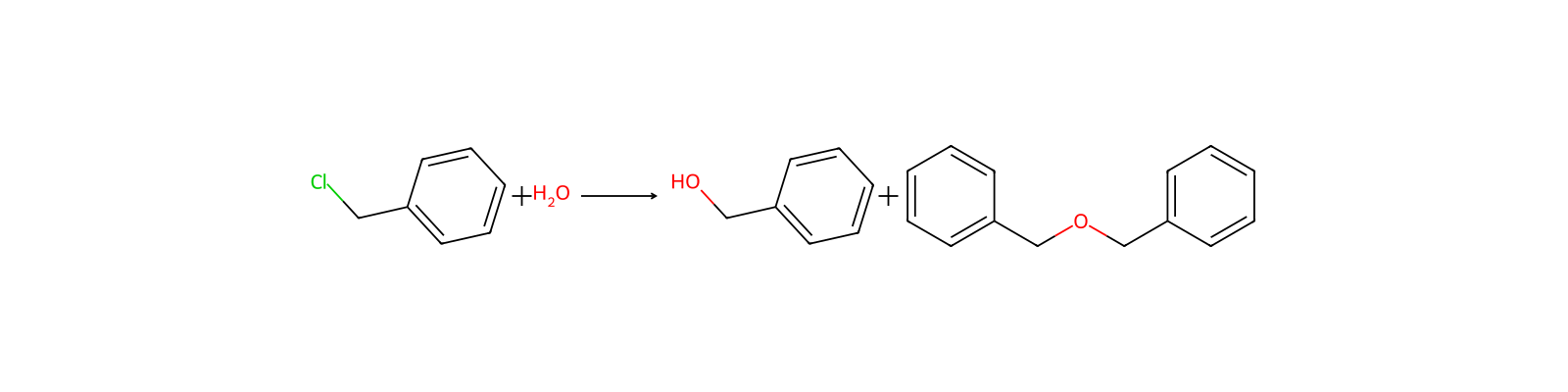
AS BY-PRODUCT IN PREPN OF BENZYL ALCOHOL BY HYDROLYSIS OF BENZYL CHLORIDE; BY USING CONCN CAUSTIC INSTEAD OF CARBONATE, YIELDS CAN BE IMPROVED TO 50% OR HIGHER.

Formulations/PreparationsGRADE: TECHNICAL
Use Classification · 6 Einträge

Fragrance Ingredients

Flavouring Agent -> FLAVOURING_AGENT -> JECFA Functional Classes

Flavoring Agents -> JECFA Flavorings Index

Zugehörige Reaktionen

115
Reaktionsaufzeichnung erstellen
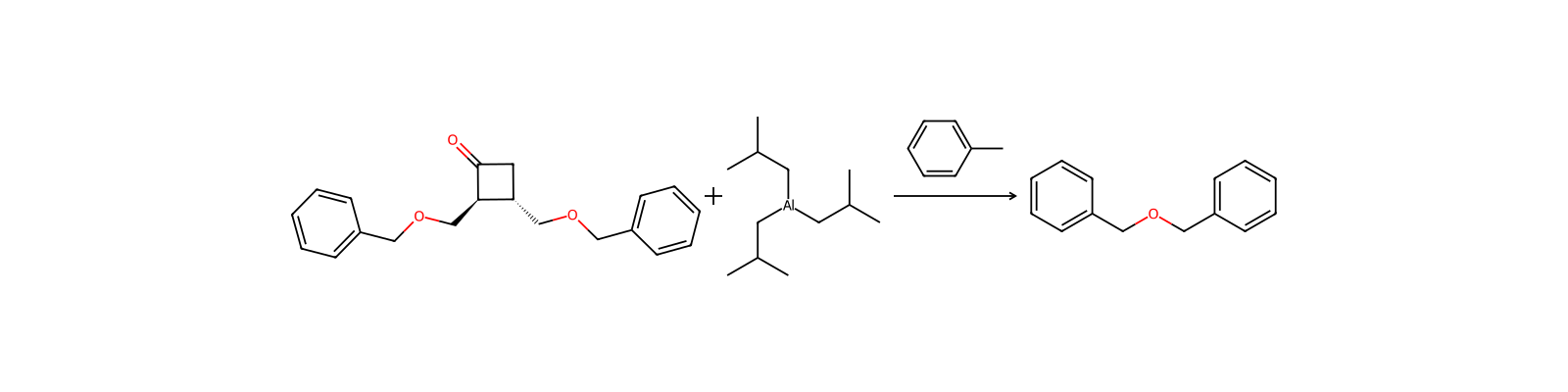
Reaktionsgleichung von HRID 2405
HRID 2405als Produktuspto-grants-1998_03
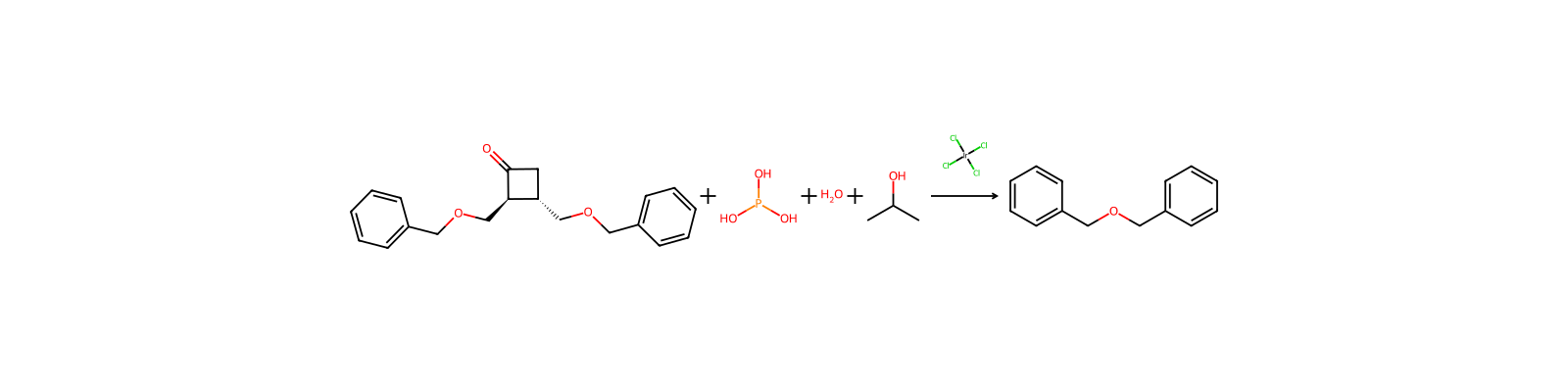
Reaktionsgleichung von HRID 22157
HRID 22157als Produktuspto-grants-1995_06
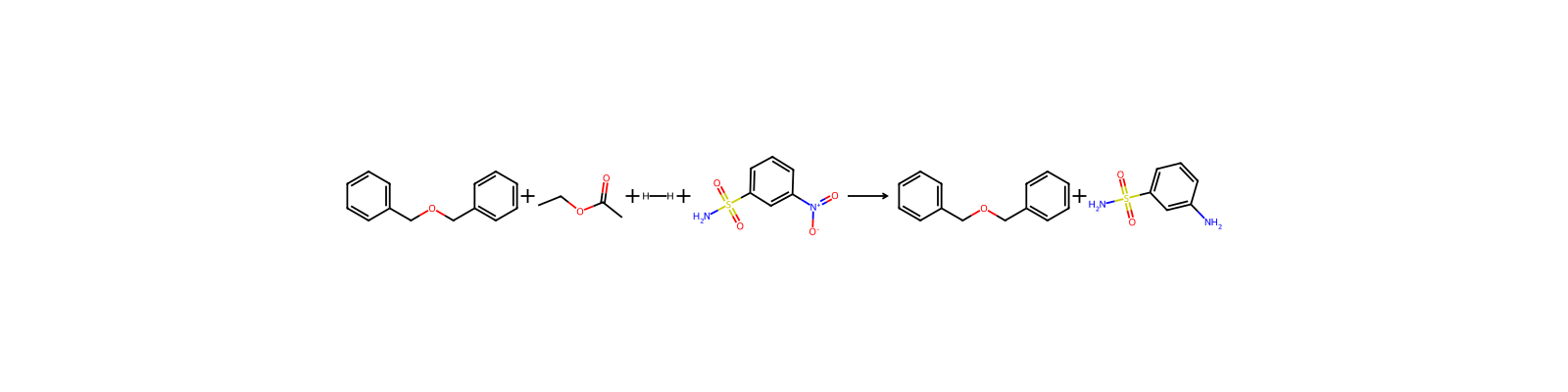
Reaktionsgleichung von HRID 36092
HRID 36092als Produktuspto-grants-1995_05
Reaktionsgleichung von HRID 36093
HRID 36093als Produktuspto-grants-1995_05
Reaktionsgleichung von HRID 36094
HRID 36094als Produktuspto-grants-1995_05
Reaktionsgleichung von HRID 118617
HRID 118617als EduktTraining data from https://doi.org/10.1039/C8SC04228D (2/10)
Reaktionsgleichung von HRID 162144
HRID 162144als EduktTraining data from https://doi.org/10.1039/C8SC04228D (9/10)
Reaktionsgleichung von HRID 176804
HRID 176804als Produktals EduktTraining data from https://doi.org/10.1039/C8SC04228D (6/10)
Seite 1 von 15

Notizen zur Verbindung

Wird geladen…

Auf dieser SeiteGrundinformationenÜberblickNamen und BezeichnerEigenschaftenSicherheit und RegulatorischesChemie und IndustrieZugehörige ReaktionenNotizen zur Verbindung
Weitere Aktionen
Neue NotizNeue ReaktionAnfrage stellen
Viscosity
Liquid viscosity = 8.719X10⁻³ Pa.s @ melting point
Color/Form · 2 Einträge

COLORLESS LIQUID

VERY PALE YELLOW

Solubility · 6 Einträge

less than 1 mg/mL at 70 °F (NTP, 1992)

PRACTICALLY INSOL IN WATER; MISCIBLE WITH ETHANOL, ETHER, CHLOROFORM, ACETONE

Water solubility = 40 mg/L at 35 °C

0.04 mg/mL at 35 °C

Insoluble in water, miscible in oils

soluble (in ethanol)

Physikochemische Eigenschaften

Schmelzpunkt
1.5 · 1.5-3.5 °C(lit.)
Siedepunkt
298 °C · 298 °C(lit.)
Dichte
1.043 g/mL · 1.043 g/mL at 25 °C(lit.)
Dampfdruck
1 Pa · <1 Pa (25 °C)
FEMA
2371 · 2371 | DIBENZYL ETHER
Brechungsindex
20 · n20/D 1.562
Flammpunkt
275 °F · 275 °F
storage temp.
2 · 2-8°C
Löslichkeit
42 mg/l · 42mg/l insoluble
Aggregatzustand
Liquid
Farbe
Clear colorless to pale yellow
Geruch (Odor)
100 % · at 100.00 %. sweet fruity cherry earthy mushroom rose plastic
Geruchsart
earthy
Biologische Quelle
synthetic
Wasserlöslichkeit
insoluble
Merck
14 · 14,1132
JECFA Number
1256 · 1256
BRN
1911156 · 1911156
Henry's Law Constant
1.5 · 1.5×100 mol/(m3Pa) at 25℃, Duchowicz et al. (2020)
Dielectric constant
3.86 · 3.8599999999999999
Stabilität
Stable. Combustible. Incompatible with strong acids, strong oxidizing agents.
Kosmetik-Inhaltsstoffe Funktionen
PERFUMING
InChI
1S/C14H14O/c1-3-7-13(8-4-1)11-15-12-14-9-5-2-6-10-14/h1-10H,11-12H2
InChIKey
MHDVGSVTJDSBDK-UHFFFAOYSA-N
SMILES
C(OCc1ccccc1)c2ccccc2
LogP
3.31 · 3.31
CAS Datenbank
103 · 103-50-4(CAS DataBase Reference)
NIST chemische Informationen
1 · Benzene, 1,1'-[oxybis(methylene)]bis-(103-50-4)
EPA chemische Informationen
Benzyl ether (103-50-4)
FDA Requirements · 1 Eintrag

Dibenzyl ether is a food additive permitted for direct addition to food for human consumption as a synthetic flavoring substance and adjuvant in accordance with the following conditions: 1) the quantity added to food does not exceed the amount reasonably required to accomplish its intended physical, nutritive, or other technical effect in food, and 2) when intended for use in or on food it is of appropriate food grade and is prepared and handled as a food ingredient.

Reactive GroupEthers
Reactivity AlertsPeroxidizable Compound
Reactivity Profile · 1 Eintrag

DIBENZYL ETHER can act as a base to form salts with strong acids and addition complexes with Lewis acids. May react violently with strong oxidizing agents. Burns readily but relatively inert in other reactions, which typically involve the breaking of the carbon-oxygen bond.

Air and Water ReactionsOxidizes readily in air to form unstable peroxides that may explode spontaneously [Bretherick, 1979 p.151-154, 164]. Insoluble in water.
NFPA Hazard Classification · 3 Einträge

0 - Materials that, under emergency conditions, would offer no hazard beyond that of ordinary combustible materials.

1 - Materials that must be preheated before ignition can occur. Materials require considerable preheating, under all ambient temperature conditions, before ignition and combustion can occur.

0 - Materials that in themselves are normally stable, even under fire conditions.

Peroxide Forming Chemical · 4 Einträge

Dibenzyl ether

D: Other compounds that may form peroxides

1 samples had 1 ppm peroxide; age &gt;1 yrs;

Kelly

Hazard Classes and Categories · 5 Einträge

Skin Sens. 1B (65.6%)

Skin Irrit. 2 (100%)

Acute toxicity (Oral) - Category 5

Hazardous to the aquatic environment (Acute) - Category 1

Skin sensitization - Category 1B

Sicherheit und Schutzausrüstung

Fire FightingFire Extinguishing Agents Not to Be Used: Water or foam may cause frothing.
First Aid · 1 Eintrag

EYES: First check the victim for contact lenses and remove if present. Flush victim's eyes with water or normal saline solution for 20 to 30 minutes while simultaneously calling a hospital or poison control center. Do not put any ointments, oils, or medication in the victim's eyes without specific instructions from a physician. IMMEDIATELY transport the victim after flushing eyes to a hospital even if no symptoms (such as redness or irritation) develop.

Nonfire Spill Response · 1 Eintrag

SMALL SPILLS AND LEAKAGE: If you spill this chemical, FIRST REMOVE ALL SOURCES OF IGNITION. Then, use absorbent paper to pick up all liquid spill material. Your contaminated clothing and absorbent paper should be sealed in a vapor-tight plastic bag for eventual disposal. Solvent wash all contaminated surfaces with 60-70% ethanol followed by washing with a soap and water solution. Do not reenter the contaminated area until the Safety Officer (or other responsible person) has verified that the area has been properly cleaned.

Disposal Methods · 1 Eintrag

SRP: At the time of review, criteria for land treatment or burial (sanitary landfill) disposal practices are subject to significant revision. Prior to implementing land disposal of waste residue (including waste sludge), consult with environmental regulatory agencies for guidance on acceptable disposal practices.

Preventive Measures · 2 Einträge

IT WOULD NOT APPEAR THAT DIBENZYL ETHER HAS CAUSED POISONING IN THE FACTORY BUT ITS VOLATILITY...IS RELATIVELY HIGH, & USUAL PROTECTIVE MEASURES MUST BE TAKEN...PROVISION OF GOOD VENTILATION IS MOST IMPORTANT.

SRP: Local exhaust ventilation should be applied wherever there is an incidence of point source emissions or dispersion of regulated contaminants in the work area. Ventilation control of the contaminant as close to its point of generation is both the most economical and safest method to minimize personnel exposure to airborne contaminants.

Personal Protective Equipment (PPE)Goggles or face shield; rubber gloves (USCG, 1999)

Toxikologische Informationen

Environmental Fate · 3 Einträge

TERRESTRIAL FATE: Based on a recommended classification scheme(1), an estimated Koc value of 1500(SRC), determined from an experimental log Kow(2) and a recommended regression-derived equation(3), indicates that dibenzyl ether will have slight mobility in soil(SRC). Volatilization of dibenzyl ether is not expected to occur from moist soils, based on an estimated Henry's Law constant of 8.3X10⁻⁸ atm-cu m/mol(4) or from dry soils based on an experimental vapor pressure of 1.03X10⁻³ mm Hg(5). According to a MITI biodegradation test, biodegradation of dibenzyl ether is not expected to be an important fate process in soil(6). However, another study with seawater and river water indicated biodegradation may be rapid(7).

AQUATIC FATE: An estimated Koc value of 1500(SRC), determined from an experimental log Kow(1) and a recommended regression-derived equation(2), indicates that dibenzyl ether would adsorb to suspended solids and sediment(2,SRC) in the water. Dibenzyl ether will be essentially non-volatile from water surfaces based on an estimated Henry's Law constant of 8.3X10⁻⁸ atm-cu m/mole(SRC), developed using a fragment constant estimation method(3). Experimental BCF values of 171-429 and 187-345(5) suggest that bioconcentrate of dibenzyl ether will be high aquatic organisms(SRC) according to a classification scheme(4). According to a MITI biodegradation test, biodegradation of dibenzyl ether is not expected to be an important fate process in water(5). However, another study with seawater and river water indicated biodegradation may be rapid(6).

ATMOSPHERIC FATE: According to a model of gas/particle partitioning of semivolatile organic compounds in the atmosphere(1), dibenzyl ether, which has an experimental vapor pressure of 1.03X10⁻³ mm Hg at 25 °C(2) will exist as a vapor in the ambient atmosphere. Vapor-phase dibenzyl ether is degraded in the atmosphere by reaction with photochemically produced hydroxyl radicals(SRC); the half-life for this reaction in air is estimated to be about 18 hours(3,SRC).

Adverse EffectsNeurotoxin - Acute solvent syndrome
Soil Adsorption/Mobility · 1 Eintrag

The Koc of dibenzyl ether is estimated as approximately 1500(SRC), using an experimental log Kow of 3.31(1) and a regression-derived equation(2,SRC). According to a recommended classification scheme(3), this estimated Koc value suggests that dibenzyl ether has slight mobility in soil(SRC).

Human Toxicity ExcerptsIRRITANT &.../SRP: CNS DEPRESSANT/ IN HIGH CONCN.
Artificial Pollution Sources · 1 Eintrag

Dibenzyl ether's production and use as a synthetic flavoring ingredient(1), a plasticizer for synthetic rubber(2), a plasticizer for nitrocellulose(3) and a solvent in perfumery(3) may result in its release to the environment through various waste streams(SRC).

Environmental Biodegradation · 1 Eintrag

A two-week biodegradation study using 30 mg/l sludge and a dibenzyl ether concentration of 100 mg/l gave a theoretical BOD of 0%(1). The estimated half-life for dibenzyl ether in Rhine river water (Netherlands) is 0.4 days(2) but this was based upon monitoring data and may include processes other than biodegradation. Biodegradation of dibenzyl ether in river and sea water was 27 and 40%, respectively, after a 3-day cultivation period(3).

Sediment/Soil ConcentrationsSEDIMENT: Dibenzyl ether was identified in the Niagara River watershed (Bloody Run Creek) in sediment at a level of 0.5-2 ppm(1).
Environmental Bioconcentration · 1 Eintrag

An estimated BCF value of 190 was calculated for dibenzyl ether(SRC), using an experimental log Kow of 3.31(1) and a recommended regression-derived equation(2). An 8-week bioconcentration study using carp and dibenzyl ether concentrations of 0.2 mg/l and 0.02 mg/l gave bioconcentration factors of 171-429 and 187-345, respectively(4). According to a classification scheme(3), these experimental BCF values suggest that bioconcentration in aquatic organisms is high(SRC).

Volatilization from Water/Soil · 1 Eintrag

The Henry's Law constant for dibenzyl ether is estimated as 8.3X10⁻⁸ atm-cu m/mole(SRC) using a fragment constant estimation method(1). This value indicates that dibenzyl ether will be essentially nonvolatile from water surfaces(2,SRC). Dibenzyl ether's vapor pressure, 1.03X10⁻³ mm Hg(3) and Henry's Law constant(1,SRC) indicate that volatilization from dry and moist soil may not occur(SRC).

Environmental Abiotic Degradation · 1 Eintrag

The rate constant for the vapor-phase reaction of dibenzyl ether with photochemically produced hydroxyl radicals has been estimated as 2.1X10⁻¹¹ cu cm/molecule-sec at 25 °C(SRC) using a structure estimation method(1,SRC). This corresponds to an atmospheric half-life of about 18 hours at an atmospheric concentration of 5X10+5 hydroxyl radicals per cu cm(1,SRC).

Probable Routes of Human ExposureGeneral and occupational exposure to ethers, such as dibenzyl ether(SRC), can occur through dermal contact, inhalation, and ingestion(1).
Environmental Water Concentrations · 2 Einträge

DRINKING WATER: Dibenzyl ether was qualitatively identified in Japanese tap water(1).

SURFACE WATER: Dibenzyl ether was identified in the Niagara River watershed at 70 ppm in the 102nd Street Bay area and in Bloody Run Creek water at a level of 0.1-1 ppb(1). Dibenzyl ether was also qualitatively identified in the Niagara River(2). Dibenzyl ether was detected in the River Rhine at three different locations in the Netherlands: Lobith, 0.3 ug/l; Maassluis, 0.01 and 0.1 ug/l; and at Gorinchem, 0.03 ug/l(3).

Regulatorische Informationen

FDA Requirements · 1 Eintrag

Dibenzyl ether is a food additive permitted for direct addition to food for human consumption as a synthetic flavoring substance and adjuvant in accordance with the following conditions: 1) the quantity added to food does not exceed the amount reasonably required to accomplish its intended physical, nutritive, or other technical effect in food, and 2) when intended for use in or on food it is of appropriate food grade and is prepared and handled as a food ingredient.

Sicherheitsdaten

F
9
wgk
2
tsca
TSCA listed
ridadr
UN 3082 9/PG 3
hs_code
2909 30 90
RTECS-Nr.
DQ6125000
risk_code
36/37/38-51/53
Toxizität
LD50 orally in Rabbit: 2500 mg/kg
hazard_code
Xi,N
safety_code
23-61
hazard_class
9
packing_group
III
Speicherklasse
10 - Combustible liquids
Giftige Stoffe Daten
103-50-4(Hazardous Substances Data)
Hazard Classifications
Aquatic Acute 1Aquatic Chronic 1Skin Sens. 1B
Selbstentzündungstemperatur
470 °C

Flavouring Agent -> FLAVOURING_AGENT -> JECFA Functional Classes

Flavouring Agent -> FLAVOURING_AGENT -> JECFA Functional Classes

Flavouring Agent -> FLAVOURING_AGENT -> JECFA Functional Classes

General Manufacturing Information · 2 Einträge

Benzene, 1,1'-[oxybis(methylene)]bis-: ACTIVE

IT PLASTICIZES VINYL RESINS, PARTICULARLY POLYVINYL ACETATE, GIVING FLEXIBLE FILMS...

Restriction Limits in the Finished Product (%) · 6 Einträge

4e-05 [Products applied to the lips]

0.0028 [Products applied to the axillae]

0.0002 [Products applied to the face/body using fingertips]

0.012 [Products related to fine fragrances]

0.0023 [Products applied to the body using the hands (palms), primarily leave-on (Body lotion)]

0.00024 [Products applied to the face using the hands (palms), primarily leave-on (Face moisturizer)]

Anwendungen · 1 Eintrag

VerwendenBenzyl ether is used as an effective GFP friendly tissue clearing medium for mouse brains. It is also used in a study to develop a detailed protocol for performing 3D imaging of solvent-cleared organs and its application to various microscopy techniques. It is also employed as a plasticizer for nitrocellulose and synthetic rubber, a solvent in perfumery, and a flavoring agent in chewing gums and baked goods. It can also be used as a plasticizer for nitrocellulose and a solvent in spices.

Darstellung

synthetischeAs a by-product in the preparation of benzyl alcohol by hydrolysis of benzyl chloride; by using a concentrated caustic instead of carbonate, yields can be improved to 50% or higher.

Vor- und nachgelagerte Produkte

Vorgelagerte Rohstoffe

BenzylchloridBenzylalkoholBenzyl chloromethyl etherBenzyl 4-PhenylbutanoateBenzylethyletherTricyclo[3.3.1.13,7]decan-1-olBenzylbromacetatBenzylbenzoat4-PhenylbuttersureBENZYL PROPARGYL ETHER1,1,3,3-Tetramethyl-1,3-diphenyldisiloxanBenzaldehyd

Nachgelagerte Produkte

3-Hydroxy-2-methyl-4-pyron2-Ethyl-3-hydroxy-4H-pyran-4-onDibenzyladipat1-Methylcyclohexa-1,4-dienHexaphenyldisiloxan2,2'-OxybisbutanBenzoylbromid

Ergänzende Hinweise

DefinitionChEBI: Dibenzyl ether is a benzyl ether in which the oxygen atom is connected to two benzyl groups. It has a role as a metabolite.