StartseiteMCPWorkbenchSkills
StartseiteWorkbenchBenachrichtigungenMein Bereich
llms.txt · MCP-AnleitungDatenschutz · Nutzungsbedingungen · Supportv1.8.0
  1. Startseite
  2. /Verbindung

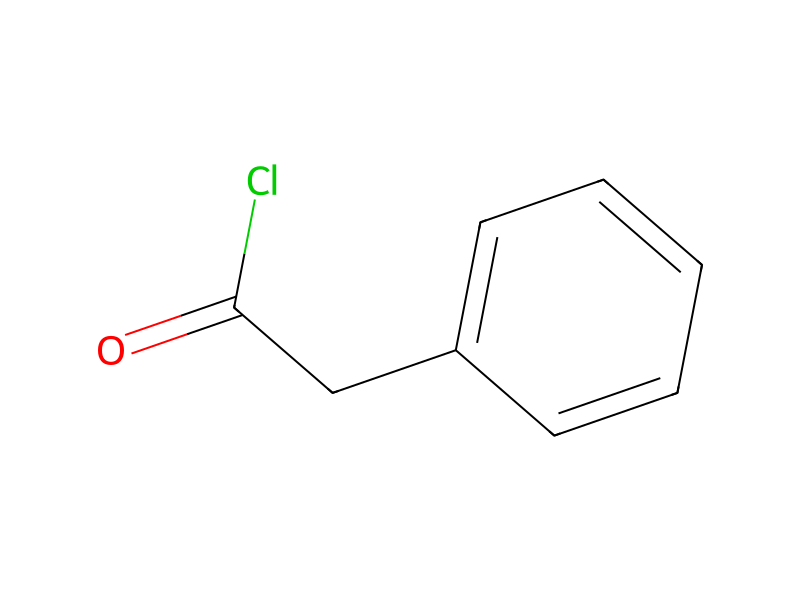
Phenylacetylchlorid

Phenylacetyl chloride
HCID 7679
Neue NotizNeue ReaktionAnfrage stellen
Druckvorschau
GrundinformationenÜberblickNamen und BezeichnerEigenschaftenSicherheit und RegulatorischesChemie und IndustrieZugehörige ReaktionenNotizen zur Verbindung
TeilstruktursucheÄhnliche Strukturen suchen

Grundinformationen

CAS
103-80-0
Standard-SMILES
O=C(Cl)Cc1ccccc1
InChIKey
VMZCDNSFRSVYKQ-UHFFFAOYSA-N
Summenformel
C8H7ClO
Durchschnittliche Molmasse
154,59 g/mol
Monoisotopische Masse
154,01854252

Überblick

Phenylacetyl chloride appears as a colorless volatile liquid with a strong odor. Denser than water. Contact may severely irritate skin, eyes and mucous membranes. May be toxic by ingestion. May also be combustible.

Namen und Bezeichner

Bevorzugter Name
Phenylacetyl chloride
IUPAC
2-phenylacetyl chloride
Lokaler Name
Phenylacetylchlorid
Englischer Name
Phenylacetyl chloride
Summenformel
C8H7ClO
Molmasse
154.59

Namen und Synonyme

PHENYLACETYL CHLORIDEBenzeneacetyl chloride2-phenylacetyl chloridePhenacetyl chloridePhenylacetic acid chlorideAcetyl chloride, phenyl-UN2577PHENYLACETIC CHLORIDEEINECS 203-146-5UNII-T30899DRND.alpha.-Phenylacetyl chlorideCCRIS 8623
Weitere Namen anzeigen
phenylacetyl-Toluylchloride-ToluylchlorideA-TOLUYL CHLORIDEAKOS BBS-00003909ylacetyl chloridePhenyl acetyl chlori
T30899DRNDAI3-23871DTXSID6059281UN 2577UN-2577alpha-Phenylacetyl chloride2Phenylacetyl chlorideCloruro de fenilacetilo

Datenbank-Bezeichner

CAS
103-80-0
PubChem CID
7679
DTXSID
DTXSID6059281
UNII
T30899DRND
EC Number
203-146-5
Nikkaji

Eigenschaften

Berechnete Struktureigenschaften

XLogP
2,4
Polarare Oberfläche (TPSA)
17,1 Ų
H-Brücken-Donoren
0
H-Brücken-Akzeptoren
1
Frei drehbare Bindungen
2
Schwere Atome
10
Formalladung
0
Komplexität
116

Experimentelle und physikochemische Eigenschaften

Chemical Classes · 2 Einträge

Toxic Gases & Vapors -> Acid Halides

Corrosives

SpringerMaterials PropertiesBoiling point
Physical Description · 2 Einträge

Phenylacetyl chloride appears as a colorless volatile liquid with a strong odor. Denser than water. Contact may severely irritate skin, eyes and mucous membranes. May be toxic by ingestion. May also be combustible.

Colorless liquid with a strong odor; [CAMEO] Clear light yellow liquid; [Sigma-Aldrich MSDS]

Physikochemische Eigenschaften

Schmelzpunkt
264 · 264-266 °C(Solv: N,N-dimethylformamide (68-12-2))
Siedepunkt
94 · 94-95 °C/12 mmHg (lit.)
Dichte
1.169 g/mL · 1.169 g/mL at 25 °C (lit.)
Brechungsindex
20 · n20/D 1.5325(lit.)
Flammpunkt
217 °F · 217 °F
storage temp.
2 · 2-8°C

Sicherheit und Regulatorisches

Sicherheitsangaben dienen nur zur Orientierung und ersetzen weder das Sicherheitsdatenblatt (SDB) des Lieferanten noch geltende Vorschriften oder eine fachliche Bewertung.

GHS-Klassifizierung

GHS Classification · 4 Einträge

Danger

H314 (100%): Causes severe skin burns and eye damage [Danger Skin corrosion/irritation]

P260, P261, P264, P271, P280, P301+P330+P331, P302+P361+P354, P304+P340, P305+P354+P338, P316, P319, P321, P363, P403+P233, P405, and P501 (click each P-code to see the statement)

Aggregated GHS information provided per 65 reports by companies from 7 notifications to the ECHA C&L Inventory. Each notification may be associated with multiple companies.

Gefahrenhinweise

Regulatory Information · 4 Einträge

Chemical: Benzeneacetyl chloride

Status: Active Update: 05-02-2021 https://echa.europa.eu/registration-dossier/-/registered-dossier/20430

Phenylacetyl chloride: Does not have an individual approval but may be used under an appropriate group standard

The New Jersey Worker and Community Right to Know Act requires public and private employers to provide information about hazardous substances at their workplaces. (N.J.S.A. 34:5A-1 et. seq.)

Other Safety InformationIMAP assessments - Benzeneacetyl chloride: Human health tier I assessment
DOT LabelCorrosive
Fire Hazards · 2 Einträge

Excerpt from ERG Guide 156 [Substances - Toxic and/or Corrosive (Combustible / Water-Sensitive)]:

· Combustible material: may burn but does not ignite readily.

Health Hazards · 2 Einträge

Excerpt from ERG Guide 156 [Substances - Toxic and/or Corrosive (Combustible / Water-Sensitive)]:

· TOXIC and/or CORROSIVE; inhalation, ingestion or contact (skin, eyes) with vapors, dusts or substance may cause severe injury, burns or death.

Chemie und Industrie

Verwendung und Herstellung

UsesUsed in laboratories and to make esters for flavorings; [REPROTOX]
General Manufacturing InformationBenzeneacetyl chloride: ACTIVE
Anwendungen · 1 Eintrag

VerwendenPhenylacetyl chloride is used in the preparation of 1,2-diphenyl-ethanone by reaction with iodobenzene using tetrabutylammonium tetrafluoroborate as a phase transfer catalyst. It is widely used in the chemical industry for manufacturing dyes and pharmaceutical products. It plays an important role in the preparation of penicillin. Further, it is used to prepare esters for flavorings.

Vor- und nachgelagerte Produkte

Vorgelagerte Rohstoffe

SchwefeldioxidChlorThionyldichloridPhenylessigsure

Nachgelagerte Produkte

1-Chloro-3-PhenylacetoneGeranylphenylacetat4-Hydroxy-3-(3-(4'-brom-4-biphenylyl)-1,2,3,4-tetrahydro-1-naphthyl)cumarin6-Benzyl-2-thiouracilDiethyl(phenylacetyl)malonateBenalaxyl

Zugehörige Reaktionen

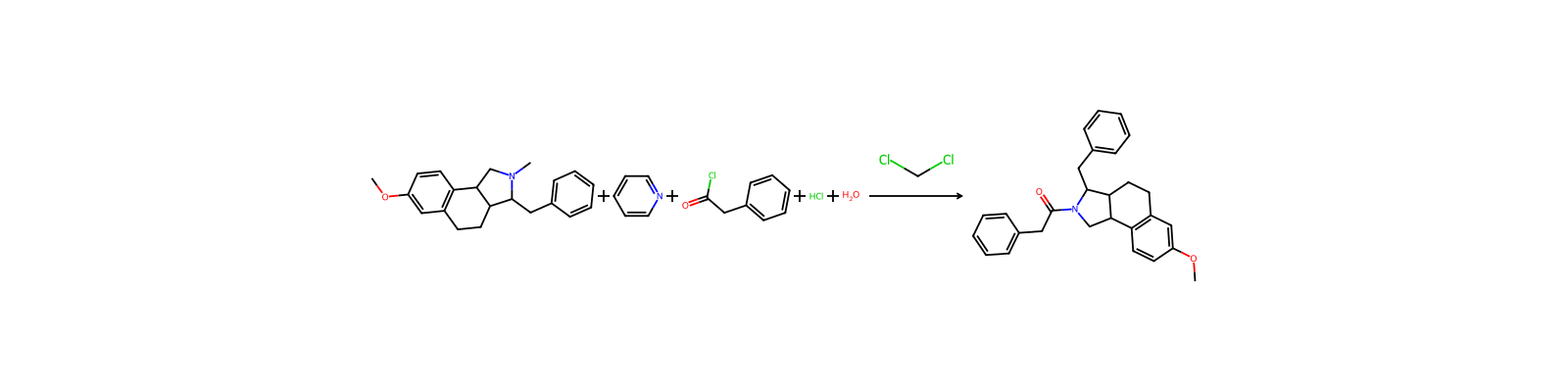
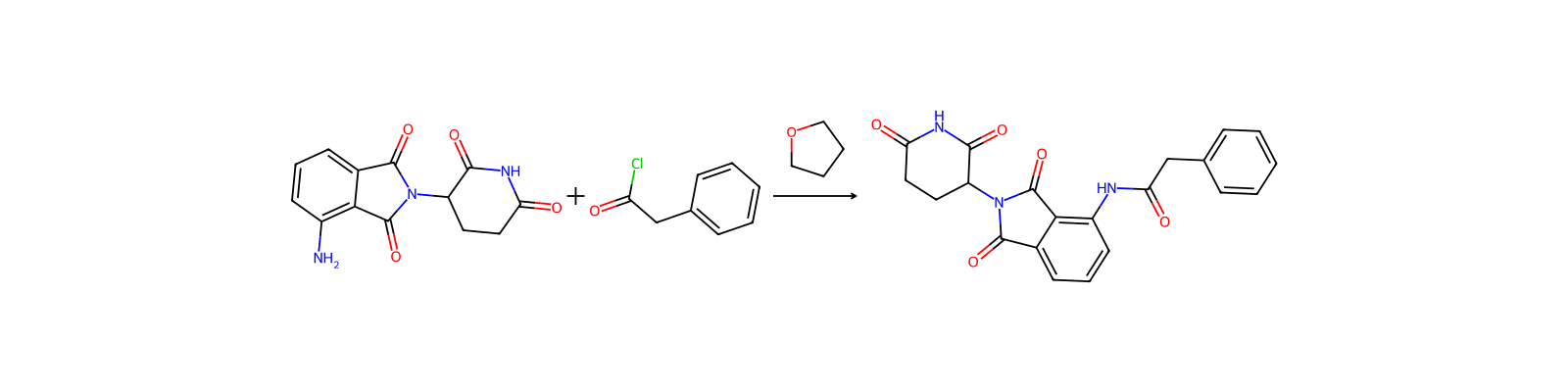
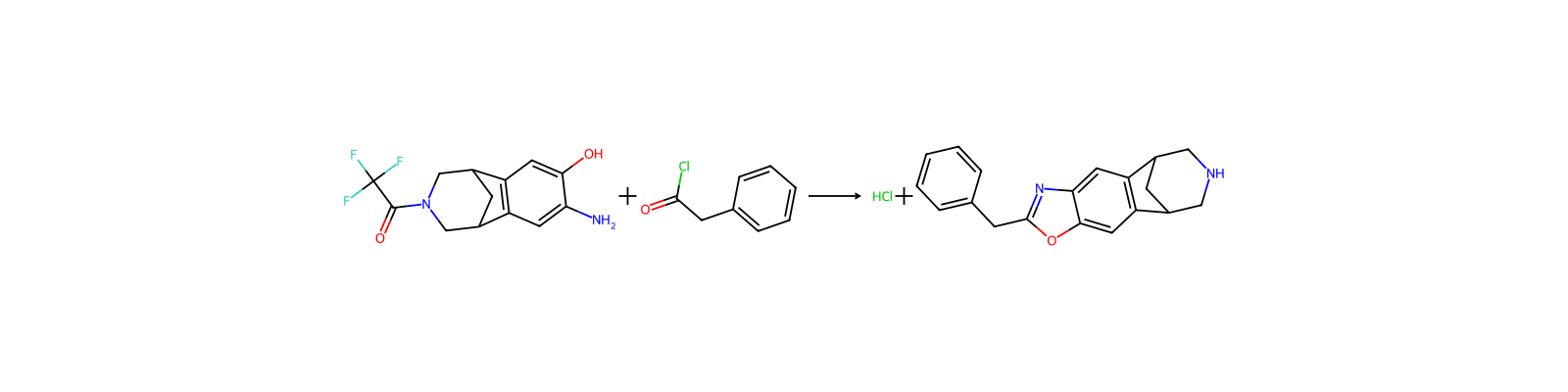
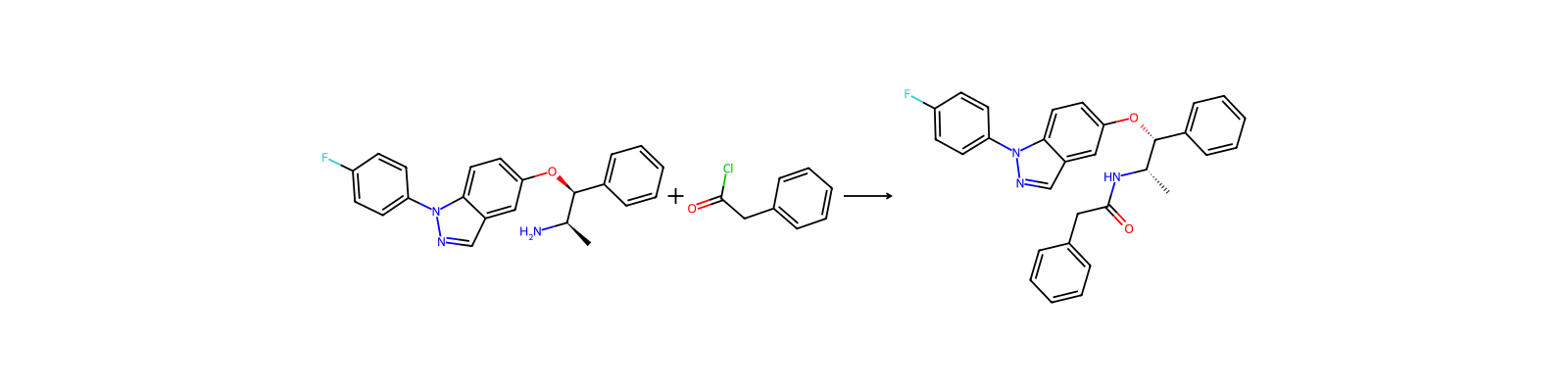
1.139
Reaktionsaufzeichnung erstellen
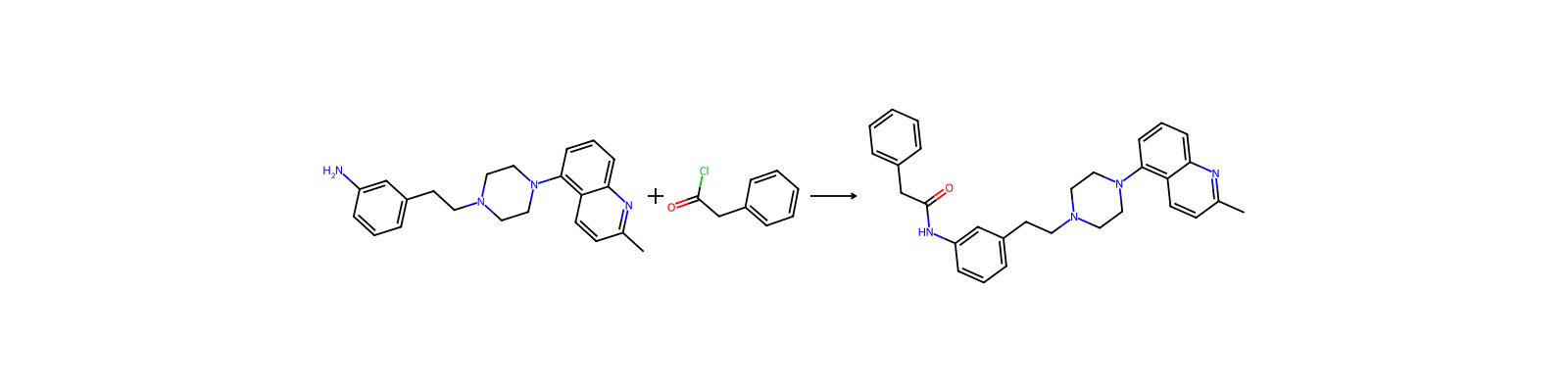
Reaktionsgleichung von HRID 2989
HRID 2989als Eduktuspto-grants-1998_03
Reaktionsgleichung von HRID 6388
HRID 6388als Eduktuspto-grants-1993_09
Reaktionsgleichung von HRID 6441
HRID 6441als Eduktuspto-grants-1993_09
Reaktionsgleichung von HRID 9985
HRID 9985als Eduktuspto-grants-2006_08
Reaktionsgleichung von HRID 10017
HRID 10017als Eduktuspto-grants-2006_08
Reaktionsgleichung von HRID 10107
HRID 10107als Eduktuspto-grants-2006_08
Reaktionsgleichung von HRID 13037
HRID 13037als Eduktuspto-grants-2010_06
Reaktionsgleichung von HRID 15791
HRID 15791als Eduktuspto-grants-2010_06
Seite 1 von 143

Notizen zur Verbindung

Wird geladen…

Auf dieser SeiteGrundinformationenÜberblickNamen und BezeichnerEigenschaftenSicherheit und RegulatorischesChemie und IndustrieZugehörige ReaktionenNotizen zur Verbindung
Weitere Aktionen
Neue NotizNeue ReaktionAnfrage stellen
J5.021K
Löslichkeit
Miscible with alcohol and ether.
Aggregatzustand
clear liquid
Farbe
Colorless to Light yellow
BRN
742254 · 742254
Stabilität
Stable. Reacts with water. Incompatible with amines, most common metals, moisture, strong oxidizing agents.
InChI
1S/C8H7ClO/c9-8(10)6-7-4-2-1-3-5-7/h1-5H,6H2
InChIKey
VMZCDNSFRSVYKQ-UHFFFAOYSA-N
SMILES
ClC(=O)Cc1ccccc1
LogP
1.628 · 1.628 (est)
CAS Datenbank
103 · 103-80-0(CAS DataBase Reference)
NIST chemische Informationen
Benzeneacetyl chloride(103-80-0)
EPA chemische Informationen
Benzeneacetyl chloride (103-80-0)
Hazards Summary · 1 Eintrag

Fumes in air; Decomposed by water evolving hydrogen chloride gas; May cause severe skin, eye, and mucous membrane irritation; [CAMEO] Causes burns; Inhalation may cause corrosive injuries to upper respiratory tract and lungs; [Sigma-Aldrich MSDS] See Acetyl chloride.

DOT ID and Guide2577 156
Reactive GroupAcyl Halides, Sulfonyl Halides, and Chloroformates
Reactivity AlertsWater-Reactive
Reactivity Profile · 1 Eintrag

PHENYLACETYL CHLORIDE is incompatible with strong oxidizing agents, alcohols, bases (including amines). May react vigorously or explosively if mixed with diisopropyl ether or other ethers in the presence of trace amounts of metal salts [J. Haz. Mat., 1981, 4, 291].

DOT Hazard Classification · 4 Einträge

Phenylacetyl chloride

UN2577

Class 8 Corrosive material (49 eCFR § 173.136)

PG II: the degree of danger presented by the material is medium

Air and Water ReactionsSoluble in water. Fumes in air. Decomposes in water or steam to form very corrosive hydrogen chloride gas.

Sicherheit und Schutzausrüstung

Fire FightingExcerpt from ERG Guide 156 [Substances - Toxic and/or Corrosive (Combustible / Water-Sensitive)]:
Accidental Release Measures · 2 Einträge

· CALL 911. Then call emergency response telephone number on shipping paper. If shipping paper not available or no answer, refer to appropriate telephone number listed on the inside back cover.

· ELIMINATE all ignition sources (no smoking, flares, sparks or flames) from immediate area.

First Aid · 2 Einträge

Excerpt from ERG Guide 156 [Substances - Toxic and/or Corrosive (Combustible / Water-Sensitive)]:

General First Aid:

Exposure Control and Personal Protection· Wear positive pressure self-contained breathing apparatus (SCBA).
Nonfire Spill ResponseExcerpt from ERG Guide 156 [Substances - Toxic and/or Corrosive (Combustible / Water-Sensitive)]:
Isolation and Evacuation · 2 Einträge

Excerpt from ERG Guide 156 [Substances - Toxic and/or Corrosive (Combustible / Water-Sensitive)]:

Immediate precautionary measure

Personal Protective Equipment (PPE)Excerpt from ERG Guide 156 [Substances - Toxic and/or Corrosive (Combustible / Water-Sensitive)]:
Emergency Response Planning Guidelines· Note: Most foams will react with the material and release corrosive/toxic gases.

Toxikologische Informationen

Adverse EffectsDermatotoxin - Skin burns.

Sicherheitsdaten

F
21
wgk
3
tsca
TSCA listed
ridadr
UN 2577
hs_code
29163900
risk_code
34-37-14
hazard_code
C
safety_code
26-36/37/39-45-25-27
hazard_class
8
packing_group
II
Speicherklasse
8A - Combustible corrosive hazardous materials
Hazard Classifications
Eye Dam. 1Met. Corr. 1Skin Corr. 1BSTOT SE 3
Lorcainide
Desoxybenzoin
1,3-Diphenylaceton
5-Methyl-7-methoxyisoflavone
(R)-(-)-2-Phenylbutyric acid
N,N-Diethylphenylacetamid
3-Phenyl-1,1,1-trifluoropropan-2-one
N2-Phenylacetyl guanosine
3-Oxo-4-phenyl-butyric acid methyl ester
2,2,2-Trichloro-1-[4-(2-phenylacetyl)-1H-pyrrol-2-yl]-1-ethanone