
Benzyldimethylamin
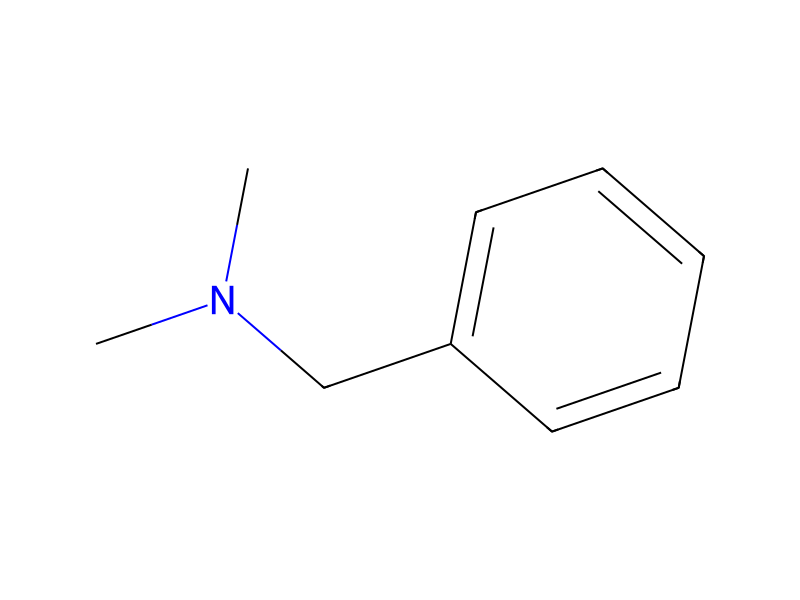
N,N-Dimethylbenzylamine
Daten werden ergänzt – lade die Seite später neu, um den aktuellen Stand zu sehen
Grundinformationen
- CAS
103-83-3- Standard-SMILES
CN(C)Cc1ccccc1- InChIKey
XXBDWLFCJWSEKW-UHFFFAOYSA-N- Summenformel
- C9H13N
- Durchschnittliche Molmasse
- 135,21 g/mol
- Monoisotopische Masse
- 135,10479942
Überblick
Benzyldimethylamine appears as a colorless to light yellow liquid with an aromatic odor. Slightly less dense than water and slightly soluble in water. Corrosive to skin, eyes and mucous membranes. Slightly toxic by ingestion, skin absorption and inhalation. Used in the manufacture of adhesives and other chemicals.
Namen und Bezeichner
- Bevorzugter Name
- N,N-Dimethylbenzylamine
- IUPAC
- N,N-dimethyl-1-phenylmethanamine
- Lokaler Name
- Benzyldimethylamin
- Englischer Name
- N,N-Dimethylbenzylamine
- Summenformel
- C9H13N
- Molmasse
- 135.21
Namen und Synonyme
N,N-DIMETHYLBENZYLAMINE103-83-3BenzyldimethylamineN-BenzyldimethylamineBDMABenzenemethanamine, N,N-dimethyl-Benzyl-N,N-dimethylamineN,N-DimethylbenzenemethanamineBenzylamine, N,N-dimethyl-N-(Phenylmethyl)dimethylamineAraldite accelerator 062N,N-Dimethyl-N-benzylamine
Weitere Namen anzeigen
N,N-DiMethyl-1-phenylMethanaMineN,N-DIETHYLBENZYLAMINEDabco BDMAN,N-Dimethyl(phenyl)methanamineBENZYLDIETHYLAMINEN-BENZYLDIETHYLAMINEN-Dimethylbenzylamine
Sumine 2015N-Benzyl-N,N-dimethylamineDTXSID8021854TYP7AXQ1YJNSC-5342DTXCID801854RefChem:822589203-149-1
Datenbank-Bezeichner
- CAS
103-83-3、28262-13-7
Eigenschaften
Berechnete StruktureigenschaftenWird ergänzt
- XLogP
- 2
- Polarare Oberfläche (TPSA)
- 3,2 Ų
- H-Brücken-Donoren
- 0
- H-Brücken-Akzeptoren
- 1
- Frei drehbare Bindungen
- 2
- Schwere Atome
- 10
- Formalladung
- 0
- Komplexität
- 82,7
Experimentelle und physikochemische Eigenschaften
Chemical Classes
Nitrogen Compounds -> Amines, Aromatic
Corrosives
SpringerMaterials Properties15N nuclear magnetic resonance spectrum
LogP
1.91
1.91
Density
0.915 at 50 °F (USCG, 1999) - Less dense than water; will float
Relative density (water = 1): 0.9
0.915 @ 10°C
SolubilitySolubility in water, g/100ml: 1.2 (moderate)
Flash Point
140 °F
57 °C o.c.
Boiling Point
357.8 °F at 760 mmHg (USCG, 1999)
180 °C
181 °C @760 [mm Hg]
Melting Point
-103 °F (USCG, 1999)
-75 °C
Sicherheit und Regulatorisches
Sicherheitsangaben dienen nur zur Orientierung und ersetzen weder das Sicherheitsdatenblatt (SDB) des Lieferanten noch geltende Vorschriften oder eine fachliche Bewertung.
GHS-Klassifizierung
GHS Classification
Danger
H226: Flammable liquid and vapor [Warning Flammable liquids]
P210, P233, P240, P241, P242, P243, P260, P261, P264, P270, P271, P273, P280, P301+P317, P301+P330+P331, P302+P352, P302+P361+P354, P303+P361+P353, P304+P340, P305+P354+P338, P316, P317, P321, P330, P362+P364, P363, P370+P378, P403+P235, P405, and P501 (click each P-code to see the statement)
This chemical does not meet GHS hazard criteria for 0.1% (1 of 850) of reports.
Danger
H226 (99.8%): Flammable liquid and vapor [Warning Flammable liquids]
Gefahrenhinweise
Regulatory Information
Chemical: Benzenemethanamine, N,N-dimethyl-
Benzenemethanamine, N,N-dimethyl- is listed on the EPA's Chemical Data Reporting (CDR) system. Manufacturers and importers of Benzenemethanamine, N,N-dimethyl- are required to report information about their production and use of this chemical to the EPA under the Toxic Substances Control Act (TSCA). (40 eCFR Part 711)
REACH registered substance: Benzyldimethylamine (EC: 203-149-1)
Benzyldimethylamine: Does not have an individual approval but may be used under an appropriate group standard
The New Jersey Worker and Community Right to Know Act requires public and private employers to provide information about hazardous substances at their workplaces. (N.J.S.A. 34:5A-1 et. seq.)
Other Safety InformationEvaluation - Chemicals that are unlikely to require further regulation to manage risks to human health
DOT LabelCorrosive Flammable Liquid
Fire Hazards
Special Hazards of Combustion Products: Toxic vapors are generated when heated. (USCG, 1999)
· Flammable/combustible material.
Chemie und Industrie
Verwendung und Herstellung
Uses
Used as a curing agent for epoxy resins; [Kanerva, p. 566] Used to manufacture adhesives and other chemicals; [CAMEO]
Plastic Composites Manufacturing [Category: Industry]
U.S. Production2023: 700,000 - <850,000 lb
Consumer UsesCatalyst
Industry UsesCatalyst
Household ProductsInformation on 1 consumer products that contain Benzyldimethylamine in the following categories is provided:
General Manufacturing Information
Miscellaneous Manufacturing
Benzenemethanamine, N,N-dimethyl-: ACTIVE
Anwendungen
BeschreibungDas N,N-Dimethylbenzylamin bildet eine farblose, wasserunlösliche Flüssigkeit mit charakteristischem Geruch. Die Verbindung besitzt nur wissenschaftliches Interesse.
VerwendenN,N-Dimethylbenzylamine was used in the synthesis of bis[(N,N-dimethylamino)benzyl] selenide. It has been used as catalyst during curing reaction of formulations of diglycidyl ether of bisphenol A and tetrahydrophthalic anhydride. It undergoes directed ortho metalation with butyl lithium. It reacts with methyl iodide to get ammonium salt, which is used as phase transfer catalysts. Further, it is used as a catalyst for the formation of polyurethane foams and epoxy resins.
Darstellung
synthetische25% Aqueous Dimethylamine, 1088 grams Benzyl Chloride, 126.6 grams In the apparatus of Example 1, the benzyl chloride was added dropwise over a two-hour period to the amine (molar ratio 1 to 6) at a rate sufficient to maintain the temperature below 40°C. Stirring was continued at room temperature for an additional hour to insure completion of the reaction denoted by the equation below. Thereafter the reaction mixture was cooled in a separatory funnel while standing in a refrigerator maintained at 5° C. and separated into two layers. The upper oily layer, weighing 111.5g, was removed and steam distilled until no further oleaginous component was observed in the distillate as it came over. The crude distillate was found to contain 103.5g of N,N-dimethylbenzylamine (76.1% of theory), 3.3g of dimethylamine and no quaternary salts. The dimethylamine was distilled off below 29°C under atmospheric pressure from the N,N-dimethylbenzylamine (bp 82°C/18mmHg).
Zugehörige Reaktionen
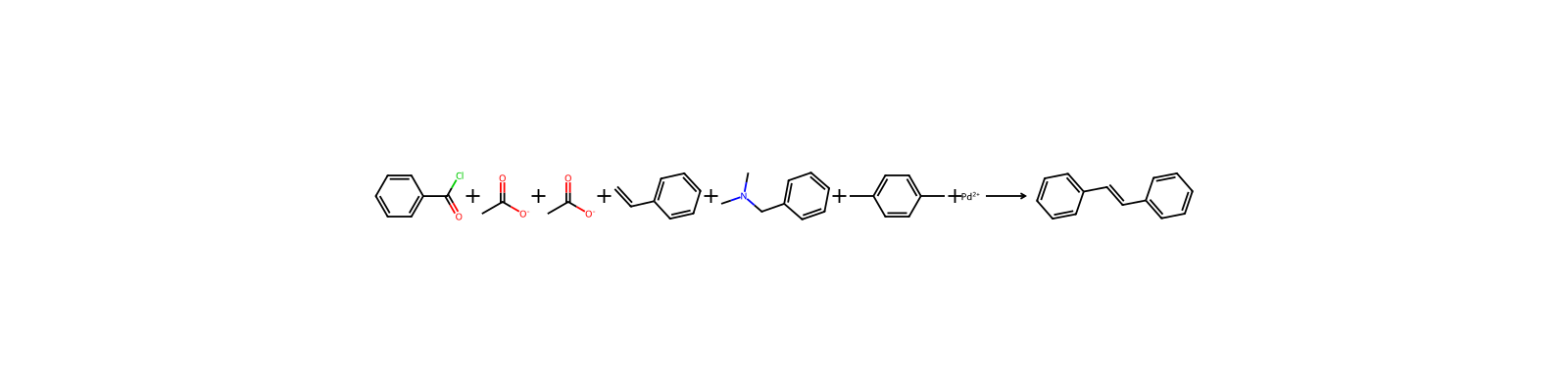
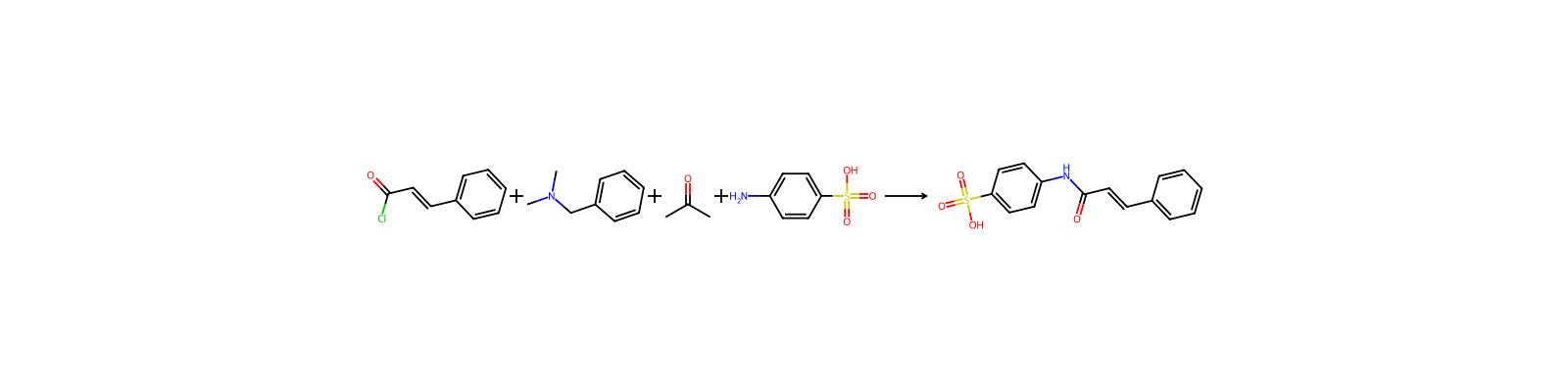
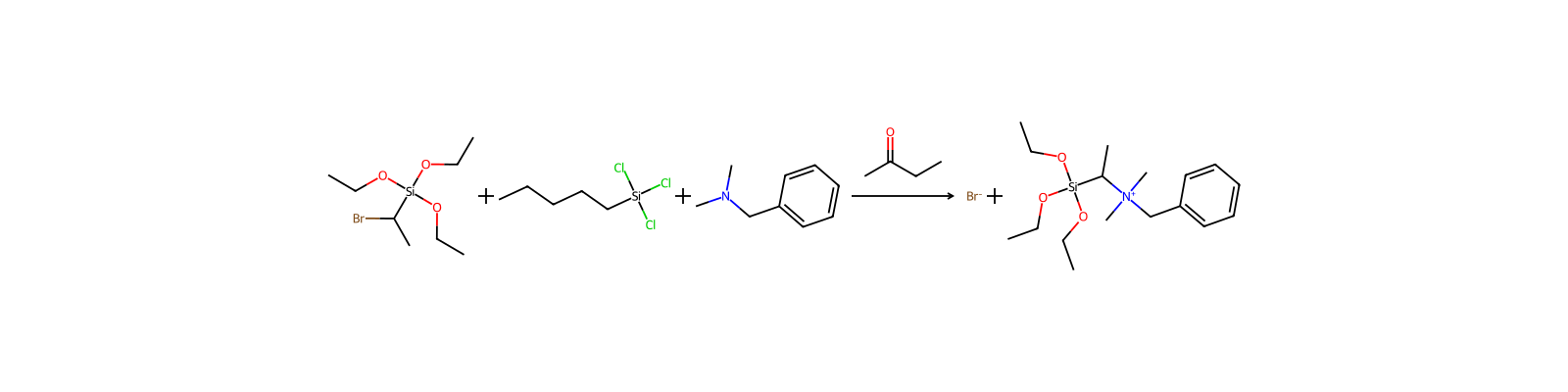
88


Notizen zur Verbindung
Wird geladen…