StartseiteMCPWorkbenchSkills
StartseiteWorkbenchBenachrichtigungenMein Bereich
llms.txt · MCP-AnleitungDatenschutz · Nutzungsbedingungen · Supportv1.8.0
  1. Startseite
  2. /Verbindung

Buttersureanhydrid

Butyric anhydride

HCID 7798
Neue NotizNeue ReaktionAnfrage stellen
Druckvorschau

Daten werden ergänzt – lade die Seite später neu, um den aktuellen Stand zu sehen
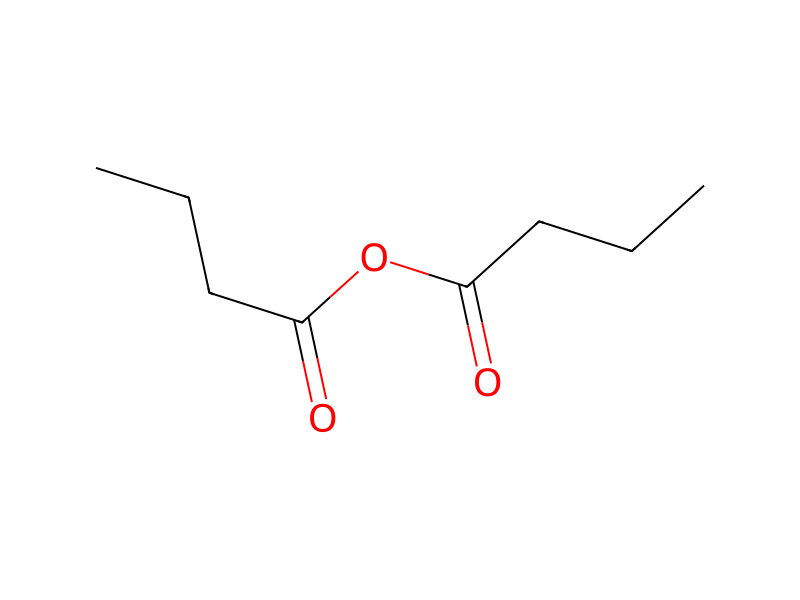
GrundinformationenÜberblickNamen und BezeichnerEigenschaftenSicherheit und RegulatorischesChemie und IndustrieZugehörige ReaktionenNotizen zur Verbindung
TeilstruktursucheÄhnliche Strukturen suchen

Grundinformationen

CAS
106-31-0
Standard-SMILES
CCCC(=O)OC(=O)CCC
InChIKey
YHASWHZGWUONAO-UHFFFAOYSA-N
Summenformel
C8H14O3
Durchschnittliche Molmasse
158,19 g/mol
Monoisotopische Masse
158,09429431

Überblick

Butyric anhydride is a water-white liquid with an odor of rancid butter. Corrosive to metals and tissue. Low toxicity.

Namen und Bezeichner

Bevorzugter Name
Butyric anhydride
IUPAC
butanoyl butanoate
Lokaler Name
Buttersureanhydrid
Englischer Name
Butyric anhydride
Summenformel
C8H14O3
Molmasse
158.2

Namen und Synonyme

BUTYRIC ANHYDRIDEn-Butyric anhydrideButanoic anhydridebutanoyl butanoateButanoic acid, anhydrideButyric acid anhydrideButyryl oxiden-Butyric acid anhydrideButyranhydridButyric anhydride NButyranhydrid [Czech]Caswell No. 132A
Weitere Namen anzeigen
butyricButyrloxidebutric anhydridebutylic anhydrideAKOS BBS-00004317
Anhydrid kyseliny maselnen-Butanoic anhydrideButanoic acid, 1,1'-anhydrideDTXSID8026729HSDB 5369Anhydrid kyseliny maselne [Czech]EINECS 203-383-4UNII-A88LE742VX

Datenbank-Bezeichner

CAS
106-31-0
PubChem CID
7798
DTXSID
DTXSID8026729
ChEMBL
CHEMBL1566369
UNII
A88LE742VX
EC Number
203-383-4
Nikkaji
J5.050D

Eigenschaften

Berechnete StruktureigenschaftenWird ergänzt

XLogP
1,6
Polarare Oberfläche (TPSA)
43,4 Ų
H-Brücken-Donoren
0
H-Brücken-Akzeptoren
3
Frei drehbare Bindungen
6
Schwere Atome
11
Formalladung
0
Komplexität
124

Experimentelle und physikochemische Eigenschaften

Chemical Classes · 2 Einträge

Other Classes -> Acid Anhydrides, Other

Corrosives

SpringerMaterials PropertiesBoiling point
LogPlog Kow = 1.39 /estimated; value theoretical due to hydrolysis in water/
OdorPUNGENT ODOR
Density0.9668 at 20 °C/4 °C
Viscosity1.59 cP at 20 °C
Color/FormWater-white liquid
SolubilitySoluble in water and alcohol with decomposition; soluble in ether
Flash Point · 2 Einträge

180 °F (NFPA, 2010)

180 °F (54 °C) (closed cup)

Boiling Point200 °C

Sicherheit und Regulatorisches

Sicherheitsangaben dienen nur zur Orientierung und ersetzen weder das Sicherheitsdatenblatt (SDB) des Lieferanten noch geltende Vorschriften oder eine fachliche Bewertung.

GHS-Klassifizierung

GHS Classification · 6 Einträge

This chemical does not meet GHS hazard criteria for 4.8% (21 of 437) of reports.

Danger

H302 (63.4%): Harmful if swallowed [Warning Acute toxicity, oral]

P260, P264, P264+P265, P270, P280, P301+P317, P301+P330+P331, P302+P361+P354, P304+P340, P305+P354+P338, P316, P317, P321, P330, P363, P405, and P501 (click each P-code to see the statement)

Aggregated GHS information provided per 437 reports by companies from 10 notifications to the ECHA C&L Inventory. Each notification may be associated with multiple companies.

Danger

Gefahrenhinweise

Regulatory Information · 5 Einträge

Chemical: Butanoic acid, anhydride

Butanoic acid, 1,1'-anhydride is listed on the EPA's Chemical Data Reporting (CDR) system. Manufacturers and importers of Butanoic acid, 1,1'-anhydride are required to report information about their production and use of this chemical to the EPA under the Toxic Substances Control Act (TSCA). (40 eCFR Part 711)

Status: Active Update: 01-08-2022 https://echa.europa.eu/registration-dossier/-/registered-dossier/12002

Butyric anhydride: Does not have an individual approval but may be used under an appropriate group standard

The New Jersey Worker and Community Right to Know Act requires public and private employers to provide information about hazardous substances at their workplaces. (N.J.S.A. 34:5A-1 et. seq.)

DOT LabelCorrosive
Fire Hazards · 2 Einträge

Excerpt from ERG Guide 156 [Substances - Toxic and/or Corrosive (Combustible / Water-Sensitive)]:

· Combustible material: may burn but does not ignite readily.

Health Hazards · 2 Einträge

Excerpt from ERG Guide 156 [Substances - Toxic and/or Corrosive (Combustible / Water-Sensitive)]:

Chemie und Industrie

Verwendung und Herstellung

Uses · 6 Einträge

Used to make drugs, tanning agents, and other organic chemicals; [HSDB]

Manufacture of butyrates, drugs, and tanning agents.

CHEM INT FOR CELLULOSE ACETATE BUTYRATE RESINS

CHEM INT FOR FLAVORING AGENTS, EG, ISOPENTYL BUTYRATE

CHEM INT FOR PERFUMES, EG, GERANYL BUTYRATE

CHEM INT FOR SODIUM TYROPANOATE (ORAL CHOLECYSTOGRAPHIC)

U.S. Exports · 2 Einträge

(1979) No Data

(1981) No Data

U.S. Imports · 2 Einträge

(1979) No Data

(1981) No Data

U.S. Production · 6 Einträge

2023: 150,000,000 - <500,000,000 lb

(1979) PROBABLY GREATER THAN 2.27X10+6 GRAMS

(1981) PROBABLY GREATER THAN 2.27X10+6 GRAMS

Butanoic acid, anhydride is listed as a High Production Volume (HPV) chemical (65FR81686). Chemicals listed as HPV were produced in or imported into the U.S. in >1 million pounds in 1990 and/or 1994. The HPV list is based on the 1990 Inventory Update Rule. (IUR) (40 CFR part 710 subpart B; 51FR21438).

Production volumes for non-confidential chemicals reported under the Inventory Update Rule. [Table#5379]

Production volume for non-confidential chemicals reported under the 2006 Inventory Update Rule. Chemical: Butanoic acid, 1,1'-anhydride. Aggregated National Production Volume: 100 to < 500 million pounds.

Consumer UsesNot Known or Reasonably Ascertainable
Industry UsesNot Known or Reasonably Ascertainable
Methods of Manufacturing · 2 Einträge

Manufactured by catalytic hydrogenation of crotonic acid.

REACTION OF BUTYRIC ACID OR METHYL BUTYRATE WITH ACETIC ANHYDRIDE OR KETENE

Formulations/PreparationsGrades: Technical; 98%

Zugehörige Reaktionen

67
Reaktionsaufzeichnung erstellen
Reaktionsgleichung von HRID 5870
HRID 5870als Eduktuspto-grants-1993_09
Reaktionsgleichung von HRID 25481
HRID 25481als Eduktuspto-grants-2005_02
Reaktionsgleichung von HRID 46995
HRID 46995als Eduktuspto-grants-1979_11
Reaktionsgleichung von HRID 72100
HRID 72100als Eduktuspto-grants-2014_09
Reaktionsgleichung von HRID 127178
HRID 127178als Produktuspto-grants-1981_03
Reaktionsgleichung von HRID 224585
HRID 224585als Lösungsmitteluspto-grants-1980_11
Reaktionsgleichung von HRID 236498
HRID 236498als Eduktuspto-grants-1987_02
Reaktionsgleichung von HRID 259473
HRID 259473als Eduktuspto-grants-1977_07
Seite 1 von 9

Notizen zur Verbindung

Wird geladen…

Auf dieser SeiteGrundinformationenÜberblickNamen und BezeichnerEigenschaftenSicherheit und RegulatorischesChemie und IndustrieZugehörige ReaktionenNotizen zur Verbindung
Weitere Aktionen
Neue NotizNeue ReaktionAnfrage stellen
Decomposition
When headed to decomposition it emits acrid smoke and irritating vapors.
Melting Point-75 °C

Physikochemische Eigenschaften

Schmelzpunkt
-75 · -75--66 °C (lit.)
Siedepunkt
198 · 198-199 °C (lit.)
Dichte
0.967 g/mL · 0.967 g/mL at 25 °C (lit.)
Dampfdichte
5.45 · 5.45 (vs air)
Dampfdruck
10 mm · 10 mm Hg ( 79.5 °C)
Brechungsindex
20 · n20/D 1.413(lit.)
Flammpunkt
190 °F · 190 °F
storage temp.
30 °C · Store below +30°C.
Löslichkeit
alcohol: soluble (with decomposition)(lit.)
Aggregatzustand
Liquid
Farbe
Clear colorless to light yellow
Geruch (Odor)
butter
Biologische Quelle
synthetic
Explosionsgrenze
1.1 %, · 1.1%, 104°F
Wasserlöslichkeit
Decomposes
Spezifische Wärmekapazität
1.79 J/ · Cp(liquid): 1.79 J/(g·K), at 25℃
Merck
14 · 14,1594
BRN
1099474 · 1099474
Dielectric constant
12 · 12.0(Ambient)
InChI
1S/C8H14O3/c1-3-5-7(9)11-8(10)6-4-2/h3-6H2,1-2H3
InChIKey
YHASWHZGWUONAO-UHFFFAOYSA-N
SMILES
CCCC(=O)OC(=O)CCC
LogP
1.39 · 1.390
CAS Datenbank
106 · 106-31-0(CAS DataBase Reference)
NIST chemische Informationen
Butanoic acid, anhydride(106-31-0)
EPA chemische Informationen
Butyric anhydride (106-31-0)

· TOXIC and/or CORROSIVE; inhalation, ingestion or contact (skin, eyes) with vapors, dusts or substance may cause severe injury, burns or death.

Hazards Summary · 1 Eintrag

A skin and eye irritant; [HSDB] A corrosive substance that can react with moisture in the respiratory tract to form butyric acid; Can cause permanent eye damage; Inhalation of high concentrations may cause pulmonary edema; [CHEMINFO] A corrosive substance that can cause injury to the skin, eyes, mucous membranes, and respiratory tract; May cause chemical pneumonitis if inhaled; [MSDSonline]

DOT ID and Guide2739 156
Reactive GroupAnhydrides
TSCA Requirements · 2 Einträge

Section 8(a) of TSCA requires manufacturers of this chemical substance to report preliminary assessment information concerned with production, exposure, and use to EPA as cited in the preamble in 51 FR 41329. Effective date: 9/30/91; Reporting date: 11/27/91.

Pursuant to section 8(d) of TSCA, EPA promulgated a model Health and Safety Data Reporting Rule. The section 8(d) model rule requires manufacturers, importers, and processors of listed chemical substances and mixtures to submit to EPA copies and lists of unpublished health and safety studies. Butyric anhydride is included on this list. Effective date: 9/30/91; Sunset date: 12/19/95.

Reactivity Profile · 1 Eintrag

BUTYRIC ANHYDRIDE reacts exothermically with water. The reaction is usually slow, but might become violent if local heating accelerates their rate. Acids accelerate the reaction with water. Incompatible with acids, strong oxidizing agents, alcohols, amines, and bases.

Atmospheric Standards · 1 Eintrag

This action promulgates standards of performance for equipment leaks of Volatile Organic Compounds (VOC) in the Synthetic Organic Chemical Manufacturing Industry (SOCMI). The intended effect of these standards is to require all newly constructed, modified, and reconstructed SOCMI process units to use the best demonstrated system of continuous emission reduction for equipment leaks of VOC, considering costs, non air quality health and environmental impact and energy requirements. Butyric anhydride is produced, as an intermediate or a final product, by process units covered under this subpart.

Flammable LimitsLower flammable limit: 0.9% by volume; Upper flammable limit: 5.8% by volume
DOT Emergency Guidelines · 5 Einträge

/GUIDE 156: SUBSTANCES - TOXIC and/or CORROSIVE (Combustible/Water-Sensitive)/ Fire or Explosion: Combustible material: may burn but does not ignite readily. Substance will react with water (some violently) releasing flammable, toxic or corrosive gases and runoff. When heated, vapors may form explosive mixtures with air: indoors, outdoors and sewers explosion hazards. Most vapors are heavier than air. They will spread along ground and collect in low or confined areas (sewers, basements, tanks). Vapors may travel to source of ignition and flash back. Contact with metals may evolve flammable hydrogen gas. Containers may explode when heated or if contaminated with water.

/GUIDE 156: SUBSTANCES - TOXIC and/or CORROSIVE (Combustible/Water-Sensitive)/ Health: TOXIC; inhalation, ingestion or contact (skin, eyes) with vapors, dusts or substance may cause severe injury, burns or death. Contact with molten substance may cause severe burns to skin and eyes. Reaction with water or moist air will release toxic, corrosive or flammable gases. Reaction with water may generate much heat that will increase the concentration of fumes in the air. Fire will produce irritating, corrosive and/or toxic gases. Runoff from fire control or dilution water may be corrosive and/or toxic and cause pollution.

/GUIDE 156: SUBSTANCES - TOXIC and/or CORROSIVE (Combustible/Water-Sensitive)/ Public Safety: CALL Emergency Response Telephone Number on Shipping Paper first. If Shipping Paper not available or no answer, refer to appropriate telephone number listed on the inside back cover. As an immediate precautionary measure, isolate spill or leak area in all directions for at least 50 meters (150 feet) for liquids and at least 25 meters (75 feet) for solids. Keep unauthorized personnel away. Stay upwind. Keep out of low areas. Ventilate enclosed areas.

/GUIDE 156: SUBSTANCES - TOXIC and/or CORROSIVE (Combustible/Water-Sensitive)/ Protective Clothing: Wear positive pressure self-contained breathing apparatus (SCBA). Wear chemical protective clothing that is specifically recommended by the manufacturer. It may provide little or no thermal protection. Structural firefighters' protective clothing provides limited protection in fire situations ONLY; it is not effective in spill situations where direct contact with the substance is possible.

For more DOT Emergency Guidelines (Complete) data for BUTYRIC ANHYDRIDE (8 total), please visit the HSDB record page.

Sicherheit und Schutzausrüstung

Fire FightingExcerpt from ERG Guide 156 [Substances - Toxic and/or Corrosive (Combustible / Water-Sensitive)]:
Accidental Release Measures · 2 Einträge

· CALL 911. Then call emergency response telephone number on shipping paper. If shipping paper not available or no answer, refer to appropriate telephone number listed on the inside back cover.

· ELIMINATE all ignition sources (no smoking, flares, sparks or flames) from immediate area.

First Aid · 2 Einträge

Excerpt from ERG Guide 156 [Substances - Toxic and/or Corrosive (Combustible / Water-Sensitive)]:

General First Aid:

Firefighting Hazards · 1 Eintrag

... Substance will react with water (some violently) releasing flammable, toxic or corrosive gases and runoff. When heated, vapors may form explosive mixtures with air: indoors, outdoors and sewers explosion hazards. ... Vapors may travel to source of ignition and flash back. Contact with metals may evolve flammable hydrogen gas. Containers may explode when heated or if contaminated with water.

Exposure Control and Personal Protection· Wear positive pressure self-contained breathing apparatus (SCBA).
Fire Fighting Procedures · 1 Eintrag

Use water in flooding quantities as fog. Solid streams of water may be ineffective. Cool all affected containers with flooding quantities of water. Apply water from as far a distance as possible. Use "alcohol" foam, dry chemical or carbon dioxide. Use water spray to knock-down vapors.

Nonfire Spill ResponseExcerpt from ERG Guide 156 [Substances - Toxic and/or Corrosive (Combustible / Water-Sensitive)]:
Disposal Methods · 1 Eintrag

SRP: The most favorable course of action is to use an alternative chemical product with less inherent propensity for occupational harm/injury/toxicity or environmental contamination. Recycle any unused portion of the material for its approved use or return it to the manufacturer or supplier. Ultimate disposal of the chemical must consider: the material's impact on air quality; potential migration in soil or water; effects on animal and plant life; and conformance with environmental and public health regulations.

Preventive Measures · 3 Einträge

SRP: The scientific literature for the use of contact lenses by industrial workers is inconsistent. The benefits or detrimental effects of wearing contact lenses depend not only upon the substance, but also on factors including the form of the substance, characteristics and duration of the exposure, the uses of other eye protection equipment, and the hygiene of the lenses. However, there may be individual substances whose irritating or corrosive properties are such that the wearing of contact lenses would be harmful to the eye. In those specific cases, contact lenses should not be worn. In any event, the usual eye protection equipment should be worn even when contact lenses are in place.

ADEQUATE VENTILATION SHOULD BE PROVIDED... /ACID ANHYDRIDES/

SRP: Local exhaust ventilation should be applied wherever there is an incidence of point source emissions or dispersion of regulated contaminants in the work area. Ventilation control of the contaminant as close to its point of generation is both the most economical and safest method to minimize personnel exposure to airborne contaminants. Ensure that the local ventilation moves the contaminant away from the worker.

Isolation and Evacuation · 2 Einträge

Excerpt from ERG Guide 156 [Substances - Toxic and/or Corrosive (Combustible / Water-Sensitive)]:

Immediate precautionary measure

Personal Protective Equipment (PPE) · 2 Einträge

Excerpt from ERG Guide 156 [Substances - Toxic and/or Corrosive (Combustible / Water-Sensitive)]:

...SUITABLE PERSONAL PROTECTIVE EQUIPMENT...WORN. IN CERTAIN CIRCUMSTANCES, PARTICULARLY THOSE ASSOCIATED WITH MAINTENANCE WORK, SUITABLE EYE PROTECTION EQUIPMENT & RESP PROTECTIVE EQUIPMENT ARE NECESSARY. /ACID ANHYDRIDES/

Emergency Response Planning Guidelines· Note: Most foams will react with the material and release corrosive/toxic gases.

Toxikologische Informationen

Interactions · 1 Eintrag

Whole unfractionated heparin can modestly decrease tumor growth, but the dose of heparin is limited by its anticoagulant properties. To overcome this limitation... the chemical structure of heparin /was modified/ and a heparin derivative /was prepared/ by O-acylating low molecular weight heparin with butyric anhydride, producing a more potent antiproliferative compound, which is only weakly anticoagulant so that the dose may be escalated without threat of hemorrhage. ...this study... investigated the effect of this chemically modified heparin, butanoylated heparin, on the growth of lung cancer in vitro and in vivo. /It was/ found that butanoylated heparin a) significantly inhibited lung cancer cell proliferation in vitro and lung cancer growth in mice and rats; b) had very low anticoagulant effect; c) had no significant toxicity on heart, liver, kidney and lung; d) significantly although modestly induced apoptosis and decreased expression of the cell proliferation pathway consisting of mutant p53, phospho-Rb and E2F1 expression in the tumor tissues. /It was/ also found that butanoylated heparin significantly inhibited CXCL12 and CXCR4 expression, suggesting that CXCL12/CXCR4 axis may be involved in regulation of tumor growth inhibition by heparin. /It was/ concluded that chemically modified butanoylated heparin has potent antiproliferative activity against lung cancer and may represent a new chemical therapeutic agent for cancer patients.

Environmental Fate · 3 Einträge

TERRESTRIAL FATE: Based on a classification scheme(1), an estimated Koc value of 10(SRC), determined from a structure estimation method(2), indicates that butyric anhydride is expected to have very high mobility in soil(SRC). However, butyric anhydride hydrolyzes to butyric acid in water(3); the neutral hydrolysis half-life at 25 °C is about 4.3 minutes based on analogy to similar anhydrides(2). Therefore leaching in soil due to rain or runoff is not expected to be an important fate process. The potential for volatilization of butyric anhydride from dry soil surfaces may exist(SRC) based upon a vapor pressure of 0.3 mm Hg at 25 °C(4) and its existence as a liquid at ambient temperatures(3).

AQUATIC FATE: Hydrolysis is the dominant fate process for butyric anhydride in water(SRC). In water, butyric anhydride hydrolyzes to butyric acid(1). Based on analogy to similar anhydrides(SRC), the neutral aqueous hydrolysis half-life of butyric anhydride at 25 °C is about 4.3 minutes(2). A base-catalyzed second-order hydrolysis rate constant of 3440 L/mole-sec(SRC) was estimated using a structure estimation method(3); this corresponds to half-lives of 17 and 1.7 minutes at pH values of 7 and 8, respectively(SRC). Due to hydrolysis, bioconcentration and volatilization are not expected to be important fate processes(SRC).

ATMOSPHERIC FATE: According to a model of gas/particle partitioning of semivolatile organic compounds in the atmosphere(1), butyric anhydride, which has a vapor pressure of 0.3 mm Hg at 25 °C(2), is expected to exist solely as a vapor in the ambient atmosphere. Vapor-phase butyric anhydride is degraded in the atmosphere by reaction with photochemically-produced hydroxyl radicals(SRC); the half-life for this reaction in air is estimated to be 4.8 days(SRC), calculated from its rate constant of 3.34X10⁻¹² cu cm/molecule-sec at 25 °C(SRC) that was derived using a structure estimation method(3).

Adverse EffectsDermatotoxin - Skin burns.
Soil Adsorption/Mobility · 1 Eintrag

Using a structure estimation method based on molecular connectivity indices(1), the Koc of butyric anhydride can be estimated to be 10(SRC). According to a classification scheme(2), this estimated Koc value suggests that butyric anhydride is expected to have very high mobility in soil. However, butyric anhydride hydrolyzes to butyric acid in water(2); the neutral hydrolysis half-life at 25 °C is about 4.3 minutes based on analogy to similar anhydrides(1).

Human Toxicity Excerpts · 2 Einträge

/SIGNS AND SYMPTOMS/ BUTYRIC ANHYDRIDE CAUSES PERSISTENT EYE IRRITATION IF CONTACT WITH VAPOR IS REPEATED AND PROLONGED. IT IS ALSO A SKIN IRRITANT.

/SIGNS AND SYMPTOMS/ ...THEY MAY PRODUCE CHRONIC CONJUNCTIVITIS. THEY ARE SLOWLY HYDROLYZED ON CONTACT WITH BODY TISSUES AND MAY OCCASIONALLY CAUSE SENSITIZATION. /ACID ANHYDRIDES/

Artificial Pollution SourcesButyric anhydride's production and use in the manufacture of butyrates, drugs, and tanning agents(1) may result in its release to the environment through various waste streams(SRC).
Environmental BioconcentrationButyric anhydride hydrolyzes to butyric acid in water(1); the neutral hydrolysis half-life at 25 °C is about 4.3 minutes based on analogy to similar anhydrides(2). Therefore, butyric anhydride is not expected to bioconcentrate in fish(SRC).
Volatilization from Water/Soil · 1 Eintrag

Butyric anhydride hydrolyzes to butyric acid in water(1); the neutral hydrolysis half-life at 25 °C is about 4.3 minutes based on analogy to similar anhydrides(2). Therefore, volatilization of butyric anhydride from surface waters or moist soil is not expected to be an important fate process(SRC). The potential for volatilization of butyric anhydride from dry soil surfaces may exist(SRC) based upon a vapor pressure of 0.3 mm Hg at 25 °C(3) and its existence as a liquid at ambient temperatures(1).

Environmental Abiotic Degradation · 1 Eintrag

The rate constant for the vapor-phase reaction of butyric anhydride with photochemically-produced hydroxyl radicals has been estimated as 3.34X10⁻¹² cu cm/molecule-sec at 25 °C(SRC) using a structure estimation method(1). This corresponds to an atmospheric half-life of about 4.8 days at an atmospheric concentration of 5X10+5 hydroxyl radicals per cu cm(1). Based on analogy to similar anhydrides(SRC), the neutral aqueous hydrolysis half-life of butyric anhydride at 25 °C is about 4.3 minutes(1). A base-catalyzed second-order hydrolysis rate constant of 3440 L/mole-sec(SRC) was estimated using a structure estimation method(2); this corresponds to half-lives of 17 and 1.7 minutes at pH values of 7 and 8, respectively(SRC).

Probable Routes of Human Exposure · 2 Einträge

According to the 2006 TSCA Inventory Update Reporting data, the number of persons reasonably likely to be exposed in the industrial manufacturing, processing, and use of butyric anhydride is 1000 or greater; the data may be greatly underestimated(1).

NIOSH (NOES Survey 1981-1983) has statistically estimated that 4,817 workers (755 of these were female) were potentially exposed to butyric anhydride in the US(1). Occupational exposure to butyric anhydride may occur through inhalation of vapor and dermal contact with this compound at workplaces where butyric anhydride is produced or used(SRC).

Environmental Fate/Exposure Summary · 1 Eintrag

Butyric anhydride's production and use in the manufacture of butyrates, drugs, and tanning agents may result in its release to the environment through various waste streams. If released to air, a vapor pressure of 0.3 mm Hg at 25 °C indicates butyric anhydride will exist solely as a vapor in the atmosphere. Vapor-phase butyric anhydride will be degraded in the atmosphere by reaction with photochemically-produced hydroxyl radicals; the half-life for this reaction in air is estimated to be 4.8 days. If released to soil, butyric anhydride is expected to have very high mobility based upon an estimated Koc of 10. Due to hydrolysis, volatilization and leaching in wet soils are not expected to be important fate processes. Volatilization from dry surfaces is possible based upon the vapor pressure and butyric anhydride's existence as a liquid at ambient temperatures. If released to water, hydrolysis will be dominant fate process. Based on analogy to similar anhydrides, the neutral hydrolysis half-life of butyric anhydride at 25 °C is about 4.3 minutes. An estimated base-catalyzed second-order hydrolysis rate constant of 3440 L/mole-sec corresponds to half-lives of 17 and 1.7 minutes at pH values of 7 and 8, respectively. Occupational exposure to butyric anhydride may occur through inhalation of vapor and dermal contact with this compound at workplaces where butyric anhydride is produced or used. (SRC)

Antidote and Emergency Treatment · 3 Einträge

Immediate first aid: Ensure that adequate decontamination has been carried out. If patient is not breathing, start artificial respiration, preferably with a demand-valve resuscitator, bag-valve-mask device, or pocket mask, as trained. Perform CPR as necessary. Immediately flush contaminated eyes with gently flowing water. Do not induce vomiting. If vomiting occurs, lean patient forward or place on left side (head-down position, if possible) to maintain an open airway and prevent aspiration. Keep patient quiet and maintain normal body temperature. Obtain medical attention. /Organic acids and related compounds/

Basic treatment: Establish a patent airway (oropharyngeal or nasopharyngeal airway, if needed). Suction if necessary. Watch for signs of respiratory insufficiency and assist respirations if necessary. Administer oxygen by nonrebreather mask at 10 to 15 L/min. Monitor for pulmonary edema and treat if necessary ... . Monitor for shock and treat if necessary ... . For eye contamination, flush eyes immediately with water. Irrigate each eye continuously with 0.9% saline (NS) during transport ... . Do not use emetics. For ingestion, rinse mouth and administer 5 mL/kg up to 200 mL of water for dilution if the patient can swallow, has a strong gag reflex, and does not drool. Activated charcoal is not effective ... . Do not attempt to neutralize because of exothermic reaction. Cover skin burns with dry, sterile dressings after decontamination ... . /Organic acids and related compounds/

Advanced treatment: Consider orotracheal or nasotracheal intubation for airway control in the patient who is unconscious, has severe pulmonary edema, or is in severe respiratory distress. Early intubation, at the first sign of upper airway obstruction, may be necessary. Positive-pressure ventilation techniques with a bag valve mask device may be beneficial. Consider drug therapy for pulmonary edema ... . Consider administering a beta agonist such as albuterol for severe bronchospasm ... . Monitor cardiac rhythm and treat arrhythmias as necessary ... . Start IV administration of D5W /SRP: "To keep open", minimal flow rate/. Use 0.9% saline (NS) or lactated Ringer's (LR) if signs of hypovolemia are present. For hypotension with signs of hypovolemia, administer fluid cautiously. Consider vasopressors if patient is hypotensive with a normal fluid volume. Watch for signs of fluid overload ... . Use proparacaine hydrochloride to assist eye irrigation ... . /Organic acids and related compounds/

Regulatorische Informationen

TSCA Requirements · 2 Einträge

Section 8(a) of TSCA requires manufacturers of this chemical substance to report preliminary assessment information concerned with production, exposure, and use to EPA as cited in the preamble in 51 FR 41329. Effective date: 9/30/91; Reporting date: 11/27/91.

Pursuant to section 8(d) of TSCA, EPA promulgated a model Health and Safety Data Reporting Rule. The section 8(d) model rule requires manufacturers, importers, and processors of listed chemical substances and mixtures to submit to EPA copies and lists of unpublished health and safety studies. Butyric anhydride is included on this list. Effective date: 9/30/91; Sunset date: 12/19/95.

Atmospheric Standards · 1 Eintrag

This action promulgates standards of performance for equipment leaks of Volatile Organic Compounds (VOC) in the Synthetic Organic Chemical Manufacturing Industry (SOCMI). The intended effect of these standards is to require all newly constructed, modified, and reconstructed SOCMI process units to use the best demonstrated system of continuous emission reduction for equipment leaks of VOC, considering costs, non air quality health and environmental impact and energy requirements. Butyric anhydride is produced, as an intermediate or a final product, by process units covered under this subpart.

Sicherheitsdaten

F
13
wgk
1
tsca
TSCA listed
ridadr
UN 2739
hs_code
29159000
RTECS-Nr.
ET7090000
risk_code
14-34
Toxizität
LD50 orally in Rabbit: 8790 mg/kg LD50 dermal Rabbit 6400 mg/kg
hazard_code
C
safety_code
26-36/37/39-45
hazard_class
8
packing_group
III
Speicherklasse
8A - Combustible corrosive hazardous materials
Giftige Stoffe Daten
106-31-0(Hazardous Substances Data)
Hazard Classifications
Acute Tox. 4 OralEye Dam. 1Skin Corr. 1B
Selbstentzündungstemperatur
535 °F
General Manufacturing Information · 2 Einträge

All Other Basic Organic Chemical Manufacturing

Butanoic acid, 1,1'-anhydride: ACTIVE

Anwendungen · 2 Einträge

BeschreibungButyric anhydride, or Butanoic anhydride, is a chemical compound with the formula (CH3CH2CH2CO)2O.It is a colorless liquid that smells strongly of butyric acid, formed by its reaction with the moisture in the air.

VerwendenButyric anhydride is used in the preparation of amidoamine dendron-based co-adsorbents, which finds application in dye- sensitized solar cells improvement. It is also used in the synthesis of butyrate ester, which is used as a perfume and flavor. Further, it acts as a fumigant to drive bees from their hives. In addition to this, it is used in food additives, textile auxiliaries, varnishes, perfumes, pharmaceuticals and disinfectants.

Darstellung · 1 Eintrag

synthetischeTo a cooled flask containing 88 gm (1.0 mole) of η-butyric acid at 10°C is added dropwise 28.0 gm (0.5 mole) of methoxyacetylene over a 1-hr period. After stirring the reaction mixture for 16 hr at 20°C the contents are distilled to afford the following three fractions: (1) b.p. 56°C, η& 1.3628, 23 gm (62%), methyl acetate; (2) b.p. 72-73°C (18 mm Hg), n% 1.3990, 10.0 gm (11%), butyric acid; (3) b.p. 91-92°C (18mmHg), 1.4118, 48.0 gm (61%), butyric anhydride.

Vor- und nachgelagerte Produkte

Vorgelagerte Rohstoffe

4-Methylen-2-oxetanonDischwefeldichloridEssigsäureanhydridPropinButtersureButyrylchloridNatriumbutyratEthenon

Nachgelagerte Produkte

Iopansureα-Ethyl-3-nitrozimtsure2-(m-aminobenzyl)butyric acidButyl-O-butyryllactatGeranylbutyrat2-Amino-1,7-dihydro-6H-purin-6-thion(Propylcarbonylthioethyl)-trimethylammoniumiodid3-Methylbutylbutyrat1-(2-Thienyl)butan-1-onsec-Butylbutyrat2',4'-Dihydroxybutyrophenon3,4-(METHYLENEDIOXY)BUTYROPHENONELinalylbutyratMethyl-2-[(1-oxobutyl)amino]benzoat1-Butanone,1-(2,4,6-trimethylphenyl)-