Grundinformationen
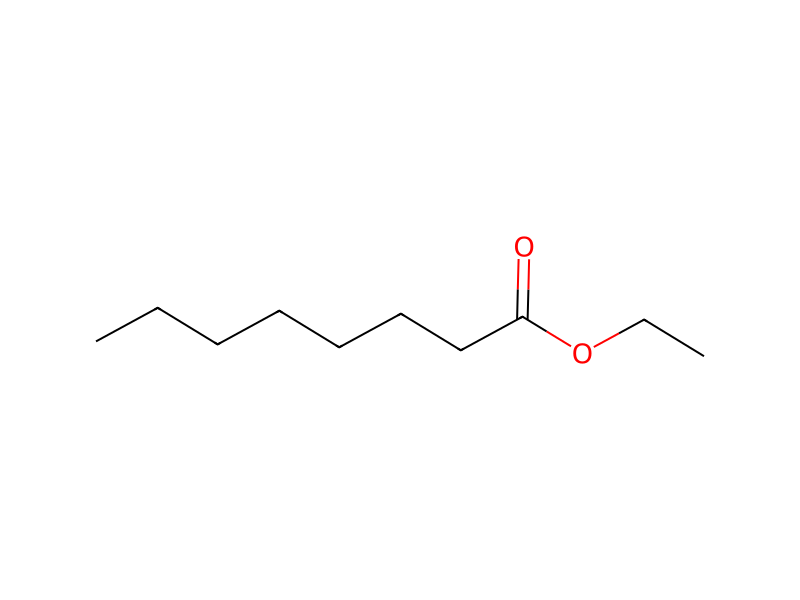
- Standard-SMILES
CCCCCCCC(=O)OCC- InChIKey
YYZUSRORWSJGET-UHFFFAOYSA-N- Summenformel
- C10H20O2
- Durchschnittliche Molmasse
- 172,26 g/mol
- Monoisotopische Masse
- 172,14632988
Namen und Bezeichner
- Bevorzugter Name
- Ethyl octanoate
- IUPAC
- ethyl octanoate
- Lokaler Name
- Ethyloctanoat
- Englischer Name
- Ethyl caprylate
- Summenformel
- C10H20O2
- Molmasse
- 172.26
Namen und Synonyme
ETHYL OCTANOATEEthyl caprylate106-32-1Ethyl n-octanoateOctanoic acid, ethyl esterCaprylic acid ethyl esterEthyl octoateFEMA No. 2449DTXSID805154281C5MOP582NSC-8898DTXCID9030094
Weitere Namen anzeigen
Octanoic acid ethylEtheyl OctanoatFEMA 2449Ethyl carprylateEthyloctanoat
CHEBI:87426RefChem:139025203-385-5octanoic acid ethyl esterEthyl octylateNSC 8898EINECS 203-385-5MFCD00009552
Datenbank-Bezeichner
- CAS
106-32-1- PubChem CID
- 7799
- DTXSID
DTXSID8051542- ChEMBL
CHEMBL4633100- ChEBI
CHEBI:87426- UNII
- 81C5MOP582
- EC Number
- 203-385-5
- Nikkaji
- J2.857F
Eigenschaften
Berechnete Struktureigenschaften
- XLogP
- 3,5
- Polarare Oberfläche (TPSA)
- 26,3 Ų
- H-Brücken-Donoren
- 0
- H-Brücken-Akzeptoren
- 2
- Frei drehbare Bindungen
- 8
- Schwere Atome
- 12
- Formalladung
- 0
- Komplexität
- 110
Experimentelle und physikochemische Eigenschaften
Density0.865-0.868
Solubility
0.0701 mg/mL at 25 °C
Soluble in most fixed oils, slightly soluble in propylene glycol, insoluble in water and glycerol
1ml in 4ml 70% ethanol (in ethanol)
Boiling Point
206.00 to 208.00 °C. @ 760.00 mm Hg
209 °C
Melting Point-43.1 °C
Refractive Index1.417-1.419
Physical Description
Liquid
Colourless liquid with a wine, brandy, fruity floral odour
Kovats Retention Index
1175;1173;1181;1181;1179;1181;1181;1183;1178;1179;1180;1190;1181;1180;1180;1184;1184;1182;1189;1180
1193.8;1178;1197;1173;1198;1195;1206;1190;1190;1190;1190;1190;1173;1202;1213;1196;1200;1200;1192;1194
1440;1440;1438;1439;1440;1433;1446;1435;1434;1448;1440;1435;1436;1444;1444;1454;1430;1426;1438;1431
Collision Cross Section149.5 Ų [M-H]- [CCS Type: DT; Buffer gas: N2; Ionization: ESI-; Dataset: TOXCAST; Source Identifier: DTXSID8051542]
Physikochemische Eigenschaften
- Schmelzpunkt
- -48 · -48--47 °C (lit.)
- Siedepunkt
- 206 · 206-208 °C (lit.)
- Dichte
- 0.867 g/mL · 0.867 g/mL at 20 °C (lit.)
- Dampfdruck
- 0.02 mm · 0.02 mm Hg ( 25 °C)
- Brechungsindex
- 20 · n20/D 1.417(lit.)
- FEMA
- 2449 · 2449 | ETHYL OCTANOATE
- Flammpunkt
- 167 °F · 167 °F
- storage temp.
- 30 °C · Store below +30°C.
- Löslichkeit
- 1 ml/4ml, · ethanol: soluble1ml/4ml, clear, colorless (70% ethanol)
- Aggregatzustand
- Liquid
- Farbe
- Clear colorless
- Geruch (Odor)
- 100 % · at 100.00 %. fruity wine waxy sweet apricot banana brandy pear
- Geruchsart
- waxy
- Biologische Quelle
- synthetic
- Explosionsgrenze
- 0.7 % · 0.7%(V)
- Wasserlöslichkeit
- insoluble
- Merck
- 14 · 14,3778
- JECFA Number
- 33 · 33
- BRN
- 1754470 · 1754470
- Henry's Law Constant
- 1.7 · 1.7×10-2 mol/(m3Pa) at 25℃, Plyasunov et al. (2004)
- Kosmetik-Inhaltsstoffe Funktionen
- PERFUMING
- InChI
- 1S/C10H20O2/c1-3-5-6-7-8-9-10(11)12-4-2/h3-9H2,1-2H3
- InChIKey
- YYZUSRORWSJGET-UHFFFAOYSA-N
- SMILES
- CCCCCCCC(=O)OCC
- LogP
- 4.47 at · 4.47 at 22.7℃
- CAS Datenbank
- 106 · 106-32-1(CAS DataBase Reference)
- NIST chemische Informationen
- Octanoic acid, ethyl ester(106-32-1)
- EPA chemische Informationen
- Ethyl octanoate (106-32-1)
Sicherheit und Regulatorisches
GHS-Klassifizierung
GHS Classification
This chemical does not meet GHS hazard criteria for 91.9% (1639 of 1784) of all reports.
Not Classified;Reported as not meeting GHS hazard criteria by 1639 of 1784 companies (only 8.1% companies provided GHS information). For more detailed information, please visit ECHA C&L website.
Aggregated GHS information provided per 1784 reports by companies from 3 notifications to the ECHA C&L Inventory.;Reported as not meeting GHS hazard criteria per 1639 of 1784 reports by companies.;There are 2 notifications provided by 145 of 1784 reports by companies with hazard statement code(s).;Information may vary between notifications depending on impurities, additives, and other factors. The percentage value in parenthesis indicates the notified classification ratio from companies that provide hazard codes. Only hazard codes with percentage values above 10% are shown. For more detailed information, please visit ECHA C&L website.
Gefahrenhinweise
Regulatory Information
Chemical: Octanoic acid, ethyl ester
Status: Active Update: 11-01-2019 https://echa.europa.eu/registration-dossier/-/registered-dossier/23963
Ethyl caprylate: Does not have an individual approval but may be used under an appropriate group standard
Other Safety InformationIMAP assessments - Octanoic acid, ethyl ester: Human health tier I assessment;Evaluation - Chemicals that are unlikely to require further regulation to manage risks to environment
Hazard Classes and CategoriesNot Classified
Regulatorische Informationen
Regulatory Information
Chemical: Octanoic acid, ethyl ester
Status: Active Update: 11-01-2019 https://echa.europa.eu/registration-dossier/-/registered-dossier/23963
Ethyl caprylate: Does not have an individual approval but may be used under an appropriate group standard
Sicherheitsdaten
- wgk
- 2
- tsca
- TSCA listed
- hs_code
- 29159080
- RTECS-Nr.
- RH0680000
- risk_code
- 38
- Toxizität
- LD50 orally in rats: 25,960 mg/kg, P. M. Jenner et al., Food Cosmet. Toxicol. 2, 327 (1964)
- hazard_code
- Xi
- safety_code
- 26-36
- Speicherklasse
- 10 - Combustible liquids
- Hazard Classifications
- Aquatic Chronic 2
- Selbstentzündungstemperatur
- 325 °C
Chemie und Industrie
Pharmakologische Informationen
Cellular LocationsExtracellular;Membrane
Verwendung und Herstellung
Household ProductsInformation on 4 consumer products that contain Ethyl Octanoate in the following categories is provided:;• Auto Products;• Inside the Home
Use Classification
Fragrance Ingredients
Flavouring Agent -> FLAVOURING_AGENT -> JECFA Functional Classes
Flavoring Agents -> JECFA Flavorings Index
Flavouring Agent -> FLAVOURING_AGENT -> JECFA Functional Classes
General Manufacturing InformationOctanoic acid, ethyl ester: ACTIVE
Anwendungen
BeschreibungEthyl caprylate (also known as ethyl octanoate) is a fatty acid ester formed from caprylic acid and ethanol. It is a natural fruit flavoring agent. It is usually included in the alcohol beverage. Among the main flavoring components of None-flavor liquor, the absolute content of ethyl caprylate is not high but its flavoring contributions is higher than ethyl acetate, ethyl lactate, and ethyl butyrate, only lower than ethyl caproate. Only small amount of ethyl caprylate could produce obvious fruit aroma in Nong-flavor liquor. However, excessive content of ethyl caprylate would inhibit the performance of other flavoring components.
OccurrenceReported found in apple, apricot, orange juice, grapefruit juice, guava, pineapple, cheddar cheese, other cheeses, butter, beer, cognac, rum, whiskey, cider, grape wines, cocoa, coconut meat, passion fruit, mango, pawpaw and mastic gum leaf oil.
Darstellung
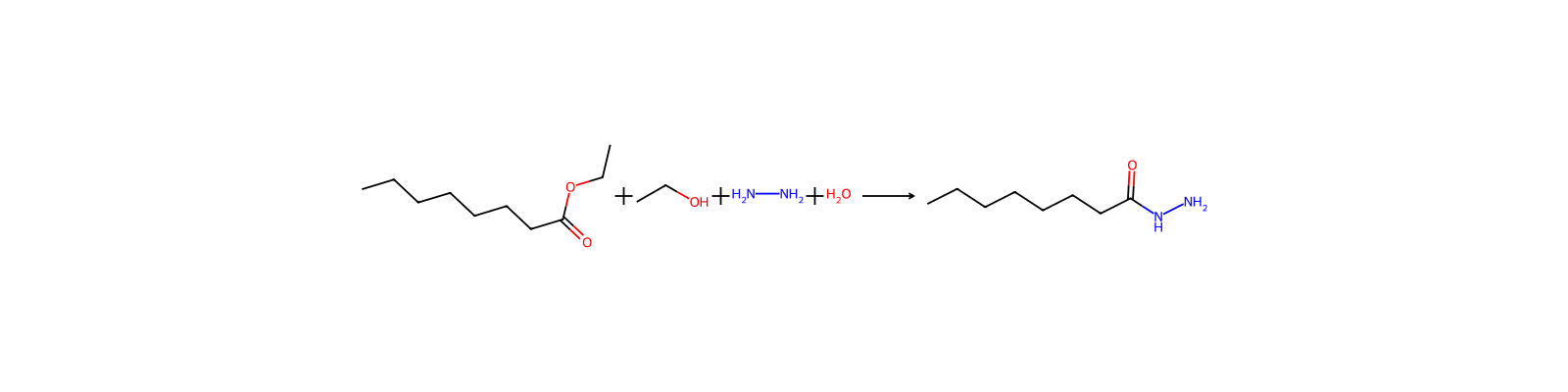
synthetischeUsually prepared by esterification of caprylic acid with ethyl alcohol and sulfuric acid as catalyst; also by alcoholysis of coconut oil in the presence of HCl.
Vor- und nachgelagerte Produkte
Vorgelagerte Rohstoffe
Nachgelagerte Produkte
Anbieter50 Anbieter
梯希爱(上海)化成工业发展有限公司021-67121386 · [email protected]
上海阿拉丁生化科技股份有限公司400-6206333 13167063860 · [email protected]
河北创海生物科技有限公司+86-86-13131129325 · [email protected]
湖北云镁科技有限公司027-59206672 18995657604 · [email protected]
爱斯特(成都)生物制药股份有限公司+86-28-85122536 85324413 · [email protected]
Baoji Guokang Healthchem co.,ltd+8615604608665 15604608665 · [email protected]
Dayang Chem (Hangzhou) Co.,Ltd.+86-0571-88938639 17705817739 · [email protected]
Hebei Yanxi Chemical Co., Ltd.+86-17531190177 · [email protected]
宜昌众意泰贸易有限公司0717-6449896 13886658719 · [email protected]
北京安司莫森技术有限公司010-82954736 13391601435 · [email protected]
上海将来实业股份有限公司400-0066400 13621662912 · [email protected]
Syntechem Co.,Ltd[email protected]
上海迈瑞尔生化科技有限公司4006356688 18621169109 · [email protected]
北京华威锐科化工有限公司0757-86329057 18934348241 · [email protected]
阿法埃莎(中国)化学有限公司400-6106006 · [email protected]
安耐吉化学&3A(安徽泽升科技股份有限公司)400-0056266 · [email protected]
北京绿百草科技发展有限公司010-61136123 · [email protected]
山东洛克化工有限公司17653113209 13065062079 · [email protected]
吉良化学21-62165282 · [email protected]
山东西亚化学有限公司13355009207 13355009207 · [email protected]
玛雅试剂+86 (573) 82222445 (0)18006601000 452520369 · [email protected]
四川库利南科技有限公司400-1166-196 18981987031 · [email protected]
河南蔚源生物科技有限公司0371-27990887 13703782753 · [email protected]
天津希恩思生化科技有限公司400 638 7771 · [email protected]
Xiamen AmoyChem Co., Ltd+86-86-5926051114 · [email protected]
河南多贝化工有限公司0370-2785118 17550508557 · [email protected]
斯百全化学(上海)有限公司021-021-021-67601398-809-809-809 15221380277 · [email protected]
艾科试剂4008-755-333 18080918076 · [email protected]
青岛保税区鲁联国际贸易有限公司0532-83893697 18561902820 · [email protected]
上海思域化工科技有限公司86-21-34053660 · [email protected]
赛默飞世尔科技(中国)有限公司800-810-5118 · [email protected]
北京伊诺凯科技有限公司400-810-7969 010-59572699 · [email protected]
江苏艾康生物医药研发有限公司025-66113011 13913916777 · [email protected]
TCI AMERICA800-4238616 · [email protected]
TOKYO CHEMICAL INDUSTRY CO., LTD.03-36680489 · [email protected]
TCI Europe320-37350700 · [email protected]
南京杜莱生物技术有限公司025-84699383-8003;025-846993838003-8003 18013301590 · [email protected]
上海将来实业股份有限公司400-0066400 13621662912 · [email protected]
上海将来实业股份有限公司021-61552785 · [email protected]
日照力德士化工有限公司010-51268198 · [email protected]
郑州鸿晟医药科技有限公司0371-0371-13526885213 15637198702 · [email protected]
美岚实业(上海)有限公司021-58958189 · [email protected]
上海爱蝶实业有限公司021-58957966 18930537195 · [email protected]
成都零六生物科技有限公司400-1166-196 13458535857 · [email protected]
上海麦克林生化科技股份有限公司15221275939 15221275939 · [email protected]
Sigma-Aldrich西格玛奥德里奇(上海)贸易有限公司021-61415566 800-8193336 · [email protected]
桦特昇生物科技(武汉)有限公司027-59207879 1972026995 18140587686 · [email protected]
TargetMol中国(陶术生物)021-021-33632979 15002134094 · [email protected]
郑州科豫隆化工产品有限公司17319789407 17319789407 · [email protected]
Alfa Chemistry1-516-6625404 · [email protected]
Ergänzende Hinweise
DefinitionChEBI: Ethyl caprylate is a fatty acid ethyl ester resulting from the formal condensation of octanoic acid with ethanol.
Zugehörige Reaktionen
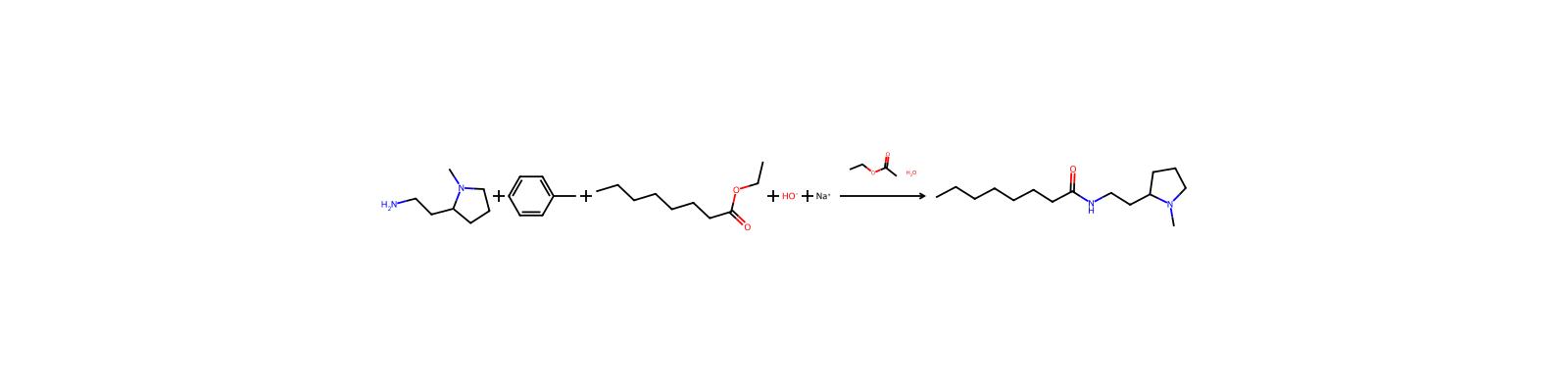
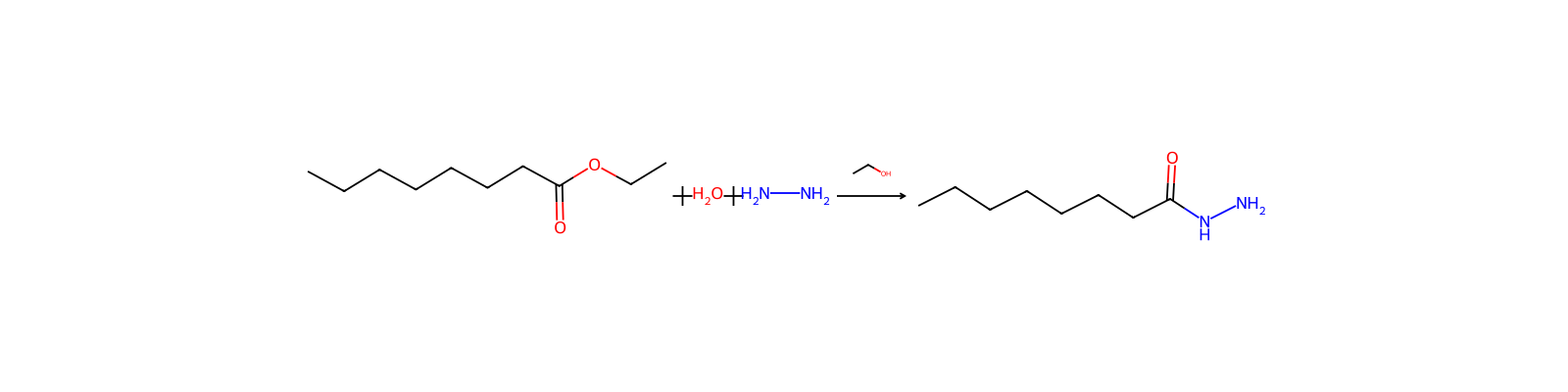
7


Verknüpfte Notizen
Wird geladen…