Grundinformationen
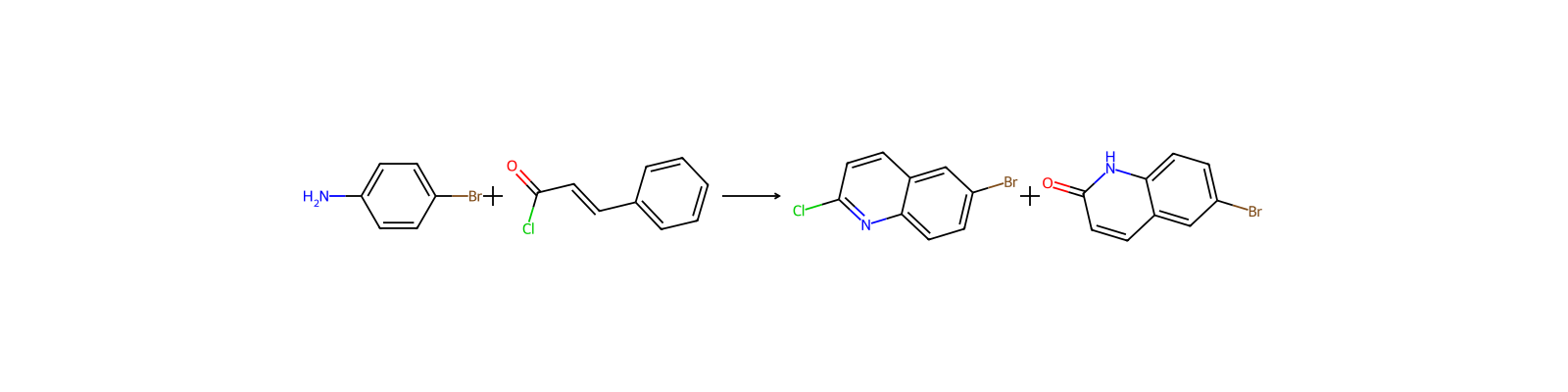
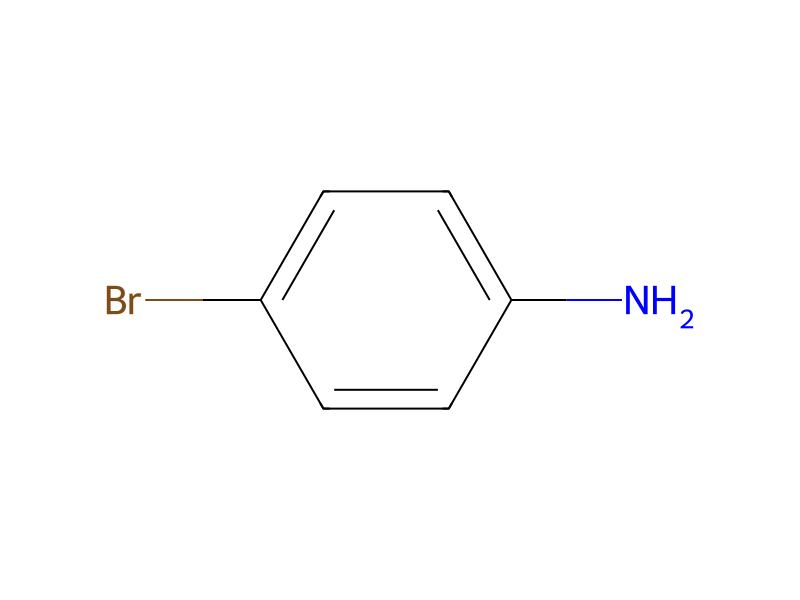
- Standard-SMILES
Nc1ccc(Br)cc1- InChIKey
WDFQBORIUYODSI-UHFFFAOYSA-N- Summenformel
- C6H6BrN
- Durchschnittliche Molmasse
- 172,02 g/mol
- Monoisotopische Masse
- 170,96836129
Überblick
P-bromoaniline is a brown solid with a sweet odor. (NTP, 1992)
Namen und Bezeichner
- Bevorzugter Name
- 4-Bromoaniline
- IUPAC
- 4-bromoaniline
- Lokaler Name
- 4-Bromanilin
- Englischer Name
- 4-Bromoaniline
- Summenformel
- C6H6BrN
- Molmasse
- 172.02
Namen und Synonyme
4-Bromoaniline106-40-1P-BROMOANILINE4-BromobenzenamineBenzenamine, 4-bromo-p-BromophenylamineAniline, p-bromo-4-Bromo-aniline4-Bromobenzeneamine4-BromanilinuDTXSID70218670RR61TC330
Weitere Namen anzeigen
bromoaniline4-Bromoanilines4-bromo-benzenamin4-BroMo-phenylaMinep-BROMOANILINE pure4-BromoaniL4-bromoanline
NSC-7085DTXCID301867RefChem:98173203-393-94-bromophenylamineMFCD000078224-Bromoaniline, 97%aniline, 4-bromo-
Datenbank-Bezeichner
- CAS
106-40-1- PubChem CID
- 7807
- DTXSID
DTXSID7021867- ChEMBL
CHEMBL57376- UNII
- 0RR61TC330
- EC Number
- 203-393-9
- Nikkaji
- J47.028G
Eigenschaften
Berechnete Struktureigenschaften
- XLogP
- 2,3
- Polarare Oberfläche (TPSA)
- 26 Ų
- H-Brücken-Donoren
- 1
- H-Brücken-Akzeptoren
- 1
- Frei drehbare Bindungen
- 0
- Schwere Atome
- 8
- Formalladung
- 0
- Komplexität
- 66,9
Experimentelle und physikochemische Eigenschaften
Chemical ClassesNitrogen Compounds -> Amines, Aromatic
SpringerMaterials Properties13C nuclear magnetic resonance spectrum
PesticidesEnvironmental transformation -> Pesticide transformation products (metabolite, successor)
LogP
log Kow = 2.26
2.26
2.0
Density
1.497 at 212 °F (NTP, 1992) - Denser than water; will sink
1.4970 at 99.6 °C/4 °C
Relative density (water = 1): 1.5 (100 °C)
Color/Form
Bipyramidal rhombic crystals, needles from 60% alcohol
Colorless crystals
Solubility
less than 1 mg/mL at 73 °F (NTP, 1992)
Very soluble in alcohol and ether; insoluble in cold water
Solubility in water: poor
Boiling Point
Decomposes (NTP, 1992)
219.7 °C
BP: decomposes
223 °C
Melting Point
151.5 °F (NTP, 1992)
66-66.5 °C
66 °C
Vapor Density
5.9 (Air = 1)
Relative vapor density (air = 1): 5.9
Vapor Pressure
0.04 [mmHg]
Vapor pressure, Pa at 25 °C: 22.6
Physical Description
P-bromoaniline is a brown solid with a sweet odor. (NTP, 1992)
Colorless solid; [Hawley] Brown solid; [CAMEO] White or brown powder; [MSDSonline]
COLOURLESS CRYSTALS.
Physikochemische Eigenschaften
- Schmelzpunkt
- 56 · 56-62 °C (lit.)
- Siedepunkt
- 230 · 230-250 °C
- Dichte
- 1.497 · 1.497
- Brechungsindex
- 1.568 · 1.5680 (estimate)
- Flammpunkt
- 222 · 222-224°C
- storage temp.
- 30 °C · Store below +30°C.
- Löslichkeit
- 0.5 g/10 · ethanol: soluble0.5g/10 mL, clear, colorless to almost colorless
- Aggregatzustand
- crystalline
- pka
- 3.86 · 3.86(at 25℃)
- Farbe
- white to light yellow
- Geruch (Odor)
- Sweetish
- Wasserlöslichkeit
- 0.1 g/100 · <0.1 g/100 mL at 23 ºC
- Merck
- 14 · 14,1404
- BRN
- 742031 · 742031
- Henry's Law Constant
- 1.1 · 1.1×101 mol/(m3Pa) at 25℃, HSDB (2015)
- Dielectric constant
- 13 · 13.0(-7℃)
- Stabilität
- Stable. Combustible. Incompatible with strong oxidizing agents, peroxides, acids, acid chlorides, acid anhydrides, chloroformates. May be air sensitive.
- InChI
- 1S/C6H6BrN/c7-5-1-3-6(8)4-2-5/h1-4H,8H2
- InChIKey
- WDFQBORIUYODSI-UHFFFAOYSA-N
- SMILES
- Nc1ccc(Br)cc1
- CAS Datenbank
- 106 · 106-40-1(CAS DataBase Reference)
- NIST chemische Informationen
- 4 · 4-Bromoaniline(106-40-1)
- EPA chemische Informationen
- p-Bromoaniline (106-40-1)
Sicherheit und Regulatorisches
GHS-Klassifizierung
GHS Classification
Danger
H302 (100%): Harmful if swallowed [Warning Acute toxicity, oral]
P260, P261, P262, P264, P264+P265, P270, P271, P280, P301+P317, P302+P352, P304+P340, P305+P351+P338, P316, P317, P319, P321, P330, P332+P317, P337+P317, P361+P364, P362+P364, P403+P233, P405, and P501 (click each P-code to see the statement)
Aggregated GHS information provided per 53 reports by companies from 12 notifications to the ECHA C&L Inventory. Each notification may be associated with multiple companies.
Gefahrenhinweise
Regulatory Information
Chemical: Benzenamine, 4-bromo-
4-Bromoaniline: Does not have an individual approval but may be used under an appropriate group standard
DOT LabelPoison
Fire Hazards
Flash point data are not available for this chemical, but it is probably combustible. (NTP, 1992)
Combustible. Gives off irritating or toxic fumes (or gases) in a fire.
Health Hazards
SYMPTOMS: Symptoms of exposure to this compound may include cyanosis (blue-black lips and tongue; gray skin) due to methemoglobinemia, headache, nausea and vomiting, dry throat, confusion, dizziness, tinnitus, weakness, irritability, drowsiness, coma, seizures, hypotension, fainting, joint pains, hemolytic anemia, jaundice, hepatic and renal damage, and bloody urine.
Hazards Summary
Causes flaccid paralysis, cyanosis, and weight loss in high-dose feeding studies of rats; [RTECS] Emergency treatment: Methemoglobinemia; [HSDB] Can induce methemoglobinemia; [ICSC] An irritant; May induce methemoglobinemia; [MSDSonline] See 4-Chloroaniline.
Reactive GroupAryl Halides
TSCA Requirements
Pursuant to section 8(d) of TSCA, EPA promulgated a model Health and Safety Data Reporting Rule. The section 8(d) model rule requires manufacturers, importers, and processors of listed chemical substances and mixtures to submit to EPA copies and lists of unpublished health and safety studies. 4-Bromoaniline is included on this list. Effective date: 10/4/82; Sunset date: 10/4/92.
Reactivity ProfileVapor may form highly reactive mixtures in air. (NTP, 1992)
Chemical DangersDecomposes on heating and on burning. This produces toxic and corrosive fumes including hydrogen bromide and nitrogen oxides (see ICSC 0282). The solution in water is a weak base. Reacts with acids and strong oxidants.
Air and Water ReactionsThis material is sensitive to prolonged exposure to air. Vapor may form highly reactive mixtures in air (NTP, 1992). Insoluble in water.
Toxic Combustion ProductsDecomposes on heating and on burning. This produces toxic and corrosive fumes including hydrogen bromide and nitrogen oxides.
Hazard Classes and CategoriesAcute Tox. 4 (100%)
Sicherheit und Schutzausrüstung
Fire Fighting
Fires involving this compound should be controlled using a dry chemical, carbon dioxide or Halon extinguisher. (NTP, 1992)
Use water spray, powder, foam, carbon dioxide.
First Aid Measures
Fresh air, rest. Refer for medical attention.
Rinse and then wash skin with water and soap.
First rinse with plenty of water for several minutes (remove contact lenses if easily possible), then refer for medical attention.
Rinse mouth. Refer for medical attention .
First Aid
EYES: First check the victim for contact lenses and remove if present. Flush victim's eyes with water or normal saline solution for 20 to 30 minutes while simultaneously calling a hospital or poison control center. Do not put any ointments, oils, or medication in the victim's eyes without specific instructions from a physician. IMMEDIATELY transport the victim after flushing eyes to a hospital even if no symptoms (such as redness or irritation) develop.
Safe StorageSeparated from strong oxidants and acids. Well closed.
Fire Fighting Procedures
Special protective equipment for firefighters Wear self contained breathing apparatus for fire fighting if necessary.
Use water spray, powder, foam, carbon dioxide.
Storage Conditions
Precautions for safe handling: Avoid contact with skin and eyes. Avoid formation of dust and aerosols. Provide appropriate exhaust ventilation at places where dust is formed. Normal measures for preventive fire protection. Conditions for safe storage Keep container tightly closed in a dry and well-ventilated place. Light sensitive. Store under inert gas. Air sensitive.
Separated from strong oxidants and acids. Well closed.
Cleanup Methods
Sweep spilled substance into covered containers. If appropriate, moisten first to prevent dusting. Carefully collect remainder. Then store and dispose of according to local regulations. Personal protection: particulate filter respirator adapted to the airborne concentration of the substance. Do NOT let this chemical enter the environment.
Removal of chloroaniline from wastewater by electrochemical treatment is discussed. /4-Chloroaniline/
Cover with the 9:1 mixture of sand and soda ash. After mixing, transfer into a paper carton, stuffed with ruffled paper. Burn in an open furnace with the utmost care or in the furnace with after burner and scrubber. /4-Chloroaniline/
Nonfire Spill Response
SMALL SPILLS AND LEAKAGE: Should a spill occur while you are handling this chemical, FIRST REMOVE ALL SOURCES OF IGNITION, then you should dampen the solid spill material with 60-70% ethanol and transfer the dampened material to a suitable container. Use absorbent paper dampened with 60-70% ethanol to pick up any remaining material. Seal the absorbent paper, and any of your clothes, which may be contaminated, in a vapor-tight plastic bag for eventual disposal. Solvent wash all contaminated surfaces with 60-70% ethanol followed by washing with a soap and water solution. Do not reenter the contaminated area until the Safety Officer (or other responsible person) has verified that the area has been properly cleaned.
Disposal Methods
SRP: The most favorable course of action is to use an alternative chemical product with less inherent propensity for occupational harm/injury/toxicity or environmental contamination. Recycle any unused portion of the material for its approved use or return it to the manufacturer or supplier. Ultimate disposal of the chemical must consider: the material's impact on air quality; potential migration in soil or water; effects on animal and plant life; and conformance with environmental and public health regulations.
A good candidate for rotary kiln incineration at a temperature range of 820 to 1,600 °C and residence times of seconds for liquids and gases, and hours for solids. /4-Chloroaniline/
Spillage Disposal
Sweep spilled substance into covered containers. If appropriate, moisten first to prevent dusting. Carefully collect remainder. Then store and dispose of according to local regulations. Personal protection: particulate filter respirator adapted to the airborne concentration of the substance. Do NOT let this chemical enter the environment.
Preventive Measures
SRP: Local exhaust ventilation should be applied wherever there is an incidence of point source emissions or dispersion of regulated contaminants in the work area. Ventilation control of the contaminant as close to its point of generation is both the most economical and safest method to minimize personnel exposure to airborne contaminants. Ensure that the local ventilation moves the contaminant away from the worker.
Avoid contact with skin, eyes and clothing. Wash hands before breaks and immediately after handling the product.
Do not eat, drink, or smoke during work.
Isolation and EvacuationExcerpt from ERG Guide 154 [Substances - Toxic and/or Corrosive (Non-Combustible)]:
Toxikologische Informationen
Ecotoxicity ValuesLC50; Species: Pimephales promelas (Fathead Minnow) age 26-34 day juvenile; Conditions: freshwater, flow through, 25 °C, pH 7.8, hardness 45 mg/L CaCO3, alkalinity 42 mg/L CaCO3; Concentration: 47500 ug/L for 96 hr /> or =95% purity/
Environmental Fate
TERRESTRIAL FATE: Based on a classification scheme(1), measured Koc values of 91(2) and 218(3) indicate that 4-bromoaniline is expected to have high to moderate mobility in soil(SRC). The pKa of 4-bromoaniline is 3.86(4), indicating that this compound is a weak base and will exist predominantly in the non-ionized form in the environment. However, anilines are expected to bind strongly to humus or organic matter in soils due to the high reactivity of the aromatic amino group(5,6), suggesting that mobility may be much lower in some soils(SRC). 4-Bromoaniline absorbs at wavelengths >290 nm(7) and, therefore, may be susceptible to direct photolysis on soil surfaces exposed to sunlight(SRC). 4-Bromoaniline has been shown to be biodegradable in acclimated soil and water(8,9), but biodegradation may be very slow in unacclimated soil(8). Volatilization of 4-bromoaniline from moist soil surfaces may have some importance(SRC) given an estimated Henry's Law constant of 9.1X10⁻⁷ atm-cu m/mole(SRC), using a fragment constant estimation method(10).
AQUATIC FATE: Based on a classification scheme(1), measured Koc values of 91(2) and 218(3) indicate that 4-bromoaniline is not expected to adsorb to suspended solids and sediment(SRC). The pKa of 4-bromoaniline is 3.86(4), indicating that this compound is a weak base and will exist predominantly in the non-ionized form in the environment. Anilines may bind strongly to humus or organic matter due to the high reactivity of the aromatic amino group(5,6), suggesting some adsorption to suspended solids and sediment may occur(SRC). Volatilization from water surfaces is expected(7) based upon an estimated Henry's Law constant of 9.1X10⁻⁷ atm-cu m/mole(SRC), developed using a fragment constant estimation method(8). Using this Henry's Law constant and an estimation method(7), volatilization half-lives for a model river and model lake are 53 and 389 days, respectively(SRC). According to a classification scheme(9), an estimated BCF of 14(SRC), from its log Kow of 2.26(10) and a regression-derived equation(8), suggests the potential for bioconcentration in aquatic organisms is low(SRC). 4-Bromoaniline absorbs at wavelengths >290 nm(11) and, therefore, may be susceptible to direct photolysis(SRC). Aromatic amines are susceptible to photosensitized degradation in natural waters exposed to sunlight due to reaction with OH and RO2 radicals(12); therefore, indirect photolysis may have some environmental importance in natural water(SRC). 4-Bromoaniline is not expected to undergo hydrolysis in the environment due to the lack of functional groups that hydrolyze under environmental conditions(7). In biodegradation studies using Elbe River water and a testfilter methodology, 4-bromoaniline had a mean degradation rate of 0.67/hr (half-life of about 1 hour; half-life in control samples was 99 hrs)(13). In anaerobic biodegradation tests using an estuarine sediment from the Tsurumi River in Japan, 4-bromoaniline had an observed degradation rate of 0.00557/day which corresponded to a half-life of 124.4 days(14).
ATMOSPHERIC FATE: According to a model of gas/particle partitioning of semivolatile organic compounds in the atmosphere(1), 4-bromoaniline, which has an estimated vapor pressure of 0.05 mm Hg at 25 °C(SRC), determined from a fragment constant method(2), is expected to exist primarily as a vapor in the ambient atmosphere. However, monitoring data have detected 4-bromoaniline in ambient atmospheric particulate material at relatively high concentrations of 109 ng/cu m(3). Vapor-phase 4-bromoaniline is degraded in the atmosphere by reaction with photochemically-produced hydroxyl radicals(SRC); the half-life for this reaction in air is estimated to be 12 hours(SRC), calculated from its rate constant of 3.1X10⁻¹¹ cu cm/molecule-sec at 25 °C(SRC) that was derived using a structure estimation method(2). Particulate-phase 4-bromoaniline may be removed from the air by wet and dry deposition(SRC). 4-Bromoaniline absorbs at wavelengths >290 nm(4) and, therefore, may be susceptible to direct photolysis by sunlight(SRC).
Adverse EffectsMethemoglobinemia - The presence of increased methemoglobin in the blood; the compound is classified as secondary toxic effect
Exposure RoutesThe substance can be absorbed into the body by inhalation of its aerosol and by ingestion.
Signs and Symptoms
Blue lips, fingernails and skin. Headache. Nausea.
Blue lips, fingernails and skin. Dizziness. Headache. Laboured breathing. Nausea. Confusion. Convulsions. Unconsciousness.
Ongoing Test Status
The following link will take the user to the National Toxicology Program (NTP) Test Agent Search Results page, which tabulates all of the "Standard Toxicology & Carcinogenesis Studies", "Developmental Studies", and "Genetic Toxicity Studies" performed with this chemical. Clicking on the "Testing Status" link will take the user to the status (i.e., in review, in progress, in preparation, on test, completed, etc.) and results of all the studies that the NTP has done on this chemical.[Available from, as of July 17, 2013: http://ntp-apps.niehs.nih.gov/ntp_tox/index.cfm?fuseaction=ntpsearch.searchresults&searchterm=106-40-1]
Effluent Concentrations4-Bromoaniline was qualitatively detected in stack effluents generated by hazardous waste incineration(1).
ICSC Environmental DataThe substance is harmful to aquatic organisms.
Soil Adsorption/Mobility
Soil adsorption studies using four silt loam soils and a 2-hour adsorption period determined a mean log Kom (K organic matter) of 1.72 (which corresponds to a log Koc of 1.96 and Koc of 91 for 4-bromoaniline(1). A Koc of 217.9 was determined in sorption studies using a calcareous Spanish soil(2); manual addition of dissolved organic carbon (from peat or tannic acid) was found to increase 4-bromoanline adsorption on soil(2). According to a classification scheme(3), these Koc values suggests that 4-bromoaniline is expected to have moderate to high mobility in soil. The pKa of 4-bromoaniline is 3.86(4), indicating that this compound is a weak base and will exist predominantly in the non-ionized form in the environment. However, anilines are expected to bind strongly to humus or organic matter in soils due to the high reactivity of the aromatic amino group(5,6), suggesting that mobility may be much lower in some soils(SRC).
Atmospheric ConcentrationsURBAN/SUBURBAN: Atmospheric particulate samples collected in the city of Lanzhou China in March 2003 contained 4-bromoaniline concentration of 109 ng/cu m(1).
Artificial Pollution Sources
4-Bromoaniline's production and use as an intermediate in the production of azo dyes, dihydroquinazolines, metobromuron and resorantel(1,2) may result in its release to the environment through various waste streams(SRC). 4-Bromoaniline was qualitatively detected in stack effluents generated by hazardous waste incineration(3). It may also be released to the environment as a product of the microbial breakdown of the herbicide metobromuron in soil(4). 4-Bromoaniline has been detected in tobacco grown in soil treated with metobromuron(5).
Environmental Biodegradation
AEROBIC: Soil enrichment cultures extracted from soils that had been treated with herbicides (such as linuron and metobromuron) over multiple years were able to readily degrade the herbicides and their degradation products (4-bromoaniline was the degradation product from metobromuron)(1); untreated control soil samples from the same location did not show any degradation activity(1). In biodegradation studies using Elbe River water and a testfilter methodology, 4-bromoaniline had a mean degradation rate of 0.67/hr (half-life of about 1 hour)(2); degradation rate in control samples was only 0.007/hr (half-life of 99 hours)(2).
ANAEROBIC: In anaerobic biodegradation tests using an estuarine sediment from the Tsurumi River in Japan, 4-bromoaniline had an observed degradation rate of 0.00557/day which corresponded to a half-life of 124.4 days(1).
PURE CULTURE: Purified enzymes of the soil fungus Geotrichum candidum biotransformed p-bromoaniline to 4,4'- dibromoazobenzene(1). A strain of Moraxella sp used p-bromoaniline as a sole source of carbon and nitrogen(2).
Regulatorische Informationen
TSCA Requirements
Pursuant to section 8(d) of TSCA, EPA promulgated a model Health and Safety Data Reporting Rule. The section 8(d) model rule requires manufacturers, importers, and processors of listed chemical substances and mixtures to submit to EPA copies and lists of unpublished health and safety studies. 4-Bromoaniline is included on this list. Effective date: 10/4/82; Sunset date: 10/4/92.
Sicherheitsdaten
- F
- 8-9-23
- wgk
- 3
- tsca
- TSCA listed
- ridadr
- UN 2811 6.1/PG 3
- hs_code
- 29214210
- RTECS-Nr.
- BW9280000
- risk_code
- 21/22-36/37/38-20/21/22
- Toxizität
- LD50 orally in Rabbit: 456 mg/kg LD50 dermal Rat 536 mg/kg
- hazard_code
- Xn
- hazard_note
- Harmful
- safety_code
- 26-36/37-36/37/39
- hazard_class
- 6.1
- packing_group
- III
- Speicherklasse
- 6.1C - Combustible acute toxic Cat.3toxic compounds or compounds which causing chronic effects
- Giftige Stoffe Daten
- 106-40-1(Hazardous Substances Data)
- Hazard Classifications
- Acute Tox. 3 DermalAcute Tox. 3 InhalationAcute Tox. 4 OralAquatic Acute 1Aquatic Chronic 1STOT RE 2
Chemie und Industrie
Pharmakologische Informationen
Metabolism/Metabolites
p-Bromoaniline metabolized to p-aminophenol in rabbits. From table/
p-Bromoaniline metabolized to p-bromoacetanilide in micro-organisms. From table/
p-Bromoaniline metabolized to p-bromoaniline-n-glucoside in beans. From table/
The metabolic fate of 4-bromoaniline (4-BrA) was investigated following intraperitoneal administration to the rat at 50 mg kg(-1), using high-performance liquid chromatography/time-of-flight tandem mass spectrometry (HPLC/TOF-MS/MS). Up to five metabolites were detected in urine that correspond to isomeric pentose conjugates (possibly ribosides) of a hydroxysulfate of 4-BrA. This identification is supported by further studies where the water used in the reversed-phase solvent system was replaced with deuterated water in order to confirm that the number of exchangeable protons present in the metabolites was consistent with the proposed structures.
The urinary excretion of 4-bromoaniline and its (carbonyl-(13)C)-labelled N-acetanilide, together with their corresponding metabolites, have been investigated in the rat following i.p. administration at 50 mg kg(-1). Metabolite profiling was performed by reversed-phase HPLC with UV detection, whilst identification was performed using a combination of enzymic hydrolysis and directly coupled HPLC-NMR-MS analysis. The urinary metabolite profile was quantitatively and qualitatively similar for both compounds with little of either excreted unchanged. The major metabolite present in urine was 2-amino-5-bromophenylsulphate, but, in addition, a number of metabolites with modification of the N-acetyl moiety were identified (from both the ((13)C)-acetanilide or produced following acetylation of the free bromoaniline). For 4-bromoacetanilide, N-deacetylation was a major route of metabolism, but despite the detection of the acetanilide following the administration of the free aniline, there was no evidence of reacetylation (futile deacetylation). Metabolites resulting from the oxidation of the acetyl group included a novel glucuronide of an N-glycolanilide, an unusual N-oxanilic acid and a novel N-acetyl cysteine conjugate.
Verwendung und Herstellung
Uses
Used in the preparation of azo dyes and dihydroquinazolines (condensed with formaldehyde); [Merck Index]
In preparation of azo dyes; condensed with formaldehyde in preparation of dihydroquinazolines
Intermediate in the production of metobromuron (a pesticide) and resorantel (a medicinal anthelmintic)
Methods of ManufacturingPrepared by steam distilling sodium hydroxide and p-bromoacetanilide; ... by direct bromination of aniline.
Use ClassificationEnvironmental transformation -> Pesticide transformation products (metabolite, successor)
General Manufacturing InformationBenzenamine, 4-bromo-: ACTIVE
Anwendungen
BeschreibungDas 4-Bromanilin bildet farblose, wasserlösliche Kristalle. Die Substanz wurde zur Synthese von Azofarbstoffen vorgeschlagen, erlangte jedoch keine technische Bedeutung.
Verwenden4-Bromoaniline is a brominated aniline that is commonly used as a building block in the preparation of pharmaceutical and organic compounds. It is used in the preparation of azo dyes and is condensed with formaldehyde to prepare dihydroquinazolines. In addition, 4-Bromoaniline is also used as an intermediate in the production of other chemicals such as metobromuron, a herbicide, and resorantel, an antiparasitic agent.
Darstellung
synthetische4-bromoaniline can be made by reacting aniline with bromine with a protection with acetyl chloride.
Vor- und nachgelagerte Produkte
Vorgelagerte Rohstoffe
Nachgelagerte Produkte
Anbieter50 Anbieter
国药集团化学试剂有限公司86-21-63210123 · [email protected]
北京华美互利生物化工010-56205725 · [email protected]
梯希爱(上海)化成工业发展有限公司021-67121386 · [email protected]
衢州润东化工有限公司0570-8789886 18892685668 · [email protected]
上海阿拉丁生化科技股份有限公司400-6206333 13167063860 · [email protected]
上海泰矶林实业有限公司02150630626 17717886015 · [email protected]
常州瀚轩生物科技有限公司18602598900,18605190599 18602598900 · [email protected]
爱斯特(成都)生物制药股份有限公司+86-28-85122536 85324413 · [email protected]
南京兰亚化工贸易有限公司+86-25-8331-5620 · [email protected]
科瑞迪化学400-821-5857 021-64326257 · [email protected]
Syntechem Co.,Ltd[email protected]
上海迈瑞尔生化科技有限公司4006356688 18621169109 · [email protected]
宁波亿诺化学品有限公司86-574-27787657 · [email protected]
阿法埃莎(中国)化学有限公司400-6106006 · [email protected]
上海德默医药科技有限公司400-021-7337 2355568890 · [email protected]
安耐吉化学&3A(安徽泽升科技股份有限公司)400-0056266 · [email protected]
石家庄斯迪亚诺精细化工有限公司0311-89250318 13582355795 · [email protected]
武汉凯威斯科技有限公司86-027-67849912 · [email protected]
上海瀚鸿科技股份有限公司021-54306202 13764082696 · [email protected]
上海先尔化学科技有限公司021-021-60556752 15800818924 · [email protected]
上海景颜化工科技有限公司13817811078 · [email protected]
嘉兴市艾森化工有限公司0573-85285100 18627885956 · [email protected]
上海隆盛化工有限公司58099637 13585536065 · [email protected]
苏州施亚生物科技有限公司86(512)5235 8471 17715136450 · [email protected]
山东西亚化学有限公司13355009207 13355009207 · [email protected]
唐山默内德贸易有限公司0315-8309571 15633399667 · [email protected]
玛雅试剂+86 (573) 82222445 (0)18006601000 452520369 · [email protected]
四川库利南科技有限公司400-1166-196 18981987031 · [email protected]
天津希恩思生化科技有限公司400 638 7771 · [email protected]
武汉科美沃化工有限公司027-85736489 · [email protected]
南京斯贝源医药科技有限公司+86-25-68710855, +86-25-68710897 · [email protected]
南京维奥化工有限公司Please Send Email 18652950785 · [email protected]
艾科试剂4008-755-333 18080918076 · [email protected]
上海思域化工科技有限公司86-21-34053660 · [email protected]
上海骏晔化工有限公司021-021-50318666 18516602538 · [email protected]
赛默飞世尔科技(中国)有限公司800-810-5118 · [email protected]
北京伊诺凯科技有限公司400-810-7969 010-59572699 · [email protected]
TCI AMERICA800-4238616 · [email protected]
TOKYO CHEMICAL INDUSTRY CO., LTD.03-36680489 · [email protected]
TCI Europe320-37350700 · [email protected]
上海贤鼎生物科技有限公司4009209199 · [email protected]
深圳康特腾科技有限公司86-0755-86635001 · [email protected]
越林试剂021-62960152 · [email protected]
苏州安尼康药物研发有限公司0512-69369885 · [email protected]
蚌埠中实化学技术有限公司+86-0552-4929304 +86-18055277008 · [email protected]
无锡中坤生化科技有限公司+86 0510-85629785
上海倍卓生物科技有限公司021-61119791,13386096464 · [email protected]
宁波台康化工有限公司0574-87365517 18074210286 · [email protected]
安徽科迪达化工有限公司0554-2106669 · [email protected]
HBCChem, Inc.+1-510-219-6317 · [email protected]
Zugehörige Reaktionen
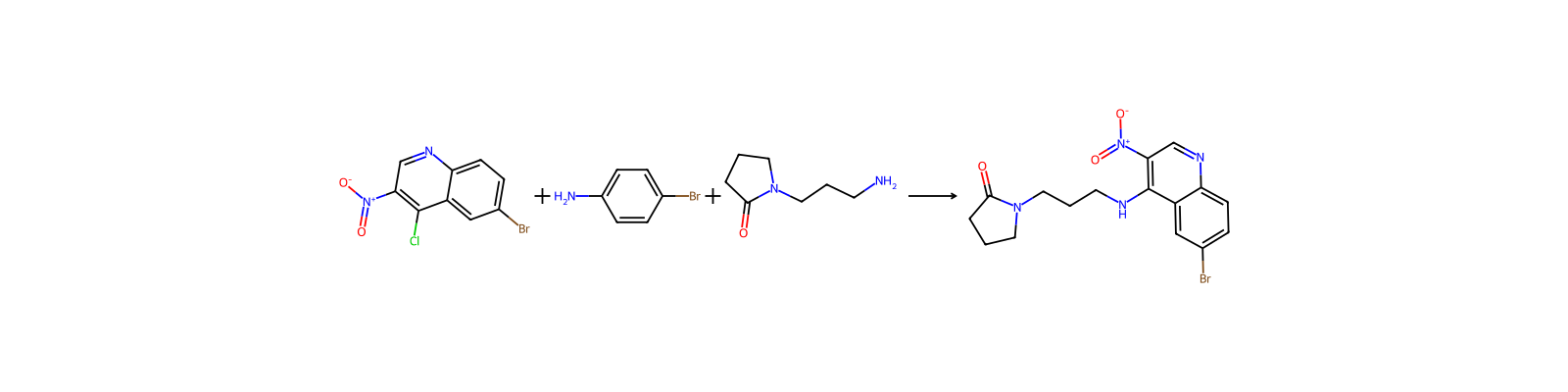
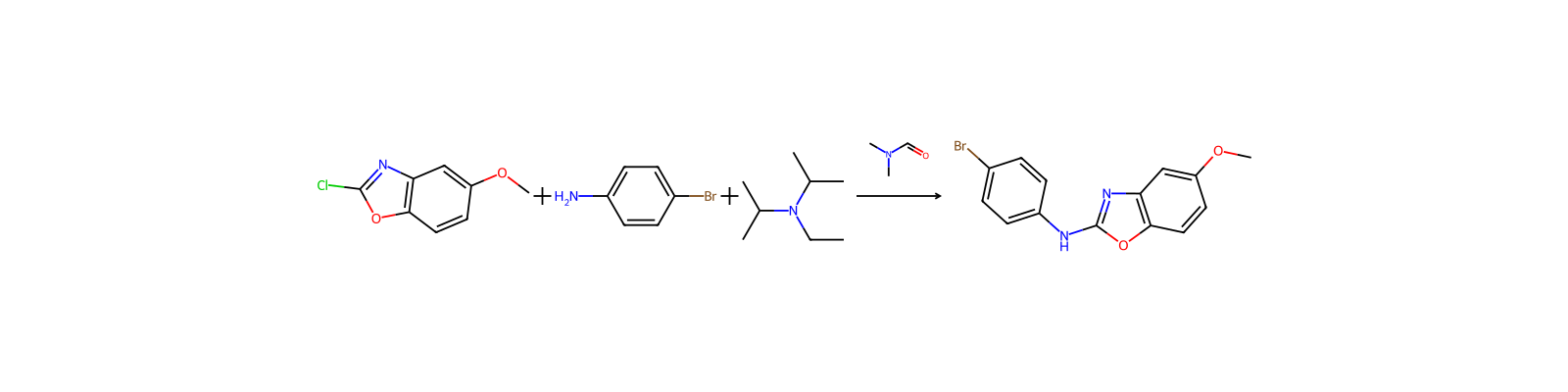
628




Verknüpfte Notizen
Wird geladen…