Grundinformationen
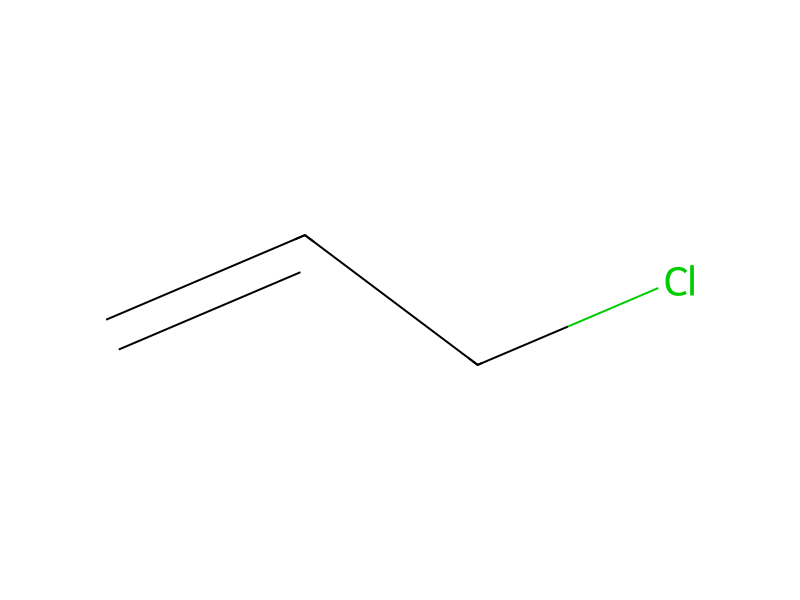
- Standard-SMILES
C=CCCl- InChIKey
OSDWBNJEKMUWAV-UHFFFAOYSA-N- Summenformel
- C3H5Cl
- Durchschnittliche Molmasse
- 76,52 g/mol
- Monoisotopische Masse
- 76,00797784
Überblick
Allyl chloride appears as a clear colorless liquid with an unpleasant pungent odor. Flash point -20 °F. Boiling point 113 °F. Less dense than water (7.8 lb / gal) and insoluble in water. Hence floats on water. Vapor irritates skin, eyes and mucous membranes. Vapors are heavier than air. Long exposure to low concentrations or short exposure to high concentrations may have adverse health effects from inhalation or skin absorption.
Namen und Bezeichner
- Bevorzugter Name
- Allyl chloride
- IUPAC
- 3-chloroprop-1-ene
- Englischer Name
- 1 -Chloro-2-propene
- Summenformel
- C3H5Cl
- Molmasse
- 0
Namen und Synonyme
ALLYL CHLORIDE107-05-13-Chloro-1-propene3-Chloropropene1-Propene, 3-chloro-3-ChloropropyleneChlorallylene2-Propenyl chloride1-Chloro-2-propeneAllylchloridChloroallylene3-Chloropropene-1
Weitere Namen anzeigen
3-ChlorpropenPropene, 3-chloro-3-Chloro-1-propyleneChloro-2-propenealpha-ChloropropyleneNCI-C04615p-AminopropiofenonDTXSID4039231
Datenbank-Bezeichner
- CAS
107-05-1- PubChem CID
- 7850
- DTXSID
DTXSID4039231- ChEMBL
CHEMBL451126- ChEBI
CHEBI:82379- UNII
- V2RFT0R50S
- EC Number
- 203-457-6
- Nikkaji
- J4.048G
Eigenschaften
Berechnete Struktureigenschaften
- XLogP
- 1,5
- Polarare Oberfläche (TPSA)
- 0 Ų
- H-Brücken-Donoren
- 0
- H-Brücken-Akzeptoren
- 0
- Frei drehbare Bindungen
- 1
- Schwere Atome
- 4
- Formalladung
- 0
- Komplexität
- 17,2
Experimentelle und physikochemische Eigenschaften
Chemical Classes
Hazardous Air Pollutants (HAPs)
Carcinogens
Volatile Organic Compound (VOC)
SolventsSolvents -> Chlorinated Aliphatics
SpringerMaterials PropertiesSchoenflies notation
PesticidesPesticide -> EPA IRIS
LogP
2.1
3.0
OdorPungent, unpleasant odor.
Density
0.94 at 68 °F (USCG, 1999) - Less dense than water; will float
0.938 at 20 °C/4 °C
Relative density (water = 1): 0.94
0.94
0.9376 @ 20°C
0.94
Color/Form
RED LIQUID
Colorless, brown, yellow, or purple liquid ...
Solubility
1 to 10 mg/mL at 66 °F (NTP, 1992)
Miscible with alcohol, chloroform, ether, petrol ether
In water, 3,370 mg/L at 25 °C
Solubility in water, g/100ml at 20 °C: 0.36
0.4%
CorrosivityAllyl chloride will attack some forms of plastics, rubber, and coatings.
Flash Point
-25 °F (NTP, 1992)
Flash point equals -25 ° F
-28.9 °C (OPEN CUP); -31.7 °C (CLOSED CUP)
-32 °C c.c.
-25 °F
-25 °F
Boiling Point
113 °F at 760 mmHg (NTP, 1992)
44-45 °C
45 °C
113 °F
44.6 °C @760 [mm Hg]
113 °F
Physikochemische Eigenschaften
- Schmelzpunkt
- -135 °C · -135 °C
- Siedepunkt
- 44 · 44-45 °C
- Dichte
- 0.938 g/cm3 · 0.938 g/cm3
Sicherheit und Regulatorisches
GHS-Klassifizierung
GHS Classification
Danger
H225: Highly Flammable liquid and vapor [Danger Flammable liquids]
P203, P210, P233, P240, P241, P242, P243, P260, P261, P264, P264+P265, P270, P271, P273, P280, P301+P317, P302+P352, P303+P361+P353, P304+P340, P305+P351+P338, P317, P318, P319, P321, P330, P332+P317, P337+P317, P362+P364, P370+P378, P391, P403+P233, P403+P235, P405, and P501 (click each P-code to see the statement)
Danger
H225 (100%): Highly Flammable liquid and vapor [Danger Flammable liquids]
P203, P210, P233, P240, P241, P242, P243, P260, P261, P262, P264, P264+P265, P270, P271, P273, P280, P301+P316, P301+P317, P302+P352, P303+P361+P353, P304+P340, P305+P351+P338, P305+P354+P338, P316, P317, P318, P319, P321, P330, P332+P317, P337+P317, P361+P364, P362+P364, P370+P378, P391, P403+P233, P403+P235, P405, and P501 (click each P-code to see the statement)
Gefahrenhinweise
Regulatory Information
Chemical: 1-Propene, 3-chloro-
Hazard Traits - Neurotoxicity; Ocular Toxicity; Respiratory Toxicity
1-Propene, 3-chloro- is listed on the EPA's Chemical Data Reporting (CDR) system. Manufacturers and importers of 1-Propene, 3-chloro- are required to report information about their production and use of this chemical to the EPA under the Toxic Substances Control Act (TSCA). (40 eCFR Part 711)
Status: Active Update: 08-02-2021 https://echa.europa.eu/registration-dossier/-/registered-dossier/14318
Allyl chloride: Does not have an individual approval but may be used under an appropriate group standard
The New Jersey Worker and Community Right to Know Act requires public and private employers to provide information about hazardous substances at their workplaces. (N.J.S.A. 34:5A-1 et. seq.)
Other Safety InformationIMAP assessments - 1-propene, 3-chloro-: Human health tier II assessment
DOT LabelFlammable Liquid Poison
Fire Hazards
Special Hazards of Combustion Products: Releases irritating hydrogen chloride gas on combustion (USCG, 1999)
· HIGHLY FLAMMABLE: Will be easily ignited by heat, sparks or flames.
Highly flammable. Gives off irritating or toxic fumes (or gases) in a fire. Vapour/air mixtures are explosive. Risk of fire and explosion on contact with incompatible substances. See Chemical Dangers.
Fire PotentialDangerous fire and explosion hazard when exposed to heat or flame ...
Health Hazards
Causes marked irritation of skin and may burn. Burns the eyes; effect may be delayed. (USCG, 1999)
· TOXIC; may be fatal if inhaled, ingested or absorbed through skin.
Hazards Summary
Exposure to allyl chloride primarily occurs for workers in manufacturing plants. The acute (short-term) effects of allyl chloride from inhalation exposure in humans consists of irritation of the eyes and respiratory passages. Chronic (long-term) exposure to allyl chloride in humans causes injury to the liver and kidneys and the onset of pulmonary edema (fluid in the lungs). There are no human cancer data available for allyl chloride. Limited animal studies indicate that exposure to allyl chloride by gavage (placing the chemical experimentally in the stomachs of mice) caused an increase in the incidence of forestomach tumors. EPA has classified allyl chloride as a Group C, a possible human carcinogen.
Liquid causes first degree burns on short exposure; [CHRIS] Corrosive to skin; [Quick CPC] Probably a mild eye irritant based on animal studies; [CHEMINFO] Experimental animals suffer no apparent adverse effects after being exposed to 3 ppm, 7 hours/day, 5 days/week for 6 months. Causes liver and kidney damage in subcutaneous lethal dose studies; In acute inhalation exposure studies at concentrations varying from 200 to 2000 ppm, dose dependent kidney damage is observed in rat and mice; Kidney and peripheral nerve injury is observed in mice given 300-500 mg/kg orally 3 times a week for 2-17 weeks. Human volunteers reported odor but no irritation after exposure to 3 ppm for 1-3 minutes; No elevations of kidney or liver function tests were found in a study of 73 males producing chlorinated hydrocarbons and exposed to allyl chloride for an average of 8.2 years; Peripheral neuropathy was reported in 53% of factory workers chronically exposed to allyl chloride. [ACGIH] Cessation of exposure usually results in good recovery. [Rosenstock, p. 676] Pulmonary edema may result from inhalation of high concentrations. [NJ-HSFS]
DOT ID and Guide
1100 131P
1100 131
Reactive GroupHalogenated Organic Compounds
EC ClassificationSymbol: F, Xn, N; R: 11-20/21/22-36/37/38-40-48/20-68-50; S: (2)-16-25-26-36/37-46-61; Note: D
UN ClassificationUN Hazard Class: 3; UN Subsidiary Risks: 6.1; UN Pack Group: I
Special Reports
CDC, Natl Inst Occup Safety Health, Hew publ (NIOSH) 76: 87 (1976). Occupational exposure to allyl chloride is covered with emphasis on biological effects of exposure, environmental data, & recommendation for standard by national institute for occupational safety & health.
USEPA; Health and Environ Effects Profile for Allyl Chloride (1988) EPA/600/X-86/198.
Bioassay of Allyl Chloride for Possible Carcinogenicity (1978) Technical Rpt Series No. 73 DHEW Pub No. (NIH) 78-1323, U.S. Department of Health Education and Welfare, National Cancer Institute, Bethesda, MD 20014
OECD; Screening Information Data Set for Allyl Chloride, 107-05-1 (May 1996). Available from: http://www.inchem.org/documents/sids/sids/chloropropene.pdf as of July 14, 2005.
European Chemicals Bureau; IUCLID Dataset, Allyl chloride (107-05-1) (2000 CD-ROM edition). Available from the database query page: http://ecb.jrc.it/esis/esis.php as of July 14, 2005.
Sicherheit und Schutzausrüstung
Fire Fighting
Excerpt from ERG Guide 131 [Flammable Liquids - Toxic; polymerization hazard]:
Use powder, AFFF, foam, carbon dioxide. In case of fire: keep drums, etc., cool by spraying with water.
First Aid Measures
Fresh air, rest. Half-upright position. Artificial respiration may be needed. Refer for medical attention.
Remove contaminated clothes. Rinse and then wash skin with water and soap. Refer for medical attention .
First rinse with plenty of water for several minutes (remove contact lenses if easily possible), then refer for medical attention.
Rinse mouth. Give a slurry of activated charcoal in water to drink. Give one or two glasses of water to drink. Refer for medical attention .
Accidental Release Measures
· CALL 911. Then call emergency response telephone number on shipping paper. If shipping paper not available or no answer, refer to appropriate telephone number listed on the inside back cover.
· ELIMINATE all ignition sources (no smoking, flares, sparks or flames) from immediate area.
First Aid
EYES: First check the victim for contact lenses and remove if present. Flush victim's eyes with water or normal saline solution for 20 to 30 minutes while simultaneously calling a hospital or poison control center. Do not put any ointments, oils, or medication in the victim's eyes without specific instructions from a physician. IMMEDIATELY transport the victim after flushing eyes to a hospital even if no symptoms (such as redness or irritation) develop.
General First Aid:
(General first aid procedures)
Safe StorageFireproof. Separated from food and feedstuffs and incompatible materials. See Chemical Dangers. Dry.
Firefighting HazardsVapor is heavier than air (vapor-air density at 100 °F, 2.2) and may travel considerable distance to source of ignition and flash back.
Exposure Control and Personal Protection
· Wear positive pressure self-contained breathing apparatus (SCBA).
2330.0 [ppm]
Fire Fighting Procedures
Use water spray, dry chemical, alcohol foam or carbon dioxide. Use water to keep fire-exposed containers cool. If leak or spill has not ignited, use water spray to disperse vapors and to provide protection for men attempting to stop leak. Water spray may be used to flush spills away from exposures.
If material /is/ on fire or involved in /a/ fire do not extinguish fire unless flow can be stopped. Use water in flooding quantities as fog. Solid streams of water may spread fire. Cool all affected containers with flooding quantities of water. Apply water from as far a distance as possible. Use "alcohol" foam, dry chemical or carbon dioxide.
Storage Conditions
Ambient storage temperature, venting should be pressure-vacuum type.
Protect from physical damage. Store in cool, dry, well-ventilated location away from any area where fire hazard may be acute. Outside or detached storage is preferred. Separate from oxidizing materials.
Keep containers sealed. Remove any sources of ignition.
Cleanup Methods
Remove all ignition sources. Ventilate area of spill or leak. For small quantities, absorb on paper towels. Evaporate in safe place (such as fume hood). Allow sufficient time for evaporating vapors to completely clear hood ductwork. Burn paper in suitable location...
Large quantites can be reclaimed or collected and atomized in suitable combustion chamber equipped with appropriate effluent gas cleaning device. Allyl chloride should not be allowed to enter confined space, such as sewer, because of possibility of explosion.
Environmental considerations: Land Spill: Dig a pit, pond, lagoon, holding area to contain liquid or solid material. /SRP: If time permits, pits, ponds, lagoons, soak holes, or holding areas should be sealed with an impermeable flexible membrane liner./ Dike surface flow using soil, sand bags, foamed polyurethane, or foamed concrete. Absorb bulk liquid with fly ash, cement powder, or commercial sorbents. Apply "universal" gelling agent to immobilize spill.
Environmental considerations: Water Spill: Use natural barriers or oil spill to control booms to limit spill travel. Use natural active agent (detergent, soaps, alcohol), if approved by EPA. Inject "universal" gelling agent to solidify encircled spill and increase effectiveness of booms. If dissolved, in region of 10 ppm or greater concentrations, apply activated carbon at ten times the spill amount. Remove trapped material with suction hoses. Use mechanical dredges or lifts to remove immobilized masses of pollutants and precipitates.
Environmental considerations: Air Spill: Apply water spray or mist to knock down vapors. Combustion products include corrosive or toxic vapors.
Nonfire Spill ResponseExcerpt from ERG Guide 131 [Flammable Liquids - Toxic; polymerization hazard]:
Disposal Methods
SRP: The most favorable course of action is to use an alternative chemical product with less inherent propensity for occupational exposure or environmental contamination. Recycle any unused portion of the material for its approved use or return it to the manufacturer or supplier. Ultimate disposal of the chemical must consider: the material's impact on air quality; potential migration in soil or water; effects on animal, aquatic, and plant life; and conformance with environmental and public health regulations.
Allyl chloride is a waste chemical stream constituent which may be subjected to ultimate disposal by controlled incineration. 1800 °F, 2 sec minimum.
Allyl chloride may be disposed of by atomizing in suitable combustion chamber equipped with an effluent gas cleaning device.
Biodegradation: In aqueous wastes allyl chloride is converted after a while to allyl alc, which is biodegraded in sewage treatment plants. The concn of the soln, however, may not exceed 100 ppm, otherwise the micro-organisms will be damaged. Concn wastes are destroyed in special waste disposal facilities.
For more Disposal Methods (Complete) data for ALLYL CHLORIDE (6 total), please visit the HSDB record page.
Toxikologische Informationen
Target Organs
Nervous
Eyes, skin, respiratory system, liver, kidneys
Ecotoxicity Values
LC50 Poecilia reticulata (Guppy) 10 mg/L/24 hr, /Conditions of bioassay not specified in source examined/
LC50 Poecilia reticulata (Guppy) 57.68 mg/L/24 hr (95% confidence interval: 48.87-68.76 mg/L); static /formulated product/
LC50 Poecilia reticulata (Guppy) 53.54 mg/L/48 hr (95% confidence interval: 43.01-71.14 mg/L); static /formulated product/
LC50 Poecilia reticulata (Guppy) 51.08 mg/L/96 hr (95% confidence interval: 41.03-67.02 mg/L); static /formulated product/
For more Ecotoxicity Values (Complete) data for ALLYL CHLORIDE (18 total), please visit the HSDB record page.
Environmental Fate
TERRESTRIAL FATE: Based on a classification scheme(1), an estimated Koc value of 51(SRC), determined from a water solubility of 3,370 mg/L(2) and a regression-derived equation(3), indicates that allyl chloride is expected to have high mobility in soil(SRC). Volatilization of allyl chloride from moist soil surfaces is expected to be an important fate process(SRC) given an estimated Henry's Law constant of 1.10X10⁻² atm-cu m/mole(SRC), using a vapor pressure of 368 mm Hg(4), and water solubility of 337 mg/L(5). Allyl chloride is expected to volatilize from dry soil surfaces(SRC) based upon its vapor pressure(4). A BOD of 62% in the Japanese MITI test(6) indicates that biodegradation is expected to be an important environmental fate process in soil(SRC).
AQUATIC FATE: Based on a classification scheme(1), an estimated Koc value of 51(SRC), determined from a water solubility of 3,370 mg/L(2) and a regression-derived equation(3), indicates that allyl chloride is not expected to adsorb to suspended solids and sediment(SRC). Volatilization from water surfaces is expected(3) based upon an estimated Henry's Law constant of 1.10X10⁻² atm-cu m/ mol derived from it's vapor pressure, 368 mm Hg(4), and water solubility, 337 mg/L(5). Using this Henry's Law constant and an estimation method(3), volatilization half-lives for a model river and model lake are 3 hours and 3 days, respectively(SRC). According to a classification scheme(6), a measured BCF range of <0.14 to <1.3(7), suggests the potential for bioconcentration in aquatic organisms is low(SRC). Allyl chloride will undergo hydrolysis at pH=7 with a half-life of approximately 8 days(8). Based on a BOD of 62% in the Japanese MITI test(7), biodegradation is expected to be an important environmental fate process in water(SRC).
ATMOSPHERIC FATE: According to a model of gas/particle partitioning of semivolatile organic compounds in the atmosphere(1), allyl chloride, which has a vapor pressure of 368 mm Hg at 25 °C(2) is expected to exist solely as a vapor in the ambient atmosphere. Vapor-phase allyl chloride is degraded in the atmosphere by reaction with photochemically-produced hydroxyl radicals(SRC); the half-life for this reaction in air is estimated to be 0.8 days(SRC), calculated from its rate constant of 1.70X10⁻¹¹ cu cm/molecule-sec at 25 °C(3). Allyl chloride does not contain chromophores that absorb at wavelengths >290 nm and therefore is not expected to be susceptible to direct photolysis by sunlight(SRC).
Adverse EffectsNeurotoxin - Sensorimotor
Exposure Routes
The substance can be absorbed into the body by inhalation, through the skin and by ingestion.
inhalation, skin absorption, ingestion, skin and/or eye contact
Ecotoxicity Excerpts
/AQUATIC SPECIES/ The 14 day LC50 value of allyl chloride to the guppy (poecilia reticulata) was determined. These data were investigated through the construction of a quantitative structure-activity relationship. Both hydrophobicity and alkylating potency of the compound were found to be necessary parameters for the satisfactory description of the LC50 data. The log LC50 experimental data for allyl chloride was 1.20 umol/L as compared to the calculated quantitative structure-activity relationship value of 2.82 umol/L.
Signs and Symptoms
Cough. Sore throat. Headache. Dizziness. Weakness. Laboured breathing. Vomiting. Unconsciousness.
Redness. Burning sensation. Pain.
Redness. Pain. Blurred vision.
Abdominal pain. Burning sensation. Vomiting.
irritation eyes, skin, nose, mucous membrane; pulmonary edema; In Animals: liver, kidney injury
Ongoing Test Status
The following link will take the user to the National Toxicology Program (NTP) Test Agent Search Results page, which tabulates all of the "Standard Toxicology & Carcinogenesis Studies", "Developmental Studies", and "Genetic Toxicity Studies" performed with this chemical. Clicking on the "Testing Status" link will take the user to the status (i.e., in review, in progress, in preparation, on test, completed, etc.) and results of all the studies that the NTP has done on this chemical. [http://ntp-apps.niehs.nih.gov/ntp_tox/index.cfm?fuseaction=ntpsearch.searchresults&searchterm=107-05-1]
Effluent Concentrations
A report on chemical emissions found that 1,112,000 lbs/year of allyl chloride were emitted to the atmosphere during 1978(1). In a 1988 study of industrial waste effluents, allyl chloride was not detected in any water samples at 37 different sampling sites throughout Canada(2).
ICSC Environmental DataThe substance is harmful to aquatic organisms.
EPA IRIS Information
Allyl chloride
Nervous
1 x 10 ^-3 mg/m^3
Medical Surveillance
The following medical procedures should be made available to each employee who is exposed to allyl chloride at potentially hazardous levels: forced vital capacity, forced expiratory volume, 14x17 chest roentgenogram, liver function tests, urinalysis, and a complete blood count. The aforementioned medical exam should be repeated on an annual basis, except that an x-ray is necessary only when indicated by the results of pulmonary function testing.
Regulatorische Informationen
Atmospheric Standards
This action promulgates standards of performance for equipment leaks of Volatile Organic Compounds (VOC) in the Synthetic Organic Chemical Manufacturing Industry (SOCMI). The intended effect of these standards is to require all newly constructed, modified, and reconstructed SOCMI process units to use the best demonstrated system of continuous emission reduction for equipment leaks of VOC, considering costs, non air quality health and environmental impact and energy requirements. Allyl chloride is produced, as an intermediate or a final product, by process units covered under this subpart.
Listed as a hazardous air pollutant (HAP) generally known or suspected to cause serious health problems. The Clean Air Act, as amended in 1990, directs EPA to set standards requiring major sources to sharply reduce routine emissions of toxic pollutants. EPA is required to establish and phase in specific performance based standards for all air emission sources that emit one or more of the listed pollutants. Allyl chloride is included on this list.
CERCLA Reportable Quantities
Persons in charge of vessels or facilities are required to notify the National Response Center (NRC) immediately, when there is a release of this designated hazardous substance, in an amount equal to or greater than its reportable quantity of 1000 lb or 454 kg. The toll free number of the NRC is (800) 424-8802. The rule for determining when notification is required is stated in 40 CFR 302.4 (section IV. D.3.b).
Clean Water Act Requirements
Allyl chloride is designated as a hazardous substance under section 311(b)(2)(A) of the Federal Water Pollution Control Act and further regulated by the Clean Water Act Amendments of 1977 and 1978. These regulations apply to discharges of this substance. This designation includes any isomers and hydrates, as well as any solutions and mixtures containing this substance.
State Drinking Water Guidelines
(NH) NEW HAMPSHIRE 7.4 ug/L
(MN) MINNESOTA 30 ug/L
(FL) FLORIDA 35 ug/L
Sicherheitsdaten
- Alarmwort
- Achtung
- Gefahrenhinweise
- Code Gefahrenhinweise Gefahrenklasse Abteilung Alarmwort Symbol P-Code H225
Chemie und Industrie
Pharmakologische Informationen
Biological Half-LifeNo reports found; [TDR, p. 67]
Metabolism/Metabolites
Allyl chloride ... dosed sc to male rats ... /was/ metabolized to allylmercapturic acid, S-allylcysteine, and S-allylcysteine S-oxide. 3-hydroxypropylmercapturic acid was /also/ a metabolite of allyl chloride ... .
Allyl glutathione and S-allyl-L-Cysteine have been detected in the bile of a rat given allyl chloride.
Allyl chloride is presumed to be metabolized to allyl alcohol, which could then be further metabolized via two pathways to form either acrolein or glycidol, from which a variety of metabolites could result. Metabolites identified in rat urine are 3-hydroxypropylmercapturic acid and allyl mercapturic acid and its sulfoxide. Allyl glutathione and S-allyl-L-cysteine have been detected in the bile of dosed rats. In-vitro metabolism of allyl chloride results in haem destruction in microsomal cytochrome P450.
...The biotransformation of allyl chloride (AC) in rats to select potential urinary biomarkers of exposure /was investigated/. ...The earlier described urinary metabolites of AC [allyl mercapturic acid (ALMA) and 3-hydroxypropyl mercapturic acid (HPMA)], as well as two urinary metabolites of ECH [alpha-chlorohydrin (alpha-CH) and 3-chloro-2-hydroxypropyl mercapturic acid (CHPMA)], were determined in this study. After ip administration of AC, in doses ranging from 66 to 590 umol/kg, control rats excreted 30 +/- 6.5% of the AC dose as ALMA. HPMA was a minor urinary metabolite of AC (<3% of the AC dose), and, for this metabolite, no clear dose-excretion relationship was found. Two other minor urinary metabolites were also found as well, namely CHPMA and alpha-CH, suggesting the formation of ECH. CHPMA excretion was linear from 66 to 330 umol/kg AC and amounted to 0.21 +/- 0.08% of the AC dose. alpha-CH excretion was linear in the dose range used and was excreted for 0.13 +/- 0.02% of the AC dose. In addition, we investigated the influence of three different enzyme inducers on the urinary metabolite profile of AC, namely pyrazole, beta-naphthoflavone, and phenobarbital. Pyrazole only increased the urinary excretion of alpha-CH. beta-Naphthoflavone induction only enhanced the ALMA excretion significantly. Phenobarbital inducted both the excretion of CHPMA and alpha-CH.
Verwendung und Herstellung
Uses
Almost all of the allyl chloride produced is used to make epichlorohydrin and glycerin. Allyl chloride derivatives are found in varnish, plastics, adhesives, perfumes, pharmaceuticals, and insecticides.
Used in the manufacture of organic chemicals; [ACGIH] Used to make glycerin and epoxy resin; [Rosenstock, p. 676]
In the synthesis of allyl compounds.
Synthesis of intermediates for manufacture of polymers, resins, & plastics
Thermosetting resins for varnishes, plastics, adhesives; synthesis of pharmaceuticals & insecticides.
Chemical intermediate for diuretics
U.S. Production
2023: 100,000,000 - <500,000,000 lb
1-Propene, 3-chloro- is listed as a High Production Volume (HPV) chemical (65FR81686). Chemicals listed as HPV were produced in or imported into the U.S. in >1 million pounds in 1990 and/or 1994. The HPV list is based on the 1990 Inventory Update Rule. (IUR) (40 CFR part 710 subpart B; 51FR21438).
Data not published.
(1986) > 500 million - 1 billion pounds
(1990) > 500 million - 1 billion pounds
For more U.S. Production (Complete) data for ALLYL CHLORIDE (9 total), please visit the HSDB record page.
Consumption PatternsPrimarily as a chemical intermediate for epichlorohydrin
Industry UsesMonomers
Methods of Manufacturing
Allyl chloride is produced on a large scale by the high-temperature (300-600 °C) chlorination of propene ... At these temperatures, chlorination proceeds by a free-radical chain mechanism, whereby the hydrogen atom in the allyl position is substituted preferentially by the chlorine, giving allyl chloride
Manufactured by chlorination of propylene; Samples, Hilbert, US 3054831 (1962 to Union Carbide).
First prepared by the reaction of allyl alcohol with phosphorous chloride
Formulations/PreparationsDry & liquid grades
General Manufacturing Information
All Other Basic Organic Chemical Manufacturing
1-Propene, 3-chloro-: ACTIVE
Anbieter50 Anbieter
国药集团化学试剂有限公司86-21-63210123 · [email protected]
梯希爱(上海)化成工业发展有限公司021-67121386 · [email protected]
上海阿拉丁生化科技股份有限公司400-6206333 13167063860 · [email protected]
南通润丰石油化工有限公司66017690 19952660367 · [email protected]
河北创海生物科技有限公司+86-86-13131129325 · [email protected]
爱斯特(成都)生物制药股份有限公司+86-28-85122536 85324413 · [email protected]
Dayang Chem (Hangzhou) Co.,Ltd.+86-0571-88938639 17705817739 · [email protected]
Hebei Yanxi Chemical Co., Ltd.+86-17531190177 · [email protected]
科瑞迪化学400-821-5857 021-64326257 · [email protected]
Henan Xiangtong Chemical Co., Ltd.86-371-61312303 · [email protected]
河北秒变生物科技有限公司17733850068
上海迈瑞尔生化科技有限公司4006356688 18621169109 · [email protected]
阿法埃莎(中国)化学有限公司400-6106006 · [email protected]
安耐吉化学&3A(安徽泽升科技股份有限公司)400-0056266 · [email protected]
武汉卡诺斯科技有限公司027-83238443 15327105076 · [email protected]
上海瀚鸿科技股份有限公司021-54306202 13764082696 · [email protected]
Cangzhou Wanyou New Material Technology Co.,Ltd18631714998 · [email protected]
上海景颜化工科技有限公司13817811078 · [email protected]
玛雅试剂+86 (573) 82222445 (0)18006601000 452520369 · [email protected]
四川库利南科技有限公司400-1166-196 18981987031 · [email protected]
天津希恩思生化科技有限公司400 638 7771 · [email protected]
Xiamen AmoyChem Co., Ltd+86-86-5926051114 · [email protected]
南京化学试剂股份有限公司025-58369808 17895012682 · [email protected]
斯百全化学(上海)有限公司021-021-021-67601398-809-809-809 15221380277 · [email protected]
艾科试剂4008-755-333 18080918076 · [email protected]
上海思域化工科技有限公司86-21-34053660 · [email protected]
赛默飞世尔科技(中国)有限公司800-810-5118 · [email protected]
北京伊诺凯科技有限公司400-810-7969 010-59572699 · [email protected]
上海遐瑞医药科技有限公司+86 21 61551611
TCI AMERICA800-4238616 · [email protected]
TOKYO CHEMICAL INDUSTRY CO., LTD.03-36680489 · [email protected]
TCI Europe320-37350700 · [email protected]
上海贤鼎生物科技有限公司4009209199 · [email protected]
北京环宇世纪化学科技有限公司hysj_bj.com
上海湄水化工科技有限公司021-60549325 18616193163
日照力德士化工有限公司010-51268198 · [email protected]
美岚实业(上海)有限公司021-58958189 · [email protected]
上海爱蝶实业有限公司021-58957966 18930537195 · [email protected]
成都零六生物科技有限公司400-1166-196 13458535857 · [email protected]
广拓化学(上海)有限公司021-60899189-8001 18918189673 · [email protected]
上海麦克林生化科技股份有限公司15221275939 15221275939 · [email protected]
成都润泽本土化工有限公司13096311329 028-88469284 616445927 · [email protected]
池州凯隆进出口贸易有限公司[email protected]
Sigma-Aldrich西格玛奥德里奇(上海)贸易有限公司021-61415566 800-8193336 · [email protected]
山东正吉化工有限公司18369999171
杭州鼎燕化工有限公司0571-87157530-8003 18267553885 · [email protected]
厦门志信化学有限公司+86-5922680277 +86-13806087780 · [email protected]
济南利扬化工有限公司0531-0531-82370399 18765887256
sgtlifesciences pvt ltd+91-8790379245 · [email protected]
邹平铭兴化工有限公司18806491188
Zugehörige Reaktionen
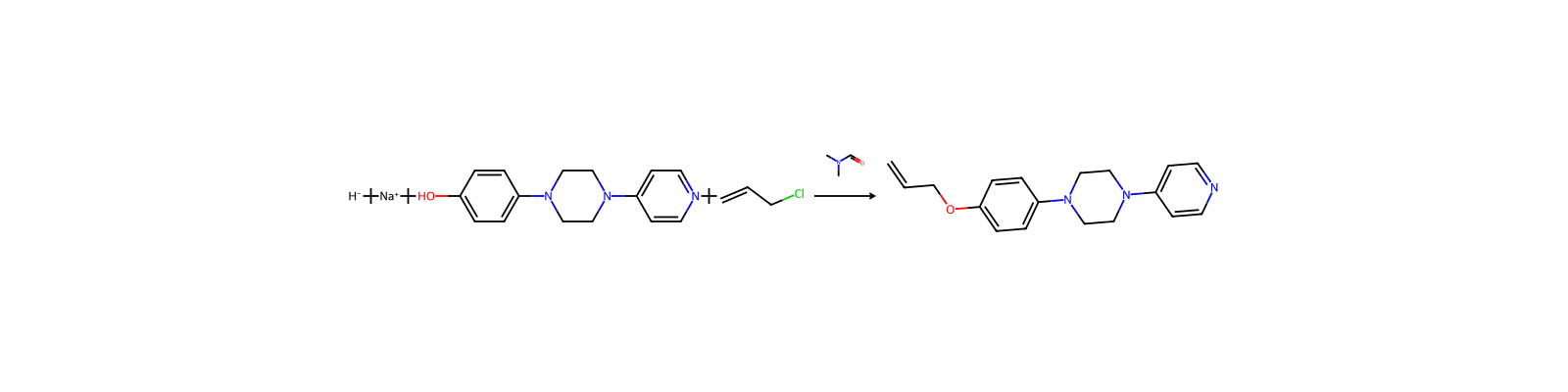
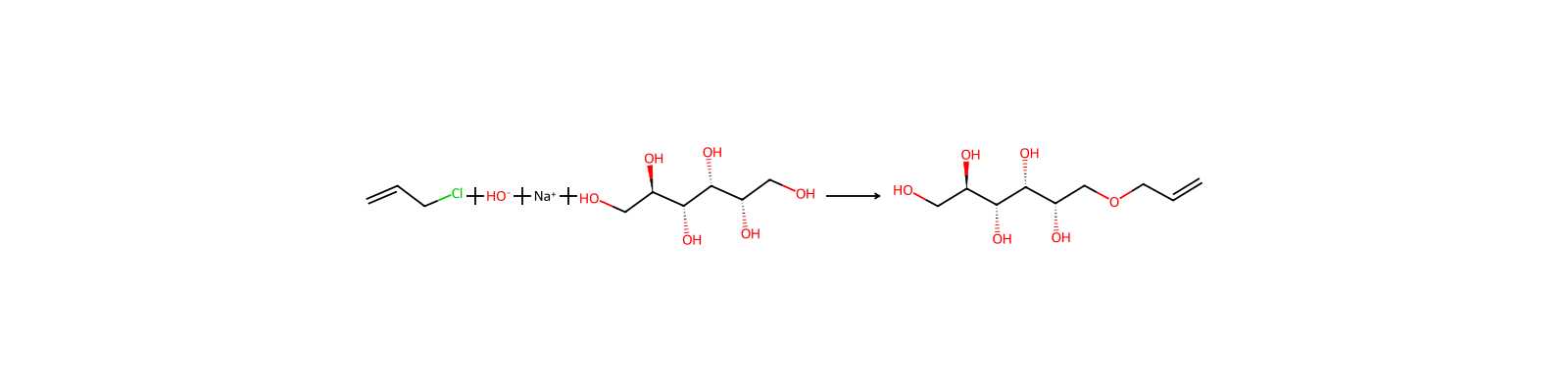
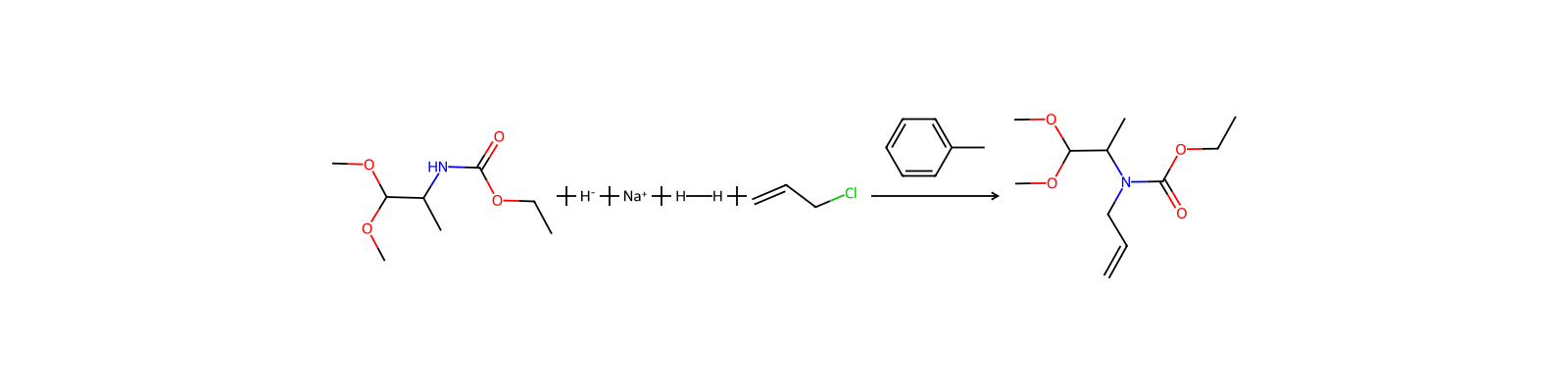
344




Verknüpfte Notizen
Wird geladen…