
Grundinformationen
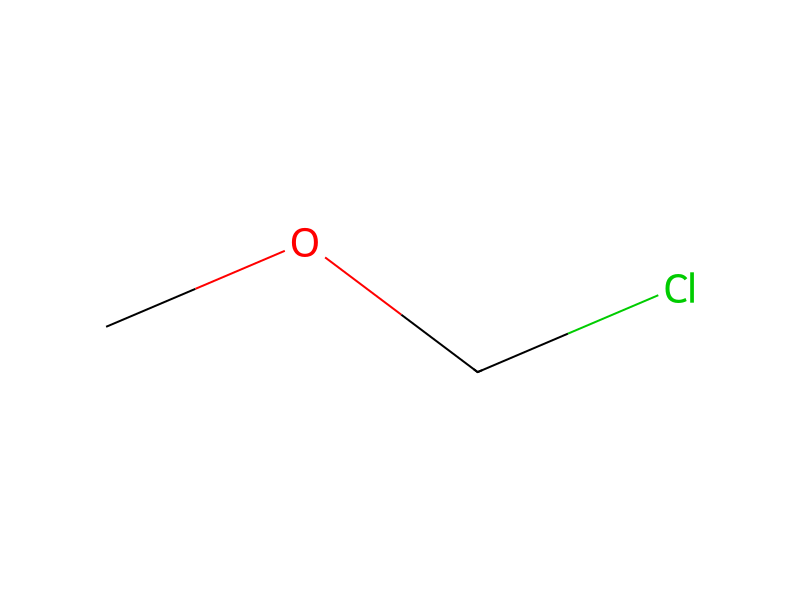
- Standard-SMILES
COCCl- InChIKey
XJUZRXYOEPSWMB-UHFFFAOYSA-N- Summenformel
- C2H5ClO
- Durchschnittliche Molmasse
- 80,51 g/mol
- Monoisotopische Masse
- 80,00289246
Überblick
Chloromethyl Methyl Ether (Technical Grade) can cause cancer according to California Labor Code.
Namen und Bezeichner
- Bevorzugter Name
- Chloromethyl Methyl Ether
- IUPAC
- chloro(methoxy)methane
- Lokaler Name
- Chlormethyl-methylether
- Englischer Name
- Chloromethyl methyl ether
- Summenformel
- C2H5ClO
- Molmasse
- 80.51
Namen und Synonyme
CHLOROMETHYL METHYL ETHER107-30-2chloro(methoxy)methaneMethane, chloromethoxy-Chlorodimethyl etherChloromethoxymethaneMethoxymethyl chlorideMethyl chloromethyl etherMethoxychloromethaneCMMEChlordimethyletherDimethylchloroether
Weitere Namen anzeigen
CH3OCH2ClchloromethylChloromethyl methylMOM chloridechlormethyl methyl ether chlorodimethyl ether
Ether, chloromethyl methylEther, dimethyl chloroMonochlorodimethyl etherMethylchloromethyl etherMonochloromethyl methyl etherEther methylique monochloreRCRA waste number U046alpha,alpha-Dichlorodimethyl ether
Datenbank-Bezeichner
- CAS
107-30-2- PubChem CID
- 7864
- DTXSID
DTXSID6020307- ChEMBL
CHEMBL3185256- ChEBI
CHEBI:82271- UNII
- 334G5B96VG
- EC Number
- 203-480-1
- Nikkaji
- J4.063K
Eigenschaften
Berechnete Struktureigenschaften
- XLogP
- 0,8
- Polarare Oberfläche (TPSA)
- 9,2 Ų
- H-Brücken-Donoren
- 0
- H-Brücken-Akzeptoren
- 1
- Frei drehbare Bindungen
- 1
- Schwere Atome
- 4
- Formalladung
- 0
- Komplexität
- 10
Experimentelle und physikochemische Eigenschaften
Chemical Classes
Hazardous Air Pollutants (HAPs)
Other Classes -> Halogenated Ethers
Carcinogens
SpringerMaterials PropertiesSchoenflies notation
PesticidesPesticide -> EPA IRIS
LogP0.320
Odor
Irritating odor
Irritating odor.
Food AdditivesPROCESSING AID -> FDA Substance added to food
Density
1.0605 at 68 °F (EPA, 1998) - Denser than water; will sink
1.0603 @ 20 °C/4 °C
Relative density (water = 1): 1.06
1.06
1.063 @ 10°C
1.06
Color/Form
COLORLESS LIQ
Colorless liquid.
Colorless liquid
Solubility
Reacts with water (NIOSH, 2024)
MISCIBLE WITH ETHANOL & ETHER & MANY OTHER ORG SOLVENTS
SOL IN ACETONE, CHLOROFORM, ETHYL ETHER, ETHYL ALCOHOL
Soluble in oxygenated solvents
Solubility in water: decomposes
Reacts
CorrosivityWill react with surface moisture to evolve hydrogen chloride which is corrosive to metal.
Flash Point
32 °F (EPA, 1998)
0 °C
0 °C (open cup).
-8 °C c.c.
32 °F (open cup)
(oc) 32 °F
Boiling Point
138 °F at 760 mmHg (EPA, 1998)
59.5 °C
59.00 to 60.00 °C. @ 760.00 mm Hg
59 °C
138 °F
59.5 °C @760 [mm Hg]
Physikochemische Eigenschaften
- Schmelzpunkt
- -103 °C · -103°C
- Siedepunkt
- 55 · 55-57 °C(lit.)
- Dichte
- 1.06 g/mL · 1.06 g/mL at 25 °C(lit.)
- Dampfdruck
- 3.55 psi · 3.55 psi ( 20 °C)
- Brechungsindex
- 20 · n20/D 1.396(lit.)
- Flammpunkt
- 60 °F · 60 °F
- storage temp.
- 0 · 0-6°C
- Wasserlöslichkeit
- decomposes
- Merck
- 13 · 13,2165
- CAS Datenbank
- 107 · 107-30-2(CAS DataBase Reference)
- NIST chemische Informationen
- Methane, chloromethoxy-(107-30-2)
Sicherheit und Regulatorisches
GHS-Klassifizierung
GHS Classification
Danger
H225: Highly Flammable liquid and vapor [Danger Flammable liquids]
P203, P210, P233, P240, P241, P242, P243, P261, P264, P270, P271, P280, P301+P317, P302+P352, P303+P361+P353, P304+P340, P317, P318, P321, P330, P362+P364, P370+P378, P403+P235, P405, and P501 (click each P-code to see the statement)
Danger
H225 (100%): Highly Flammable liquid and vapor [Danger Flammable liquids]
P203, P210, P233, P240, P241, P242, P243, P261, P264, P264+P265, P270, P271, P280, P301+P317, P302+P352, P303+P361+P353, P304+P340, P305+P351+P338, P317, P318, P321, P330, P337+P317, P362+P364, P370+P378, P403+P235, P405, and P501 (click each P-code to see the statement)
Gefahrenhinweise
Hazards IdentificationToxic/poison by inhalation (TIH/PIH)
Regulatory Information
Chemical: Methane, chloromethoxy-
Hazard Traits - Carcinogenicity; Dermatotoxicity; Ocular Toxicity; Respiratory Toxicity
Methane, chloromethoxy- is listed on the EPA's Chemical Data Reporting (CDR) system. Manufacturers and importers of Methane, chloromethoxy- are required to report information about their production and use of this chemical to the EPA under the Toxic Substances Control Act (TSCA). (40 eCFR Part 711)
Chloromethyl methyl ether: HSNO Approval: HSR002938 Approved with controls
The New Jersey Worker and Community Right to Know Act requires public and private employers to provide information about hazardous substances at their workplaces. (N.J.S.A. 34:5A-1 et. seq.)
Other Safety InformationIMAP assessments - Methane, chloromethoxy-: Environment tier I assessment
DOT LabelPoison Inhalation Hazard Flammable Liquid
Fire Hazards
Flammable/combustible material; may be ignited by heat, sparks, or flames. Vapors may travel to a source of ignition and flash back. Container may explode in heat of fire. In addition to the risk of explosion, when air mixtures of ether vapors are heated or exposed to flame or sparks, they tend to form peroxides. Ethers containing peroxides can detonate when heated. Unburned material may form powerful tear gas. When wet, also forms irritating formaldehyde gas. Evolves formaldehyde and hydrogen chloride. When heated to decomposition, it emits toxic fumes of chlorides. Avoid decomposing heat Hazardous polymerization may not occur. (EPA, 1998)
· HIGHLY FLAMMABLE: Will be easily ignited by heat, sparks or flames.
Highly flammable. Gives off irritating or toxic fumes (or gases) in a fire. Heating will cause rise in pressure with risk of bursting. Vapour/air mixtures are explosive.
Fire PotentialA very dangerous fire hazard when exposed to heat or flame.
Health Hazards
The principal effect is irritation. The liquid causes severe irritation of eyes and skin; and vapor exposure of 100 ppm is severely irritating to eyes and nose. This level is dangerous to life in 4 hours. Pulmonary edema or pneumonia may cause death. There was increased death rate from respiratory cancer among exposed victims and it is a regulated carcinogen. (EPA, 1998)
· TOXIC; may be fatal if inhaled, ingested or absorbed through skin.
Hazards Summary
Chloromethyl methyl ether is used in some chemical manufacturing processes. Acute (short-term) inhalation exposure causes severe irritation of the skin, eyes, mucous membranes, and respiratory tract, pulmonary edema, and pneumonia in humans. Chronic (long-term) inhalation exposure may cause chronic bronchitis in humans. Numerous case reports and epidemiological studies have reported increased incidences of respiratory cancer in workers occupationally exposed to chloromethyl methyl ether. Increased incidences of lung tumors have been observed in mice, rats, and hamsters exposed by inhalation. EPA has classified chloromethyl methyl ether as a Group A, known human carcinogen.
Liquid causes second degree burns after contact for a few minutes; [CHRIS] CMME becomes rapidly contaminated with bis-chloromethyl ether, a known human carcinogen; [ACGIH] A lachrymator; [HSDB] A corrosive substance that can cause pulmonary edema; [ICSC] Bis(chloromethyl) ether and Chloromethyl methyl ether (technical grade) are listed in Table 18-3 as substances that are known human carcinogens (IARC Group 1) after occupational exposure causing lung cancer (oat cell). [Siemiatycki, p. 327]
DOT ID and Guide
1239 131
1239 131
Reactive GroupEthers
EC ClassificationSymbol: F, T; R: 45-11-20/21/22; S: 53-45; Note: E
UN ClassificationUN Hazard Class: 6.1; UN Subsidiary Risks: 3; UN Pack Group: I
Sicherheit und Schutzausrüstung
Fire Fighting
Move container from fire area. Dike fire control water for later disposal; do not scatter material. Cool containers that are exposed to flames with water. Withdraw immediately in case of rising sound from venting safety device or any discoloration of tank due to fire. Extinguish with dry chemicals, foam, or carbon dioxide. Water may be ineffective in extinguishing fire. (EPA, 1998)
Use dry powder. Water may be ineffective. In case of fire: keep drums, etc., cool by spraying with water.
First Aid Measures
Fresh air, rest. Half-upright position. Artificial respiration may be needed. Refer immediately for medical attention.
Remove contaminated clothes. Rinse skin with plenty of water or shower. Refer for medical attention .
Rinse with plenty of water (remove contact lenses if easily possible). Refer immediately for medical attention.
Rinse mouth. Do NOT induce vomiting. Refer immediately for medical attention.
Accidental Release Measures
· CALL 911. Then call emergency response telephone number on shipping paper. If shipping paper not available or no answer, refer to appropriate telephone number listed on the inside back cover.
· ELIMINATE all ignition sources (no smoking, flares, sparks or flames) from immediate area.
First Aid
Signs and Symptoms of Chloromethyl Methyl Ether Exposure: Acute exposure to chloromethyl methyl ether may produce severe irritation and burning of the skin, eyes, and mucous membranes. Sore throat, fever, chills, dypsnea (difficulty breathing), chronic bronchitis, and pulmonary edema with productive cough may be noted.
General First Aid:
(General first aid procedures)
Safe StorageFireproof. Provision to contain effluent from fire extinguishing. Well closed. Separated from food and feedstuffs. Store in an area without drain or sewer access.
Firefighting Hazards
FLASHBACK ALONG VAPOR TRAIL MAY OCCUR.
Unburned material may form powerful tear gas. When wet, also forms irritating formaldehyde gas.
May float or sink in fire
Exposure Control and Personal Protection
· Wear positive pressure self-contained breathing apparatus (SCBA).
TIH (Toxic Inhalation Hazard) - Term used to describe gases and volatile liquids that are toxic when inhaled. Some are TIH materials themselves, e.g., chlorine, and some release TIH gases when spilled in water, e.g., chlorosilanes. [ERG 2016].
Fire Fighting ProceduresEXTINGUISH WITH DRY CHEMICALS, FOAM OR CARBON DIOXIDE. WATER MAY BE INEFFECTIVE ON FIRE. COOL EXPOSED CONTAINERS WITH WATER.
Storage Conditions
Store at ambient temperature.
PRECAUTIONS FOR "CARCINOGENS": Storage site should be as close as practical to lab in which carcinogens are to be used, so that only small quantities required for ... expt need to be carried. Carcinogens should be kept in only one section of cupboard, an explosion-proof refrigerator or freezer (depending on chemicophysical properties ...) that bears appropriate label. An inventory ... should be kept, showing quantity of carcinogen & date it was acquired ... Facilities for dispensing ... should be contiguous to storage area. /Chemical Carcinogens/
Cleanup Methods
Neutralizing agents for acids and caustics: Flood with water. Rinse with sodium bicarbonate or lime solution. Notify local health and pollution control agencies. Notify operators of nearby water intakes.
PRECAUTIONS FOR "CARCINOGENS": A high-efficiency particulate arrestor (HEPA) or charcoal filters can be used to minimize amt of carcinogen in exhausted air ventilated safety cabinets, lab hoods, glove boxes or animal rooms ... Filter housing that is designed so that used filters can be transferred into plastic bag without contaminating maintenance staff is avail commercially. Filters should be placed in plastic bags immediately after removal ... The plastic bag should be sealed immediately ... The sealed bag should be labelled properly ... Waste liquids ... should be placed or collected in proper containers for disposal. The lid should be secured & the bottles properly labelled. Once filled, bottles should be placed in plastic bag, so that outer surface ... is not contaminated ... The plastic bag should also be sealed & labelled. ... Broken glassware ... should be decontaminated by solvent extraction, by chemical destruction, or in specially designed incinerators. /Chemical Carcinogens/
Nonfire Spill ResponseExcerpt from ERG Guide 131 [Flammable Liquids - Toxic]:
Disposal Methods
Generators of waste (equal to or greater than 100 kg/mo) containing this contaminant, EPA hazardous waste number U046, must conform with USEPA regulations in storage, transportation, treatment and disposal of waste.
Incineration, preferably after mixing with another combustible fuel. Care must be exercised to assure complete combustion to prevent the formation of phosgene. An acid scrubber is necessary to remove the halo acids produced. Recommendable method: Incineration. Not recommendable method: Evaporation.
A potential candidate for rotary kiln incineration at a temperature range of 820 to 1,600 °C and residence times of seconds for liquids and gases, and hours for solids. A potential candidate for fluidized bed incineration at a temperature range of 450 to 980 °C and residence times of seconds for liquids and gases, and longer for solids. A potential candidate for liquid injection incineration at a temperature range of 650 to 1,600 °C and a residence time of 0.1 to 2 seconds.
PRECAUTIONS FOR "CARCINOGENS": There is no universal method of disposal that has been proved satisfactory for all carcinogenic compounds & specific methods of chem destruction ... published have not been tested on all kinds of carcinogen-containing waste. ... summary of avail methods & recommendations ... /given/ must be treated as guide only. /Chemical Carcinogens/
For more Disposal Methods (Complete) data for CHLOROMETHYL METHYL ETHER (9 total), please visit the HSDB record page.
Toxikologische Informationen
Cancer Sites[in animals: skin & lung cancer]
InteractionsCHLOROMETHYL METHYL ETHER ELICITED WEAK TUMOR RESPONSE WITH CROTON RESIN AS PROMOTING AGENT.
Target OrgansEyes, skin, respiratory system
Environmental Fate
TERRESTRIAL FATE: The fate of chloromethyl methyl ether in moist soil is unknown. However, since it hydrolyzes so rapidly in pure water(1), it is expected to disappear rapidly from moist soil(SRC).
AQUATIC FATE: Chloromethyl methyl ether will hydrolyze instantaneously in water (half-life <1 sec)(1). Reaction products include methanol, formaldehyde, HCl, and chloromethylformate(1,2).
ATMOSPHERIC FATE: Chloromethyl methyl ether will hydrolyze in humid air (half-life 3.5 min to 6.5 hr)(1,2). However, results suggest that the hydrolysis is surface catalyzed and therefore may not represent the true half-life in atmospheric room air or outside air(SRC). The half-life of chloromethyl methyl ether with photochemically-produced hydroxyl radicals has been determined to be approximately 7 days(3,SRC).
Adverse EffectsDermatotoxin - Skin burns.
Exposure Routes
Serious local effects by all routes of exposure.
inhalation, skin absorption, ingestion, skin and/or eye contact
Toxicity Summary
... Based upon the lack of persistence of BCME /bis(chloromethyl) ether/ and CMME /chloromethyl methyl ether/ in the environment, average human exposure to these compounds is likely to be very low. ... General population exposure to BCME and CMME occurs where they are produced by the widespread burning of this synergist in mosquito coils. ...Quantitative information on the kinetics and metabolism ... in humans is not available. However, it is anticipated that although in vivo BCME and CMME would be rapidly hydrolyzed in tissues to formaldehyde and hydrogen chloride, and methanol, formaldehyde and hydrogen chloride, respectively, there should be alkylation activity. ... BCME and CMME are acutely toxic by inhalation or ingestion. ...During inhalation of BCME /in laboratory animal studies/, irritation of the eyes and respiratory tract were noted as well as necrotizing bronchitis. Skin application resulted in erythema and necrosis, and application to the eye resulted in corneal necrosis. Similar effects were noted after exposure to CMME. Increased mortality and tracheal hyperplasia were observed in rats and hamsters following multiple inhalation exposure to ... BCME ... Similar results were observed in rats repeatedly exposed by inhalation to ... CMME ... In general, positive results were obtained when ... tested for mutagenicity in vitro. ... BCME and CMME have been reported to increase unscheduled DNA synthesis in vitro ... Studies with CMME have shown an increased incidence of tracheal metaplasia and bronchial hyperplasia in a dose-dependent manner in rats. However, results of carcinogenicity bioassays are inconclusive in animal studies. ... Exposure of workers to BCME (CMME) was associated with increased risk of lung cancer. Workers exposed to commercial grade CMME were probably also exposed to BCME. The predominant tumors in exposed workers were small cell carcinomas, quite distinct from the chiefly squamous cell carcinomas usually found in smokers. The association between exposure to BCME (CMME) and lung cancer was strong ... The type of lung cancer, latency period and average age of appearance of lung tumors in workers exposed to BCME (CMME) has been remarkably consistent. For CMME, there is also evidence of a positive relationship between a qualitative measure of exposure and mortality due to lung cancer. ... Concentrations /of BCME and CMME/ ... in the course of occupational exposure increased the frequency of chromosomal aberrations in the peripheral lymphocytes of exposed workers. Information has not been reported regarding the neurological, immunological, developmental or reproductive effects of BCME or CMME in humans. ... No information on the toxicological effects of BCME and CMME on environmental organisms has been reported.
Signs and Symptoms
Burning sensation. Cough. Sore throat. Dizziness. Headache. Nausea. Shortness of breath. Laboured breathing.
Redness. Pain. Skin burns. Blisters.
Redness. Pain. Blurred vision. Loss of vision. Severe burns.
Burns in mouth and throat. Abdominal cramps. Vomiting. Diarrhoea. Shock or collapse.
irritation eyes, skin, mucous membrane; pulmonary edema, pulmonary congestion, pneumonitis; skin burns, necrosis; cough, wheezing, pulmonary congestion; blood stained-sputum; weight loss; bronchial secretions; [potential occupational carcinogen]
Ongoing Test Status
The following link will take the user to the National Toxicology Program (NTP) Test Agent Search Results page, which tabulates all of the "Standard Toxicology & Carcinogenesis Studies", "Developmental Studies", and "Genetic Toxicity Studies" performed with this chemical. Clicking on the "Testing Status" link will take the user to the status (i.e., in review, in progress, in preparation, on test, completed, etc.) and results of all the studies that the NTP has done on this chemical. [http://ntp-apps.niehs.nih.gov/ntp_tox/index.cfm?fuseaction=ntpsearch.searchresults&searchterm=107-30-2]
EPA IRIS InformationChloromethyl methyl ether (CMME)
Medical Surveillance
PRECAUTIONS FOR "CARCINOGENS": Whenever medical surveillance is indicated, in particular when exposure to a carcinogen has occurred, ad hoc decisions should be taken concerning ... /cytogenetic and/or other/ tests that might become useful or mandatory. /Chemical Carcinogens/
Whole Blood: The literature search did not reveal reports of monitoring tests for assessment of methyl chloromethyl ether absorption. Reference Ranges: Normal - not established; Exposed - not established; Toxic - not established.
Serum or Plasma: The literature search did not reveal reports of monitoring tests for assessment of methyl chloromethyl ether absorption. Reference Ranges: Normal - not established; Exposed - not established; Toxic - not established.
Urine: The literature search did not reveal reports of monitoring tests for assessment of methyl chloromethyl ether absorption. Reference Ranges: Normal - not established; Exposed - not established; Toxic - not established.
For more Medical Surveillance (Complete) data for CHLOROMETHYL METHYL ETHER (8 total), please visit the HSDB record page.
Natural Pollution SourcesChloromethyl methyl ether has been reported not to occur in nature(1).
Regulatorische Informationen
RCRA Requirements
U046; As stipulated in 40 CFR 261.33, when chloromethyl methyl ether, as a commercial chemical product or manufacturing chemical intermediate or an off-specification commercial chemical product or a manufacturing chemical intermediate, becomes a waste, it must be managed according to Federal and/or State hazardous waste regulations. Also defined as a hazardous waste is any residue, contaminated soil, water, or other debris resulting from the cleanup of a spill, into water or on dry land, of this waste. Generators of small quantities of this waste may qualify for partial exclusion from hazardous waste regulations (40 CFR 261.5).
Atmospheric Standards
Listed as a hazardous air pollutant (HAP) generally known or suspected to cause serious health problems. The Clean Air Act, as amended in 1990, directs EPA to set standards requiring major sources to sharply reduce routine emissions of toxic pollutants. EPA is required to establish and phase in specific performance based standards for all air emission sources that emit one or more of the listed pollutants. Chloromethyl methyl ether is included on this list.
CERCLA Reportable Quantities
Persons in charge of vessels or facilities are required to notify the National Response Center (NRC) immediately, when there is a release of this designated hazardous substance, in an amount equal to or greater than its reportable quantity of 10 lb or 4.54 kg. The toll free number of the NRC is (800) 424-8802; In the Washington D.C. metropolitan area (202) 426-2675. The rule for determining when notification is required is stated in 40 CFR 302.4 (section IV. D.3.b).
Releases of CERCLA hazardous substances are subject to the release reporting requirement of CERCLA section 103, codified at 40 CFR part 302, in addition to the requirements of 40 CFR part 355. Chloromethyl methyl ether is an extremely hazardous substance (EHS) subject to reporting requirements when stored in amounts in excess of its threshold planning quantity (TPQ) of 100 lbs.
DHS Chemicals of Interest (COI)
Chloromethyl methyl ether
1
5000
Toxic chemical that can be released at a facility.
Sicherheitsdaten
- wgk
- 3
- ridadr
- UN 1239
- RTECS-Nr.
- KN6650000
- risk_code
- 45-11-20/21/22
- hazard_code
- F,T
- safety_code
- 53-45
- hazard_class
- 6.1
- packing_group
- I
Chemie und Industrie
Pharmakologische Informationen
Biological Half-LifeNo reports found; [TDR, p. 851]
Cellular LocationsCytoplasm
Verwendung und Herstellung
Uses
Chloromethyl methyl ether is used in the synthesis of chloromethylated compounds and as an alkylating agent and solvent used in the manufacture of water repellents, ion-exchange resins, and industrial polymers.
Used as a methylating agent; [ACGIH]
Carcinogen--see 29 CFR 1910.1003;
CHEM INT, EG, FOR DODECYLBENZYL CHLORIDE
An alkylating agent & solvent used in the manufacture of water repellants, ion-exchange resins, & indust polymers
In synthesis of chloromethylated compounds.
Impurities
... Technical grade chloromethyl methyl ether contains 1-8% bis(chloromethyl)ether ... .
Commercial product is usually contaminated by sym-dichloromethyl ether.
U.S. Production
2023: 5,000,000 - <10,000,000 lb
(1977) AT LEAST 4.59X10+9 G
(1982) PROBABLY GREATER THAN 2.27X10+6 G
Industry UsesMonomers
Methods of Manufacturing
Prepn by passing hydrogen chloride through a mixture of formalin and methanol.
Methyl chloromethyl ether ... can be made by ... reaction of /aliphatic compounds with paraformaldehyde and hydrogen chloride/. A highly carcinogenic by-product, bischloromethyl ether, restricts the use of this reaction.
Methanol + formaldehyde + hydrogen chloride, anhydrous (reaction)
Formulations/PreparationsCommercial chloromethyl methyl ether contains a minimum of 95% of the active ingredient
General Manufacturing Information
Plastics Material and Resin Manufacturing
Methane, chloromethoxy-: ACTIVE
IN 1976 THE INDUSTRIAL USE OF CHLOROMETHYL ETHERS HAS BEEN WIDELY CURTAILED OR STOPPED ALTOGETHER.
Anwendungen
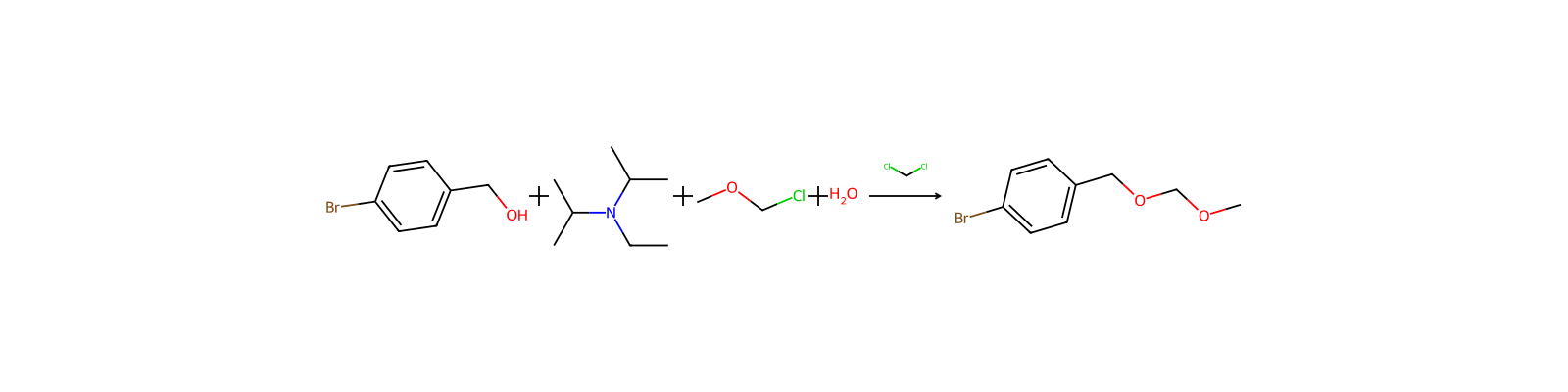
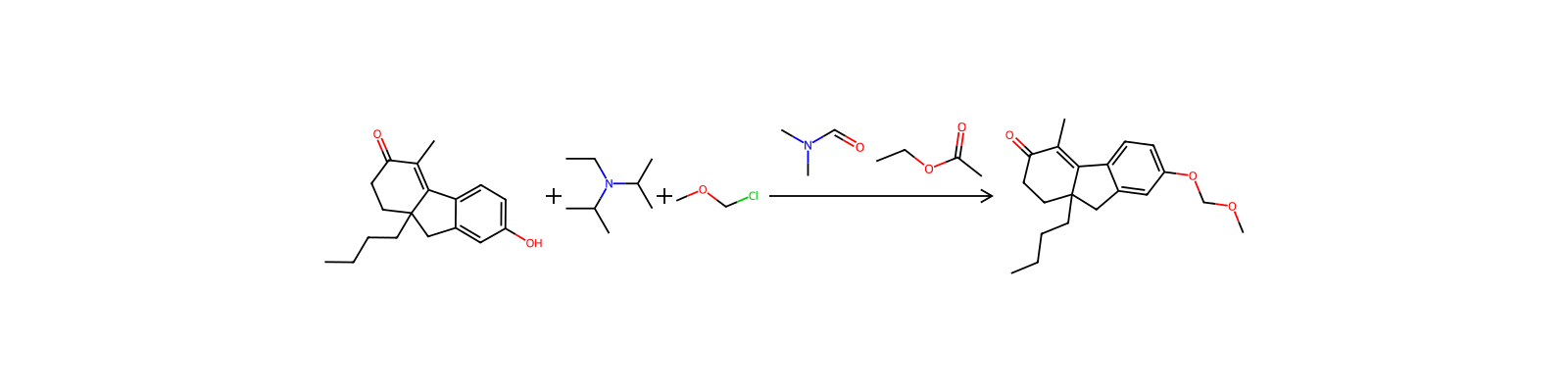
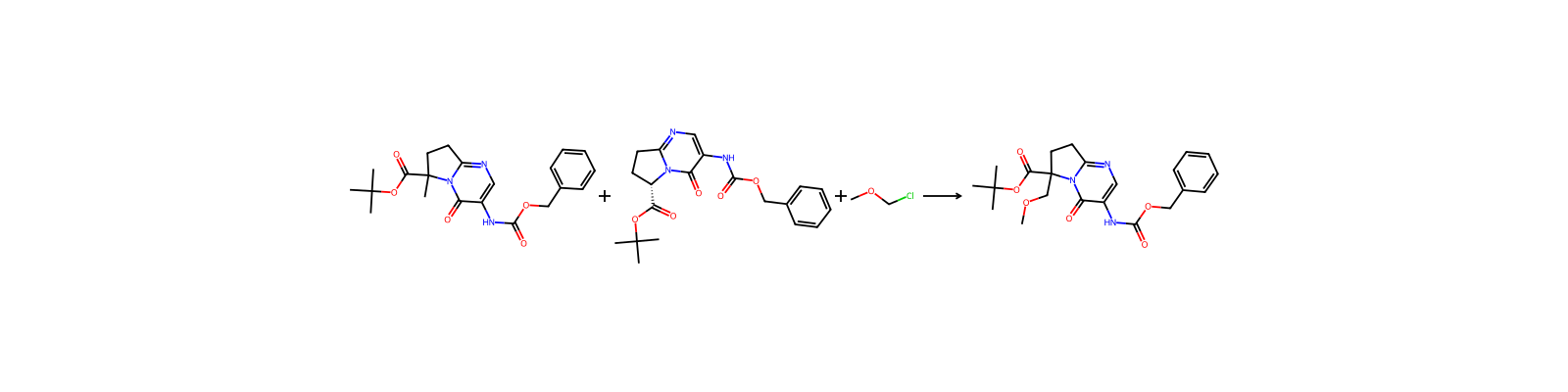
VerwendenA chloroalkyl ether that is an efficient alkylating agent. Used as an alcohol protecting group in the preparation of various organic compounds. A known human carcinogen.
Vor- und nachgelagerte Produkte
Vorgelagerte Rohstoffe
Nachgelagerte Produkte
Zugehörige Reaktionen
1.612



Verknüpfte Notizen
Wird geladen…