
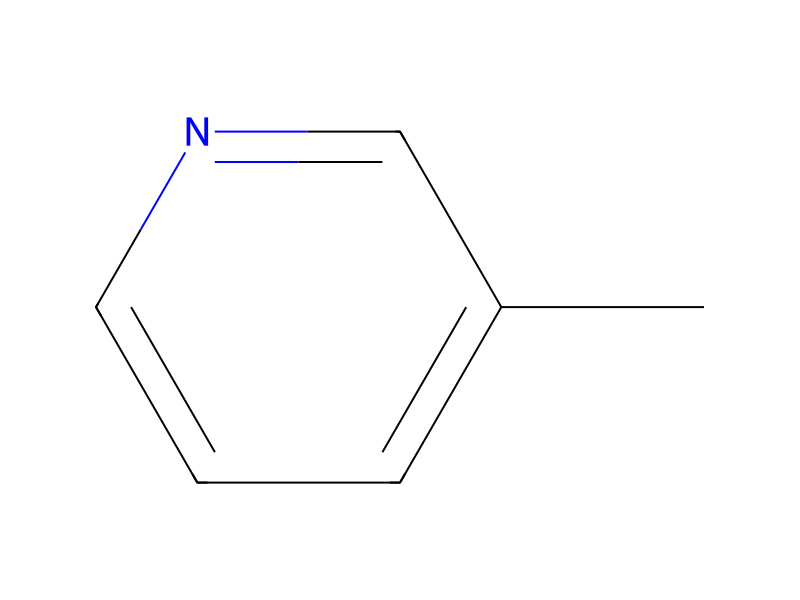
Grundinformationen
- Standard-SMILES
Cc1cccnc1- InChIKey
ITQTTZVARXURQS-UHFFFAOYSA-N- Summenformel
- C6H7N
- Durchschnittliche Molmasse
- 93,13 g/mol
- Monoisotopische Masse
- 93,05784922
Überblick
Beta-picoline is a colorless liquid with a sweetish odor. (NTP, 1992)
Namen und Bezeichner
- Bevorzugter Name
- 3-Methylpyridine
- IUPAC
- 3-methylpyridine
- Lokaler Name
- 3-Methylpyridin
- Englischer Name
- 3-Picoline
- Summenformel
- C6H7N
- Molmasse
- 93.13
Namen und Synonyme
3-METHYLPYRIDINE3-Picoline108-99-6beta-PicolinePyridine, 3-methyl-m-Picolinem-Methylpyridinebeta-MethylpyridineDTXSID9021897B083J4KF7FNSC-18251DTXCID201897
Weitere Namen anzeigen
3-Prcolinepyridine,3-methyl-BETAP3-PicoLbPicolin
CHEBI:39922RefChem:29989203-636-9.beta.-Picoline.beta.-MethylpyridineNSC 18251MFCD000064023-Mepy
Datenbank-Bezeichner
- CAS
108-99-6- PubChem CID
- 7970
- DTXSID
DTXSID9021897- ChEMBL
CHEMBL15722- ChEBI
CHEBI:39922- UNII
- B083J4KF7F
- EC Number
- 203-636-9
- Nikkaji
- J5.085G
Eigenschaften
Berechnete Struktureigenschaften
- XLogP
- 1,2
- Polarare Oberfläche (TPSA)
- 12,9 Ų
- H-Brücken-Donoren
- 0
- H-Brücken-Akzeptoren
- 1
- Frei drehbare Bindungen
- 0
- Schwere Atome
- 7
- Formalladung
- 0
- Komplexität
- 52,1
Experimentelle und physikochemische Eigenschaften
Chemical ClassesNitrogen Compounds -> Pyridines
DrugsPharmaceuticals -> Listed in ZINC15
SpringerMaterials PropertiesBoiling point
LogP
log Kow = 1.20
1.20
OdorSweetish, not unpleasant odor
Density
0.957 (USCG, 1999) - Less dense than water; will float
0.9566 at 20 °C/4 °C
Relative density (water = 1): 0.96
0.9613 @ 20°C
Flavoring AgentsEU Flavoring substances
Color/FormColorless liquid
Solubility
Very soluble (NTP, 1992)
Miscible with water at 20 °C
Miscible with alcohol, ether
Very soluble in acetone; soluble in carbon tetrachloride
Solubility in water: miscible
Flash Point
97 °F (NTP, 1992)
38 °C
37 °C (99 °F) (Closed cup)
38 °C c.c.
Boiling Point
290 to 291 °F at 760 mmHg (NTP, 1992)
144.1 °C
143-144 °C
144.1 °C @760 [mm Hg]
DecompositionWhen heated to decomposition it emits toxic fumes of /nitrogen oxides/.
Physikochemische Eigenschaften
- Schmelzpunkt
- -19 °C · -19 °C (lit.)
- Siedepunkt
- 144 °C · 144 °C (lit.)
- Dichte
- 0.957 g/mL · 0.957 g/mL at 25 °C (lit.)
- Dampfdichte
- 3.2 · 3.2 (vs air)
- Dampfdruck
- 4.4 mm · 4.4 mm Hg ( 20 °C)
- Brechungsindex
- 20 · n20/D 1.504(lit.)
- Flammpunkt
- 97 °F · 97 °F
- storage temp.
- Flammables area
- Löslichkeit
- alcohol: miscible(lit.)
- pka
- 5.68 · 5.68(at 20℃)
- Aggregatzustand
- Liquid
- Farbe
- Clear yellow
- PH
- 10 · 10 (100g/l, H2O, 20℃)
- Geruch (Odor)
- Unpleasant
- Explosionsgrenze
- 1.3 · 1.3-8.7%(V)
- Wasserlöslichkeit
- soluble
- Spezifische Wärmekapazität
- 1.7 J/ · Cp(liquid): 1.7 J/(g·K), at 25℃
- Merck
- 14 · 14,7401
- BRN
- 1366 · 1366
- Henry's Law Constant
- 1.2 · 1.2×100 mol/(m3Pa) at 25℃, Brockbank (2013)
- Dielectric constant
- 11.1 · 11.1
- Stabilität
- Stable. Flammable. Hygroscopic. Incompatible with oxidizing agents.
- InChI
- 1S/C6H7N/c1-6-3-2-4-7-5-6/h2-5H,1H3
- InChIKey
- ITQTTZVARXURQS-UHFFFAOYSA-N
- SMILES
- Cc1cccnc1
- LogP
- 1.2 at · 1.2 at 20℃
- CAS Datenbank
- 108 · 108-99-6(CAS DataBase Reference)
- NIST chemische Informationen
- 3 · Pyridine, 3-methyl-(108-99-6)
- EPA chemische Informationen
- 3 · 3-Methylpyridine (108-99-6)
Sicherheit und Regulatorisches
GHS-Klassifizierung
GHS Classification
This chemical does not meet GHS hazard criteria for 2% (36 of 1774) of reports.
Danger
H226 (95.7%): Flammable liquid and vapor [Warning Flammable liquids]
P210, P233, P240, P241, P242, P243, P260, P261, P262, P264, P264+P265, P270, P271, P280, P301+P317, P301+P330+P331, P302+P352, P302+P361+P354, P303+P361+P353, P304+P340, P305+P351+P338, P305+P354+P338, P316, P317, P319, P321, P330, P337+P317, P361+P364, P363, P370+P378, P403+P233, P403+P235, P405, and P501 (click each P-code to see the statement)
Aggregated GHS information provided per 1774 reports by companies from 21 notifications to the ECHA C&L Inventory. Each notification may be associated with multiple companies.
Danger
Gefahrenhinweise
Regulatory Information
Chemical: Pyridine, 3-methyl-
Commission Regulation (EC) No 1565/2000 (Repealed by Com. Implementing Reg. (EU) No 872/2012)
Pyridine, 3-methyl- is listed on the EPA's Chemical Data Reporting (CDR) system. Manufacturers and importers of Pyridine, 3-methyl- are required to report information about their production and use of this chemical to the EPA under the Toxic Substances Control Act (TSCA). (40 eCFR Part 711)
Status: Active Update: 11-12-2019 https://echa.europa.eu/registration-dossier/-/registered-dossier/2119
3-Methylpyridine: Does not have an individual approval but may be used under an appropriate group standard
DOT LabelFlammable Liquid
Fire Hazards
Special Hazards of Combustion Products: Vapors may travel considerable distance to a source of ignition and flashback. Forms explosive mixtures in air. Emits toxic fumes under fire conditions. (USCG, 1999)
Flammable. Gives off irritating or toxic fumes (or gases) in a fire. Above 38 °C explosive vapour/air mixtures may be formed.
Fire Potential
Moderate fire risk.
Flammable when exposed to heat or flame.
Health Hazards
HARMFUL if swallowed, inhaled or absorbed through skin. Material is extremely destructive to tissue of the mucous membranes and upper respiratory tract, eyes and skin. Inhalation may be fatal as a result of spasm, inflammation of larynx and bronchi, chemical pneumonitis and pulmonary edema. Symptoms of exposure may include burning sensation, coughing, wheezing, laryngitis, shortness of breath, headache, nausea and vomiting. (USCG, 1999)
Hazards Summary
A corrosive substance that can cause injury to the skin, eyes, and respiratory tract; Inhalation of high concentrations can cause unconsciousness; The liquid defats the skin; [ICSC] A corrosive substance that can cause injury to the skin, eyes, and respiratory tract; May be absorbed through skin; Causes CNS depression in high-dose animal studies; [MSDSonline] An irritant that can cause CNS depression; In one case, a worker exposed for 11 years had elevated liver enzymes; Liver changes occur in rats exposed to chronic high doses; [AIHA]
Reactive GroupAmines, Phosphines, and Pyridines
UN ClassificationUN Hazard Class: 3; UN Pack Group: III
TSCA Requirements
Pursuant to section 8(d) of TSCA, EPA promulgated a model Health and Safety Data Reporting Rule. The section 8(d) model rule requires manufacturers, importers, and processors of listed chemical substances and mixtures to submit to EPA copies and lists of unpublished health and safety studies. 3-Methylpyridine is included on this list. Effective date: 09/10/84; Sunset date: 09/10/94.
Reactivity AlertsHighly Flammable
Reactivity Profile
BETA-PICOLINE may react with oxidizing materials (NTP, 1992). Neutralizes acids in exothermic reactions to form salts plus water. May be incompatible with isocyanates, halogenated organics, peroxides, phenols (acidic), epoxides, anhydrides, and acid halides. Flammable gaseous hydrogen may be generated in combination with strong reducing agents, such as hydrides.
Atmospheric Standards
This action promulgates standards of performance for equipment leaks of Volatile Organic Compounds (VOC) in the Synthetic Organic Chemical Manufacturing Industry (SOCMI). The intended effect of these standards is to require all newly constructed, modified, and reconstructed SOCMI process units to use the best demonstrated system of continuous emission reduction for equipment leaks of VOC, considering costs, non air quality health and environmental impact and energy requirements. 3-Methylpyridine is produced, as an intermediate or a final product, by process units covered under this subpart.
Sicherheit und Schutzausrüstung
Fire Fighting
Fires involving this material should be controlled using a dry chemical, carbon dioxide or Halon extinguisher. (NTP, 1992)
Use water spray, powder, alcohol-resistant foam, carbon dioxide. In case of fire: keep drums, etc., cool by spraying with water.
First Aid Measures
Fresh air, rest. Refer for medical attention.
Remove contaminated clothes. Rinse skin with plenty of water or shower. Refer for medical attention .
First rinse with plenty of water for several minutes (remove contact lenses if easily possible), then refer for medical attention.
Rinse mouth. Do NOT induce vomiting. Refer for medical attention .
First Aid
EYES: First check the victim for contact lenses and remove if present. Flush victim's eyes with water or normal saline solution for 20 to 30 minutes while simultaneously calling a hospital or poison control center. Do not put any ointments, oils, or medication in the victim's eyes without specific instructions from a physician. IMMEDIATELY transport the victim after flushing eyes to a hospital even if no symptoms (such as redness or irritation) develop.
Safe StorageFireproof. Separated from strong oxidants.
Firefighting HazardsSpecial hazards arising from the substance or mixture: Carbon oxides, nitrogen oxides (NOx).
Fire Fighting Procedures
Suitable extinguishing media: Use water spray, alcohol-resistant foam, dry chemical or carbon dioxide.
Advice for firefighters: Wear self-contained breathing apparatus for firefighting if necessary.
If material on fire or involved in fire: Do not extinguish fire unless flow can be stopped. Use water in flooding quantities as fog. Solid streams of water may be ineffective. Cool all affected containers with flooding quantities of water. Apply water from as far a distance as possible. Use "alcohol" foam, dry chemical, or carbon dioxide. /Picolines/
Storage Conditions
Conditions for safe storage, including any incompatibilities: Keep container tightly closed in a dry and well-ventilated place. Containers which are opened must be carefully resealed and kept upright to prevent leakage. Hygroscopic. Storage class (TRGS 510): Flammable liquids.
Cleanup Methods
Accidental Release Measures. Personal precautions, protective equipment and emergency procedures: Wear respiratory protection. Avoid breathing vapours, mist or gas. Ensure adequate ventilation. Remove all sources of ignition. Evacuate personnel to safe areas. Beware of vapours accumulating to form explosive concentrations. Vapours can accumulate in low areas. Environmental precautions: Prevent further leakage or spillage if safe to do so. Do not let product enter drains. Methods and materials for containment and cleaning up: Contain spillage, and then collect with an electrically protected vacuum cleaner or by wet-brushing and place in container for disposal according to local regulations.
Nonfire Spill Response
SMALL SPILLS AND LEAKAGE: If you should spill this chemical, use absorbent paper to pick up all liquid spill material. Seal the absorbent paper, as well as any of your clothing which may be contaminated, in a vapor-tight plastic bag for eventual disposal. Wash any surfaces you may have contaminated with a soap and water solution. Do not reenter the contaminated area until the Safety Officer (or other responsible person) has verified that the area has been properly cleaned.
Disposal Methods
SRP: The most favorable course of action is to use an alternative chemical product with less inherent propensity for occupational harm/injury/toxicity or environmental contamination. Recycle any unused portion of the material for its approved use or return it to the manufacturer or supplier. Ultimate disposal of the chemical must consider: the material's impact on air quality; potential migration in soil or water; effects on animal and plant life; and conformance with environmental and public health regulations.
Waste treatment methods. Product: Burn in a chemical incinerator equipped with an afterburner and scrubber but exert extra care in igniting as this material is highly flammable. Offer surplus and non-recyclable solutions to a licensed disposal company. Contact a licensed professional waste disposal service to dispose of this material. Contaminated packaging: Dispose of as unused product.
Spillage Disposal
Personal protection: chemical protection suit including self-contained breathing apparatus. Collect leaking and spilled liquid in sealable containers as far as possible. Absorb remaining liquid in sand or inert absorbent. Then store and dispose of according to local regulations.
Preventive Measures
SRP: The scientific literature for the use of contact lenses in industry is conflicting. The benefit or detrimental effects of wearing contact lenses depend not only upon the substance, but also on factors including the form of the substance, characteristics and duration of the exposure, the uses of other eye protection equipment, and the hygiene of the lenses. However, there may be individual substances whose irritating or corrosive properties are such that the wearing of contact lenses would be harmful to the eye. In those specific cases, contact lenses should not be worn. In any event, the usual eye protection equipment should be worn even when contact lenses are in place.
Precautions for safe handling: Avoid contact with skin and eyes. Avoid inhalation of vapour or mist. Keep away from sources of ignition - No smoking.Take measures to prevent the build up of electrostatic charge.
Appropriate engineering controls: Avoid contact with skin, eyes and clothing. Wash hands before breaks and immediately after handling the product.
Gloves must be inspected prior to use. Use proper glove removal technique (without touching glove's outer surface) to avoid skin contact with this product. Dispose of contaminated gloves after use in accordance with applicable laws and good laboratory practices. Wash and dry hands.
For more Preventive Measures (Complete) data for 3-METHYLPYRIDINE (6 total), please visit the HSDB record page.
Toxikologische Informationen
Interactions
The three IQ (2-amino-3-methylimidazo(4,5-f) quinoline) compounds IQ, MeIQx (2-amino-3,4-dimethyl (4,5-f) quinoxaline) and MeIQ (2-amino-3,4-dimethylimidazo(4,5-f)quinoline) have been found in boiled pork juice. To determine which Maillard reaction products are important in the formation of IQ-type mutagens in boiled pork juice, six Maillard reaction products were separately added to the porkjuice before reflux boiling and then the mutagenicity of each sample was examined with Salmonella typhimurium TA98 in the presence of S9 mix. The addition of four Maillard reaction products enhanced the mutagenicity of pork juice 1.2-2.9-fold after reflux boiling. The highest level of enhancement was observed with tetrahydrothiophene, followed by 2,3-dimethylpyrazine, 3-methylpyridine and 2-methylpyridine. However, the addition of 2-acetylpyrrole and imidazole greatly inhibited the mutagenicity of pork juice.
3-Methylpyridine partially relieved the ataxia induced by tri-o-cresyl phosphate in hens.
Ecotoxicity Values
LD50; Species: Wild bird oral 1 g/kg
LC50; Species: Pimephales promelas (Fathead Minnow) age 29 days, length 18.1 mm, weight 0.077 g; Conditions: freshwater, flow through, 24.1 °C, pH 7.8, hardness 43.5 mg/L CaCO3, alkalinity 44.0 mg/L CaCO3, dissolved oxygen 7.2 mg/L; Concentration: 144000 ug/L for 96 hr (95% confidence interval: 131000-160000 ug/L) /99% purity/
Environmental Fate
TERRESTRIAL FATE: Based on a classification scheme(1), an estimated Koc value of 115(SRC), determined from a structure estimation method(2), indicates that 3-methylpyridine is expected to have high mobility in soil(SRC). The pKa of 3-methylpyridine is 5.63(3), indicating that this compound will exist partially in cation form in the environment and cations generally adsorb more strongly to soils containing organic carbon and clay than their neutral counterparts(4). Soil studies with 2-methylpyridine(5), a compound expected to have similar sorption properties as 3-methylpryidine(SRC), demonstrated that Koc can vary with pH with lowest adsorption occurring in the non-ionized form(5). Volatilization of 3-methylpyridine from moist soil surfaces is expected to be an important fate process(SRC) given a Henry's Law constant of 7.73X10⁻⁶ atm-cu m/mole(6). 2-Methylpyridine is expected to volatilize from dry soil surfaces(SRC) based upon a vapor pressure of 6.05 mm Hg at 25 °C(7). 3-Methylpyridine is expected to biodegrade fairly rapidly in aerobic soil; however, under anaerobic conditions, this compound may be persistent(8,9). 3-Methylpyridine was added to aerobic Fincastle silt loam for a period of 32 days; 69.3% of the available nitrogen was released after this time(8). However, in an aerobic surface soil experiment, only 35% biodegradation was reported in 3 months while in anaerobic surface soil, under denitrifying and sulfidogenic conditions, 50 and 10 to 20% of the initially added 3-methylpyridine was biodegraded, respectively, in 3 months(9).
AQUATIC FATE: Based on a classification scheme(1), an estimated Koc value of 115(SRC), determined from a structure estimation method(2), indicates that 3-methylpyridine is not expected to adsorb to suspended solids and sediment(SRC). Volatilization from water surfaces is expected(3) based upon a Henry's Law constant of 7.73X10⁻⁶ atm-cu m/mole(4). Using this Henry's Law constant and an estimation method(3), volatilization half-lives for a model river and model lake are 5 and 37 days, respectively(SRC). According to a classification scheme(5), an estimated BCF of 3(SRC), from its log Kow of 1.20(6) and a regression-derived equation(2), suggests the potential for bioconcentration in aquatic organisms is low(SRC). Low bioconcentration was reported for BCF tests using carp (Cyprinus carpio)(7). Rapid biodegradation under aerobic conditions is likely although 3-methylpyridine seems resistant to biodegradation under anaerobic conditions(8,9). 3-Methylpyridine was rapidly biodegraded in acclimated aerobic natural waters with complete removal within 2 to 4 days(8). However, in sulfidogenic estuarine sediments, 3-methylpyridine was not biodegraded over 200 days(9). 3-Methylpyridine is not expected to undergo hydrolysis in the environment due to the lack of functional groups that hydrolyze under environmental conditions(3). The UV absorption spectrum of 3-methylpyridine in aqueous solution shows no absorption >290 nm(10); therefore, 3-methylpyridine is not expected to be susceptible to direct photolysis by sunlight(SRC).
ATMOSPHERIC FATE: According to a model of gas/particle partitioning of semivolatile organic compounds in the atmosphere(1), 2-methylpyridine, which has a vapor pressure of 6.05 mm Hg at 25 °C(2), is expected to exist solely as a vapor in the ambient atmosphere. Vapor-phase 3-methylpyridine is degraded in the atmosphere by reaction with photochemically-produced hydroxyl radicals(SRC); the half-life for this reaction in air is estimated to be 7 days(SRC), calculated from its rate constant of 2.30X10⁻¹² cu cm/molecule-sec at 25 °C(3). The UV absorption spectrum of 3-methylpyridine in aqueous solution shows no absorption >290 nm(4); therefore, 3-methylpyridine is not expected to be susceptible to direct photolysis by sunlight(SRC).
Food Survey ValuesConcentrations of 3-methylpyridine in 3 commercial fermented soybean curds from Hong Kong were 17.9, 21.0, and 54.6 ug/kg(1). 3-Methylpyridine was identified as a volatile component of boiled beef(2) and mutton(3).
Adverse EffectsNeurotoxin - Other CNS neurotoxin
Exposure RoutesThe substance can be absorbed into the body by inhalation of its vapour, through the skin and by ingestion.
Toxicity Summary
IDENTIFICATION AND USE: 3-Methylpyridine is a colorless liquid. It is used as a solvent; intermediate in dye and resins industries; in manufacture of insecticides, waterproofing agents, niacin and niacinamide. HUMAN EXPOSURE AND TOXICITY: 3-Methylpyridine caused eye irritation, gastro-intestinal disturbances and central nervous system (CNS) effects in one worker and may have produced liver abnormalities and facial skin eruptions in another. ANIMAL STUDIES: 3-Methylpyridine was a marked skin irritant in rabbits and guinea-pigs and has caused severe eye irritation in rabbits.. It has affected electrophysiological parameters in rats. Moderate acute oral, dermal and inhalation toxicity was demonstrated in laboratory animals, the principal site of toxic attack being the CNS. Repeated inhalation exposure resulted in increased liver weight in rats. 3-Methylpyridine was tested in three independent bacterial gene mutation studies; all studies gave negative results in S. typhimurium or E. coli tester strains, with and without exogenous metabolic activation. In vivo, no significant increases in the frequencies of micronucleated erythrocytes were observed in peripheral blood of male or female mice. In NTP cancerogenicity studies there was equivocal evidence of carcinogenic activity of 3-methylpyridine in male mice based on increased incidences of alveolar/ bronchiolar adenoma and alveolar/bronchiolar adenoma or carcinoma (combined). There was clear evidence of carcinogenic activity of 3-methylpyridine in female mice based on the increased incidences of alveolar/ bronchiolar adenoma or carcinoma (combined) in the lung and of hepatocellular carcinoma and hepatoblastoma in the liver. In the similar studies in rats there was no evidence of carcinogenic activity of 3-methylpyridine in male rats. There was some evidence of carcinogenic activity of 3-methylpyridine in female rats based on increased incidences of alveolar/bronchiolar adenoma and alveolar/bronchiolar adenoma or carcinoma (combined).
Signs and Symptoms
Cough. Dizziness. Drowsiness. Headache. Nausea. Sore throat. Unconsciousness. Weakness.
MAY BE ABSORBED! Dry skin. Redness. Burning sensation. Pain. Blisters. Further see Inhalation.
Redness. Pain. Severe deep burns.
Abdominal pain. Burning sensation. Diarrhoea. Further see Inhalation.
Ongoing Test Status
EPA has released the first beta version (version 0.5) of the Interactive Chemical Safety for Sustainability (iCSS) Dashboard. The beta version of the iCSS Dashboard provides an interactive tool to explore rapid, automated (or in vitro high-throughput) chemical screening data generated by the Toxicity Forecaster (ToxCast) project and the federal Toxicity Testing in the 21st century (Tox21) collaboration. /The title compound was tested by ToxCast and/or Tox21 assays; See the data in Chemical Explorer/[USEPA; ICSS Dashboard Application; Available from, as of June 27, 2014: http://actor.epa.gov/dashboard/]
The following link will take the user to the National Toxicology Program (NTP) Test Agent Search Results page, which tabulates all of the "Standard Toxicology & Carcinogenesis Studies", "Developmental Studies", and "Genetic Toxicity Studies" performed with this chemical. Clicking on the "Testing Status" link will take the user to the status (i.e., in review, in progress, in preparation, on test, completed, etc.) and results of all the studies that the NTP has done on this chemical.[Available from, as of October 22, 2014: http://ntp-apps.niehs.nih.gov/ntp_tox/index.cfm?fuseaction=ntpsearch.searchresults&searchterm=108-99-6]
Effluent ConcentrationsOil shale condensate retort water contained 3-methylpyridine at 6.5 mg/L(1).
Soil Adsorption/Mobility
Using a structure estimation method based on molecular connectivity indices(1), the Koc of 3-methylpyridine can be estimated to be 115(SRC). According to a classification scheme(2), this estimated Koc value suggests that 3-methylpyridine is expected to have high mobility in soil. The pKa of 3-methylpyridine is 5.63(3), indicating that this compound will exist partially in cation form in the environment and cations generally adsorb more strongly to soils containing organic carbon and clay than their neutral counterparts(4). Soil studies with 2-methylpyridine(5), a compound expected to have similar sorption properties as 3-methylpryidine(SRC), demonstrated that Koc can vary with pH with lowest adsorption occurring in the non-ionized form(5).
TSCA Test Submissions
Subchronic inhalation toxicity was evaluated in groups of 10 male Crl:CD(SD)BR rats exposed to atmospheres containing 3-methylpyridine at an analytically measured (by gas chromatograph) level of 0 or 290q33 ppm for 6 h/d, 5 d/week for 2 weeks. The test atmosphere was generated by pumping liquid test material into a heated flask and diluting the resulting vapors with air introduced into the flask and chamber. There were no mortalities. Clinical observations included no compound-related signs of toxicity. Clinical chemistry and hematological studies revealed no treatment- related changes. Necropsy revealed elevated mean absolute and relative liver weights which was reversible after 13 days recovery. There were no other signs of toxicity.
3-Methylpyridine (CAS # 108-99-6, 98%) was evaluated for mutagenicity in Chinese hamster V79 lung cells exposed to concentrations of 0, 3.25, 3.5, and 3.75 uL/mL/plate in triplicate cultures, at 3 uL/mL/plate in solitary culture, and 4 uL/mL/plate in duplicate, without rat liver S9 metabolic activation (due to negative results in Ames microsome test), each for 4 hours. Exposure levels were chosen to span cloning efficiencies ranging from 3.6 to 74.6% L/mL/plate in preliminary cytotoxicity assay, and treated cells were subcultured in nonselective and selective medium, respectively, to determine survival and mutagenicity. By study protocol, a reproducible dose-related response with a 10-fold increase in the mutation rate of controls at 1 or more doses constituted a biologically significant indication of mutagenicity. With correction for cell survival, no treatment-related increased mutation frequency was observed.
3-Methylpyridine (CAS # 108-99-6, 98%) was evaluated for DNA single-strand breaks in Chinese hamster V79 lung cells exposed to concentrations of 0, 2, 3, 4, and 5 uL/mL/plate for 4 hours without metabolic activation (due to a negative results in Ames microsome assay). Concentrations were chosen to span cloning efficiences from 0 to 90.4% in preliminary cytotoxicity testing, and a survival index (cloning efficiency) was determined by Coulter count of trypsinized control and treated cells following genotoxicity assay. By study protocol, a 3-fold increase in elution rate relative to concurrent control in 2 consecutive doses constituted a biologically significant indication of genotoxicity. With correction for cell survival, alkaline filter elution of lysed treated and control cells with fluorimetric quantification of the residual DNA/dye complex disclosed no significant increase in DNA single-strand breaks relative to controls.
3-Methylpyridine (CAS # 108-99-6) was evaluated for mutagenicity in cultured TA1535, TA1537, TA98, and TA100 strains of Salmonella typhimurium, both in the presence and absence of rat liver S-9 metabolic activation. In two independent assays, bacterial cultures in triplicate with and without metabolic activation were exposed to 0 (unspecified solvent control), 0.51, 1.63, 5.10, 16.30, and 51.0 uM/plate for 36-72 hours. Relative to vehicle and historical controls, exposures did not increase mean frequency of base-pair or frame-shift histidine revertants in any strain regardless of metabolic activation.
Regulatorische Informationen
TSCA Requirements
Pursuant to section 8(d) of TSCA, EPA promulgated a model Health and Safety Data Reporting Rule. The section 8(d) model rule requires manufacturers, importers, and processors of listed chemical substances and mixtures to submit to EPA copies and lists of unpublished health and safety studies. 3-Methylpyridine is included on this list. Effective date: 09/10/84; Sunset date: 09/10/94.
Atmospheric Standards
This action promulgates standards of performance for equipment leaks of Volatile Organic Compounds (VOC) in the Synthetic Organic Chemical Manufacturing Industry (SOCMI). The intended effect of these standards is to require all newly constructed, modified, and reconstructed SOCMI process units to use the best demonstrated system of continuous emission reduction for equipment leaks of VOC, considering costs, non air quality health and environmental impact and energy requirements. 3-Methylpyridine is produced, as an intermediate or a final product, by process units covered under this subpart.
Sicherheitsdaten
- wgk
- 1
- tsca
- TSCA listed
- ridadr
- UN 2313 3/PG 3
- hs_code
- 29333999
- RTECS-Nr.
- TJ5000000
- risk_code
- 10-20/21/22-34-36/37/38-22
- Toxizität
- bird - wild,LD50,oral,1gm/kg (1000mg/kg),Archives of Environmental Contamination and Toxicology. Vol. 12, Pg. 355, 1983.
- hazard_code
- C,Xn
- safety_code
- 16-26-36/37/39-45-36
- hazard_class
- 3
- packing_group
- III
- Speicherklasse
- 3 - Flammable liquids
- Giftige Stoffe Daten
- 108-99-6(Hazardous Substances Data)
- Hazard Classifications
- Acute Tox. 3 DermalAcute Tox. 3 InhalationAcute Tox. 4 OralEye Dam. 1Flam. Liq. 3Skin Corr. 1B
- Selbstentzündungstemperatur
- ~1000 °F
Chemie und Industrie
Pharmakologische Informationen
Biological Half-LifeThe position of the methyl group drastically influenced the pharmacokinetics of the methylpyridines, with 3-methylpyridine exhibiting the longest biological halflife.
Metabolism/Metabolites
Intraperitoneal admin to guinea pigs, rabbits, mice, & ferrets resulted in urinary excretioN of the N-oxide (approx 10% in rats, 40% in mice & guinea pigs).
Urinary excretioN of pyridine n-oxide was incr iN mice pretreated with phenobarbitone, compared to controls. 3-Methylcholanthrene had no appreciable effect.
N-Oxidation is a minor route for 3-methylpyridine biotransformation with 6.6, 4.2, & 0.7% biotransformation of the dose, respectively, being excreted in the urine of mice, rats & guinea pigs receiving ip doses of the chemical.
Absorption, Distribution and Excretion
The % uptake of 3-methylpyridine by rats increased with dosage; elimination occurred in 2 phases, the duration of which also was dose dependent. Addition of a methyl group to pyridine greatly increased the rate of uptake into liver, kidney & brain or rats.
Verwendung und Herstellung
Uses
Used as a solvent (pharmaceuticals, resins, and dyestuffs), rubber accelerator, laboratory reagent, and chemical intermediate; [HSDB] Picolines are constituents in cigarette smoke, bone oil, coal tar, and coke oven emissions. [AIHA] Used as a flavoring agent in foods and beverages; [IARC Monographs - 122]
Solvent; intermediate in dye and resins industries; in the manufacture of insecticides, waterproofing agents, niacin and niacinamide.
Solvent in synthesis of pharmaceuticals, resins, dyestuffs, rubber accelerators, insecticides. preparation of nicotinic acid and nicotinic acid amide, waterproofing agents, laboratory reagent.
Used as a chemical intermediate for the synthesis of: 3-chloro-2-hydroxy-5-trifluoromethylpyridine; 2-hydroxy-5-(trifluoromethyl)pyridine; nicotinonitrile
The predominant use of 3-methylpyridine is as a starting material for agrochemicals and pharmaceuticals. For example, it is used to make insecticides such as chlorpyrifos, food additives, eg, niacin and its amide, and herbicides, eg, fluazifop-butyl.
3-Methylpyridine may serve as an important source of nicotinic acid for dietary supplements.
U.S. Production
2023: 7,000,000 - <8,500,000 lb
(1989) ca. 9000 metric ton/year
3-Methylpyridine is listed as a High Production Volume (HPV) chemical (65FR81686). Chemicals listed as HPV were produced in or imported into the U.S. in >1 million pounds in 1990 and/or 1994. The HPV list is based on the 1990 Inventory Update Rule. (IUR) (40 CFR part 710 subpart B; 51FR21438).
Production volume for non-confidential chemicals reported under the 2006 Inventory Update Rule. Chemical: Pyridine, 3-methyl-. Aggregated National Production Volume: 10 to < 50 million pounds.
Non-confidential 2012 Chemical Data Reporting (CDR) information on the production and use of chemicals manufactured or imported into the United States. Chemical: Pyridine, 3-methyl-. National Production Volume: Withheld.
Consumption PatternsESSENTIALLY 100% AS A CHEMICAL INTERMEDIATE
Consumer UsesIntermediate
Industry UsesIntermediate
Methods of Manufacturing
In a vapor-phase reaction over a nickel- containing catalyst in the presence of hydrogen, 2-methylglutaronitrile gives 3-methylpiperidine, which then undergoes dehydrogenation over palladium - alumina to give 3-methylpyridine.
From cyclohexylamine plus ammonia and zinc chloride, also from coal tar and bone oil.
Acetaldehyde + formaldehyde + ammonia (Reilly synthesis; coproduced with pyridine/alpha-picoline/gamma-picoline)
Acrolein + ammonia (Daicel process; coproduced with pyridine)
General Manufacturing Information
All Other Basic Organic Chemical Manufacturing
Pyridine, 3-methyl-: ACTIVE
Pyridine bases are a constituent of tars. They were isolated from coal tar or coal gas before synthetic manufacturing processes became established. The amounts contained in coal tar and coal gas are small, and the pyridine bases isolated from them are a mixture of many components. Thus, with a few exceptions, isolation of pure pyridine bases was expensive. Today, almost all pyridine bases are produced by synthesis. /Pridine bases/
Anwendungen
Occurrence3-Methylpyridine is released during the production of fossil fuels. It is formed as a byproduct of coke production (Naizer and Mashek 1974); is present in coal gasification wastewater (Giabbai et al 1985); is a contaminant of groundwater near underground coal gasification sites (Stuermer and Morris 1982); is a component of groundwater contaminated with coal-tar waste (Pereira et al 1983); and is found in shale oil wastewaters (Hawthorne and Sievers 1984; Hawthorne et al 1985). It is formed upon pyrolysis of wood (Yasuhara and Sugiura 1987) and is a constituent of cigarette (IARC 1986; Sakuma et al 1984) and marijuana (Merli et al 1981) smoke. 3-Methylpyridine is formed during the thermal degradation of nicotine in the burning of tobacco (Schmelz et al 1979). The chemical is also present in brewed coffee (Sasaki et al 1987) and black tea (Werkoff and Hubert 1975). 3-Methylpyridine has been detected along with other micropollutants in the Barcelona water supply (Rivera et al 1987). Methods for the biological treatment of wastewater high in the chemical have been developed (Roubiskova 1986). The biodegradability of 3-methylpyridine has been studied in various soils (Sims and Sommers 1985, 1986).
Verwenden3-Picoline is used as a precursor in pharmaceuticals and agricultural industries. It acts as a precursor to 3-cyanopyridine, niacin, vitamin-B. It is an antidote for organophosphate poisoning.
Vor- und nachgelagerte Produkte
Vorgelagerte Rohstoffe
Nachgelagerte Produkte
Anbieter50 Anbieter
梯希爱(上海)化成工业发展有限公司021-67121386 · [email protected]
上海阿拉丁生化科技股份有限公司400-6206333 13167063860 · [email protected]
山东欣合新材料有限公司15665828542 15662672320 · [email protected]
Syntechem Co.,Ltd[email protected]
上海迈瑞尔生化科技有限公司4006356688 18621169109 · [email protected]
Wuhan EnTai Technology Development Co,.Ltd86-27-82330560 · [email protected]
上海拓克化学科技有限公司+86-021-69895597 13776836200 +86-13776836200 · [email protected]
阿法埃莎(中国)化学有限公司400-6106006 · [email protected]
安耐吉化学&3A(安徽泽升科技股份有限公司)400-0056266 · [email protected]
上海瀚鸿科技股份有限公司021-54306202 13764082696 · [email protected]
上海景颜化工科技有限公司13817811078 · [email protected]
嘉兴市艾森化工有限公司0573-85285100 18627885956 · [email protected]
合肥天健化工有限公司551-65418679 15856988503;15837135945 · [email protected]
上海比阳实业有限公司+86-15021878111 · [email protected]
南京蓝白化工有限公司025-85499326 15366059326;13813836665 · [email protected]
江苏喜勒能源有限公司15653388333 15653388333 · [email protected]
山东西亚化学有限公司13355009207 13355009207 · [email protected]
玛雅试剂+86 (573) 82222445 (0)18006601000 452520369 · [email protected]
四川库利南科技有限公司400-1166-196 18981987031 · [email protected]
天津希恩思生化科技有限公司400 638 7771 · [email protected]
南京维奥化工有限公司Please Send Email 18652950785 · [email protected]
北京泰亚杰科技有限公司021-33690831-8001 13552411790;18616022633 · [email protected]
泰州志诚化工科技有限公司0523-82837785 13914525028 · [email protected]
艾科试剂4008-755-333 18080918076 · [email protected]
上海思域化工科技有限公司86-21-34053660 · [email protected]
赛默飞世尔科技(中国)有限公司800-810-5118 · [email protected]
北京伊诺凯科技有限公司400-810-7969 010-59572699 · [email protected]
上海遐瑞医药科技有限公司+86 21 61551611
TCI AMERICA800-4238616 · [email protected]
TOKYO CHEMICAL INDUSTRY CO., LTD.03-36680489 · [email protected]
TCI Europe320-37350700 · [email protected]
越林试剂021-62960152 · [email protected]
苏州安尼康药物研发有限公司0512-69369885 · [email protected]
无锡中坤生化科技有限公司+86 0510-85629785
上海汇凯化学科技有限公司021-61995394 18916691159 · [email protected]
湖北鑫源顺医药化工有限公司13971561712, 13995564702, 027-50664929 · [email protected]
上海湄水化工科技有限公司021-60549325 18616193163
上海将来实业股份有限公司021-61552785 · [email protected]
安徽科迪达化工有限公司0554-2106669 · [email protected]
日照力德士化工有限公司010-51268198 · [email protected]
美岚实业(上海)有限公司021-58958189 · [email protected]
上海爱蝶实业有限公司021-58957966 18930537195 · [email protected]
成都零六生物科技有限公司400-1166-196 13458535857 · [email protected]
广拓化学(上海)有限公司021-60899189-8001 18918189673 · [email protected]
雷丁试剂0510-85629785 18013409632 · [email protected]
上海御略医药科技有限公司021-60345187 13671753212 · [email protected]
上海麦克林生化科技股份有限公司15221275939 15221275939 · [email protected]
上海嵩爰化工科技有限公司010-1234567 18521000990 · [email protected]
上海有朋化工有限公司021-69005955 13701776567 · [email protected]
上海凯赛化工有限公司021-33516722 13701817765 · [email protected]
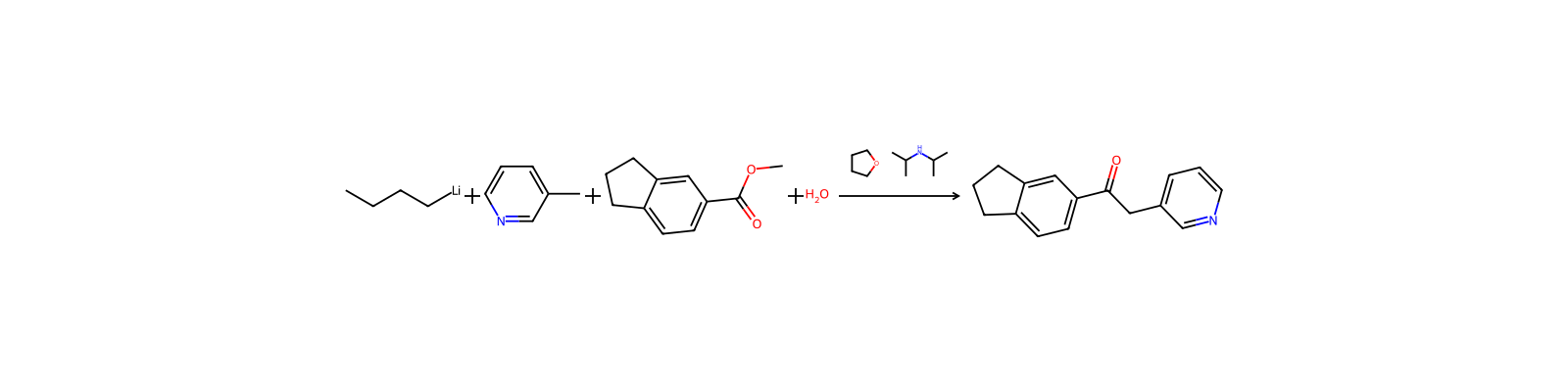
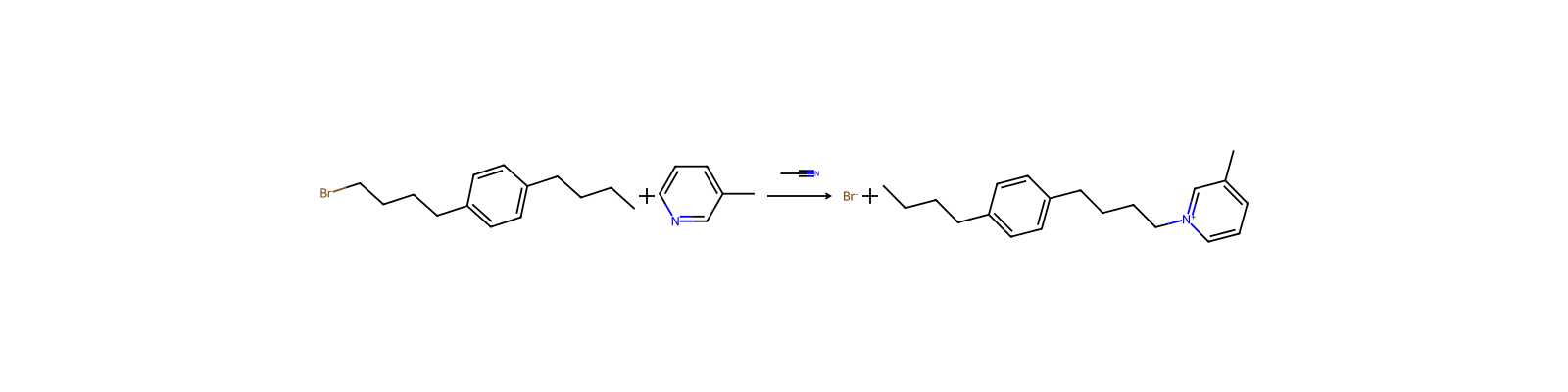
Zugehörige Reaktionen
109




Verknüpfte Notizen
Wird geladen…