1,3-Dibrompropan
1,3-Dibromopropane
Daten werden ergänzt – lade die Seite später neu, um den aktuellen Stand zu sehen

Grundinformationen
- CAS
109-64-8- Standard-SMILES
BrCCCBr- InChIKey
VEFLKXRACNJHOV-UHFFFAOYSA-N- Summenformel
- C3H6Br2
- Durchschnittliche Molmasse
- 201,89 g/mol
- Monoisotopische Masse
- 199,88362439
Überblick
1,3-Dibromopropane is an organobromide compound. Bromine is a halogen element with the symbol Br and atomic number 35. Diatomic bromine does not occur naturally, but bromine salts can be found in crustal rock. (L625)
Namen und Bezeichner
- Bevorzugter Name
- 1,3-Dibromopropane
- IUPAC
- 1,3-dibromopropane
- Lokaler Name
- 1,3-Dibrompropan
- Englischer Name
- 1,3-Dibromopropane
- Summenformel
- C3H6Br2
- Molmasse
- 201.89
Namen und Synonyme
1,3-DIBROMOPROPANE109-64-8Trimethylene bromideTrimethylene dibromidePropane, 1,3-dibromo-alpha,gamma-DibromopropaneDTXSID1021902YQR3048IX9NSC-62663DTXCID701902RefChem:72605203-690-3
Weitere Namen anzeigen
1,3-Dibrompropan1,3-dibromo-propan,’-DibromopropaneDibromo-1,3 propane1,3-Propylenebromide1,3-propanedibromideNSC 62663TX85750000
1,3-dibromo-propaneC3H6Br2.alpha.,.gamma.-DibromopropaneMFCD000002551,3-Dibromopropane-2-13C.omega.,.omega.'-DibromopropaneCCRIS 67111,3-dibromo propane
Datenbank-Bezeichner
- CAS
109-64-8- PubChem CID
- 8001
- DTXSID
DTXSID1021902- UNII
- YQR3048IX9
- EC Number
- 203-690-3
- Nikkaji
- J2.433C
Eigenschaften
Berechnete StruktureigenschaftenWird ergänzt
- XLogP
- 2,4
- Polarare Oberfläche (TPSA)
- 0 Ų
- H-Brücken-Donoren
- 0
- H-Brücken-Akzeptoren
- 0
- Frei drehbare Bindungen
- 2
- Schwere Atome
- 5
- Formalladung
- 0
- Komplexität
- 12,4
Experimentelle und physikochemische Eigenschaften
Chemical ClassesOther Classes -> Halogenated Aliphatics, Saturated
SpringerMaterials PropertiesSchoenflies notation
LogP
log Kow = 2.37
2.37
OdorSweet odor
Density
1.9712 g/cu cm at 15 °C
1.977 @25 °C
Color/FormColorless liquid
Solubility
1.68 g/L in water at 30 °C. Soluble in alcohol and ether
In water, 1,700 mg/L at 25 °C
Flash PointFlash point: -34.4 °C
Boiling Point
167 °C
166.5 °C @760 [mm Hg]
DecompositionWhen heated to decomposition it emits toxic fumes of /hydrogen bromide/.
Melting Point
-36 °C
-34.5 °C
Vapor Pressure
1.36 [mmHg]
1.36 mm Hg at 25 °C
1.36 [mm Hg] @25 °C
Physikochemische Eigenschaften
- Schmelzpunkt
- -34 °C · -34 °C (lit.)
- Siedepunkt
- 167 °C · 167 °C (lit.)
- Dichte
- 1.989 g/mL · 1.989 g/mL at 25 °C (lit.)
- Dampfdichte
- 7 · 7 (vs air)
- Dampfdruck
- 2.6 hPa · 2.6 hPa (20 °C)
- Brechungsindex
- 20 · n20/D 1.524(lit.)
- Flammpunkt
- 54 °C · 54 °C
- storage temp.
- 30 °C · Store below +30°C.
- Löslichkeit
- 1.68 g/l · 1.68g/l
- Aggregatzustand
- Liquid
- Farbe
- Clear colorless to yellow
- Wasserlöslichkeit
- 1.7 g/L · 1.7 g/L (30 ºC)
- Merck
- 14 · 14,9713
- BRN
- 635662 · 635662
- Henry's Law Constant
- 1.1 · 1.1×10-3 mol/(m3Pa) at 25℃, Mackay et al. (1993)
- Dielectric constant
- 4.3 · 4.3(20℃)
- Stabilität
- Stable. Incompatible with strong oxidizing agents, strong bases. Flammable.
- InChI
- 1S/C3H6Br2/c4-2-1-3-5/h1-3H2
- InChIKey
- VEFLKXRACNJHOV-UHFFFAOYSA-N
- SMILES
- BrCCCBr
- CAS Datenbank
- 109 · 109-64-8(CAS DataBase Reference)
- NIST chemische Informationen
- 1 · Propane, 1,3-dibromo-(109-64-8)
- EPA chemische Informationen
- 1 · Propane, 1,3-dibromo- (109-64-8)
Sicherheit und Regulatorisches
Sicherheitsangaben dienen nur zur Orientierung und ersetzen weder das Sicherheitsdatenblatt (SDB) des Lieferanten noch geltende Vorschriften oder eine fachliche Bewertung.
GHS-Klassifizierung
GHS Classification
This chemical does not meet GHS hazard criteria for 23.7% (52 of 219) of reports.
Warning
H226 (75.3%): Flammable liquid and vapor [Warning Flammable liquids]
P210, P233, P240, P241, P242, P243, P264, P264+P265, P270, P273, P280, P301+P317, P302+P352, P303+P361+P353, P305+P351+P338, P321, P330, P332+P317, P337+P317, P362+P364, P370+P378, P391, P403+P235, and P501 (click each P-code to see the statement)
Aggregated GHS information provided per 219 reports by companies from 12 notifications to the ECHA C&L Inventory. Each notification may be associated with multiple companies.
H401: Toxic to aquatic life [Hazardous to the aquatic environment, acute hazard]
Gefahrenhinweise
Regulatory Information
Chemical: Propane, 1,3-dibromo-
Status: Active Update: 09-04-2018 https://echa.europa.eu/registration-dossier/-/registered-dossier/19530
1,3-Dibromopropane: Does not have an individual approval but may be used under an appropriate group standard
Other Safety InformationEvaluation - 1-bromo-3-chloropropane and 1,3-dibromopropane
Hazards Summary
Feeding study with young and newborn rats showed liver toxicity (hypertrophy of hepatocytes and change in biochemical parameters) and reduction of body weights; Emergency medical treatment: 1-Bromopropane. [HSDB] A mutagen; Effects in high-dose animal studies include convulsions; [RTECS]
Hazard Classes and Categories
Flam. Liq. 3 (75.3%)
Flammable liquids - Category 3
Hazardous to the aquatic environment (Acute) - Category 2
Sicherheit und Schutzausrüstung
Fire Fighting Procedures
If material on fire or involved in fire: Do not extinguish fire unless flow can be stopped. Use water in flooding quantities as fog. Solid streams of water may be ineffective. Cool all affected containers with flooding quantities of water. Use alcohol foam, dry chemical or carbon dioxide. Keep run-off water out of sewers and water sources. /Bromopropanes/
Preventive Measures
If material on fire or involved in fire: Do not extinguish fire unless flow can be stopped. Use water in flooding quantities as fog. Solid streams of water may be ineffective. Cool all affected containers with flooding quantities of water. Use alcohol foam, dry chemical or carbon dioxide. Keep run-off water out of sewers and water sources. /Bromopropanes/
Personnel protection: Avoid breathing vapors. Keep upwind. Do not handle broken packages unless wearing appropriate personal protective equipment. If contact with the material anticipated, wear appropriate chemical protective clothing. /Bromopropanes/
Protective Action Criteria (PAC)
1.6 [mg/m3]
17 [mg/m3]
100 [mg/m3]
Personal Protective Equipment (PPE)Personnel Protection: ... Wear appropriate chemical protective gloves, boots and goggles. /Bromopropanes/
Toxikologische Informationen
Treatment
EYES: irrigate opened eyes for several minutes under running water. INGESTION: do not induce vomiting. Rinse mouth with water (never give anything by mouth to an unconscious person). Seek immediate medical advice. SKIN: should be treated immediately by rinsing the affected parts in cold running water for at least 15 minutes, followed by thorough washing with soap and water. If necessary, the person should shower and change contaminated clothing and shoes, and then must seek medical attention. INHALATION: supply fresh air. If required provide artificial respiration.
Health Effects
Bromine vapour causes irritation and direct damage to the mucous membranes. Elemental bromine also burns the skin. The bromide ion is a central nervous system depressant and chronic exposure produces neuronal effects. This is called bromism and can result in central reactions reaching from somnolence to coma, cachexia, exicosis, loss of reflexes or pathologic reflexes, clonic seizures, tremor, ataxia, loss of neural sensitivity, paresis, papillar edema of the eyes, abnormal speech, cerebral edema, delirium, aggressiveness, and psychoses. (L625, L626, L627)
Ecotoxicity Values
LC50 Pimephales promelas (Fathead minnow) 5.3 mg/L/24 hr /Conditions of bioassay not specified in source examined/
LC50 Pimephales promelas (Fathead minnow) 1.79 mg/L/96 hr /Conditions of bioassay not specified in source examined/
Environmental Fate
TERRESTRIAL FATE: Based on a classification scheme(1), an estimated Koc value of 460(SRC), determined from a measured log Kow of 2.37(2) and a regression derived equation(3), indicates that 1,3-dibromopropane is expected to have moderate mobility in soil(SRC). Volatilization of 1,3-dibromopropane from moist soil surfaces is expected to be an important fate process(SRC) given a Henry's Law constant of 8.88X10⁻⁴ atm-cu m/mole(4). The potential for volatilization of 1,3-dibromopropane from dry soil surfaces exists(SRC) based upon its vapor pressure of 1.36 mm Hg(4). Biodegradation data were not available(SRC, 2005).
AQUATIC FATE: Based on a classification scheme(1), an estimated Koc value of 460(SRC), determined from a measured log Kow of 2.37(2) and a regression derived equation(3), indicates that 1,3-dibromopropane is not expected to adsorb to suspended solids and sediment(SRC). Volatilization from water surfaces is expected(3) based upon a Henry's Law constant of 8.88X10⁻⁴ atm-cu m/mole(4). Using this Henry's Law constant and an estimation method(3), volatilization half-lives for a model river and model lake are 2 hours and 6 days, respectively(SRC). According to a classification scheme(5), an estimated BCF of 13(SRC), from log Kow(2) and a regression-derived equation(6), suggests the potential for bioconcentration in aquatic organisms is low(SRC). The hydrolysis half-life of 1,3-dibromopropane is about 48 days at pH 7 and 25 °C(7). Biodegradation data were not available(SRC, 2005).
ATMOSPHERIC FATE: According to a model of gas/particle partitioning of semivolatile organic compounds in the atmosphere(1), 1,3-dibromopropane, which has a vapor pressure of 1.36 mm Hg at 25 °C(2), is expected to exist solely as a vapor in the ambient atmosphere. Vapor-phase 1,3-dibromopropane is degraded in the atmosphere by reaction with photochemically-produced hydroxyl radicals(SRC); the half-life for this reaction in air is estimated to be 19 days(SRC), calculated from its rate constant of 8.4X10⁻¹³ cu cm/molecule-sec at 25 °C(SRC) that was derived using a structure estimation method(3).
Adverse EffectsNeurotoxin - Acute solvent syndrome
Exposure RoutesOral (L626) ; inhalation (L626) ; dermal (L626)
Toxicity Summary
Bromine is a powerful oxidizing agent and is able to release oxygen free radicals from the water in mucous membranes. These free radicals are also potent oxidizers and produce tissue damage. In additon, the formation of hydrobromic and bromic acids will result in secondary irritation. The bromide ion is also known to affect the central nervous system, causing bromism. This is believed to be a result of bromide ions substituting for chloride ions in the in actions of neurotransmitters and transport systems, thus affecting numerous synaptic processes. (L626, L627, A543)
Signs and Symptoms
Bromine vapour causes irritation and direct damage to the mucous membranes. Symptoms include lacrimation, rhinorrhoea, eye irritation with mucous secretions from the oropharyngeal and upper airways, coughing, dyspnoea, choking, wheezing, epistaxis, and headache. The bromide ion is a central nervous system depressant producing ataxia, slurred speech, tremor, nausea, vomiting, lethargy, dizziness, visual disturbances, unsteadiness, headaches, impaired memory and concentration, disorientation and hallucinations. This is called bromism. (L626, L627)
Soil Adsorption/Mobility
The Koc of 1,3-dibromopropane is estimated as 460(SRC), using a measured log Kow of 2.37(1) and a regression-derived equation(2). According to a classification scheme(3), this estimated Koc value suggests that 1,3-dibromopropane is expected to have moderate mobility in soil(SRC). Adsorption isotherms for 1,3-dibromopropane were calculated using a highly organic Florida Pahokee soil(4). The adsorption isotherms were non linear with an average soil adsorption coefficient (Kd) of 22.5 L/kg(4). The Freundlich adsorption coefficient (Kf) was 54 L/kg with fitting parameter N equal to 0.874(4).
Artificial Pollution Sources1,3-Dibromopropane's production and use as an intermediate for dyestuff and pharmaceutical industries, and in the manufacture of cyclopropane(1) may result in its release to the environment through various waste streams(SRC).
Carcinogen ClassificationNo indication of carcinogenicity to humans (not listed by IARC).
Environmental Bioconcentration
An estimated BCF of 13 was calculated for 1,3-dibromopropane (SRC), using a measured log Kow of 2.37(1) and a regression-derived equation(2). According to a classification scheme(3), this BCF suggests the potential for bioconcentration in aquatic organisms is low(SRC).
Sicherheitsdaten
- wgk
- 2
- tsca
- TSCA listed
- ridadr
- UN 1993 3/PG 3
- hs_code
- 29033036
- RTECS-Nr.
- TX8575000
- risk_code
- 10-22-38-51/53-36/37/38
- Toxizität
- LD50 orally in Rabbit: 315 mg/kg
- hazard_code
- Xn,N,Xi
- safety_code
- 16-26-36-61-24/25
- hazard_class
- 3
- packing_group
- III
- Speicherklasse
- 3 - Flammable liquids
- Giftige Stoffe Daten
- 109-64-8(Hazardous Substances Data)
- Hazard Classifications
- Acute Tox. 4 OralAquatic Chronic 2Flam. Liq. 3Skin Irrit. 2
Chemie und Industrie
Pharmakologische Informationen
Metabolism/Metabolites
The metabolism of 1,3-dibromopropane had been investigated in the rat. Two conjugated metabolites have been isolated from the urine and identified as S-(3-hydroxypropyl)cysteine and N-acetyl-S-(3-hydroxypropyl)cysteine. An oxidation product, identified as beta-bromolactic acid, has been isolated as a urinary metabolite. 1,3-dibromopropane is not excreted unchanged in expired air or in the urine. Approx. 15% of the dose (100 mg/kg) is excreted as metabolic products over 50 h and 3.5% as CO2 within 6 h, indicating that oxidation is the main route of detoxication.
Bromine is mainly absorbed via inhalation, but may also enter the body through dermal contact. Bromine salts can be ingested. Due to its reactivity, bromine quickly forms bromide and may be deposited in the tissues, displacing other halogens. (L626)
Verwendung und Herstellung
Uses
Used as an intermediate to make dyestuff, drugs, and cyclopropane; Also used as a herbicide; [HSDB]
Farming (Pesticides) [Category: Industry]
Intermediate for dyestuff and pharmaceutical industries, cyclopropane manufacture.
Used as a herbicide /SRP65: Former use/
Methods of Manufacturing
Prepared by the action of hydrobromic acid on trimethylene glycil in the presence of sulfuric acid
From trimethylene glycol and PBr3
Formulations/PreparationsGrade: Technical, CP
General Manufacturing InformationPropane, 1,3-dibromo-: ACTIVE
Anwendungen
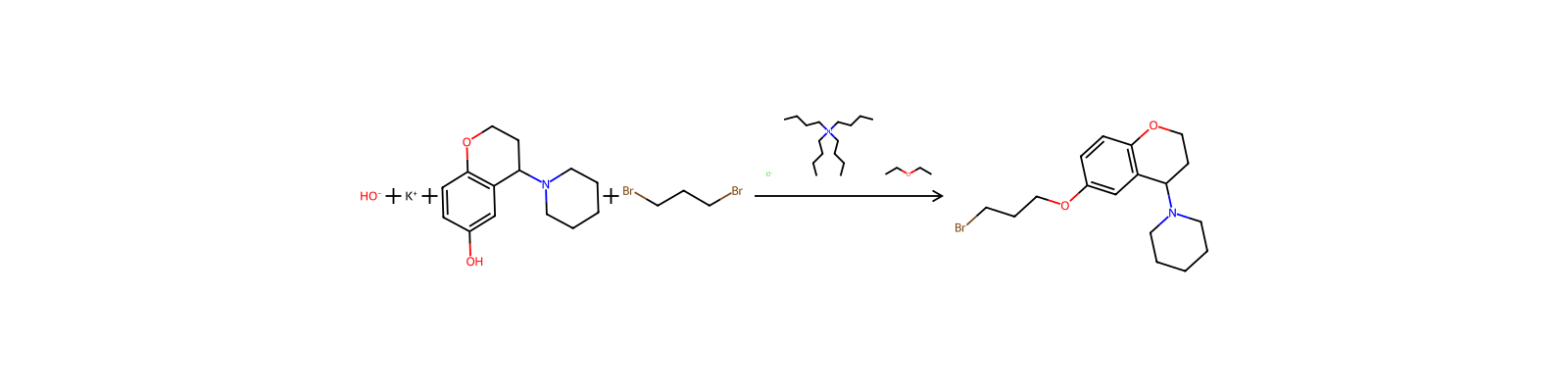
Verwenden1,3-Dibromopropane is used to prepare C3-bridged compounds through C-N coupling reactions. It is used in the preparation of 2,3,4,5-tetrahydro-7,7-diphenylimidazo- [2,1-b]-thiazine-6(7H)-one by reacting with potassium salt of 5,5-diphenyl-2-thiohydantoin.
Vor- und nachgelagerte Produkte
Vorgelagerte Rohstoffe
Nachgelagerte Produkte
Zugehörige Reaktionen
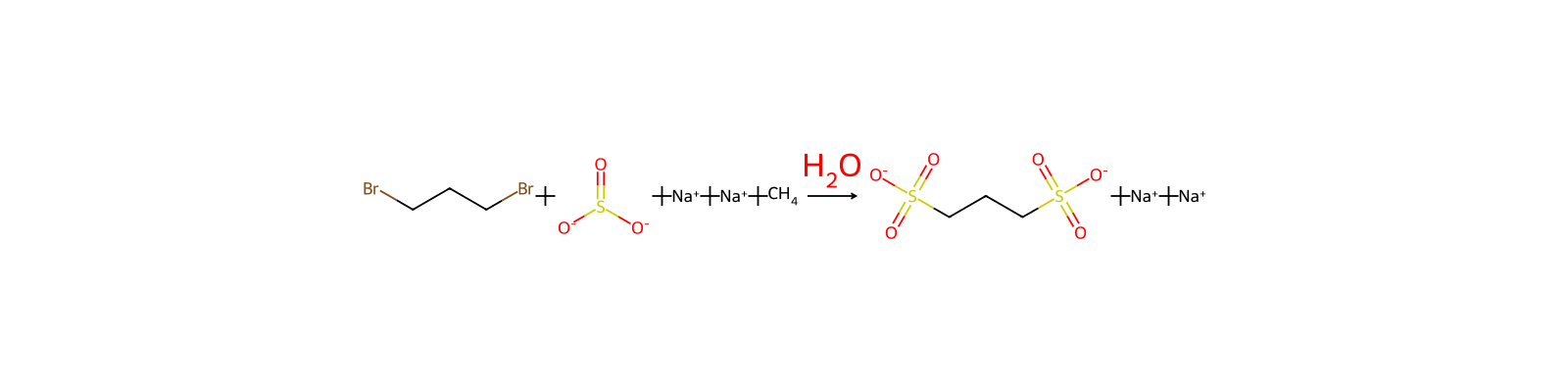
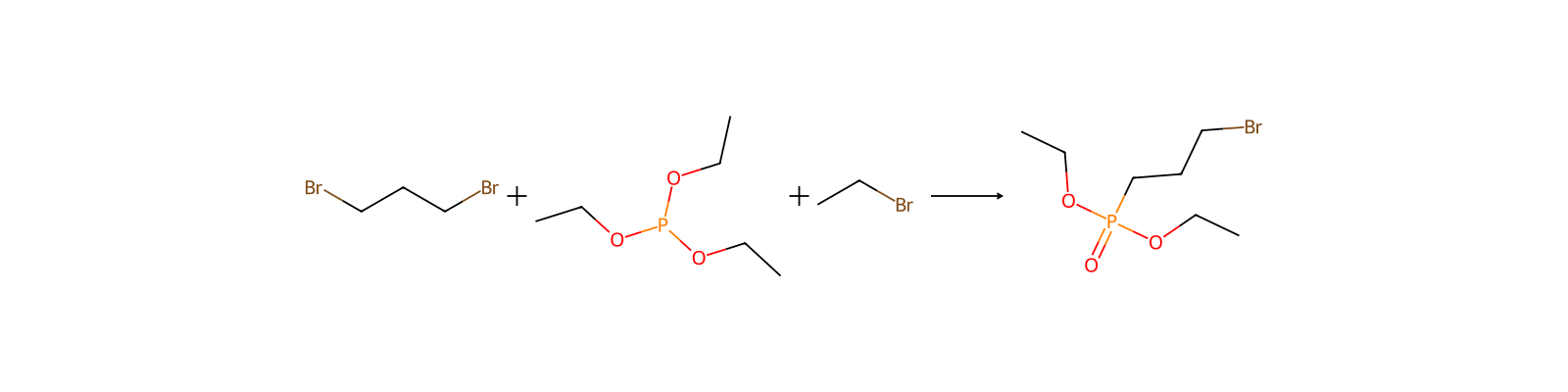
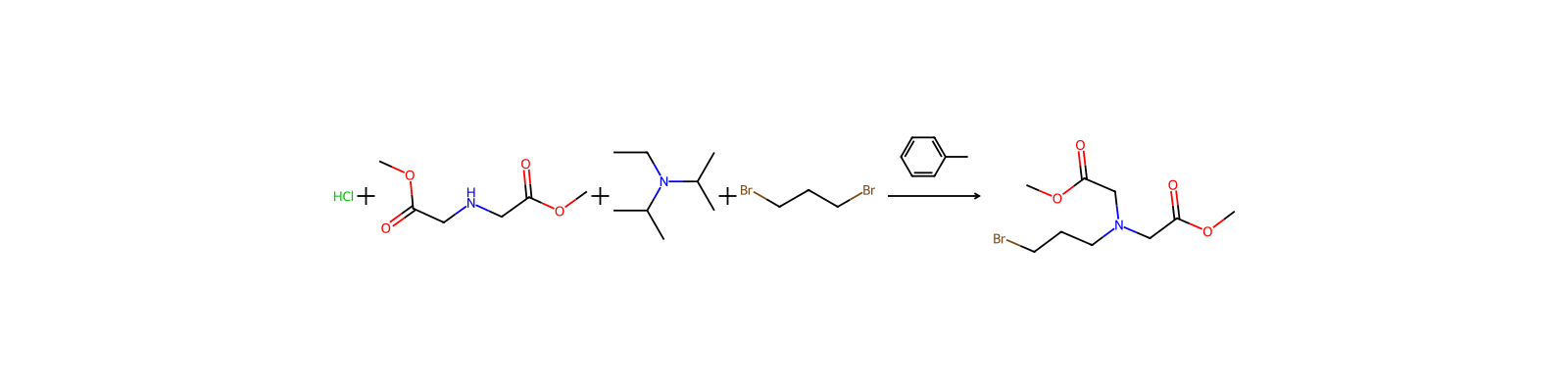
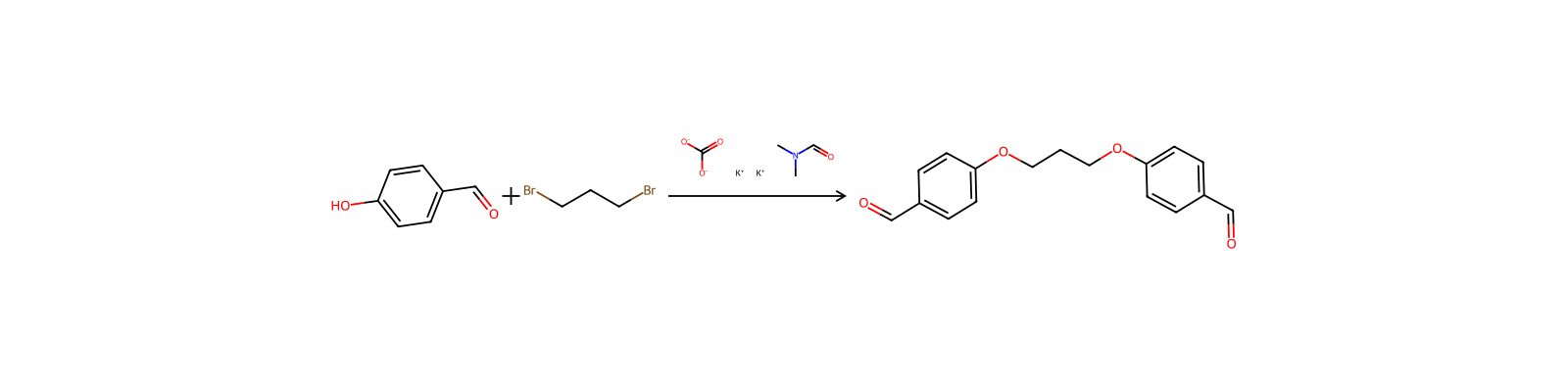
1.812



Notizen zur Verbindung
Wird geladen…