StartseiteMCPWorkbenchSkills
StartseiteWorkbenchBenachrichtigungenMein Bereich
llms.txt · MCP-AnleitungDatenschutz · Nutzungsbedingungen · Supportv1.8.0
  1. Startseite
  2. /Verbindung

Butylvinylether

Butyl vinyl ether

HCID 8108
Neue NotizNeue ReaktionAnfrage stellen
Druckvorschau

Daten werden ergänzt – lade die Seite später neu, um den aktuellen Stand zu sehen

GrundinformationenNamen und BezeichnerEigenschaftenSicherheit und RegulatorischesChemie und IndustrieZugehörige ReaktionenNotizen zur Verbindung
TeilstruktursucheÄhnliche Strukturen suchen

Grundinformationen

CAS
111-34-2
Standard-SMILES
C=COCCCC
InChIKey
UZKWTJUDCOPSNM-UHFFFAOYSA-N
Summenformel
C6H12O
Durchschnittliche Molmasse
100,16 g/mol
Monoisotopische Masse
100,088815

Namen und Bezeichner

Bevorzugter Name
Butyl vinyl ether
IUPAC
1-ethenoxybutane
Lokaler Name
Butylvinylether
Englischer Name
n-Butyl vinyl ether
Summenformel
C6H12O
Molmasse
100.16

Namen und Synonyme

BUTYL VINYL ETHER111-34-2Vinyl butyl etherButoxyetheneButane, 1-(ethenyloxy)-ButoxyethyleneEther, butyl vinylVinyl n-butyl etherAgrisynth BVEButil vinil eterEther butylvinylique1-BUTOXYETHENE
Weitere Namen anzeigen
Bve1-(ETHENYLOXY)BUTANEPolyvinoxbutoxy-etheneether,butylvinyl(BUTYLOXY)ETHYLENENSC 8264
VinipolDTXSID5051575Shostakovski balsamVinipol vb 2Butyl vinyl ether, inhibitedAI3-24225NSC-8264321YRT7173

Datenbank-Bezeichner

CAS
111-34-2
PubChem CID
8108
DTXSID
DTXSID5051575
ChEMBL
CHEMBL3561125
UNII
321YRT7173
EC Number
203-860-7
Nikkaji
J75.043C

Eigenschaften

Berechnete StruktureigenschaftenWird ergänzt

XLogP
2,1
Polarare Oberfläche (TPSA)
9,2 Ų
H-Brücken-Donoren
0
H-Brücken-Akzeptoren
1
Frei drehbare Bindungen
4
Schwere Atome
7
Formalladung
0
Komplexität
41

Experimentelle und physikochemische Eigenschaften

Density · 2 Einträge

0.7888 at 20 °C/20 °C

Bulk density: 7.45 lb/gal at 20 °C

Color/FormLiquid
Solubility · 4 Einträge

Sol in alc and ether

Sol in acetone, benzene

Water solubility of 3,000 mg/l

Very sol in ethyl alcohol, acetone; miscible in ethyl ether

Flash Point · 2 Einträge

15 °F (NFPA, 2010)

-9 °C (Open cup)

Boiling Point94 °C
DecompositionWhen heated to decomposition it emits acrid smoke and irritating fumes.
Melting Point-92 °C
Vapor Density3.45 (Air = 1)
Vapor Pressure · 2 Einträge

49.1 [mmHg]

49 mm Hg at 25 °C /from experimentally derived coefficients/

Sicherheit und Regulatorisches

Sicherheitsangaben dienen nur zur Orientierung und ersetzen weder das Sicherheitsdatenblatt (SDB) des Lieferanten noch geltende Vorschriften oder eine fachliche Bewertung.

GHS-Klassifizierung

GHS Classification · 5 Einträge

Danger

H225 (100%): Highly Flammable liquid and vapor [Danger Flammable liquids];H315 (74%): Causes skin irritation [Warning Skin corrosion/irritation];H317 (70.7%): May cause an allergic skin reaction [Warning Sensitization, Skin]

P210, P233, P240, P241, P242, P243, P261, P264, P272, P280, P302+P352, P303+P361+P353, P321, P332+P317, P333+P317, P362+P364, P370+P378, P403+P235, and P501 (click each P-code to see the statement)

Aggregated GHS information provided per 150 reports by companies from 11 notifications to the ECHA C&L Inventory. Each notification may be associated with multiple companies.;Information may vary between notifications depending on impurities, additives, and other factors. The percentage value in parenthesis indicates the notified classification ratio from companies that provide hazard codes. Only hazard codes with percentage values above 10% are shown. For more detailed information, please visit ECHA C&L website.

Gefahrenhinweise

Regulatory Information · 4 Einträge

Chemical: Butane, 1-(ethenyloxy)-

Status: Active Update: 07-01-2022 https://echa.europa.eu/registration-dossier/-/registered-dossier/33141;Status: Active Update: 21-09-2022 https://echa.europa.eu/registration-dossier/-/registered-dossier/16525

Butane, 1-(ethenyloxy)-: HSNO Approval: HSR001104 Approved with controls

The New Jersey Worker and Community Right to Know Act requires public and private employers to provide information about hazardous substances at their workplaces. (N.J.S.A. 34:5A-1 et. seq.)

DOT LabelFlammable Liquid
Fire Hazards · 2 Einträge

Excerpt from ERG Guide 127 [Flammable Liquids (Water-Miscible); polymerization hazard]:;HIGHLY FLAMMABLE: Will be easily ignited by heat, sparks or flames. CAUTION: Ethanol (UN1170) can burn with an invisible flame. Use an alternate method of detection (thermal camera, broom handle, etc.) Vapors may form explosive mixtures with air. Vapors may travel to source of ignition and flash back. Most vapors are heavier than air. They will spread along the ground and collect in low or confined areas (sewers, basements, tanks, etc.). Vapor explosion hazard indoors, outdoors or in sewers. Those substances designated with a (P) may polymerize explosively when heated or involved in a fire. Runoff to sewer may create fire or explosion hazard. Containers may explode when heated. Many liquids will float on water. (ERG, 2024)

Chemie und Industrie

Verwendung und Herstellung

Uses · 3 Einträge

Used in the synthesis of copolymers and as an acrylic/vinyl acetate resin comonomer; [HSDB]

Butyl vinyl ether /is/ ... used in the synthesis of copolymers.

Acrylic/vinyl acetate resin comonomer

Methods of Manufacturing · 2 Einträge

Reaction of acetylene with n-butyl alcohol.

Acetylene + n-butanol (ethynylation)

Formulations/PreparationsGrade: Technical (98%)
General Manufacturing InformationButane, 1-(ethenyloxy)-: ACTIVE

Anwendungen

VerwendenSynthesis, copolymerization.

Vor- und nachgelagerte Produkte

Vorgelagerte Rohstoffe

Divinylether1,1-DiethoxyethanPalladiumchlorid

Nachgelagerte Produkte

1-[4-(TRIFLUOROMETHYL)PYRIMID-2-YL]PIPERAZINE2-Hydroxy-4-(trifluoromethyl)pyrimidine2-Chloro-4-(trifluoromethyl)pyrimidine2-HYDROXY-6-(TRIFLUOROMETHYL)NICOTINIC ACID

Zugehörige Reaktionen

287
Reaktionsaufzeichnung erstellen
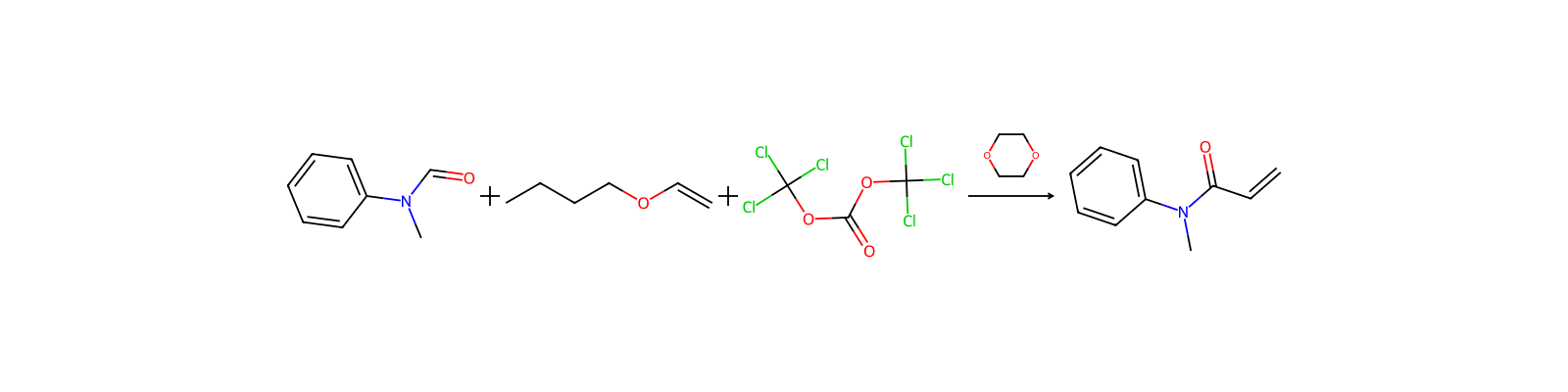
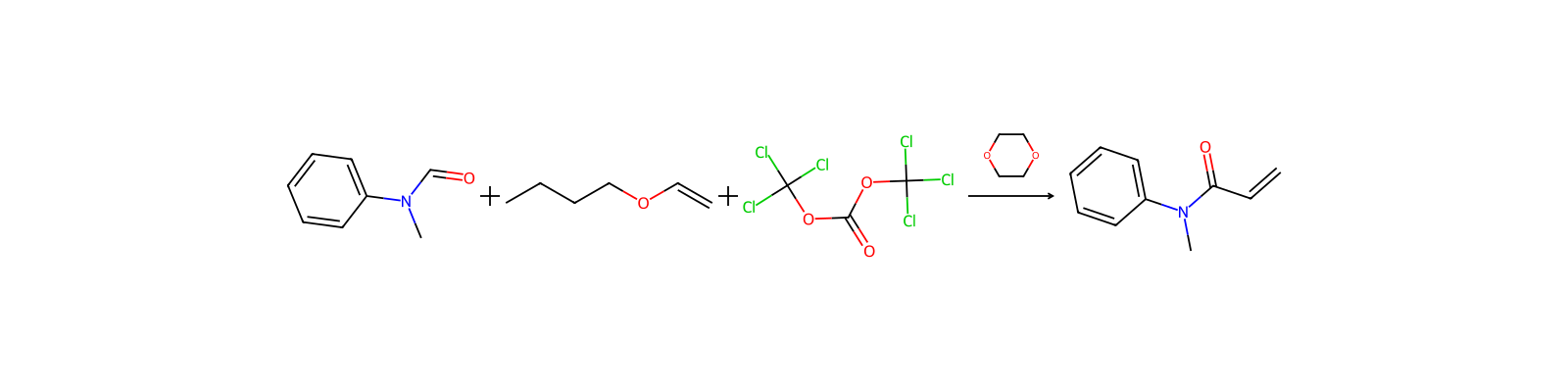
Reaktionsgleichung von HRID 9933
HRID 9933als Eduktuspto-grants-2006_08
Reaktionsgleichung von HRID 9934
HRID 9934als Eduktuspto-grants-2006_08
Reaktionsgleichung von HRID 9935
HRID 9935als Eduktuspto-grants-2006_08
Reaktionsgleichung von HRID 9937
HRID 9937als Eduktuspto-grants-2006_08
Reaktionsgleichung von HRID 9939
HRID 9939als Eduktuspto-grants-2006_08
Reaktionsgleichung von HRID 10210
HRID 10210als Eduktuspto-grants-2006_08
Reaktionsgleichung von HRID 14497
HRID 14497als Eduktuspto-grants-2010_06
Reaktionsgleichung von HRID 30587
HRID 30587als Eduktuspto-grants-2008_09
Seite 1 von 36

Notizen zur Verbindung

Wird geladen…

Auf dieser SeiteGrundinformationenNamen und BezeichnerEigenschaftenSicherheit und RegulatorischesChemie und IndustrieZugehörige ReaktionenNotizen zur Verbindung
Weitere Aktionen
Neue NotizNeue ReaktionAnfrage stellen
Refractive IndexIndex of refraction: 1.4026 at 20 °C
Physical Description · 2 Einträge

Butyl vinyl ether, stabilized appears as a liquid. Less dense than water. Vapors heavier than air. May irritate skin and eyes. Used to make other chemicals.

Liquid; Slightly soluble in water; [Hawley]

Kovats Retention Index · 3 Einträge

695;687

671;679;695

858

Physikochemische Eigenschaften

Schmelzpunkt
92 °C · −92 °C(lit.)
Siedepunkt
94 °C · 94 °C(lit.)
Dichte
0.774 g/mL · 0.774 g/mL at 25 °C(lit.)
Dampfdichte
3.5 · 3.5 (vs air)
Dampfdruck
42 mm · 42 mm Hg ( 20 °C)
Brechungsindex
20 · n20/D 1.400(lit.)
Flammpunkt
15 °F · 15 °F
storage temp.
2 · 2-8°C
Löslichkeit
3 g/l · 3g/l
Aggregatzustand
Liquid
Farbe
Clear
Explosionsgrenze
1.2 · 1.2-8.6%(V)
Wasserlöslichkeit
3 g/L · 3 g/L (20 ºC)
Spezifische Wärmekapazität
2.32 J/ · Cp(liquid): 2.32 J/(g·K), at 25℃
BRN
1560217 · 1560217
Henry's Law Constant
4.6 · 4.6×10-3 mol/(m3Pa) at 25℃, Duchowicz et al. (2020)
InChI
1S/C6H12O/c1-3-5-6-7-4-2/h4H,2-3,5-6H2,1H3
InChIKey
UZKWTJUDCOPSNM-UHFFFAOYSA-N
SMILES
CCCCOC=C
LogP
3.15 at · 3.15 at 20℃
CAS Datenbank
111 · 111-34-2(CAS DataBase Reference)
NIST chemische Informationen
1 · Butane, 1-(ethenyloxy)-(111-34-2)
EPA chemische Informationen
Butyl vinyl ether (111-34-2)

· HIGHLY FLAMMABLE: Will be easily ignited by heat, sparks or flames.;CAUTION: Ethanol (UN1170) can burn with an invisible flame. Use an alternate method of detection (thermal camera, broom handle, etc.);· Vapors may form explosive mixtures with air.;· Vapors may travel to source of ignition and flash back.;· Most vapors are heavier than air. They will spread along the ground and collect in low or confined areas (sewers, basements, tanks, etc.).;· Vapor explosion hazard indoors, outdoors or in sewers.;· Those substances designated with a (P) may polymerize explosively when heated or involved in a fire.;· Runoff to sewer may create fire or explosion hazard.;· Containers may explode when heated.;· Many liquids will float on water.

Fire Potential · 2 Einträge

Flammable, dangerous fire risk.

Fire hazard: Dangerous, when exposed to heat or flame.

Health Hazards · 2 Einträge

Excerpt from ERG Guide 127 [Flammable Liquids (Water-Miscible); polymerization hazard]:;Inhalation or contact with material may irritate or burn skin and eyes. Fire may produce irritating, corrosive and/or toxic gases. Vapors may cause dizziness or asphyxiation, especially when in closed or confined areas. Runoff from fire control or dilution water may cause environmental contamination. (ERG, 2024)

· Inhalation or contact with material may irritate or burn skin and eyes.;· Fire may produce irritating, corrosive and/or toxic gases.;· Vapors may cause dizziness or asphyxiation, especially when in closed or confined areas.;· Runoff from fire control or dilution water may cause environmental contamination.

Hazards Summary · 1 Eintrag

Flammable liquid; [Hawley] A skin and eye irritant; [Sax] Probably causes CNS depression; [HSDB] May cause skin burns; [CAMEO] An irritant; Chronic effects in high-dose animal studies include degenerative changes to brain; [MSDSonline] Butyl vinyl ether, stabilized (UN2352) has warning of explosive polymerization; [ERG 2016] See Vinyl methyl ether.

DOT ID and Guide2352 127P
Reactive GroupEthers;Hydrocarbons, Aliphatic Unsaturated;Polymerizable Compounds
Reactivity AlertsHighly Flammable;Polymerizable;Peroxidizable Compound
Reactivity Profile · 1 Eintrag

Ethers, such as BUTYL VINYL ETHER can act as bases. They form salts with strong acids and addition complexes with Lewis acids. The complex between diethyl ether and boron trifluoride is an example. Ethers may react violently with strong oxidizing agents. In other reactions, which typically involve the breaking of the carbon-oxygen bond, ethers are relatively inert.

DOT Emergency Guidelines · 5 Einträge

/GUIDE 127P: FLAMMABLE LIQUIDS (POLAR/WATER-MISCIBLE)/ Fire or Explosion: HIGHLY FLAMMABLE: Will be easily ignited by heat, sparks or flames. Vapors may form explosive mixtures with air. Vapors may travel to source of ignition and flash back. Most vapors are heavier than air. They will spread along ground and collect in low or confined areas (sewers, basements, tanks). Vapor explosion hazard indoors, outdoors or in sewers. Those substances designated with a "P" may polymerize explosively when heated or involved in a fire. Runoff to sewer may create fire or explosion hazard. Containers may explode when heated. Many liquids are lighter than water. /Butyl vinyl ether, inhibited; Butyl vinyl ether, stabilized/

/GUIDE 127P: FLAMMABLE LIQUIDS (POLAR/WATER-MISCIBLE)/ Health: Inhalation or contact with material may irritate or burn skin and eyes. Fire may produce irritating, corrosive and/or toxic gases. Vapors may cause dizziness or suffocation. Runoff from fire control may cause pollution. /Butyl vinyl ether, inhibited; Butyl vinyl ether, stabilized/

/GUIDE 127P: FLAMMABLE LIQUIDS (POLAR/WATER-MISCIBLE)/ Public Safety: CALL Emergency Response Telephone Number ... . As an immediate precautionary measure, isolate spill or leak area for at least 50 meters (150 feet) in all directions. Keep unauthorized personnel away. Stay upwind. Keep out of low areas. Ventilate closed spaces before entering. /Butyl vinyl ether, inhibited; Butyl vinyl ether, stabilized/

/GUIDE 127P: FLAMMABLE LIQUIDS (POLAR/WATER-MISCIBLE)/ Protective Clothing: Wear positive pressure self-contained breathing apparatus (SCBA). Structural firefighters' protective clothing will only provide limited protection. /Butyl vinyl ether, inhibited; Butyl vinyl ether, stabilized/

For more DOT Emergency Guidelines (Complete) data for BUTYL VINYL ETHER (8 total), please visit the HSDB record page.

DOT Hazard Classification · 5 Einträge

Butyl vinyl ether, stabilized

UN2352

Class 3 Flammable and combustible liquid (49 eCFR § 173.120)

PG II: the degree of danger presented by the material is medium;For more information about the packing group assignment, please visit 49 eCFR § 173

Sicherheit und Schutzausrüstung

Fire Fighting · 1 Eintrag

Excerpt from ERG Guide 127 [Flammable Liquids (Water-Miscible); polymerization hazard]:;CAUTION: The majority of these products have a very low flash point. Use of water spray when fighting fire may be inefficient. CAUTION: For fire involving UN1170, UN1987 or UN3475, alcohol-resistant foam should be used. CAUTION: Ethanol (UN1170) can burn with an invisible flame. Use an alternate method of detection (thermal camera, broom handle, etc.).;SMALL FIRE: Dry chemical, CO2, water spray or alcohol-resistant foam.;LARGE FIRE: Water spray, fog or alcohol-resistant foam. Avoid aiming straight or solid streams directly onto the product. If it can be done safely, move undamaged containers away from the area around the fire.;FIRE INVOLVING TANKS, RAIL TANK CARS OR HIGHWAY TANKS: Fight fire from maximum distance or use unmanned master stream devices or monitor nozzles. Cool containers with flooding quantities of water until well after fire is out. Withdraw immediately in case of rising sound from venting safety devices or discoloration of tank. ALWAYS stay away from tanks in direct contact with flames. For massive fire, use unmanned master stream devices or monitor nozzles; if this is impossible, withdraw from area and let fire burn. (ERG, 2024)

Accidental Release Measures · 2 Einträge

· CALL 911. Then call emergency response telephone number on shipping paper. If shipping paper not available or no answer, refer to appropriate telephone number listed on the inside back cover.;· Keep unauthorized personnel away.;· Stay upwind, uphill and/or upstream.;· Ventilate closed spaces before entering, but only if properly trained and equipped.

· ELIMINATE all ignition sources (no smoking, flares, sparks or flames) from immediate area.;· All equipment used when handling the product must be grounded.;· Do not touch or walk through spilled material.;· Stop leak if you can do it without risk.;· Prevent entry into waterways, sewers, basements or confined areas.;· A vapor-suppressing foam may be used to reduce vapors.;· Absorb or cover with dry earth, sand or other non-combustible material and transfer to containers.;· Use clean, non-sparking tools to collect absorbed material.;Large Spill;· Dike far ahead of liquid spill for later disposal.;· Water spray may reduce vapor, but may not prevent ignition in closed spaces.

First Aid · 2 Einträge

Excerpt from ERG Guide 127 [Flammable Liquids (Water-Miscible); polymerization hazard]:;Refer to the "General First Aid" section. Specific First Aid: Wash skin with soap and water. In case of burns, immediately cool affected skin for as long as possible with cold water. Do not remove clothing if adhering to skin. (ERG, 2024)

General First Aid:;· Call 911 or emergency medical service.;· Ensure that medical personnel are aware of the material(s) involved, take precautions to protect themselves and avoid contamination.;· Move victim to fresh air if it can be done safely.;· Administer oxygen if breathing is difficult.;· If victim is not breathing:;-- DO NOT perform mouth-to-mouth resuscitation; the victim may have ingested or inhaled the substance.;-- If equipped and pulse detected, wash face and mouth, then give artificial respiration using a proper respiratory medical device (bag-valve mask, pocket mask equipped with a one-way valve or other device).;-- If no pulse detected or no respiratory medical device available, provide continuous compressions. Conduct a pulse check every two minutes or monitor for any signs of spontaneous respirations.;· Remove and isolate contaminated clothing and shoes.;· For minor skin contact, avoid spreading material on unaffected skin.;· In case of contact with substance, remove immediately by flushing skin or eyes with running water for at least 20 minutes.;· For severe burns, immediate medical attention is required.;· Effects of exposure (inhalation, ingestion, or skin contact) to substance may be delayed.;· Keep victim calm and warm.;· Keep victim under observation.;· For further assistance, contact your local Poison Control Center.;· Note: Basic Life Support (BLS) and Advanced Life Support (ALS) should be done by trained professionals.;Specific First Aid:;· Wash skin with soap and water.

Exposure Control and Personal Protection· Wear positive pressure self-contained breathing apparatus (SCBA).;· Structural firefighters' protective clothing provides thermal protection but only limited chemical protection.
Fire Fighting Procedures · 2 Einträge

Water may be ineffective ... alcohol foam is recommended ... . /From table/

... Carbon dioxide, dry chemical, foam, alcohol foam.

Nonfire Spill Response · 1 Eintrag

Excerpt from ERG Guide 127 [Flammable Liquids (Water-Miscible); polymerization hazard]:;ELIMINATE all ignition sources (no smoking, flares, sparks or flames) from immediate area. All equipment used when handling the product must be grounded. Do not touch or walk through spilled material. Stop leak if you can do it without risk. Prevent entry into waterways, sewers, basements or confined areas. A vapor-suppressing foam may be used to reduce vapors. Absorb or cover with dry earth, sand or other non-combustible material and transfer to containers. Use clean, non-sparking tools to collect absorbed material.;LARGE SPILL: Dike far ahead of liquid spill for later disposal. Water spray may reduce vapor, but may not prevent ignition in closed spaces. (ERG, 2024)

Disposal Methods · 2 Einträge

SRP: At the time of review, criteria for land treatment or burial (sanitary landfill) disposal practices are subject to significant revision. Prior to implementing land disposal of waste residue (including waste sludge), consult with environmental regulatory agencies for guidance on acceptable disposal practices.

This compound should be susceptible to removal from waste water by air stripping. /Bis(2-chloroethyl)ether/

Preventive Measures · 1 Eintrag

SRP: The scientific literature for the use of contact lenses in industry is conflicting. The benefit or detrimental effects of wearing contact lenses depend not only upon the substance, but also on factors including the form of the substance, characteristics and duration of the exposure, the uses of other eye protection equipment, and the hygiene of the lenses. However, there may be individual substances whose irritating or corrosive properties are such that the wearing of contact lenses would be harmful to the eye. In those specific cases, contact lenses should not be worn. In any event, the usual eye protection equipment should be worn even when contact lenses are in place.

Isolation and Evacuation · 2 Einträge

Excerpt from ERG Guide 127 [Flammable Liquids (Water-Miscible); polymerization hazard]:;IMMEDIATE PRECAUTIONARY MEASURE: Isolate spill or leak area for at least 50 meters (150 feet) in all directions.;LARGE SPILL: Consider initial downwind evacuation for at least 300 meters (1000 feet).;FIRE: If tank, rail tank car or highway tank is involved in a fire, ISOLATE for 800 meters (1/2 mile) in all directions; also, consider initial evacuation for 800 meters (1/2 mile) in all directions. (ERG, 2024)

Immediate precautionary measure;· Isolate spill or leak area for at least 50 meters (150 feet) in all directions.;Large Spill;· Consider initial downwind evacuation for at least 300 meters (1000 feet).;Fire;· If tank, rail tank car or highway tank is involved in a fire, ISOLATE for 800 meters (1/2 mile) in all directions; also, consider initial evacuation for 800 meters (1/2 mile) in all directions.

Personal Protective Equipment (PPE) · 1 Eintrag

Excerpt from ERG Guide 127 [Flammable Liquids (Water-Miscible); polymerization hazard]:;Wear positive pressure self-contained breathing apparatus (SCBA). Structural firefighters' protective clothing provides thermal protection but only limited chemical protection. (ERG, 2024)

Emergency Response Planning Guidelines · 1 Eintrag

CAUTION: The majority of these products have a very low flash point. Use of water spray when fighting fire may be inefficient.;CAUTION: For fire involving UN1170, UN1987 or UN3475, alcohol-resistant foam should be used.;CAUTION: Ethanol (UN1170) can burn with an invisible flame. Use an alternate method of detection (thermal camera, broom handle, etc.);Small Fire;· Dry chemical, CO2, water spray or alcohol-resistant foam.;Large Fire;· Water spray, fog or alcohol-resistant foam.;· Avoid aiming straight or solid streams directly onto the product.;· If it can be done safely, move undamaged containers away from the area around the fire.;Fire Involving Tanks, Rail Tank Cars or Highway Tanks;· Fight fire from maximum distance or use unmanned master stream devices or monitor nozzles.;· Cool containers with flooding quantities of water until well after fire is out.;· Withdraw immediately in case of rising sound from venting safety devices or discoloration of tank.;· ALWAYS stay away from tanks in direct contact with flames.;· For massive fire, use unmanned master stream devices or monitor nozzles; if this is impossible, withdraw from area and let fire burn.

Toxikologische Informationen

Environmental Fate · 3 Einträge

TERRESTRIAL FATE: Based on a classification scheme(1), an estimated Koc value of 53(SRC), determined from a water solubility of 3,000 mg/l(2) and a regression-derived equation(3), indicates that butyl vinyl ether is expected to have very high mobility in soil(SRC). Volatilization of butyl vinyl ether from moist soil surfaces is expected to be important(3,SRC) given an estimated Henry's Law constant of 2.2X10⁻³ atm-cu m/mole(SRC), calculated from its water solubility(2) and vapor pressure(4). The potential for volatilization of butyl vinyl ether from dry soil surfaces may exist(SRC) based on a vapor pressure of 49 mm Hg(4). Limited data are present in the scientific literature regarding the biodegradation of butyl vinyl ether(SRC).

AQUATIC FATE: Based on a classification scheme(1), an estimated Koc value of 53(SRC), determined from a water solubility of 3,000 mg/l(2) and a regression-derived equation(3), indicates that butyl vinyl ether is not expected to adsorb to suspended solids and sediment in water(SRC). Butyl vinyl ether is expected to volatilize rapidly from water surfaces(3,SRC) based on an estimated Henry's Law constant of 2.2X10⁻³ atm-cu m/mole(SRC), calculated from its water solubility(2) and vapor pressure(4). Estimated volatilization half-lives for a model river and model lake are 3 hours and 4 days, respectively(3,SRC). Butyl vinyl ether may be susceptible to appreciable hydrolysis in certain environmental waters(5,SRC). The calculated half-lives for hydrolysis of butyl vinyl ether are 9.5 hours, 40 days, and 10.9 years at pH 5, 7, and 9, respectively(5,SRC). According to a classification scheme(6), an estimated BCF of 7(3,SRC), from butyl vinyl ether's water solubility(2), suggests the potential for bioconcentration in aquatic organisms is low(SRC). Limited data are present in the scientific literature regarding the biodegradation of butyl vinyl ether(SRC).

ATMOSPHERIC FATE: According to a model of gas/particle partitioning of semivolatile organic compounds in the atmosphere(1), butyl vinyl ether, which has a vapor pressure of 49 mm Hg at 25 °C(2,SRC), is expected to exist solely as a vapor in the ambient atmosphere. Vapor-phase butyl vinyl ether is degraded in the atmosphere by reaction with photochemically-produced hydroxyl radicals(SRC); the half-life for this reaction in air is estimated to be 9 hours(3,SRC). Butyl vinyl ether may be susceptible to photooxidation via vapor phase reaction with ozone; the half-life for this reaction in air is estimated to be 6.5 days(4,SRC). Direct photolysis will not be an important removal process since butyl vinyl ether does not absorb light at wavelengths >290 nm(5).

Adverse EffectsNeurotoxin - Other CNS neurotoxin;Dermatotoxin - Skin burns.
Soil Adsorption/Mobility · 1 Eintrag

The Koc of butyl vinyl ether is estimated as approximately 53(SRC), using a water solubility of 3,000 mg/l(1) and a regression-derived equation(2,SRC). According to a classification scheme(3), this estimated Koc value suggests that butyl vinyl ether is expected to have very high mobility in soil(SRC).

Atmospheric Concentrations · 1 Eintrag

Butyl vinyl ether was detected, but not quantified, at 1 of 4 sites in the Houston, TX, area sampled in Nov 1974(1). It was not found in any of the samples from the 5 sites in the Los Angeles Basin sampled in March and April 1975 or the 2 sites in the Kanawha Valley, WV sampled in Sept 1974 and it was not detected in any of the night ambient air samples in the study(1).

Artificial Pollution SourcesButyl vinyl ether's production and use in synthesis and copolymerization(1) may result in its release to the environment through various waste streams(SRC).
Environmental Bioconcentration · 1 Eintrag

An estimated BCF of 7 was calculated for butyl vinyl ether(SRC), using a water solubility of 3,000 mg/l(1) and a regression-derived equation(2). According to a classification scheme(3), this BCF suggests the potential for bioconcentration in aquatic organisms is low.

Volatilization from Water/Soil · 1 Eintrag

The Henry's Law constant for butyl vinyl ether is estimated as 2.2X10⁻³ atm-cu m/mole(SRC) from its experimental values for vapor pressure, 49 mm Hg(2), and water solubility, 3,000 mg/l(1). This Henry's Law constant indicates that butyl vinyl ether is expected to volatilize rapidly from water surfaces(3,SRC). Based on this Henry's Law constant, the estimated volatilization half-life from a model river (1 m deep, flowing 1 m/sec, wind velocity of 3 m/sec) is approximately 3 hours(3,SRC). The estimated volatilization half-life from a model lake (1 m deep, flowing 0.05 m/sec, wind velocity of 0.5 m/sec) is approximately 4 days(3,SRC). Butyl vinyl ether's Henry's Law constant(1,2,SRC) indicates that rapid volatilization from moist soil surfaces may occur(SRC). The potential for volatilization of butyl vinyl ether from dry soil surfaces may exist(SRC) based on a vapor pressure of 49 mm Hg(2).

Non-Human Toxicity Excerpts · 1 Eintrag

4-Nitrophenyl vinyl ether and phenyl vinyl ether administered i.p. in mice lowered hepatic non-protein sulfhydryl content, but did not elevate the serum glutamate pyruvate transaminase activity. n-Butyl vinyl ether showed no significant effects either on the non-protein sulfhydryl content or on the serum glutamate pyruvate transaminase activity. Mice pretreated with buthionine sulfoximine were sensitive to the potential toxicity of 4-Nitrophenyl vinyl ether. These results showed that aryl vinyl ethers, 4-Nitrophenyl vinyl ether and phenyl vinyl ether, are more toxic than the alkyl vinyl ether, n-Butyl vinyl ether, and that glutathione plays an important role on the protection of hepatic injury by reactive metabolite(s) derived from vinyl ethers.

Environmental Abiotic Degradation · 1 Eintrag

The rate constant for the vapor phase reactions of butyl vinyl ether with photochemically produced hydroxyl radicals has been measured to be 4.3X10⁻¹¹ cu cm/molecule-sec at 25 °C(1) which corresponds to a half-life of 9 hours at an atmospheric concentration of 5X10+5 hydroxyl radicals per cu cm (SRC). The rate constant for the vapor phase reactions of butyl vinyl ether with photochemically produced ozone has been estimated to be 1.75X10⁻¹⁸ cu cm/molecule-sec at 25 °C(2) which corresponds to a half-life of 6.5 days at an atmospheric concentration of 7X10+11 ozone molecules per cu cm(SRC). Direct photolysis will not be an important removal process since aliphatic ethers do not absorb light at wavelengths >290 nm(3). Butyl vinyl ether is susceptible to appreciable hydrolysis in certain environmental waters, especially at acidic pH, based upon a measured acid catalyzed hydrolysis rate constant of 2.02 M-1 s-1 at 25 °C(4). This hydrolysis rate constant corresponds to half-lives for hydrolysis of 9.5 hr, 40 days, and 10.9 yr at pH 5, 7, and 9, respectively(4,SRC).

Probable Routes of Human Exposure · 1 Eintrag

NIOSH (NOES Survey 1981-1983) has statistically estimated that 851 workers (187 of these are female) are exposed to butyl vinyl ether in the USA(1). The most probable routes of general population exposure to butyl vinyl ether are via inhalation of contaminated air(1,SRC) and ingestion of contaminated drinking water(2,3,SRC). Exposure through dermal contact may occur in occupational settings(SRC). Inhalation and dermal exposure will be expected to be highest in workplaces where butyl vinyl ether is made and used(SRC).

Environmental Water Concentrations · 2 Einträge

DRINKING WATER: Butyl vinyl ether was tentatively identified, but not quantified, in a drinking water concentrate from Seattle, WA sampled in Nov 1976(1).

SURFACE WATER: Butyl vinyl ether has been detected, not quantified, in samples of water from the southern basin of Lake Michigan(1).

Environmental Fate/Exposure Summary · 1 Eintrag

Butyl vinyl ether's production and use in synthesis and copolymerization may result in its release to the environment through various waste streams. If released to air, a vapor pressure of 49 mm Hg at 25 °C indicates butyl vinyl ether will exist solely as a vapor in the ambient atmosphere. Vapor-phase butyl vinyl ether will be degraded in the atmosphere by reaction with photochemically-produced hydroxyl radicals; the half-life for this reaction in air is estimated to be 9 hours. The vapor phase reactions of butyl vinyl ether with photochemically produced ozone corresponds to a half-life of 6.5 days. Direct photolysis will not be an important removal process since aliphatic ethers do not absorb light at wavelengths >290 nm. If released to soil, butyl vinyl ether is expected to have very high mobility based upon an estimated Koc of 53. Volatilization from moist soil surfaces is expected to be an important fate process based upon an estimated Henry's Law constant of 2.2X10⁻³ atm-cu m/mole. Volatilization from dry soil surfaces may be important given the vapor pressure of this compound. If released into water, butyl vinyl ether is not expected to adsorb to suspended solids and sediment in water based on the estimated Koc. Volatilization from water surfaces is expected to be an important fate process based on its estimated Henry's Law constant. The volatilization half-life from a model river and a model lake is estimated as approximately 3 hours and 4 days, respectively. An estimated BCF of 7 suggests the potential for bioconcentration in aquatic organisms is low. Limited data are present in the scientific literature regarding the biodegradation of butyl vinyl ether. Butyl vinyl ether will be susceptible to appreciable hydrolysis in certain environmental waters, especially at acidic pH, with calculated half-lives for hydrolysis of 9.5 hr, 40 days, and 10.9 yr at pH 5, 7, and 9, respectively. The most probable route of general population exposure to butyl vinyl ether is v

Regulatorische Informationen

Regulatory Information · 4 Einträge

Chemical: Butane, 1-(ethenyloxy)-

Status: Active Update: 07-01-2022 https://echa.europa.eu/registration-dossier/-/registered-dossier/33141;Status: Active Update: 21-09-2022 https://echa.europa.eu/registration-dossier/-/registered-dossier/16525

Butane, 1-(ethenyloxy)-: HSNO Approval: HSR001104 Approved with controls

The New Jersey Worker and Community Right to Know Act requires public and private employers to provide information about hazardous substances at their workplaces. (N.J.S.A. 34:5A-1 et. seq.)

Sicherheitsdaten

wgk
2
tsca
TSCA listed
ridadr
UN 2352
hs_code
2909 19 90
RTECS-Nr.
KN5950000
risk_code
11-19-2017/11/19
Toxizität
LD50 orally in Rabbit: 10000 mg/kg LD50 dermal Rabbit 3300 mg/kg
hazard_code
F
safety_code
9-14-16-33
hazard_class
3
packing_group
II
Speicherklasse
3 - Flammable liquids
Giftige Stoffe Daten
111-34-2(Hazardous Substances Data)
Hazard Classifications
Flam. Liq. 2Skin Irrit. 2Skin Sens. 1
Selbstentzündungstemperatur
437 °F
3-(Trifluoromethyl)pyrazole
1-METHYL-3-(TRIFLUOROMETHYL)-1H-PYRAZOLE
tert-Butyl 4-[4-(trifluoromethyl)pyrimidin-2-yl]piperazine-1-carboxylate ,97%
4-BROMO-2-(TRIFLUOROMETHYL)-5-METHOXYPYRIDINE
2-Hydrazino-4-(trifluoromethyl)pyrimidine
2-BROMO-4-(TRIFLUOROMETHYL)PYRIMIDINE
3-Buten-2-one, 4-butoxy-1,1,1-trifluoro-, (3E)-
p-tert-Butylacetophenon
Vinylhexanoat
3-Butoxyacryloyl chloride
1-QUINOLIN-3-YLETHANONE
4-acetyl-2-methylbenzoic acid
2-Acetyl-6-bromonaphthalene