
Itaconic acid
Daten werden ergänzt – lade die Seite später neu, um den aktuellen Stand zu sehen

Grundinformationen
- CAS
25119-64-6- Standard-SMILES
C=C(CC(=O)O)C(=O)O- InChIKey
LVHBHZANLOWSRM-UHFFFAOYSA-N- Summenformel
- C5H6O4
- Durchschnittliche Molmasse
- 130,1 g/mol
- Monoisotopische Masse
- 130,02660867
Überblick
Itaconic acid is a dicarboxylic acid that is methacrylic acid in which one of the methyl hydrogens is substituted by a carboxylic acid group. It has a role as a fungal metabolite and a human metabolite. It is a dicarboxylic fatty acid, a dicarboxylic acid and an olefinic compound. It is functionally related to a succinic acid. It is a conjugate acid of an itaconate(2-).
Namen und Bezeichner
- Bevorzugter Name
- Itaconic acid
- IUPAC
- 2-methylidenebutanedioic acid
- Englischer Name
- Poly(itaconic acid)
- Summenformel
- C15H18O12X2
- Molmasse
- 130.1
Namen und Synonyme
Itaconic acid97-65-42-Methylenesuccinic acid2-methylidenebutanedioic acidMETHYLENESUCCINIC ACIDMethylenebutanedioic acidPropylenedicarboxylic aciditaconateButanedioic acid, methylene-2-Propene-1,2-dicarboxylic acidSuccinic acid, methylene-2-methylenebutanedioic acid
Weitere Namen anzeigen
Poly(itaconic acid)itaconicacidpolymersITACONIC ACID POLYMERitaconic acid homopolymerpoly(2-methylenesuccinicacid)methylenesuccinicacidpolymersmethylene-butanedioicacihomopolymer
DTXSID2026608NSC-3357Q4516562YHDTXCID006608CHEBI:30838methylidenebutanedioateRefChem:792464hydron;2-methylidenebutanedioate
Datenbank-Bezeichner
- CAS
25119-64-6、97-65-4- PubChem CID
- 811
- DTXSID
Eigenschaften
Berechnete StruktureigenschaftenWird ergänzt
- XLogP
- -0,1
- Polarare Oberfläche (TPSA)
- 74,6 Ų
- H-Brücken-Donoren
- 2
- H-Brücken-Akzeptoren
- 4
- Frei drehbare Bindungen
- 3
- Schwere Atome
- 9
- Formalladung
- 0
- Komplexität
- 158
Experimentelle und physikochemische Eigenschaften
LipidsFatty Acyls [FA] -> Fatty Acids and Conjugates [FA01] -> Dicarboxylic acids [FA0117]
PolymersPlastics & Rubber -> Other Monomers
SpringerMaterials PropertiesCrystal structure
OdorCHARACTERISTIC ODOR
Density1.632
Color/Form
RHOMBIC CRYSTALS FROM BENZENE
WHITE CRYSTALS
Solubility
1 G DISSOLVES IN 12 ML WATER, 5 ML ALC; VERY SLIGHTLY SOL IN BENZENE, CHLOROFORM, CARBON DISULFIDE, PETROLEUM ETHER
SOL IN ACETONE
76.8 mg/mL at 20 °C
Boiling Point268 °C, SUBLIMES
Melting Point
162-164 °C WITH DECOMP, ALSO REPORTED AS 172 °C
175 °C
Sicherheit und Regulatorisches
Sicherheitsangaben dienen nur zur Orientierung und ersetzen weder das Sicherheitsdatenblatt (SDB) des Lieferanten noch geltende Vorschriften oder eine fachliche Bewertung.
GHS-Klassifizierung
GHS Classification
This chemical does not meet GHS hazard criteria for 5.9% (33 of 555) of reports.
Danger
H315 (14.8%): Causes skin irritation [Warning Skin corrosion/irritation]
P261, P264, P264+P265, P271, P280, P302+P352, P304+P340, P305+P351+P338, P305+P354+P338, P317, P319, P321, P332+P317, P337+P317, P362+P364, P403+P233, P405, and P501 (click each P-code to see the statement)
Aggregated GHS information provided per 555 reports by companies from 20 notifications to the ECHA C&L Inventory. Each notification may be associated with multiple companies.
Danger
Gefahrenhinweise
Regulatory Information
Chemical: Butanedioic acid, methylene-
Butanedioic acid, 2-methylene- is listed on the EPA's Chemical Data Reporting (CDR) system. Manufacturers and importers of Butanedioic acid, 2-methylene- are required to report information about their production and use of this chemical to the EPA under the Toxic Substances Control Act (TSCA). (40 eCFR Part 711)
Status: Active Update: 27-04-2023 https://echa.europa.eu/registration-dossier/-/registered-dossier/14392
Methylenesuccinic acid: Does not have an individual approval but may be used under an appropriate group standard
Other Safety InformationIMAP assessments - Butanedioic acid, methylene-: Environment tier I assessment
Hazards SummaryCorrosive to eyes; [eChemPortal: ERMA] Oral LD50 (rat) = 2969 mg/kg; NOEL = 500 mg/kg/d (highest dose tested) for oral repeated dose testing of rats for 4 weeks; [eChemPortal: SIDSUNEP] An irritant; [MSDSonline]
Hazard Classes and Categories
Skin Irrit. 2 (14.8%)
Serious eye damage/eye irritation - Category 1
Chemie und Industrie
Pharmakologische Informationen
Cellular LocationsMitochondria
Verwendung und Herstellung
Uses
Used in copolymerization and to make resins, plasticizers, and lube oil additives; [HSDB] Used as a comonomer in the production of acrylic fibers and latex; [eChemPortal: SIDSUNEP]
COPOLYMERIZATIONS; RESINS; PLASTICIZERS; LUBE OIL ADDITIVES; INTERMEDIATE
U.S. Production2023: 2,500,000 - <4,000,000 lb
Consumer UsesNot Known or Reasonably Ascertainable
Industry UsesSurface modifier
Methods of Manufacturing
OBTAINED BY DRY DISTILLATION OF CITRIC ACID AND SUBSEQUENT TREATMENT OF THE ANHYDRIDE WITH WATER. PRODUCED ON A LARGE SCALE BY SUBMERGED AEROBIC FERMENTATION USING ASPERGILLUS TERREUS AND LOW COST CARBOHYDRATES FROM BEET OR CANE: KANE ET AL, US PATENT 2,385,283 (1945 TO PFIZER).
SYNTHESIS FROM PROPARGYL CHLORIDE, CARBON MONOXIDE, NICKEL CARBONYL & WATER: CHIUSOLI, US PATENT 3,025,320 (1962 TO MONTECATINI).
Household ProductsInformation on 1 consumer products that contain Methylenesuccinic acid in the following categories is provided:
General Manufacturing Information
Petrochemical Manufacturing
Butanedioic acid, 2-methylene-: ACTIVE
Zugehörige Reaktionen
153

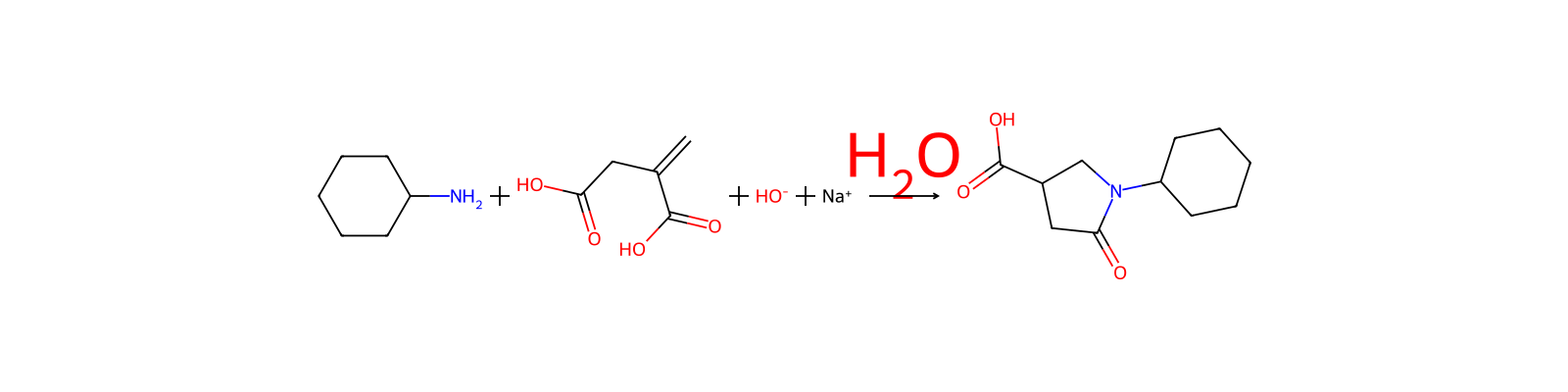


Notizen zur Verbindung
Wird geladen…