
Propan-1,3-diylbis(diphenylphosphin)
1,3-Bis(diphenylphosphino)propane
Daten werden ergänzt – lade die Seite später neu, um den aktuellen Stand zu sehen

Grundinformationen
- CAS
6737-42-4- Standard-SMILES
c1ccc(P(CCCP(c2ccccc2)c2ccccc2)c2ccccc2)cc1- InChIKey
LVEYOSJUKRVCCF-UHFFFAOYSA-N- Summenformel
- C27H26P2
- Durchschnittliche Molmasse
- 412,4 g/mol
- Monoisotopische Masse
- 412,15097482
Namen und Bezeichner
- Bevorzugter Name
- 1,3-Bis(diphenylphosphino)propane
- IUPAC
- 3-diphenylphosphanylpropyl(diphenyl)phosphane
- Lokaler Name
- Propan-1,3-diylbis(diphenylphosphin)
- Englischer Name
- 1,3-Bis(diphenylphosphino)propane
- Summenformel
- C27H26P2
- Molmasse
- 412.45
Namen und Synonyme
1,3-Bis(diphenylphosphino)propane6737-42-4Phosphine, 1,3-propanediylbis[diphenyl-DPPP cpdPhosphine, 1,3-propanediylbis(diphenyl-44R56E2C68NSC-193753DTXSID0064464RefChem:72524DTXCID30448871,3-B(DPP)PPhosphine, 1,1'-(1,3-propanediyl)bis(1,1-diphenyl)-
Weitere Namen anzeigen
1,3-BIS(DIPHENYLPHOSPHINE)PROPANE1,3-Bis(diphenylphosphanyl)propane1,3-bis(diphenyphosphino)propaneBis(1,3-diphenylphosphino)propane98% DPPP1,3-Bis(diphenyLphosphino)propanePH2PCH2 CH2CH2PPH21,3-BIS(DIPHENYPHOSPHINO)
229-791-2DPPP3-diphenylphosphanylpropyl(diphenyl)phosphaneMFCD00003050Trimethylenebis(diphenylphosphine)[3-(diphenylphosphanyl)propyl]diphenylphosphanePropane-1,3-diylbis(diphenylphosphine)1,3-Propanediylbis(diphenylphosphine)
Datenbank-Bezeichner
- CAS
6737-42-4- PubChem CID
- 81219
- DTXSID
DTXSID0064464- ChEMBL
CHEMBL73394- UNII
- 44R56E2C68
- EC Number
- 229-791-2
- Nikkaji
- J208.099K
Eigenschaften
Berechnete StruktureigenschaftenWird ergänzt
- XLogP
- 6,2
- Polarare Oberfläche (TPSA)
- 0 Ų
- H-Brücken-Donoren
- 0
- H-Brücken-Akzeptoren
- 0
- Frei drehbare Bindungen
- 8
- Schwere Atome
- 29
- Formalladung
- 0
- Komplexität
- 350
Physikochemische Eigenschaften
- Schmelzpunkt
- 63 · 63-65 °C (lit.)
- Siedepunkt
- 529.7 · 529.7±33.0 °C(Predicted)
- Flammpunkt
- 235 °C · 235°C
- storage temp.
- Inert atmosphere,Room Temperature
- Aggregatzustand
- Granules or Powder
- Farbe
- White to light yellow-beige
- Wasserlöslichkeit
- insoluble
- BRN
- 2821785 · 2821785
- InChI
- InChI=1S/C27H26P2/c1-5-14-24(15-6-1)28(25-16-7-2-8-17-25)22-13-23-29(26-18-9-3-10-19-26)27-20-11-4-12-21-27/h1-12,14-21H,13,22-23H2
- InChIKey
- LVEYOSJUKRVCCF-UHFFFAOYSA-N
- SMILES
- P(C1C=CC=CC=1)(C1C=CC=CC=1)CCCP(C1C=CC=CC=1)C1C=CC=CC=1
- CAS Datenbank
- 6737 · 6737-42-4(CAS DataBase Reference)
- NIST chemische Informationen
- 1 · 1,3-Bis(diphenylphosphino)propane(6737-42-4)
- EPA chemische Informationen
Sicherheit und Regulatorisches
Sicherheitsangaben dienen nur zur Orientierung und ersetzen weder das Sicherheitsdatenblatt (SDB) des Lieferanten noch geltende Vorschriften oder eine fachliche Bewertung.
GHS-Klassifizierung
GHS Classification
Warning
H302 (64.7%): Harmful if swallowed [Warning Acute toxicity, oral];H315 (100%): Causes skin irritation [Warning Skin corrosion/irritation];H317 (64.7%): May cause an allergic skin reaction [Warning Sensitization, Skin];H319 (100%): Causes serious eye irritation [Warning Serious eye damage/eye irritation];H335 (99.3%): May cause respiratory irritation [Warning Specific target organ toxicity, single exposure; Respiratory tract irritation];H400 (64.7%): Very toxic to aquatic life [Warning Hazardous to the aquatic environment, acute hazard];H410 (65.4%): Very toxic to aquatic life with long lasting effects [Warning Hazardous to the aquatic environment, long-term hazard]
P261, P264, P264+P265, P270, P271, P272, P273, P280, P301+P317, P302+P352, P304+P340, P305+P351+P338, P319, P321, P330, P332+P317, P333+P317, P337+P317, P362+P364, P391, P403+P233, P405, and P501 (click each P-code to see the statement)
Aggregated GHS information provided per 153 reports by companies from 12 notifications to the ECHA C&L Inventory. Each notification may be associated with multiple companies.;Information may vary between notifications depending on impurities, additives, and other factors. The percentage value in parenthesis indicates the notified classification ratio from companies that provide hazard codes. Only hazard codes with percentage values above 10% are shown. For more detailed information, please visit ECHA C&L website.
Gefahrenhinweise
Regulatory InformationPMN - indicates a commenced PMN (Pre-Manufacture Notices) substance.
Hazard Classes and CategoriesAcute Tox. 4 (64.7%);Skin Irrit. 2 (100%);Skin Sens. 1 (64.7%);Eye Irrit. 2 (100%);STOT SE 3 (99.3%);Aquatic Acute 1 (64.7%);Aquatic Chronic 1 (65.4%)
Regulatorische Informationen
Chemie und Industrie
Verwendung und Herstellung
General Manufacturing InformationPhosphine, 1,1'-(1,3-propanediyl)bis[1,1-diphenyl-: ACTIVE
Anwendungen
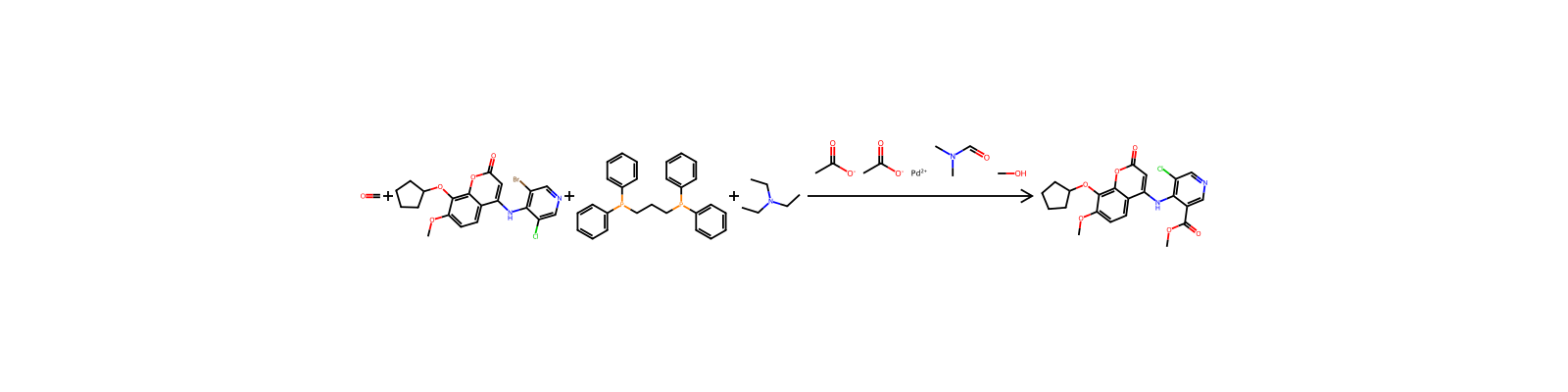
Beschreibung1,3-Bis(diphenylphosphino)propane is a ligand for metal-catalyzed substitution reactions of aryl and vinyl triflates, halides, and carbonates; carbonylation reactions; Grignard coupling; diene alkylation; macrocycle synthesis.
Verwenden1,3-Bis(diphenylphosphino)propane is used as a bidentate ligand in coordination chemistry and form complex dichloro(1,3-bis(diphenylphosphino)propane)nickel by reacting with nickel(II) chloride. This complex is used as a catalyst for Kumada coupling reaction. It also acts as a ligand for palladium(II) catalysts which is useful for the co-polymerization of carbon monoxide and ethylene to get polyketones. Further, it is employed in palladium-catalyzed arylation under Heck reaction and Suzuki reaction. In addition to this, it serves as a catalyst for Negishi coupling and Sonogashira coupling reactions.
Vor- und nachgelagerte Produkte
Vorgelagerte Rohstoffe
Zugehörige Reaktionen
903


Notizen zur Verbindung
Wird geladen…