
1-Bromodecane
Daten werden ergänzt – lade die Seite später neu, um den aktuellen Stand zu sehen
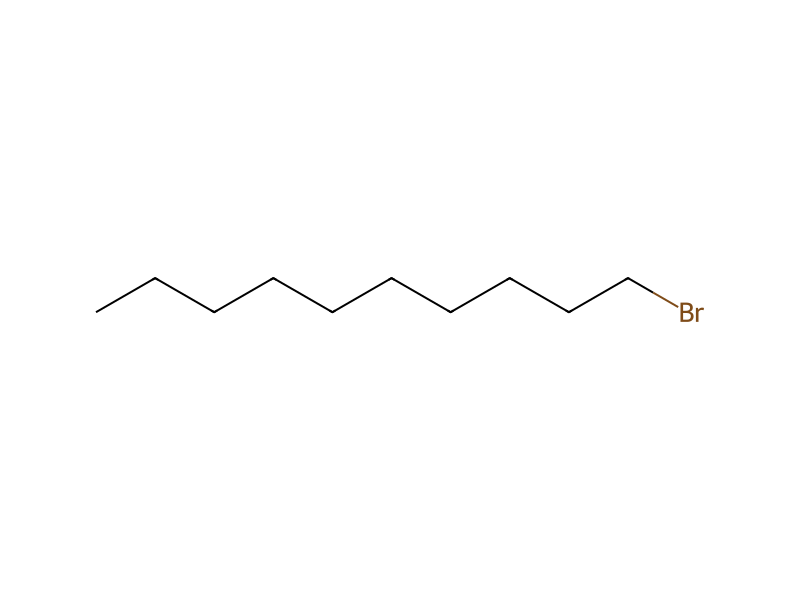
Grundinformationen
- CAS
112-29-8- Standard-SMILES
CCCCCCCCCCBr- InChIKey
MYMSJFSOOQERIO-UHFFFAOYSA-N- Summenformel
- C10H21Br
- Durchschnittliche Molmasse
- 221,18 g/mol
- Monoisotopische Masse
- 220,08266277
Namen und Bezeichner
- Bevorzugter Name
- 1-Bromodecane
- IUPAC
- 1-bromodecane
- Englischer Name
- 1-Bromodecane
- Summenformel
- C10H21Br
- Molmasse
- 221.18
Namen und Synonyme
1-BROMODECANE112-29-8Decyl bromiden-Decyl bromideDecane, 1-bromo-1-Decyl bromideDTXSID9051581Y2JDF9ZCB6NSC-8780DTXCID3030133RefChem:75157203-955-3
Weitere Namen anzeigen
1-BromdecanBROMO DECANEI–Bromodecane1-bromo-decan1-DecylbromidBroMine decane10-Bromodecane
DecylbromidebromodecaneC10H21BrMFCD00000221Decane, bromo-1-bromo-decaneNSC 8780EINECS 203-955-3
Datenbank-Bezeichner
- CAS
112-29-8- PubChem CID
- 8173
- DTXSID
DTXSID9051581- ChEMBL
CHEMBL3559832- UNII
- Y2JDF9ZCB6
- EC Number
- 203-955-3
- Nikkaji
- J5.209D
Eigenschaften
Berechnete StruktureigenschaftenWird ergänzt
- XLogP
- 6
- Polarare Oberfläche (TPSA)
- 0 Ų
- H-Brücken-Donoren
- 0
- H-Brücken-Akzeptoren
- 0
- Frei drehbare Bindungen
- 8
- Schwere Atome
- 11
- Formalladung
- 0
- Komplexität
- 61,9
Experimentelle und physikochemische Eigenschaften
Chemical ClassesOther Classes -> Halogenated Aliphatics, Saturated
SpringerMaterials PropertiesBoiling point
LogP6.0
Density1.0702 @ 20°C
Boiling Point240.6 °C @760 [mm Hg]
Melting Point-29.2 °C
Vapor Pressure0.04 [mmHg]
Physical Description
Liquid
Clear, light yellow liquid; [Aldrich MSDS]
Physikochemische Eigenschaften
- Schmelzpunkt
- -29.6 °C · -29.6 °C
- Siedepunkt
- 238 °C · 238 °C(lit.)
Sicherheit und Regulatorisches
Sicherheitsangaben dienen nur zur Orientierung und ersetzen weder das Sicherheitsdatenblatt (SDB) des Lieferanten noch geltende Vorschriften oder eine fachliche Bewertung.
GHS-Klassifizierung
GHS Classification
Warning
H315 (15.1%): Causes skin irritation [Warning Skin corrosion/irritation]
P264, P264+P265, P273, P280, P302+P352, P305+P351+P338, P321, P332+P317, P337+P317, P362+P364, P391, and P501 (click each P-code to see the statement)
Aggregated GHS information provided per 53 reports by companies from 10 notifications to the ECHA C&L Inventory. Each notification may be associated with multiple companies.
Gefahrenhinweise
Regulatory Information
Chemical: Decane, 1-bromo-
Decane, 1-bromo- is listed on the EPA's Chemical Data Reporting (CDR) system. Manufacturers and importers of Decane, 1-bromo- are required to report information about their production and use of this chemical to the EPA under the Toxic Substances Control Act (TSCA). (40 eCFR Part 711)
Status: Active Update: 17-05-2018 https://echa.europa.eu/registration-dossier/-/registered-dossier/5308
Decane, 1-bromo-: Does not have an individual approval but may be used under an appropriate group standard
Hazards SummaryMay cause irritation; [Aldrich MSDS] See 1-Bromopropane and 2-Bromopentane.
Hazard Classes and CategoriesSkin Irrit. 2 (15.1%)
Sicherheit und Schutzausrüstung
Protective Action Criteria (PAC)
13 [mg/m3]
150 [mg/m3]
880 [mg/m3]
Toxikologische Informationen
Chemie und Industrie
Verwendung und Herstellung
U.S. Production2022: 70,547 lb
Industry UsesIntermediate
General Manufacturing Information
Miscellaneous Manufacturing
Decane, 1-bromo-: ACTIVE
Anwendungen
Verwenden1-Bromodecane is used to produce decanal. It is also used in organic synthesis.
Vor- und nachgelagerte Produkte
Vorgelagerte Rohstoffe
Nachgelagerte Produkte
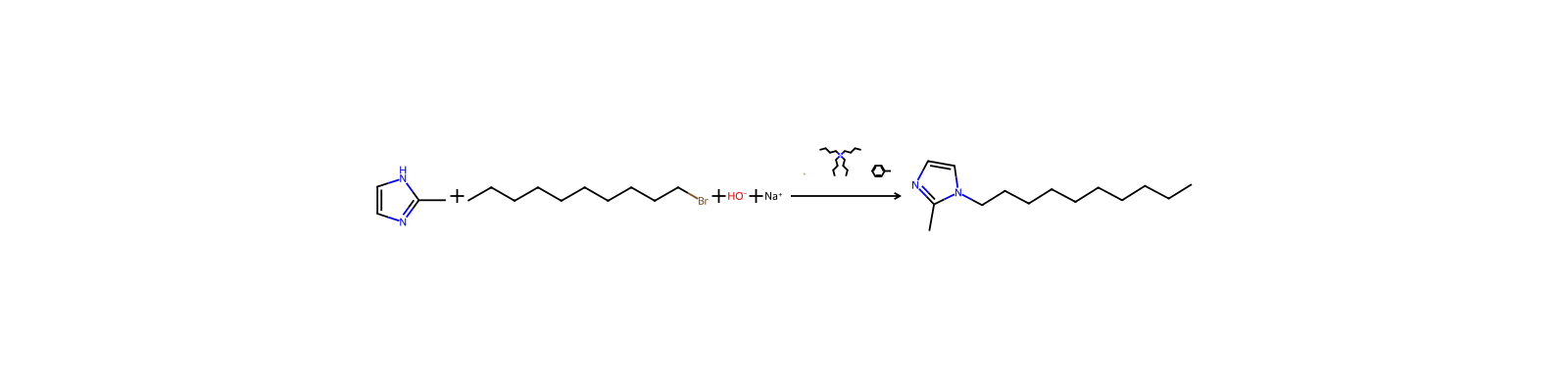
Zugehörige Reaktionen
214




Notizen zur Verbindung
Wird geladen…