StartseiteMCPWorkbenchSkills
StartseiteWorkbenchBenachrichtigungenMein Bereich
llms.txt · MCP-AnleitungDatenschutz · Nutzungsbedingungen · Supportv1.8.0
  1. Startseite
  2. /Verbindung

Nitrosylschwefelsure

Nitrosylsulfuric acid

HCID 82157
Neue NotizNeue ReaktionAnfrage stellen
Druckvorschau

Daten werden ergänzt – lade die Seite später neu, um den aktuellen Stand zu sehen

GrundinformationenÜberblickNamen und BezeichnerEigenschaftenSicherheit und RegulatorischesChemie und IndustrieZugehörige ReaktionenNotizen zur Verbindung
TeilstruktursucheÄhnliche Strukturen suchen

Grundinformationen

CAS
37297-09-9
Standard-SMILES
O=NOS(=O)(=O)O
InChIKey
VQTGUFBGYOIUFS-UHFFFAOYSA-N
Summenformel
HNO5S
Durchschnittliche Molmasse
127,08 g/mol
Monoisotopische Masse
126,95754313

Überblick

Shipped in solution with sulfuric acid (solutions are usually 40% nitrosylsulfuric acid and 54% sulfuric acid (Hawley)). Solution is a straw-colored oily liquid with a sharp odor. When pure, a crystalline solid decomposing at 73 °C. Very irritating to skin and eyes. Used to make dyes and other chemicals.

Namen und Bezeichner

Bevorzugter Name
Nitrosylsulfuric acid
IUPAC
nitroso hydrogen sulfate
Lokaler Name
Nitrosylschwefelsure
Englischer Name
Nitrosylsulfuric acid
Summenformel
HNO5S
Molmasse
127.07

Namen und Synonyme

Nitrosylsulfuric acidnitrosyl sulfatechamber crystalsNitrosylsulphuric acidNITROSOSULFURIC ACIDnitrosyl sulfuric acidnitrosulfonic acidnitrosyl hydrogen sulfatenitro acid sulfiteNitroxylsulfuric acidSulfuric acid, monoanhydride with nitrous acidUNII-40K942UPM8
Weitere Namen anzeigen
Nitrosylsulfuric acid 40%nitrosylsulphuricNitrosylschwefelsureNITROSYSULFURIC ACIDNitrosyl hydrogensulfateSulfuric nitrous anhydride
40K942UPM8Sulfuric acid monoanhydride with nitrous acidEINECS 231-964-2UN2308DTXSID30889380EC 231-964-2NITROSYLSULFURIC ACID [MI]Sulfuric acid, anhydride with nitrous acid (1:1)

Datenbank-Bezeichner

CAS
37297-09-9、7782-78-7
PubChem CID

Eigenschaften

Berechnete StruktureigenschaftenWird ergänzt

XLogP
-0,9
Polarare Oberfläche (TPSA)
101 Ų
H-Brücken-Donoren
1
H-Brücken-Akzeptoren
6
Frei drehbare Bindungen
1
Schwere Atome
7
Formalladung
0
Komplexität
136

Experimentelle und physikochemische Eigenschaften

Chemical Classes · 2 Einträge

Toxic Gases & Vapors -> Acids, Inorganic

Corrosives

SpringerMaterials PropertiesCorrosion
Density3 @25 °C
Melting Point73.5 °C
Physical Description · 3 Einträge

Shipped in solution with sulfuric acid (solutions are usually 40% nitrosylsulfuric acid and 54% sulfuric acid (Hawley)). Solution is a straw-colored oily liquid with a sharp odor. When pure, a crystalline solid decomposing at 73 °C. Very irritating to skin and eyes. Used to make dyes and other chemicals.

Solid; [Merck Index] Sulfuric acid solution: Straw-colored liquid with a sharp odor; [CAMEO] Light yellow crystals; [Sigma-Aldrich MSDS]

Solid

Physikochemische Eigenschaften

Schmelzpunkt
-10 °C · -10 °C
Siedepunkt
333 ℃ · 333℃ at 101.33kPa

Sicherheit und Regulatorisches

Sicherheitsangaben dienen nur zur Orientierung und ersetzen weder das Sicherheitsdatenblatt (SDB) des Lieferanten noch geltende Vorschriften oder eine fachliche Bewertung.

GHS-Klassifizierung

GHS Classification · 4 Einträge

Danger

H271 (12.4%): May cause fire or explosion; strong Oxidizer [Danger Oxidizing liquids; Oxidizing solids]

P210, P220, P260, P261, P262, P264, P264+P265, P270, P271, P280, P283, P301+P316, P301+P330+P331, P302+P352, P302+P361+P354, P304+P340, P305+P354+P338, P306+P360, P316, P317, P321, P330, P361+P364, P363, P370+P378, P371+P380+P375, P403+P233, P405, P420, and P501 (click each P-code to see the statement)

Aggregated GHS information provided per 185 reports by companies from 10 notifications to the ECHA C&L Inventory. Each notification may be associated with multiple companies.

Gefahrenhinweise

Hazards Identification · 2 Einträge

Water-reactive material (WR)

Water-reactive material (WR)

Regulatory Information · 5 Einträge

Chemical: Sulfuric acid, monoanhydride with nitrous acid

Sulfuric acid, anhydride with nitrous acid (1:1) is listed on the EPA's Chemical Data Reporting (CDR) system. Manufacturers and importers of Sulfuric acid, anhydride with nitrous acid (1:1) are required to report information about their production and use of this chemical to the EPA under the Toxic Substances Control Act (TSCA). (40 eCFR Part 711)

Status: Active Update: 25-07-2018 https://echa.europa.eu/registration-dossier/-/registered-dossier/12460

Nitrosylsulfuric acid: Does not have an individual approval but may be used under an appropriate group standard

The New Jersey Worker and Community Right to Know Act requires public and private employers to provide information about hazardous substances at their workplaces. (N.J.S.A. 34:5A-1 et. seq.)

DOT LabelCorrosive
Fire Hazards · 3 Einträge

Excerpt from ERG Guide 157 [Substances - Toxic and/or Corrosive (Non-Combustible / Water-Sensitive)]:

Chemie und Industrie

Verwendung und Herstellung

Uses · 2 Einträge

Used for bleaching cereal; [Merck Index] Used to make dyes and other chemicals; [CAMEO] Used in the chemicals industry as an intermediate and solvent; [IUCLID]

Toxic Gas from Spilling Chemical in Water [Category: Other]

U.S. Production2023: 166,568 lb
Consumer UsesNot Known or Reasonably Ascertainable
Industry UsesNot Known or Reasonably Ascertainable
General Manufacturing Information · 2 Einträge

Not Known or Reasonably Ascertainable

Sulfuric acid, anhydride with nitrous acid (1:1): ACTIVE

Anwendungen

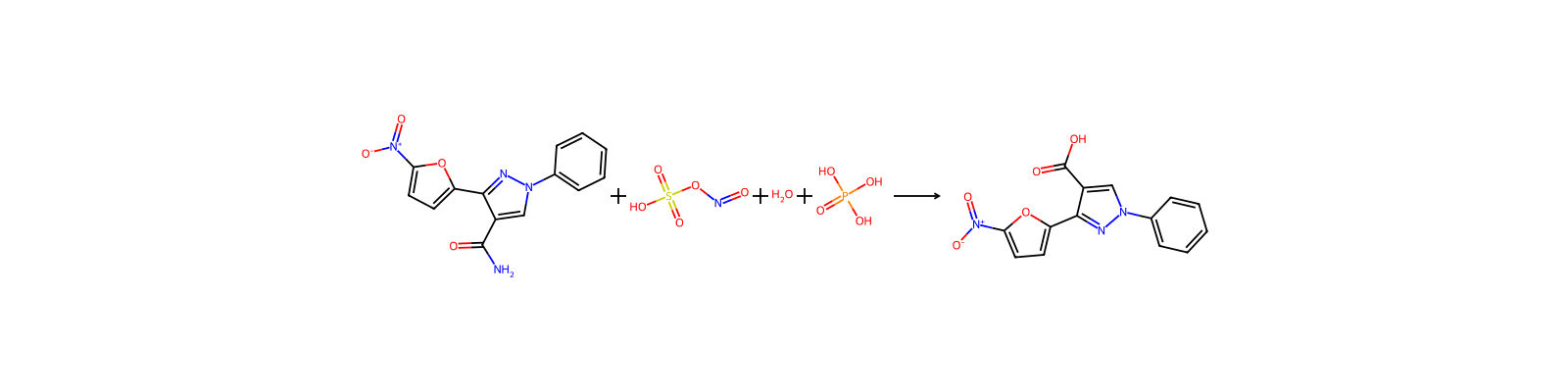
VerwendenNitrosylsulfuric acid is used for diazotisation, nitrosation, oxidation and oximation reactions. Product Data Sheet

Vor- und nachgelagerte Produkte

Nachgelagerte Produkte

2-[[4-[(2-Cyanethyl)ethylamino]phenyl]azo]-5-nitrobenzonitril3-[Ethyl[4-[(6-nitrobenzothiazol-2-yl)azo]phenyl]amino]propiononitrilBasic Blue 53Disperse Orange 971,4-Dinitronaphthaleneepsilon-Caprolactam

Zugehörige Reaktionen

87
Reaktionsaufzeichnung erstellen
Reaktionsgleichung von HRID 35509
HRID 35509als Eduktuspto-grants-1988_08
Reaktionsgleichung von HRID 87726
HRID 87726als EduktTraining data from https://doi.org/10.1039/C8SC04228D (2/10)
Reaktionsgleichung von HRID 127837
HRID 127837als Eduktuspto-grants-1981_03
Reaktionsgleichung von HRID 223353
HRID 223353als Eduktuspto-grants-1982_10
Reaktionsgleichung von HRID 252889
HRID 252889als Eduktuspto-grants-2011_01
Reaktionsgleichung von HRID 252890
HRID 252890als Eduktuspto-grants-2011_01
Reaktionsgleichung von HRID 252891
HRID 252891als Eduktuspto-grants-2011_01
Reaktionsgleichung von HRID 252892
HRID 252892als Eduktuspto-grants-2011_01
Seite 1 von 11

Notizen zur Verbindung

Wird geladen…

Auf dieser SeiteGrundinformationenÜberblickNamen und BezeichnerEigenschaftenSicherheit und RegulatorischesChemie und IndustrieZugehörige ReaktionenNotizen zur Verbindung
Weitere Aktionen
Neue NotizNeue ReaktionAnfrage stellen
82157
DTXSID
DTXSID30889380
ChEBI
CHEBI:230452
UNII
40K942UPM8
EC Number
231-964-2
Nikkaji
J96.480H
Dichte
1.612 g/mL · 1.612 g/mL at 25 °C
Dampfdruck
2.6 · 2.6-30Pa at 20-50℃
storage temp.
Refrigerator (+4°C)
Löslichkeit
2 O; · reacts with H2O; soluble in H2SO4
pka
-7.51 · -7.51±0.18(Predicted)
Aggregatzustand
Viscous Liquid
Farbe
Clear to milky yellow to greenish
Wasserlöslichkeit
decomposes
Merck
13 · 13,6682
InChI
InChI=1S/HNO5S/c2-1-6-7(3,4)5/h(H,3,4,5)
InChIKey
VQTGUFBGYOIUFS-UHFFFAOYSA-N
SMILES
O(N=O)S(O)(=O)=O
CAS Datenbank
7782 · 7782-78-7(CAS DataBase Reference)
EPA chemische Informationen
Sulfuric acid, monoanhydride with nitrous acid (7782-78-7)

· Non-combustible, substance itself does not burn but may decompose upon heating to produce corrosive and/or toxic fumes.

· Non-combustible, substance itself does not burn but may decompose upon heating to produce corrosive and/or toxic fumes.

Health Hazards · 3 Einträge

Excerpt from ERG Guide 157 [Substances - Toxic and/or Corrosive (Non-Combustible / Water-Sensitive)]:

· TOXIC and/or CORROSIVE; inhalation, ingestion or contact (skin, eyes) with vapors, dusts or substance may cause severe injury, burns or death.

· TOXIC and/or CORROSIVE; inhalation, ingestion or contact (skin, eyes) with vapors, dusts or substance may cause severe injury, burns or death.

Hazards Summary · 1 Eintrag

Decomposed by moisture producing sulfuric and nitric acids; [Merck Index] Shipped in solution with sulfuric acid; A strong oxidizing agent; Reacts vigorously with water evolving sulfuric acid and nitric acids; A strong skin and eye irritant; [CAMEO] Reacts violently with water; Causes burns; Inhalation may cause corrosive injuries to upper respiratory tract and lungs; Highly toxic by inhalation; Toxic by ingestion and skin absorption; [Sigma-Aldrich MSDS]

DOT ID and Guide · 2 Einträge

2308 157

3456 157

Reactive GroupAcids, Strong Oxidizing
Reactivity AlertsStrong Oxidizing Agent
Reactivity Profile · 1 Eintrag

NITROSYLSULFURIC ACID is an oxidizing agent. Neutralizes chemical bases in exothermic reactions. An attempt to diazotize dinitroaniline using nitrosylsulfuric acid resulted in an explosion with loss of life. The event was blamed on the high concentration of the reactants dinitroaniline hydrochloride and nitrosylsulfuric acid [MCA Case History 1763. 1971].

DOT Hazard Classification · 6 Einträge

Nitrosylsulfuric acid, liquid

UN2308

Class 8 Corrosive material (49 eCFR § 173.136)

PG II: the degree of danger presented by the material is medium

Nitrosylsulphuric acid, solid

UN3456

Air and Water ReactionsDecomposes in water to form sulfuric and nitric acids [Merck 11th ed. 1989].

Sicherheit und Schutzausrüstung

Fire FightingExcerpt from ERG Guide 157 [Substances - Toxic and/or Corrosive (Non-Combustible / Water-Sensitive)]:
Accidental Release Measures · 4 Einträge

· CALL 911. Then call emergency response telephone number on shipping paper. If shipping paper not available or no answer, refer to appropriate telephone number listed on the inside back cover.

· ELIMINATE all ignition sources (no smoking, flares, sparks or flames) from immediate area.

· CALL 911. Then call emergency response telephone number on shipping paper. If shipping paper not available or no answer, refer to appropriate telephone number listed on the inside back cover.

· ELIMINATE all ignition sources (no smoking, flares, sparks or flames) from immediate area.

First Aid · 3 Einträge

Excerpt from ERG Guide 157 [Substances - Toxic and/or Corrosive (Non-Combustible / Water-Sensitive)]:

General First Aid:

General First Aid:

Exposure Control and Personal Protection · 3 Einträge

· Wear positive pressure self-contained breathing apparatus (SCBA).

· Wear positive pressure self-contained breathing apparatus (SCBA).

TIH (Toxic Inhalation Hazard) - Term used to describe gases and volatile liquids that are toxic when inhaled. Some are TIH materials themselves, e.g., chlorine, and some release TIH gases when spilled in water, e.g., chlorosilanes. [ERG 2016].

Nonfire Spill ResponseExcerpt from ERG Guide 157 [Substances - Toxic and/or Corrosive (Non-Combustible / Water-Sensitive)]:
Isolation and Evacuation · 6 Einträge

Excerpt from ERG Guide 157 [Substances - Toxic and/or Corrosive (Non-Combustible / Water-Sensitive)]:

Immediate precautionary measure

When spilled in water

When spilled in water

Immediate precautionary measure

When spilled in water

Toxic-by-Inhalation (TIH) Gas · 2 Einträge

NO2 - when spill Nitrosylsulfuric acid, liquid into water.

NO2 - when spill Nitrosylsulfuric acid, solid into water.

Protective Action Criteria (PAC) · 3 Einträge

1.2 [mg/m3]

13 [mg/m3]

79 [mg/m3]

Personal Protective Equipment (PPE)Excerpt from ERG Guide 157 [Substances - Toxic and/or Corrosive (Non-Combustible / Water-Sensitive)]:
Emergency Response Planning Guidelines · 2 Einträge

· Note: Some foams will react with the material and release corrosive/toxic gases.

· Note: Some foams will react with the material and release corrosive/toxic gases.

Toxikologische Informationen

Adverse EffectsDermatotoxin - Skin burns.

Sicherheitsdaten

wgk
3
tsca
TSCA listed
ridadr
UN 3456 8/PG II (NITROSYLSULPHURIC ACID, SOLID)
hs_code
28111980
risk_code
8-14-23/24/25-35-34
hazard_code
O,T
safety_code
17-26-36/37/39-45-27
hazard_class
8
packing_group
II
Speicherklasse
5.1B - Oxidizing hazardous materials
Hazard Classifications
Acute Tox. 3 DermalAcute Tox. 3 OralAcute Tox. 4 InhalationEye Dam. 1Met. Corr. 1Ox. Liq. 2Skin Corr. 1A