StartseiteMCPWorkbenchSkills
StartseiteWorkbenchBenachrichtigungenMein Bereich
llms.txt · MCP-AnleitungDatenschutz · Nutzungsbedingungen · Supportv1.8.0
  1. Startseite
  2. /Verbindung

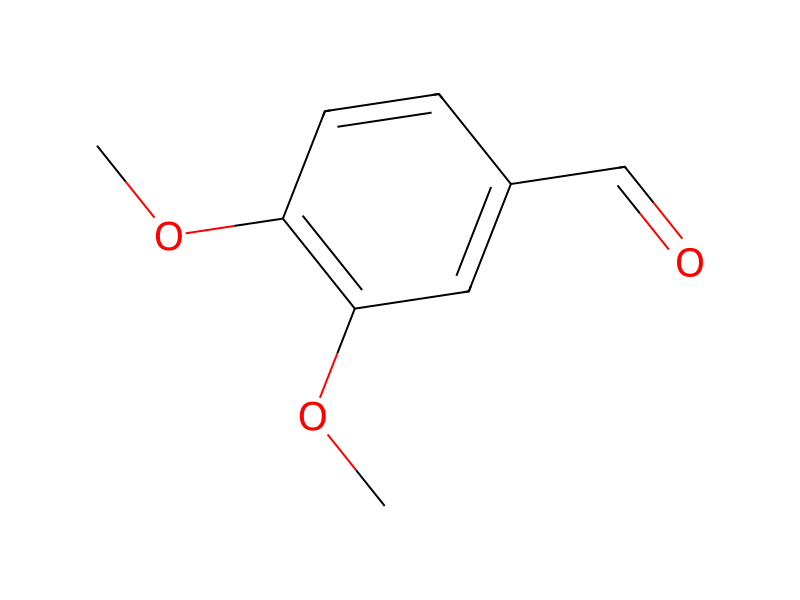
Veratrumaldehyd

Veratraldehyde
HCID 8419
Neue NotizNeue ReaktionAnfrage stellen
Druckvorschau
GrundinformationenÜberblickNamen und BezeichnerEigenschaftenSicherheit und RegulatorischesChemie und IndustrieZugehörige ReaktionenNotizen zur Verbindung
TeilstruktursucheÄhnliche Strukturen suchen

Grundinformationen

CAS
120-14-9
Standard-SMILES
COc1ccc(C=O)cc1OC
InChIKey
WJUFSDZVCOTFON-UHFFFAOYSA-N
Summenformel
C9H10O3
Durchschnittliche Molmasse
166,17 g/mol
Monoisotopische Masse
166,06299418

Überblick

Veratraldehyde appears as needles or chunky light peach powder. Has an odor of vanilla beans. (NTP, 1992)

Namen und Bezeichner

Bevorzugter Name
Veratraldehyde
IUPAC
3,4-dimethoxybenzaldehyde
Lokaler Name
Veratrumaldehyd
Englischer Name
Veratraldehyde
Summenformel
C9H10O3
Molmasse
166.17

Namen und Synonyme

3,4-DimethoxybenzaldehydeVERATRALDEHYDE120-14-9Veratric aldehydeBenzaldehyde, 3,4-dimethoxy-Vanillin methyl etherVeratrum aldehydeVeratryl aldehydeVeratralp-Veratric aldehyde4-O-Methylvanillin3,4-Dimethoxybenzenecarbonal
Weitere Namen anzeigen
3,4-DIMETHOXYANILINE204-373-2FEMA 3109METHYL VANILLINMethyl vanilline
Protocatechualdehyde dimethyl etherProtocatechuic aldehyde dimethyl etherFEMA No. 3109DTXSID7026285UI88P68JZDNSC-8500NSC-24521DTXCID406285

Datenbank-Bezeichner

CAS
120-14-9
PubChem CID
8419
DTXSID
DTXSID7026285
ChEMBL
CHEMBL1088937
ChEBI
CHEBI:17098
UNII
UI88P68JZD
EC Number
204-373-2
Nikkaji
J9.907D

Eigenschaften

Berechnete Struktureigenschaften

XLogP
1,5
Polarare Oberfläche (TPSA)
35,5 Ų
H-Brücken-Donoren
0
H-Brücken-Akzeptoren
3
Frei drehbare Bindungen
3
Schwere Atome
12
Formalladung
0
Komplexität
147

Experimentelle und physikochemische Eigenschaften

FragrancesFragrance Ingredient (Veratraldehyde) -> IFRA transparency List
LogP · 2 Einträge

1.22

1.22

Food AdditivesFLAVORING AGENT OR ADJUVANT -> FDA Substance added to food
Flavoring AgentsEU Flavoring substances
Solubility · 4 Einträge

less than 1 mg/mL at 72 °F (NTP, 1992)

6.32 mg/mL at 25 °C

insoluble in cold water; soluble in hot water oils

soluble (in ethanol)

Flash Pointgreater than 230 °F (NTP, 1992)
Endocrine DisruptorsPotential endocrine disrupting compound
Boiling Point · 4 Einträge

538 °F at 760 mmHg (NTP, 1992)

281.00 °C. @ 760.00 mm Hg

281 °C

281 °C @760 [mm Hg]

Melting Point · 2 Einträge

Sicherheit und Regulatorisches

Sicherheitsangaben dienen nur zur Orientierung und ersetzen weder das Sicherheitsdatenblatt (SDB) des Lieferanten noch geltende Vorschriften oder eine fachliche Bewertung.

GHS-Klassifizierung

GHS Classification · 6 Einträge

Warning

H302 (100%): Harmful if swallowed [Warning Acute toxicity, oral]

P264, P270, P301+P317, P330, and P501 (click each P-code to see the statement)

Aggregated GHS information provided per 1759 reports by companies from 13 notifications to the ECHA C&L Inventory.

Warning

H302: Harmful if swallowed [Warning Acute toxicity, oral]

Gefahrenhinweise

Regulatory Information · 4 Einträge

Chemical: Benzaldehyde, 3,4-dimethoxy-

Commission Regulation (EC) No 1565/2000 (Repealed by Com. Implementing Reg. (EU) No 872/2012)

REACH registered substance: Veratraldehyde (EC: 204-373-2)

3,4-Dimethoxybenzaldehyde: Does not have an individual approval but may be used under an appropriate group standard

Fire HazardsThis compound is probably combustible. (NTP, 1992)
Health HazardsSYMPTOMS: Exposure to this compound may cause skin, eye, mucous membrane or upper respiratory tract irritation.
Reactive GroupAldehydes
Reactivity Profile · 1 Eintrag

VERATRALDEHYDE is incompatible with strong oxidizing agents and strong bases. (NTP, 1992). VERATRALDEHYDE is an aldehyde. Aldehydes are readily oxidized to give carboxylic acids. Flammable and/or toxic gases are generated by the combination of aldehydes with azo, diazo compounds, dithiocarbamates, nitrides, and strong reducing agents. Aldehydes can react with air to give first peroxo acids, and ultimately carboxylic acids. These autoxidation reactions are activated by light, catalyzed by salts of transition metals, and are autocatalytic (catalyzed by the products of the reaction).

Chemie und Industrie

Pharmakologische Informationen

Cellular LocationsCytoplasm

Verwendung und Herstellung

Use Classification · 6 Einträge

Fragrance Ingredients

Flavouring Agent -> FLAVOURING_AGENT -> JECFA Functional Classes

Flavoring Agents -> JECFA Flavorings Index

Flavouring Agent -> FLAVOURING_AGENT -> JECFA Functional Classes

Flavouring Agent -> FLAVOURING_AGENT -> JECFA Functional Classes

Flavouring Agent -> FLAVOURING_AGENT -> JECFA Functional Classes

General Manufacturing InformationBenzaldehyde, 3,4-dimethoxy-: ACTIVE
Anwendungen · 2 Einträge

OccurrenceReported among the constituents of the essential oils of Cymbopogon javanensis and Eryngium poterium. Also reported found in raspberry, ginger, peppermint oil, Bourbon vanilla and mastic gum oil.

VerwendenVeratraldehyde was used in the preparation of 4-chloromethyl-2-(dimethoxyphenyl)-1,3-dioxolane. It was used in the synthesis of (+)-lithospermic acid, having anti-HIV activity. It forms 1:1 inclusion complexes with cyclodextrins. It reacts with 3-acetyl-2,5-dimethythiophene to yield chalcone dye, (2E)-3-(3,4-Dimethoxyphenyl)-1-(2,5-dimethylthiophen-3-yl)prop-2-en-1-one.

Darstellung

synthetischePrepared from vanillin by methylation of vanillin with dimethylsulfate under mildly alkaline conditions.

Vor- und nachgelagerte Produkte

Vorgelagerte Rohstoffe

Vanillin

Zugehörige Reaktionen

389
Reaktionsaufzeichnung erstellen
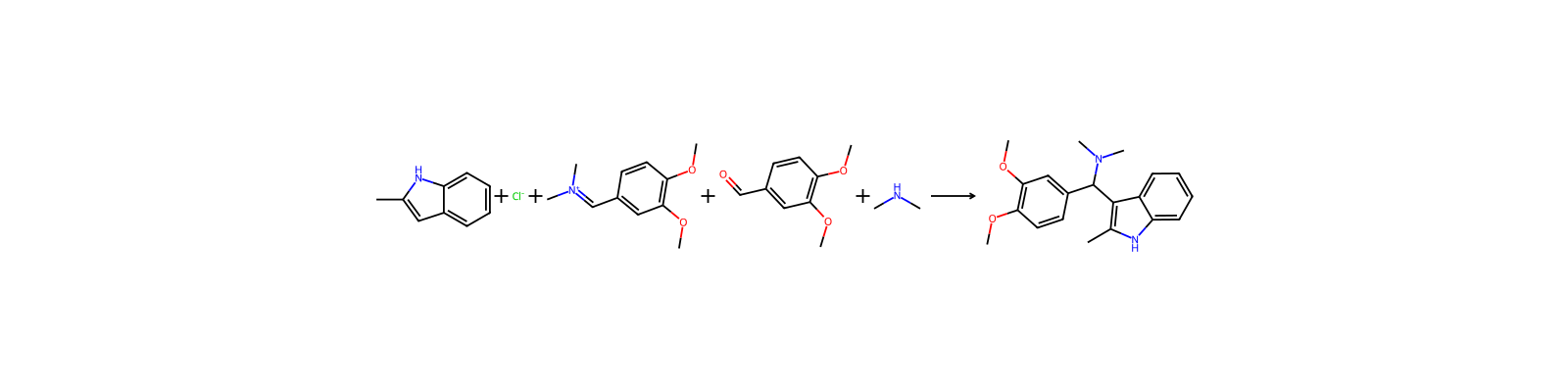
Reaktionsgleichung von HRID 9056
HRID 9056als Eduktuspto-grants-2006_08
Reaktionsgleichung von HRID 9057
HRID 9057als Eduktuspto-grants-2006_08
Reaktionsgleichung von HRID 9058
HRID 9058als Eduktuspto-grants-2006_08
Reaktionsgleichung von HRID 9059
HRID 9059als Eduktuspto-grants-2006_08
Reaktionsgleichung von HRID 9060
HRID 9060als Eduktuspto-grants-2006_08
Reaktionsgleichung von HRID 9061
HRID 9061als Eduktuspto-grants-2006_08
Reaktionsgleichung von HRID 9062
HRID 9062als Eduktuspto-grants-2006_08
Reaktionsgleichung von HRID 16146
HRID 16146als Eduktuspto-grants-2010_06
Seite 1 von 49

Notizen zur Verbindung

Wird geladen…

Auf dieser SeiteGrundinformationenÜberblickNamen und BezeichnerEigenschaftenSicherheit und RegulatorischesChemie und IndustrieZugehörige ReaktionenNotizen zur Verbindung
Weitere Aktionen
Neue NotizNeue ReaktionAnfrage stellen

108 to 109 °F (NTP, 1992)

58 °C

Physical Description · 3 Einträge

Veratraldehyde appears as needles or chunky light peach powder. Has an odor of vanilla beans. (NTP, 1992)

Solid

white crystalline solid

Physikochemische Eigenschaften

Schmelzpunkt
40 · 40-43 °C (lit.)
Siedepunkt
281 °C · 281 °C (lit.)
Dichte
1.1708 · 1.1708 (rough estimate)
Dampfdruck
0.09 Pa · 0.09Pa at 24℃
Brechungsindex
1.526 · 1.5260 (estimate)
FEMA
3109 · 3109 | VERATRALDEHYDE
Flammpunkt
230 °F · >230 °F
storage temp.
2 · 2-8°C
Löslichkeit
alcohol: freely soluble
Aggregatzustand
Lumps or Fused Solid
Farbe
White to yellow
Wichte
1.15 · 1.15 (liquid)
Geruch (Odor)
10 % · at 10.00 % in dipropylene glycol. sweet woody vanilla
Geruchsart
creamy
Biologische Quelle
synthetic
Wasserlöslichkeit
0.1 g/100 · <0.1 g/100 mL at 22 ºC
Merck
14 · 14,9951
JECFA Number
877 · 877
BRN
473899 · 473899
Stabilität
Stable. Incompatible with strong bases, strong oxidizing agents.
Major Application
flavors and fragrances
Kosmetik-Inhaltsstoffe Funktionen
PERFUMING
InChI
1S/C9H10O3/c1-11-8-4-3-7(6-10)5-9(8)12-2/h3-6H,1-2H3
InChIKey
WJUFSDZVCOTFON-UHFFFAOYSA-N
SMILES
[H]C(=O)c1ccc(OC)c(OC)c1
LogP
0.8 at · 0.8 at 25℃
CAS Datenbank
120 · 120-14-9(CAS DataBase Reference)
NIST chemische Informationen
3 · Benzaldehyde, 3,4-dimethoxy-(120-14-9)
EPA chemische Informationen
Veratraldehyde (120-14-9)
Air and Water ReactionsInsoluble in water.
Hazard Classes and Categories · 2 Einträge

Acute Tox. 4 (100%)

Acute toxicity (Oral) - Category 4

Sicherheit und Schutzausrüstung

Fire FightingFires involving this compound may be controlled using a dry chemical, carbon dioxide or Halon extinguisher. (NTP, 1992)
First Aid · 1 Eintrag

EYES: First check the victim for contact lenses and remove if present. Flush victim's eyes with water or normal saline solution for 20 to 30 minutes while simultaneously calling a hospital or poison control center. Do not put any ointments, oils, or medication in the victim's eyes without specific instructions from a physician. IMMEDIATELY transport the victim after flushing eyes to a hospital even if no symptoms (such as redness or irritation) develop.

Nonfire Spill Response · 1 Eintrag

SMALL SPILLS AND LEAKAGE: Should a spill occur while you are handling this chemical, FIRST REMOVE ALL SOURCES OF IGNITION, then you should dampen the solid spill material with 60-70% ethanol and transfer the dampened material to a suitable container. Use absorbent paper dampened with 60-70% ethanol to pick up any remaining material. Seal the absorbent paper, and any of your clothes, which may be contaminated, in a vapor-tight plastic bag for eventual disposal. Solvent wash all contaminated surfaces with 60-70% ethanol followed by washing with a soap and water solution. Do not reenter the contaminated area until the Safety Officer (or other responsible person) has verified that the area has been properly cleaned.

Protective Action Criteria (PAC) · 3 Einträge

6.0 [mg/m3]

66 [mg/m3]

400 [mg/m3]

Personal Protective Equipment (PPE) · 1 Eintrag

RECOMMENDED RESPIRATOR: Where the neat test chemical is weighed and diluted, wear a NIOSH-approved half face respirator equipped with an organic vapor/acid gas cartridge (specific for organic vapors, HCl, acid gas and SO2) with a dust/mist filter. (NTP, 1992)

Sicherheitsdaten

F
9-23
wgk
3
tsca
TSCA listed
hs_code
29124900
RTECS-Nr.
YX5088000
risk_code
22-38-36/37/38-36/38
Toxizität
LD50 orally in Rabbit: 2000 mg/kg LD50 dermal Rabbit > 5000 mg/kg
hazard_code
Xn,Xi
safety_code
26-22-24/25-36
Speicherklasse
11 - Combustible Solids
Hazard Classifications
Acute Tox. 4 OralSkin Irrit. 2
Dimethylsulfat

Nachgelagerte Produkte

6,7-Dimethoxy-2,4-Quinazolinedioneβ-(3,4-Dimethoxyphenyl)-α-cyanopropionaldehyde dimethylacetalDiaveridin7-Hydroxy-6-methoxy-3,4-dihydroisoquinoline1-(3,4-Dimethoxyphenyl)aceton3-Phenylumbelliferone3,4-DimethoxyphenylessigsureMethyldopaFenoldopam3,4-Dimethoxybenzylalkohol3,4-DihydroxyphenylessigsureSINENSETIN2,6-Bis-(3,4-Dimethoxyphenylmethylene)-Cyclohexanone