StartseiteMCPWorkbenchSkills
StartseiteWorkbenchBenachrichtigungenMein Bereich
llms.txt · MCP-AnleitungDatenschutz · Nutzungsbedingungen · Supportv1.8.0
  1. Startseite
  2. /Verbindung

Trimethylborat

Trimethyl borate

HCID 8470
Neue NotizNeue ReaktionAnfrage stellen
Druckvorschau

Daten werden ergänzt – lade die Seite später neu, um den aktuellen Stand zu sehen

GrundinformationenÜberblickNamen und BezeichnerEigenschaftenSicherheit und RegulatorischesChemie und IndustrieZugehörige ReaktionenNotizen zur Verbindung
TeilstruktursucheÄhnliche Strukturen suchen

Grundinformationen

CAS
121-43-7
Standard-SMILES
COB(OC)OC
InChIKey
WRECIMRULFAWHA-UHFFFAOYSA-N
Summenformel
C3H9BO3
Durchschnittliche Molmasse
103,92 g/mol
Monoisotopische Masse
104,0644743

Überblick

Trimethyl borate appears as a water-white liquid. Denser than water. Vapors heavier than air. Used as a solvent and fungicide for fruit.

Namen und Bezeichner

Bevorzugter Name
Trimethyl borate
IUPAC
trimethyl borate
Lokaler Name
Trimethylborat
Englischer Name
Trimethyl borate
Summenformel
C3H9BO3
Molmasse
103.91

Namen und Synonyme

TRIMETHYL BORATE121-43-7TrimethoxyboraneMethyl boratetrimethylborateTrimethoxyboronBoric acid trimethyl esterBorester OTrimethoxyborineBoric acid, trimethyl esterBoric acid (H3BO3), trimethyl esterTrimethylester kyseliny borite
Weitere Namen anzeigen
B(OMe)3trimethylB(OCH3)3C3H9BO3LobitridolTriMethyl boratBORON METHOXIDEborestero
NSC-77782U64J6F5NDTXSID0037738CHEBI:38913RefChem:191751DTXCID8017738204-468-9934-685-0

Datenbank-Bezeichner

CAS
121-43-7、3349-42-6
PubChem CID
8470
DTXSID
DTXSID0037738
ChEBI
CHEBI:38913
UNII
82U64J6F5N
EC Number
204-468-9、693-032-5、934-685-0
Nikkaji
J2.484H

Eigenschaften

Berechnete StruktureigenschaftenWird ergänzt

Polarare Oberfläche (TPSA)
27,7 Ų
H-Brücken-Donoren
0
H-Brücken-Akzeptoren
3
Frei drehbare Bindungen
3
Schwere Atome
7
Formalladung
0
Komplexität
31,7

Experimentelle und physikochemische Eigenschaften

Chemical Classes · 2 Einträge

Metals -> Metalloid Compounds (Boron)

Flammable agents - 3rd degree

LogP-1.9
Density · 3 Einträge

0.915 g/cu cm

Relative density (water = 1): 0.915

0.92 @ 20°C

Color/FormColorless, moisture-sensitive liquid; fumes in air
Solubility · 3 Einträge

Miscible with tetrahydrofuran, ether, isoporpylamine, hexane, methanol, nujol, and other organic liquids

Miscible with alcohol, ether; soluble in polar nonhydroxylic solvents

Solubility in water: reaction

Flash Point · 3 Einträge

less than 80 °F (NFPA, 2010)

< 80 °F (< 27 °C) (closed cup)

- 7 °C

Boiling Point · 3 Einträge

67.5 °C

68 °C

68 °C @760 [mm Hg]

Decomposition · 2 Einträge

The substance decomposes on heating or on burning producing toxic fumes including boron oxide.

Sicherheit und Regulatorisches

Sicherheitsangaben dienen nur zur Orientierung und ersetzen weder das Sicherheitsdatenblatt (SDB) des Lieferanten noch geltende Vorschriften oder eine fachliche Bewertung.

GHS-Klassifizierung

GHS Classification · 6 Einträge

Danger

H226: Flammable liquid and vapor [Warning Flammable liquids]

P203, P210, P233, P240, P241, P242, P243, P280, P302+P352, P303+P361+P353, P317, P318, P321, P362+P364, P370+P378, P403+P235, P405, and P501 (click each P-code to see the statement)

Danger

H225 (40.5%): Highly Flammable liquid and vapor [Danger Flammable liquids]

P203, P210, P233, P240, P241, P242, P243, P260, P261, P262, P264, P264+P265, P270, P271, P280, P301+P316, P302+P352, P303+P361+P353, P304+P340, P305+P351+P338, P308+P316, P316, P317, P318, P321, P330, P337+P317, P361+P364, P362+P364, P370+P378, P403+P233, P403+P235, P405, and P501 (click each P-code to see the statement)

Gefahrenhinweise

Regulatory Information · 6 Einträge

Chemical: Boric acid (H3BO3), trimethyl ester

Hazard Traits - Reproductive Toxicity

Boric acid (H3BO3), trimethyl ester is listed on the EPA's Chemical Data Reporting (CDR) system. Manufacturers and importers of Boric acid (H3BO3), trimethyl ester are required to report information about their production and use of this chemical to the EPA under the Toxic Substances Control Act (TSCA). (40 eCFR Part 711)

REACH registered substance: Trimethyl borate (EC: 204-468-9)

Boric acid, trimethyl ester: HSNO Approval: HSR001230 Approved with controls

The New Jersey Worker and Community Right to Know Act requires public and private employers to provide information about hazardous substances at their workplaces. (N.J.S.A. 34:5A-1 et. seq.)

DOT LabelFlammable Liquid
Fire Hazards · 3 Einträge

Excerpt from ERG Guide 129 [Flammable Liquids (Water-Miscible / Noxious)]:

· HIGHLY FLAMMABLE: Will be easily ignited by heat, sparks or flames.

Highly flammable. Gives off irritating or toxic fumes (or gases) in a fire. Vapour/air mixtures are explosive.

Chemie und Industrie

Verwendung und Herstellung

Uses · 6 Einträge

Used as a flame retardant, welding and brazing flux, chemical intermediate, fungicide, and a solvent for waxes, resins, and oils; [HSDB]

Welding [Category: Weld]

As solvent for waxes, resins, oils; catalyst in manufacture of ketones; analysis of paint and varnish ingredients; as neutron detector gas in presence of a scintillation counter; as promoter of diborane reactions

Dehydrating agent; fungicide for citrus fruit

Intermediate in preparation of metal borohydrides

Azeotropic gaseous flux for welding and brazing

U.S. Production · 3 Einträge

2023: 1,000,000 - <8,500,000 lb

(1979) PROBABLY GREATER THAN 4.54X10+6 G

Production figures for trimethyl borate were given as 21.1 million pound in 1977(1), most of which is used captively in the production of sodium borohydride(2).

Industry UsesNot Known or Reasonably Ascertainable
Methods of Manufacturing...From pyridine-boron trichloride complex; from methanol and boric oxide, borax or boric acid; from methyl orthosilicates and boron halide; from boric acid and methanol...
General Manufacturing Information · 6 Einträge

Pharmaceutical and Medicine Manufacturing

Boric acid (H3BO3), trimethyl ester: ACTIVE

US 2689259; US 2884439; US 2937195 (to Callery Chem)

US 2881227 and US 2884440 (to Olin Mathieson)

US 2855427 (to Am. Potash & Chem.)

US 2739979 ( to USAEC)

Anwendungen · 2 Einträge

BeschreibungTrimethylborat ist eine feuchtigkeitsempfindliche, farblose und entzündliche Flüssigkeit mit einem Siedepunkt von 68.5 ℃. Der Ester brennt mit einer charakteristisch grünen Flamme, was zum qualitativen Bornachweis genutzt wird.

VerwendenTrimethyl borate is a useful reagent in organic synthesis. It is involved in the production of resins, waxes and paints and acts as a methylation agent. As a boron source, Trimethyl borate is used to prepare flame retardants, anti-oxidants and corrosion inhibitors. It reacts with Grignard reagents followed by hydrolysis to prepare boronic acid. It is also used as a precursor of borate esters, which finds application in the Suzuki coupling reaction. It is used as neutron detector gas in the presence of a scintillation counter; as a promoter of diborane reactions.

Zugehörige Reaktionen

1.498
Reaktionsaufzeichnung erstellen
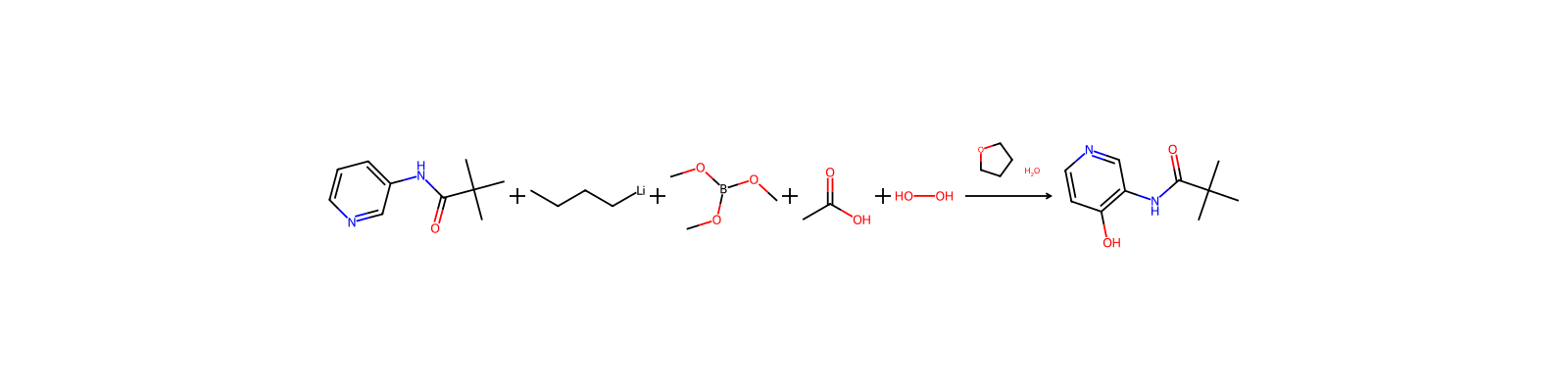
Reaktionsgleichung von HRID 1874
HRID 1874als Eduktuspto-grants-1998_03
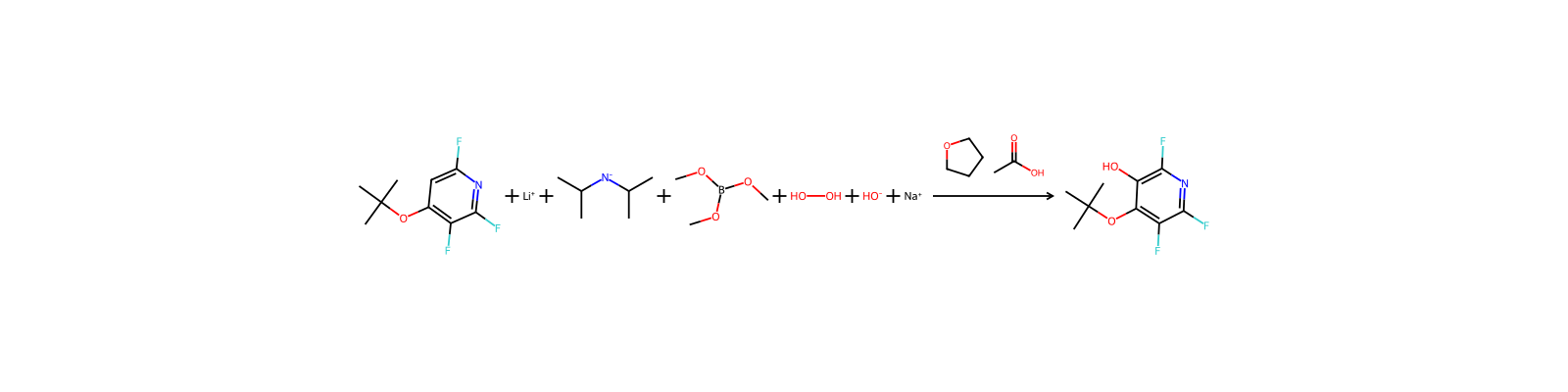
Reaktionsgleichung von HRID 2061
HRID 2061als Eduktuspto-grants-1998_03
Reaktionsgleichung von HRID 2578
HRID 2578als Eduktuspto-grants-1998_03
Reaktionsgleichung von HRID 5138
HRID 5138als Eduktuspto-grants-1993_09
Reaktionsgleichung von HRID 7777
HRID 7777als Eduktuspto-grants-2006_08
Reaktionsgleichung von HRID 11166
HRID 11166als Eduktuspto-grants-2006_08
Reaktionsgleichung von HRID 11418
HRID 11418als Eduktuspto-grants-2006_08
Reaktionsgleichung von HRID 13639
HRID 13639als Eduktuspto-grants-2010_06
Seite 1 von 188

Notizen zur Verbindung

Wird geladen…

Auf dieser SeiteGrundinformationenÜberblickNamen und BezeichnerEigenschaftenSicherheit und RegulatorischesChemie und IndustrieZugehörige ReaktionenNotizen zur Verbindung
Weitere Aktionen
Neue NotizNeue ReaktionAnfrage stellen

When heated to decomposition it emit acrid smoke and irritating fumes.

Melting Point · 3 Einträge

-29.3 °C

-29 °C

-29 °C

Vapor Density · 2 Einträge

3.59 (Air = 1)

Relative vapor density (air = 1): 3.6

Vapor Pressure · 4 Einträge

137.0 [mmHg]

137 mm Hg at 25 °C

Vapor pressure, kPa at 25 °C: 18

137 [mm Hg] @25 °C

Refractive IndexIndex of refraction: 1.3568 at 20 °C/D

Physikochemische Eigenschaften

Schmelzpunkt
-34 °C · -34 °C (lit.)
Siedepunkt
68 · 68-69 °C (lit.)
Dichte
0.932 g/mL · 0.932 g/mL at 20 °C (lit.)
Dampfdichte
3.59 · 3.59 (vs air)
Dampfdruck
147.9 · 147.9-148 hPa ( 20 °C)
Brechungsindex
20 · n20/D 1.358(lit.)
Flammpunkt
8 °F · 8 °F
storage temp.
20 °C · Store at <= 20°C.
Löslichkeit
Miscible with tetrahydrofuran, ether, isoporpylamine, hexane and methanol.
Aggregatzustand
Liquid
Farbe
Colorless
Wichte
0.915 · 0.915
Wasserlöslichkeit
reacts
Spezifische Wärmekapazität
1.83 J/ · Cp(liquid): 1.83 J/(g·K), at 25℃
Merck
14 · 14,9712
BRN
1697939 · 1697939
Dielectric constant
8.2 · 8.2(20℃)
Stabilität
Stable. Incompatible with oxidizing agents. Decomposes slowly in the presence of moisture, rapidly in water. Flammable.
InChI
1S/C3H9BO3/c1-5-4(6-2)7-3/h1-3H3
InChIKey
WRECIMRULFAWHA-UHFFFAOYSA-N
SMILES
COB(OC)OC
CAS Datenbank
121 · 121-43-7(CAS DataBase Reference)
NIST chemische Informationen
Boric acid, trimethyl ester(121-43-7)
EPA chemische Informationen
Boric acid (H3BO3), trimethyl ester (121-43-7)
Fire Potential · 2 Einträge

Flammable, fire risk ...

A very dangerous fire hazard when exposed to heat, flame, or oxidizers.

Health Hazards · 2 Einträge

Excerpt from ERG Guide 129 [Flammable Liquids (Water-Miscible / Noxious)]:

· May cause toxic effects if inhaled or absorbed through skin.

Hazards Summary · 1 Eintrag

A skin and eye irritant; Inhalation may cause cough and sore throat; [ICSC] Chronic poisoning in grazing animals where soil is high in boric acid results in vomiting, diarrhea, shock, convulsions, and paralysis; Post-mortem findings include inflammation of the GI tract, liver and kidney damage, and cerebral edema; [HSDB]

DOT ID and Guide2416 129
Reactive GroupEsters, Sulfate Esters, Phosphate Esters, Thiophosphate Esters, and Borate Esters
EC ClassificationSymbol: Xn; R: 10-21; S: (2)-23-25
UN ClassificationUN Hazard Class: 3; UN Pack Group: II
Special ReportsUSEPA/OWRS; Quality Criteria for Water 1986 Boron (1986) EPA 440/5-86-001
Reactivity AlertsHighly Flammable

Sicherheit und Schutzausrüstung

Fire Fighting · 2 Einträge

Excerpt from ERG Guide 129 [Flammable Liquids (Water-Miscible / Noxious)]:

Use foam, powder, carbon dioxide. In case of fire: keep drums, etc., cool by spraying with water. NO direct contact with water.

First Aid Measures · 4 Einträge

Fresh air, rest.

Rinse skin with plenty of water or shower.

First rinse with plenty of water for several minutes (remove contact lenses if easily possible), then refer for medical attention.

Rinse mouth. Refer for medical attention .

Accidental Release Measures · 2 Einträge

· CALL 911. Then call emergency response telephone number on shipping paper. If shipping paper not available or no answer, refer to appropriate telephone number listed on the inside back cover.

· ELIMINATE all ignition sources (no smoking, flares, sparks or flames) from immediate area.

First Aid · 2 Einträge

Excerpt from ERG Guide 129 [Flammable Liquids (Water-Miscible / Noxious)]:

General First Aid:

Safe StorageFireproof. Separated from strong oxidants and strong acids. Dry.
Exposure Control and Personal Protection· Wear positive pressure self-contained breathing apparatus (SCBA).
Fire Fighting Procedures · 2 Einträge

To fight fire use dry chemical, CO2, spray, foam.

If material on fire or involved in fire: Do not extinguish fire unless flow can be stopped. Use water in flooding quantities as fog. Solid stream of water may be ineffective. Cool all affected containers with flooding quantities of water. Use "alcohol" foam, dry chemical or carbon dioxide. Keep run-off water out of sewers and water sources.

Cleanup Methods · 1 Eintrag

Collect leaking and spilled liquid in sealable containers as far as possible. Absorb remaining liquid in dry sand or inert absorbent and remove to safe place. Do NOT wash away into sewer (extra personal protection: self-contained breathing apparatus). /table/

Nonfire Spill ResponseExcerpt from ERG Guide 129 [Flammable Liquids (Water-Miscible / Noxious)]:
Disposal Methods · 1 Eintrag

SRP: The most favorable course of action is to use an alternative chemical product with less inherent propensity for occupational exposure or environmental contamination. Recycle any unused portion of the material for its approved use or return it to the manufacturer or supplier. Ultimate disposal of the chemical must consider: the material's impact on air quality; potential migration in soil or water; effects on animal, aquatic, and plant life; and conformance with environmental and public health regulations.

Spillage Disposal · 1 Eintrag

Personal protection: filter respirator for organic vapours of low boiling point adapted to the airborne concentration of the substance. Collect leaking liquid in sealable containers. Do NOT wash away into sewer. Absorb remaining liquid in dry sand or inert absorbent. Then store and dispose of according to local regulations.

Preventive Measures · 5 Einträge

Do not breathe gas, fumes, vapor, or spray. Avoid contact with eyes.

SRP: The scientific literature for the use of contact lenses in industry is conflicting. The benefit or detrimental effects of wearing contact lenses depend not only upon the substance, but also on factors including the form of the substance, characteristics and duration of the exposure, the uses of other eye protection equipment, and the hygiene of the lenses. However, there may be individual substances whose irritating or corrosive properties are such that the wearing of contact lenses would be harmful to the eye. In those specific cases, contact lenses should not be worn. In any event, the usual eye protection equipment should be worn even when contact lenses are in place.

SRP: Local exhaust ventilation should be applied wherever there is an incidence of point source emissions or dispersion of regulated contaminants in the work area. Ventilation control of the contaminant as close to its point of generation is both the most economical and safest method to minimize personnel exposure to airborne contaminants.

SRP: Contaminated protective clothing should be segregated in such a manner so that there is no direct personal contact by personnel who handle, dispose, or clean the clothing. Quality assurance to ascertain the completeness of the cleaning procedures should be implemented before the decontaminated protective clothing is returned for reuse by the workers. Contaminated clothing should not be taken home at end of shift, but should remain at employee's place of work for cleaning.

For more Preventive Measures (Complete) data for TRIMETHYL BORATE (6 total), please visit the HSDB record page.

Toxikologische Informationen

Environmental Fate · 3 Einträge

TERRESTRIAL FATE: Trimethyl borate is rapidly hydrolyzed to boric acid and methanol in the presence of water(1,2). Hydrolysis would be expected to be the dominate fate process for trimethyl borate in the environment(SRC).

AQUATIC FATE: Trimethyl borate is rapidly hydrolyzed to boric acid and methanol in the presence of water(1,2). Hydrolysis would be expected to be the dominate fate process for trimethyl borate in the environment(SRC).

ATMOSPHERIC FATE: According to a model of gas/particle partitioning of semivolatile organic compounds in the atmosphere(1), trimethyl borate, which has a vapor pressure of 136 mm Hg at 25 °C(2), is expected to exist solely as a vapor in the ambient atmosphere. Trimethyl borate is rapidly hydrolyzed to boric acid and methanol in the presence of water(3,4). Hydrolysis would be expected to be the dominate fate process for trimethyl borate in the environment(SRC).

Adverse EffectsNeurotoxin - Other CNS neurotoxin
Exposure RoutesThe substance can be absorbed into the body by inhalation, through the skin and by ingestion.
Signs and Symptoms · 4 Einträge

Cough. Sore throat.

Redness. Burning sensation.

Redness. Pain.

Burning sensation. Abdominal pain.

Medical SurveillanceNo specific considerations are needed for boric acid or borates except for general health and liver and kidney function. /Boric acid and borates/
Soil Adsorption/Mobility · 1 Eintrag

Trimethyl borate is rapidly hydrolyzed to boric acid and methanol in the presence of water(1,2). Hydrolysis would be expected to be the dominate fate process for trimethyl borate in the environment(SRC). Adsorption to soil or suspended particles in water is not considered an important environmental fate for trimethyl borate(SRC).

Natural Pollution SourcesBorates are found in ocean water, sedimentary rocks, coal, shale, and soils(1).
Human Toxicity Excerpts · 2 Einträge

/SIGNS AND SYMPTOMS/ Inhalation: Cough, sore throat. Eyes: Redness, pain. Skin: Redness, burning sensation. /table/

/OTHER TOXICITY INFORMATION/ Harmful in contact with skin

Artificial Pollution Sources · 1 Eintrag

Trimethyl borate's production and use as a solvent, flame retardant for textiles, dehydrating agent, brazing flux, wood preservative, catalyst, as well as it use as an intermediate for the synthesis of boron compounds and in scintillation counters(1-3) may result in its release to the environment through various waste streams(SRC). Trimethyl borate is used to treat wood where it is decomposed to boric acid upon contact with the moisture in the wood; the boric acid formed acts as a wood preservative preventing damage from wood-destroying fungi and insects(2).

Environmental BiodegradationTrimethyl borate is rapidly hydrolyzed to boric acid and methanol in the presence of water(1,2). Biodegradation in not considered an important environmental fate for trimethyl borate(SRC).
Environmental Bioconcentration · 1 Eintrag

Trimethyl borate is rapidly hydrolyzed to boric acid and methanol in the presence of water(1,2). Hydrolysis would be expected to be the dominate fate process for trimethyl borate in the environment(SRC). Bioconcentration is not considered an important environmental fate for trimethyl borate(SRC).

Volatilization from Water/Soil · 1 Eintrag

Trimethyl borate is rapidly hydrolyzed to boric acid and methanol in the presence of water(1,2). Hydrolysis would be expected to be the dominate fate process for trimethyl borate in the environment(SRC). Volatilization from water or soil is not considered an important environmental fate for trimethyl borate(SRC).

Regulatorische Informationen

State Drinking Water Guidelines · 5 Einträge

(CA) CALIFORNIA 1000 ug/L /Boron/

(NH) NEW HAMPSHIRE 630 ug/L /Boron/

(ME) MAINE 1,400 ug/L /Boron/

(MN) MINNESOTA 1,000 ug/L /Boron/

(WI) WISCONSIN 960 ug/L /Boron/

Federal Drinking Water GuidelinesEPA 600 ug/L /Boron/

Sicherheitsdaten

F
21
wgk
3
tsca
TSCA listed
ridadr
UN 2416
hs_code
29209085
RTECS-Nr.
ED5600000
risk_code
11-21-23/25-36/37/38-10-36-61-60
Toxizität
LD50 orally in rats: 6.14 ml/kg (Smyth)
hazard_code
Xn,F,T
safety_code
16-27-36/37/39-45-25-23-2-26-53
hazard_class
3
packing_group
II
Speicherklasse
3 - Flammable liquids
Giftige Stoffe Daten
121-43-7(Hazardous Substances Data)
Hazard Classifications
Acute Tox. 3 DermalAcute Tox. 3 InhalationAcute Tox. 3 OralEye Irrit. 2Flam. Liq. 2Repr. 1BSTOT SE 1
Selbstentzündungstemperatur
305°C
Darstellung · 1 Eintrag

synthetischeThe preparation method of trimethyl borate1. The direct reaction between boric acid and methanol is as follows:3CH30H+H3B03→B (OCH3) 3+3H20Usually the trimethyl borate formed in the reaction forms an azeotrope with excess methanol and is distilled out together, and then the trimethyl borate is obtained by separating the azeotrope.2. The direct reaction between boron oxide and methanol is as follows:B203+6CH30H→2B (OCH3) 3+3H203. Borax, methanol and sulfuric acid are directly reacted, and the reaction formula is :Na2B4O7.1OH2O+12CH30H+2H2S04→4B (OCH3)3+2NaHS04+17H20

Vor- und nachgelagerte Produkte

Vorgelagerte Rohstoffe

Tetramethylorthosilicat

Nachgelagerte Produkte

Benzofuran-2-boronic acid8-Quinolineboronic acid1-Methyl-4-pyrazole boronic acid pinacol ester4-Isopropylbenzeneboronic acid2-(Methanesulfonylamino)phenylboronic acidIsopropenylboronic acid pinacol ester2-(N,N-DIETHYLAMINOCARBONYL)PHENYLBORONIC ACIDBiphenyl-3-boronic acid2-FLUOROPHENYLBORONIC ACID2-ISOPROPOXYPHENYLBORONIC ACID2-Naphthaleneboronic acid1-METHYL-1H-INDOLE-5-BORONIC ACID 2,2-DIMETHYL PROPANE DIOL-1,3-CYCLIC ESTERBenzylboronic acid4-tert-Butylphenylboronic acid4-(Methylthio)phenylboronic acid2,3-Dimethylphenylboronic acid2,6-Difluorphenol2,5-Dichlorophenylboronic acid1,4-Phenylenebisboronic acid3,5-Dimethylisoxazole-4-boronic acid2-Fluorophenylboronic acid3,4-METHYLENEDIOXYPHENYLBORONIC ACID5-METHOXYBENZOFURAN-2-BORONIC ACID4-Benzyloxybenzeneboronic acidBenzo[b]thien-2-ylboronic acid(4-PHENYLAMINOCARBONYLPHENYL)BORONIC ACIDNatriumtetraphenylborat2,2'-BITHIOPHENE-5-BORONIC ACID4-FLUORO-2-NITROPHENYLBORONIC ACID2-Methoxypyridine-3-boronic acid2-Benzyloxyphenylboronic acid4-Cyanophenylboronic acid3-Methoxymethylphenylboronic acid3,4,5-Trifluorophenol4-FLUORO-3-(HYDROXYMETHYL)BENZENEBORONIC ACID4-(METHOXYCARBONYL)PHENYLBORONIC ACID4-PHENOXYPHENYLBORONIC ACID5-Indolylboronic acid1-Methyl-1H-pyrazole-5-boronic acid pinacol esterQuinoline-5-boronic acid

Ergänzende Hinweise

DefinitionChEBI: Trimethyl borate is a member of the class of borate esters obtained by the formal condensation of three equivalents of methanol with boric acid.