

Grundinformationen
- Standard-SMILES
O=C(Cl)c1ccc(Cl)cc1- InChIKey
RKIDDEGICSMIJA-UHFFFAOYSA-N- Summenformel
- C7H4Cl2O
- Durchschnittliche Molmasse
- 175,01 g/mol
- Monoisotopische Masse
- 173,9639201
Namen und Bezeichner
- Bevorzugter Name
- 4-Chlorobenzoyl chloride
- IUPAC
- 4-chlorobenzoyl chloride
- Lokaler Name
- 4-Chlorbenzoylchlorid
- Englischer Name
- 4-Chlorobenzoyl chloride
- Summenformel
- C7H4Cl2O
- Molmasse
- 175.01
Namen und Synonyme
4-CHLOROBENZOYL CHLORIDE122-01-0Benzoyl chloride, 4-chloro-p-Chlorobenzoyl chloridepara-Chlorobenzoyl chloride4-Chlorobenzoic acid chlorideDTXSID40516198UQ7JCV2YPEINECS 204-515-3Benzoyl chloride, p-chloro-CCRIS 8935AI3-14889
Weitere Namen anzeigen
PCOCSKL7554-Chlorobenzoyl4-Chlorobenzoyl chloChloride to chlorine4-ChlorbenzoylchloridIndapamide Impurity ELABOTEST-BB LTBB0005694-chloro-benzoylchlorid
DTXCID9030171CHEBI:60716EC 204-515-3pChlorobenzoylchloridpChlorobenzoyl chlorideRefChem:98557Benzoyl chloride, 4chloro204-515-3
Datenbank-Bezeichner
- CAS
122-01-0- PubChem CID
- 8501
- DTXSID
DTXSID4051619- ChEBI
CHEBI:60716- UNII
- 8UQ7JCV2YP
- EC Number
- 204-515-3
- Nikkaji
- J95.365B
Eigenschaften
Berechnete Struktureigenschaften
- XLogP
- 3,6
- Polarare Oberfläche (TPSA)
- 17,1 Ų
- H-Brücken-Donoren
- 0
- H-Brücken-Akzeptoren
- 1
- Frei drehbare Bindungen
- 1
- Schwere Atome
- 10
- Formalladung
- 0
- Komplexität
- 128
Experimentelle und physikochemische Eigenschaften
Vapor Pressure0.05 [mmHg]
Physical DescriptionClear colorless liquid; mp = 12-14 deg C; [Acros Organics MSDS]
Physikochemische Eigenschaften
- Schmelzpunkt
- 11 · 11-14 °C (lit.)
- Siedepunkt
- 102 · 102-104 °C/11 mmHg (lit.)
- Dichte
- 1.365 g/mL · 1.365 g/mL at 20 °C (lit.)
- Dampfdruck
- 5.8 · 5.8-73.9Pa at 20-50℃
- Brechungsindex
- 20 · n20/D 1.578(lit.)
- Flammpunkt
- 221 °F · 221 °F
- storage temp.
- 30 °C · Store below +30°C.
- Löslichkeit
- soluble in Chloroform, DMSO
- Aggregatzustand
- Liquid
- Farbe
- Clear colorless to faintly colored
- Explosionsgrenze
- 1.5 · 1.5-15%(V)
- Wasserlöslichkeit
- Reacts with water. Reacts with alcohol.
- BRN
- 471606 · 471606
- Stabilität
- Stable. Moisture sensitive. Incompatible with strong oxidizing agents.
- InChI
- 1S/C7H4Cl2O/c8-6-3-1-5(2-4-6)7(9)10/h1-4H
- InChIKey
- RKIDDEGICSMIJA-UHFFFAOYSA-N
- SMILES
- ClC(=O)c1ccc(Cl)cc1
- LogP
- 2.52 at · 2.52 at 25℃
- CAS Datenbank
- 122 · 122-01-0(CAS DataBase Reference)
- NIST chemische Informationen
- 4 · 4-Chlorobenzoic acid chloride(122-01-0)
- EPA chemische Informationen
- 4 · Benzoyl chloride, 4-chloro- (122-01-0)
Sicherheit und Regulatorisches
GHS-Klassifizierung
GHS Classification
Danger
H314 (99.4%): Causes severe skin burns and eye damage [Danger Skin corrosion/irritation];H318 (60.5%): Causes serious eye damage [Danger Serious eye damage/eye irritation];H335 (33.8%): May cause respiratory irritation [Warning Specific target organ toxicity, single exposure; Respiratory tract irritation]
P260, P261, P264, P264+P265, P271, P280, P301+P330+P331, P302+P361+P354, P304+P340, P305+P354+P338, P316, P317, P319, P321, P363, P403+P233, P405, and P501 (click each P-code to see the statement)
Aggregated GHS information provided per 157 reports by companies from 13 notifications to the ECHA C&L Inventory. Each notification may be associated with multiple companies.;Information may vary between notifications depending on impurities, additives, and other factors. The percentage value in parenthesis indicates the notified classification ratio from companies that provide hazard codes. Only hazard codes with percentage values above 10% are shown. For more detailed information, please visit ECHA C&L website.
Not Classified
Gefahrenhinweise
Regulatory Information
Chemical: Benzoyl chloride, 4-chloro-
Status: Active Update: 23-09-2022 https://echa.europa.eu/registration-dossier/-/registered-dossier/5601
4-Chlorobenzoyl chloride: Does not have an individual approval but may be used under an appropriate group standard
Hazards Summary
Causes irritant dermatitis and allergic anaphylaxis (multiple organ involvement) in 12-week intermittent intravenous studies of guinea pigs; [RTECS] A skin and eye irritant; May cause skin sensitization; [ECHA REACH Registrations] Hydrolyzed by water producing fumes and aqueous hydrogen chloride; Causes burns and lachrymation; Inhalation may cause corrosive injuries to respiratory tract; [Acros Organics MSDS]
Hazard Classes and CategoriesSkin Corr. 1B (99.4%);Eye Dam. 1 (60.5%);STOT SE 3 (33.8%)
Toxikologische Informationen
Adverse Effects
Dermatotoxin - Skin burns.;Lacrimator (Lachrymator) - A substance that irritates the eyes and induces the flow of tears.;Skin Sensitizer - An agent that can induce an allergic reaction in the skin.;Toxic Pneumonitis - Inflammation of the lungs induced by inhalation of metal fumes or toxic gases and vapors.
Regulatorische Informationen
Regulatory Information
Chemical: Benzoyl chloride, 4-chloro-
Status: Active Update: 23-09-2022 https://echa.europa.eu/registration-dossier/-/registered-dossier/5601
4-Chlorobenzoyl chloride: Does not have an individual approval but may be used under an appropriate group standard
Sicherheitsdaten
- F
- 10-19-21
- wgk
- 1
- tsca
- TSCA listed
- ridadr
- UN 3265 8/PG 2
- hs_code
- 29163900
- RTECS-Nr.
- DM6635510
- risk_code
- 34-36/37
- hazard_code
- C
- safety_code
- 26-36/37/39-45-28A
- hazard_class
- 8
- packing_group
- II
- Speicherklasse
- 8A - Combustible corrosive hazardous materials
- Hazard Classifications
- Aquatic Chronic 3Eye Dam. 1Skin Corr. 1B
Chemie und Industrie
Verwendung und Herstellung
UsesUsed to make fine chemicals; [ECHA REACH Registrations]
General Manufacturing InformationBenzoyl chloride, 4-chloro-: ACTIVE
Anwendungen
Verwenden4-Chlorobenzoyl chloride was used to synthesize 4-chlorobenzoyl CoA by reacting it with CoA in KHCO3 buffer. 4-Chlorobenzoyl chloride may be used in the following studies Acylation of benzene using different solid acid catalysts such as dodecatungstophosphoric acid (DTPA), DTPA/K-10 clay, K-10, Amberlite, Amberlyst-15, Indion-130, Filtrol-24 clay and sulfated zirconia, Preparation of 1-(4-chlorobenzoyl)-2, 7-dimethoxynaphthalene, Preparation of 4-chlorobenzoyl CoA, via reaction with CoA in KHCO3 buffer, Preparation of 1-aryloxyacetyl-4-(4-chlorobenzoyl)-semicarbazides.
Vor- und nachgelagerte Produkte
Vorgelagerte Rohstoffe
Nachgelagerte Produkte
Anbieter50 Anbieter
梯希爱(上海)化成工业发展有限公司021-67121386 · [email protected]
上海阿拉丁生化科技股份有限公司400-6206333 13167063860 · [email protected]
山东前元高分子材料有限公司18678041314 18765609661 · [email protected]
科瑞迪化学400-821-5857 021-64326257 · [email protected]
Syntechem Co.,Ltd[email protected]
上海迈瑞尔生化科技有限公司4006356688 18621169109 · [email protected]
阿法埃莎(中国)化学有限公司400-6106006 · [email protected]
安耐吉化学&3A(安徽泽升科技股份有限公司)400-0056266 · [email protected]
石家庄斯迪亚诺精细化工有限公司0311-89250318 13582355795 · [email protected]
常州市程益生物科技有限公司13338800824 · [email protected]
上海瀚鸿科技股份有限公司021-54306202 13764082696 · [email protected]
南京欣丰康生物科技有限公司025-84683399 13952017251 · [email protected]
嘉兴市艾森化工有限公司0573-85285100 18627885956 · [email protected]
池州捷峰生物科技有限公司0566-8928158 · [email protected]
玛雅试剂+86 (573) 82222445 (0)18006601000 452520369 · [email protected]
四川库利南科技有限公司400-1166-196 18981987031 · [email protected]
天津希恩思生化科技有限公司400 638 7771 · [email protected]
南京维奥化工有限公司Please Send Email 18652950785 · [email protected]
艾科试剂4008-755-333 18080918076 · [email protected]
上海思域化工科技有限公司86-21-34053660 · [email protected]
赛默飞世尔科技(中国)有限公司800-810-5118 · [email protected]
北京伊诺凯科技有限公司400-810-7969 010-59572699 · [email protected]
南京诺利斯医药科技有限公司13901585132 · [email protected]
TCI AMERICA800-4238616 · [email protected]
TOKYO CHEMICAL INDUSTRY CO., LTD.03-36680489 · [email protected]
TCI Europe320-37350700 · [email protected]
上海贤鼎生物科技有限公司4009209199 · [email protected]
深圳康特腾科技有限公司86-0755-86635001 · [email protected]
越林试剂021-62960152 · [email protected]
苏州安尼康药物研发有限公司0512-69369885 · [email protected]
北京环宇世纪化学科技有限公司hysj_bj.com
上海湄水化工科技有限公司021-60549325 18616193163
安徽科迪达化工有限公司0554-2106669 · [email protected]
日照力德士化工有限公司010-51268198 · [email protected]
美岚实业(上海)有限公司021-58958189 · [email protected]
上海石洋化工有限公司021-56795766 · [email protected]
上海爱蝶实业有限公司021-58957966 18930537195 · [email protected]
成都零六生物科技有限公司400-1166-196 13458535857 · [email protected]
广拓化学(上海)有限公司021-60899189-8001 18918189673 · [email protected]
上海御略医药科技有限公司021-60345187 13671753212 · [email protected]
上海麦克林生化科技股份有限公司15221275939 15221275939 · [email protected]
上海乾劲化工科技有限公司021-20900665 17321230821 · [email protected]
杭州杰恒化工有限公司0571-87396432 · [email protected]
上海有朋化工有限公司021-69005955 13701776567 · [email protected]
上海凯赛化工有限公司021-33516722 13701817765 · [email protected]
上海彤源化工有限公司021-021-69182866 13701855675 · [email protected]
成都润泽本土化工有限公司13096311329 028-88469284 616445927 · [email protected]
上海蓝润化学有限公司021-69515658 ; 69515628 13701998368 · [email protected]
上海容立化学科技有限公司021-69992220 13701886816 · [email protected]
上海康拓化工有限公司021-69185552 13701777608 · [email protected]
Ergänzende Hinweise
DefinitionChEBI: An acyl chloride consisting of benzoyl chloride having a chloro substituent in the para-position.
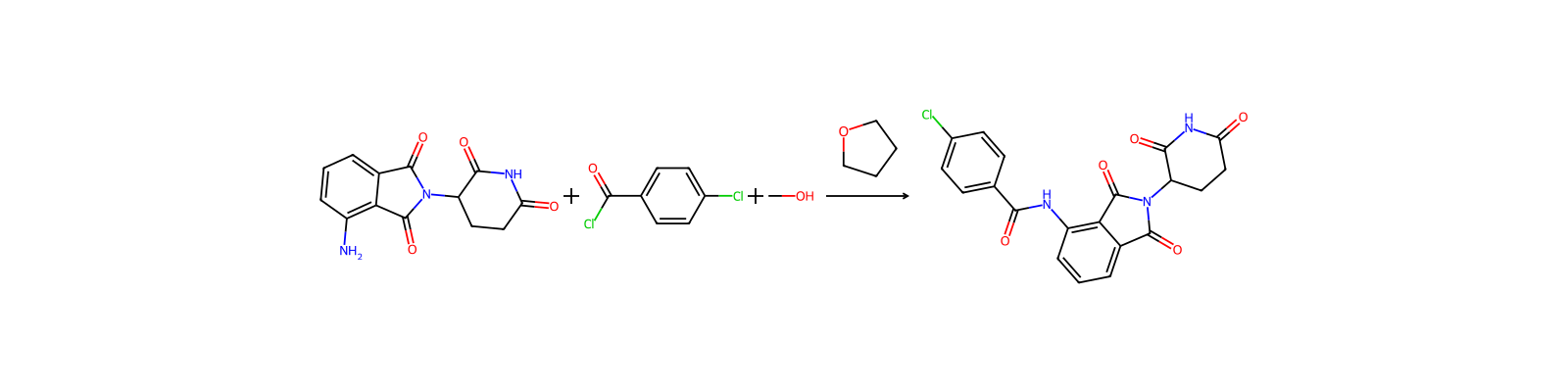
Zugehörige Reaktionen
924




Verknüpfte Notizen
Wird geladen…