StartseiteMCPWorkbenchSkills
StartseiteWorkbenchBenachrichtigungenMein Bereich
llms.txt · MCP-AnleitungDatenschutz · Nutzungsbedingungen · Supportv1.8.0
  1. Startseite
  2. /Verbindung

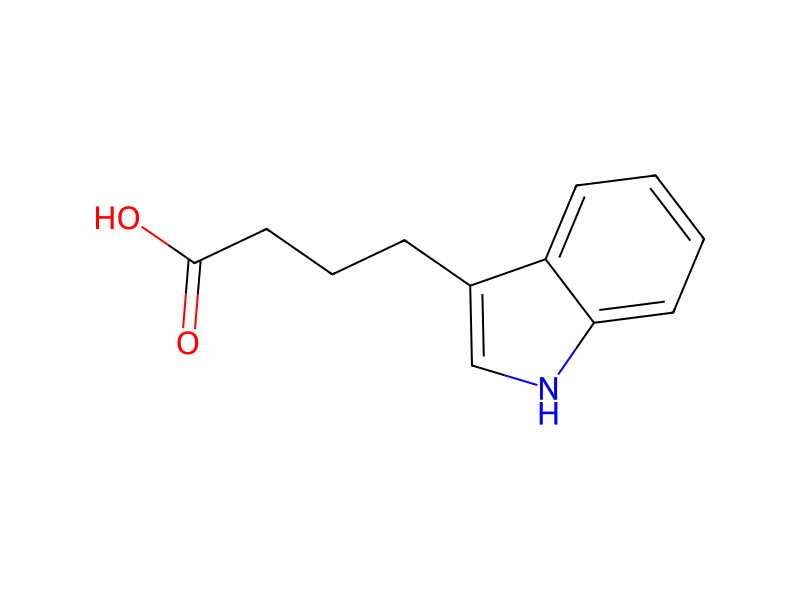
4-(Indol-3-yl)buttersäure

Indole-3-Butyric Acid
HCID 8617
Neue NotizNeue ReaktionAnfrage stellen
Druckvorschau
GrundinformationenÜberblickNamen und BezeichnerEigenschaftenSicherheit und RegulatorischesChemie und IndustrieZugehörige ReaktionenNotizen zur Verbindung
TeilstruktursucheÄhnliche Strukturen suchen

Grundinformationen

CAS
133-32-4
Standard-SMILES
O=C(O)CCCc1c[nH]c2ccccc12
InChIKey
JTEDVYBZBROSJT-UHFFFAOYSA-N
Summenformel
C12H13NO2
Durchschnittliche Molmasse
203,24 g/mol
Monoisotopische Masse
203,09462866

Überblick

Indole-3-butyric acid is a indol-3-yl carboxylic acid that is butanoic acid carrying a 1H-indol-3-yl substituent at position 1. It has a role as an auxin, a plant hormone and a plant metabolite. It is functionally related to a butyric acid. It is a conjugate acid of an indole-3-butyrate.

Namen und Bezeichner

Bevorzugter Name
Indole-3-Butyric Acid
IUPAC
4-(1H-indol-3-yl)butanoic acid
Lokaler Name
4-(Indol-3-yl)buttersäure
Englischer Name
Indole-3-butyric acid
Summenformel
C12H13NO2
Molmasse
203.24

Namen und Synonyme

Indole-3-butyric acid3-Indolebutyric acid133-32-44-(1H-Indol-3-yl)butanoic acidIndolebutyric acidHormodinSeradix1H-INDOLE-3-BUTANOIC ACID4-(3-Indolyl)butyric acidJiffy grow4-indol-3-ylbutyric acidIndole-3-butanoic acid
Weitere Namen anzeigen
IBAhormexrootingpowder3-Indolybutyric acidIndole-3-butyric acid IBA4-indole-3-ylbutyric acid
Indolbutyric acidSeradix 2Seradix 3Seradix B 2Seradix B 3Rhizopon AAIndole butyric acid3-Indolyl-gamma-butyric acid

Datenbank-Bezeichner

CAS
133-32-4
PubChem CID
8617
DTXSID
DTXSID8032623
ChEMBL
CHEMBL582878
ChEBI
CHEBI:33070

Eigenschaften

Berechnete Struktureigenschaften

XLogP
2,3
Polarare Oberfläche (TPSA)
53,1 Ų
H-Brücken-Donoren
2
H-Brücken-Akzeptoren
2
Frei drehbare Bindungen
4
Schwere Atome
15
Formalladung
0
Komplexität
230

Experimentelle und physikochemische Eigenschaften

DrugsPharmaceuticals -> Listed in ZINC15
Pesticides · 4 Einträge

Plant Growth Regulators

Active substance -> EU Pesticides database: Approved

Pesticides -> Plant Growth Regulators

Herbicides

LogP · 3 Einträge

log Kow = 2.30

2.30

2.3

OdorEssentially odorless
Color/Form · 2 Einträge

White to slightly yellow crystals

White to tan powder or crystalline solid

Solubility · 3 Einträge

In benzene: >1000 g/L; in acetone, ethanol, diethyl ether: 30-100 g/L; in chloroform: 0.01-1 g/L

In water, 250 mg/L @ 20 °C

0.25 mg/mL at 20 °C

Endocrine DisruptorsPotential endocrine disrupting compound
Melting Point · 2 Einträge

124.5 °C

124.5 °C

Sicherheit und Regulatorisches

Sicherheitsangaben dienen nur zur Orientierung und ersetzen weder das Sicherheitsdatenblatt (SDB) des Lieferanten noch geltende Vorschriften oder eine fachliche Bewertung.

GHS-Klassifizierung

GHS Classification · 6 Einträge

Danger

H301 (98%): Toxic if swallowed [Danger Acute toxicity, oral]

P261, P264, P264+P265, P270, P271, P280, P301+P316, P302+P352, P304+P340, P305+P351+P338, P319, P321, P330, P332+P317, P337+P317, P362+P364, P403+P233, P405, and P501 (click each P-code to see the statement)

Aggregated GHS information provided per 98 reports by companies from 23 notifications to the ECHA C&L Inventory. Each notification may be associated with multiple companies.

Danger

H301: Toxic if swallowed [Danger Acute toxicity, oral]

Gefahrenhinweise

Regulatory Information · 3 Einträge

Commission Regulation (EC) No 2229/2004

2008/941/EC, 2011/28/EU, Reg. (EU) 2023/918, Reg. (EU) 2025/2316, Reg.(EU) No 2018/1266, Reg.(EU) No 540/2011

Indolylbutyric acid: Does not have an individual approval but may be used under an appropriate group standard

Other Safety InformationIMAP assessments - 1H-Indole-3-butanoic acid: Environment tier I assessment
Fire PotentialNon-flammable
Hazards SummaryAll generic toxicology data requirements waived because of low toxicity; Causes substantial but temporary eye injury. [Reference #1] An irritant; [MSDSonline] See Indoleacetic acid.
Special Reports · 1 Eintrag

USEPA/Office of Pesticide Programs; Reregistration Eligibility Decision Document - Indole-3-Butyric Acid, August 1992. The RED summarizes the risk assessment conclusions and outlines any risk reduction measures necessary for the pesticide to continue to be registered in the U.S.[Available from, as of February 10, 2004: http://www.epa.gov/pesticides/reregistration/status.htm]

Chemie und Industrie

Pharmakologische Informationen

Tissue LocationsNeuron
Cellular LocationsMembrane

Verwendung und Herstellung

Uses · 5 Einträge

Used to stimulate root formation of plant clippings; [HSDB] Similar in structure to the naturally occurring plant-growth hormone indole-3-acetic acid; Used on fruit, vegetable, and field crops and on ornamental turf; Used to reduce transplant shock in ornamental nursery stock; [Reference #1]

Farming (Pesticides) [Category: Industry]

For indole-3-butyric acid (USEPA/OPP Pesticide Code: 046701) ACTIVE products with label matches. /SRP: Registered for use in the U.S. but approved pesticide uses may change periodically and so federal, state and local authorities must be consulted for currently approved uses./

Biochemical pesticide, plant growth regulator.

To stimulate root formation of plant clippings.

Methods of Manufacturing... Heating indole, gamma-butyrolactone, and sodium hydroxide , followed by acidification of the product
Formulations/Preparations · 5 Einträge

Trade names: Hormodin, Seradix

Technical grade: 97.0%. Dust: 0.01%-4.5%; soluble concentrate/liquid: 0.0004%-1.03%; wettable powder/dust: 0.1%-0.8%.

Mixtures: Boll-Set (+gibberellic acid), Cytoplex HMS (+gibberellic acid+kinetin), Early Harvest (+cytokinins+gibberellic acid), Maxon II (+gibberellic acid), PGR-IV (+gibberellic acid), Super Lagniappe (+cytokinins+gibberellic acid).

Trade names: Synergol, Chryzoplus, Chryzopon, Chryzosan, Chryzotek, Chryzotop, Rhizopon AA.

Discontinued names: Rootone.

Household ProductsInformation on 5 consumer products that contain 3-Indolebutyric acid in the following categories is provided:
Use ClassificationHerbicides

Zugehörige Reaktionen

33
Reaktionsaufzeichnung erstellen
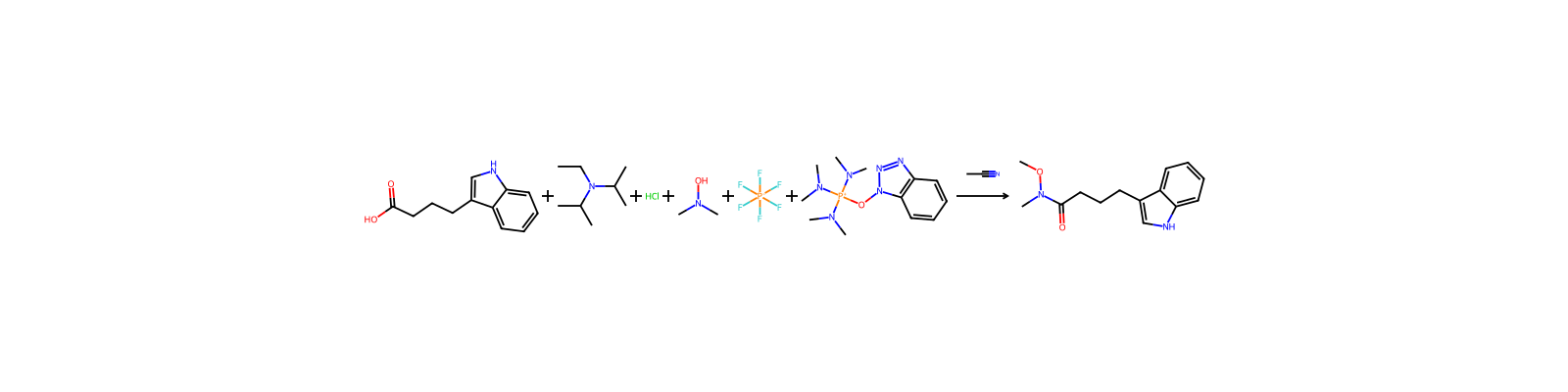
Reaktionsgleichung von HRID 883
HRID 883als Eduktuspto-grants-1998_03
Reaktionsgleichung von HRID 53563
HRID 53563als Eduktuspto-grants-1997_04
Reaktionsgleichung von HRID 96237
HRID 96237als EduktTraining data from https://doi.org/10.1039/C8SC04228D (2/10)
Reaktionsgleichung von HRID 121031
HRID 121031als EduktTraining data from https://doi.org/10.1039/C8SC04228D (2/10)
Reaktionsgleichung von HRID 121690
HRID 121690als EduktTraining data from https://doi.org/10.1039/C8SC04228D (2/10)
Reaktionsgleichung von HRID 128816
HRID 128816als Eduktuspto-grants-1995_11
Reaktionsgleichung von HRID 128817
HRID 128817als Eduktuspto-grants-1995_11
Reaktionsgleichung von HRID 140031
HRID 140031als EduktTraining data from https://doi.org/10.1039/C8SC04228D (9/10)
Seite 1 von 5

Notizen zur Verbindung

Wird geladen…

Auf dieser SeiteGrundinformationenÜberblickNamen und BezeichnerEigenschaftenSicherheit und RegulatorischesChemie und IndustrieZugehörige ReaktionenNotizen zur Verbindung
Weitere Aktionen
Neue NotizNeue ReaktionAnfrage stellen
UNII
061SKE27JP
EC Number
205-101-5
Nikkaji
J2.525I
Vapor Pressure · 3 Einträge

0.00000117 [mmHg]

Vapor pressure: <0.01 mPa (<8X10⁻⁸ mm Hg) @ 25 °C

1.8X10⁻⁶ mm Hg @ 25 °C /Estimated/

Henry's Law ConstantHenry's Law constant: 1.3X10⁻¹¹ atm cu m/mol@ 25 °C /Estimated/
Physical Description · 2 Einträge

White or slightly yellow solid; [Merck Index] Off-white powder; [MSDSonline]

Solid

Stability/Shelf LifeVery stable in neutral, acidic and alkaline media.

Physikochemische Eigenschaften

Schmelzpunkt
124 · 124-125.5 °C(lit.)
Siedepunkt
341.55 °C · 341.55°C (rough estimate)
Dichte
1.1255 · 1.1255 (rough estimate)
Brechungsindex
1.544 · 1.5440 (estimate)
storage temp.
2 · 2-8°C
Löslichkeit
25 mg/mL; · DMF: 25 mg/mL; DMSO: 25 mg/mL; Ethanol: 25 mg/mL; PBS (pH 7.2): 0.1 mg/mL
pka
4.83 · 4.83±0.10(Predicted)
Aggregatzustand
Liquid
Farbe
Clear colorless to pale yellow
Wasserlöslichkeit
Soluble in water(0.25g/L).
Merck
14 · 14,4965
BRN
171120 · 171120
Stabilität
Stable. Incompatible with strong oxidizing agents. Light sensitive.
InChI
1S/C12H13NO2/c14-12(15)7-3-4-9-8-13-11-6-2-1-5-10(9)11/h1-2,5-6,8,13H,3-4,7H2,(H,14,15)
InChIKey
JTEDVYBZBROSJT-UHFFFAOYSA-N
SMILES
OC(=O)CCCc1c[nH]c2ccccc12
LogP
2.3 · 2.300
CAS Datenbank
133 · 133-32-4(CAS DataBase Reference)
EPA chemische Informationen
-3 · Indole-3-butyric acid (133-32-4)
FIFRA Requirements · 3 Einträge

An exemption from the requirement of a tolerance is established for residues of auxins (specifically: indole-3-acetic acid and indole-3-butyric acid) in or on all food commodities when used as plant regulators on plants, seeds, or cuttings and on all food commodities after harvest in accordance with good agricultural practices.

As the federal pesticide law FIFRA directs, EPA is conducting a comprehensive review of older pesticides to consider their health and environmental effects and make decisions about their future use. Under this pesticide reregistration program, EPA examines health and safety data for pesticide active ingredients initially registered before November 1, 1984, and determines whether they are eligible for reregistration. In addition, all pesticides must meet the new safety standard of the Food Quality Protection Act of 1996. Pesticides for which EPA had not issued Registration Standards prior to the effective date of FIFRA '88 were divided into three lists based upon their potential for human exposure and other factors, with List B containing pesticides of greater concern and List D pesticides of less concern. Indole-3-butyric acid is on List B. Case No: 2330; Pesticide type: fungicide, herbicide; Case Status: RED Approved 09/1992; OPP has made a decision that some/all uses of the pesticide are eligible for reregistration, as reflected in a Reregistration Eligibility Decision (RED) document.; Active ingredient (AI): indole-3-butyric acid; AI Status: OPP has completed a Reregistration Eligibility Decision (RED) for the case/AI..

The Agency ... finds that products containing only IBA as an active ingredient are eligible for reregistration once the product specific data, confirmatory ecotoxicity data, and amended labeling are received and accepted by the Agency. Products that contain additional active ingredients will be reregistered once the Agency completes eligibility decisions on the other active ingredients and once product specific and amended labeling are received and accepted.

Hazard Classes and Categories · 2 Einträge

Acute Tox. 3 (98%)

Acute toxicity (Oral) - Category 3

Sicherheit und Schutzausrüstung

Disposal Methods · 1 Eintrag

SRP: The most favorable course of action is to use an alternative chemical product with less inherent propensity for occupational exposure or environmental contamination. Recycle any unused portion of the material for its approved use or return it to the manufacturer or supplier. Ultimate disposal of the chemical must consider: the material's impact on air quality; potential migration in soil or water; effects on animal, aquatic, and plant life; and conformance with environmental and public health regulations.

Allowable Tolerances · 1 Eintrag

An exemption from the requirement of a tolerance is established for residues of auxins (specifically: indole-3-acetic acid and indole-3-butyric acid) in or on all food commodities when used as plant regulators on plants, seeds, or cuttings and on all food commodities after harvest in accordance with good agricultural practices.

Toxikologische Informationen

Ecotoxicity Values · 5 Einträge

LC50 Oncorhynchus mykiss (Rainbow trout,donaldson trout) >90.5 ppm/96 hr; static /formulated product/

EC50 Daphnia magna (Water flea; intoxication, immobilization) 57 ppm/48 hr (95% confidence interval: 46-74 ppm); static /formulated product/

LC50 Colinus virginianus (Northern bobwhite, 14 day old) diet >5,000 ppm (in the diet)/8 days

LC50 Colinus virginianus (Northern bobwhite, 20 wk old) oral >2,150 mg/kg/14 days

EC50 Lactuca sativa (Lettuce; inhibition of germination) 0.06 mol/cu m/72 hr

Environmental Fate · 3 Einträge

TERRESTRIAL FATE: Based on a classification scheme(1), an estimated Koc value of 550(SRC), determined from a structure estimation method(2), indicates that indolebutyric acid is expected to have moderate to low mobility in soil(SRC). The estimated pKa of indolebutyric acid is 4.7 for the ionization of the carboxylic acid group(3), indicating that this compound will primarily exist in the dissociated form in the environment; anions generally do not adsorb to organic carbon and clay as strongly as their neutral counterparts(4). Volatilization of indolebutyric acid from moist soil surfaces is not expected to be an important fate process, since indolebutyric acid is expected to exist primarily in its dissociated form in the environment(SRC). Volatilization of the undissociated form of indolebutyric acid from moist soil surfaces is not expected to be an important fate process(SRC) given an estimated Henry's Law constant of 1.3X10⁻¹¹ atm-cu m/mole(SRC), developed using a fragment constant estimation method(7). Indolebutyric acid is not expected to volatilize from dry soil surfaces(SRC) based upon an estimated vapor pressure of 1.8X10⁻⁶ mm Hg(SRC), determined from a fragment constant method(5). Indolebutyric acid was reported to degrade rapidly in soil(6).

AQUATIC FATE: Based on a classification scheme(1), an estimated Koc value of 550(SRC), determined from a structure estimation method(2), indicates that indolebutyric acid is not expected to adsorb to suspended solids and sediment(SRC). This compound is expected to exist in the dissociated form in the environment, based on an estimated pKa of 4.7 for the ionization of the carboxylic acid group(3), and therefore volatilization from water surfaces is not expected to be an important fate process(SRC). Volatilization from water surfaces is not expected for the undissociated form of indolebutyric acid(9) based upon an estimated Henry's Law constant of 1.3X10⁻¹¹ atm-cu m/mole(SRC), developed using a fragment constant estimation method(10). Indolebutyric acid is not expected to undergo hydrolysis in the environment due to the lack of hydrolyzable functional groups(4). Indolebutyric acid was reported to be very stable in neutral, acidic, or alkaline media(5). According to a classification scheme(6), an estimated BCF of 3(SRC), from its log Kow of 2.30(7) and a regression-derived equation(8), suggests the potential for bioconcentration in aquatic organisms is low(SRC). Biodegradation data for indolebutyric acid in water were not found; however, indolebutyric acid was reported to degrade rapidly in soil(11).

ATMOSPHERIC FATE: According to a model of gas/particle partitioning of semivolatile organic compounds in the atmosphere(1), indolebutyric acid, which has an estimated vapor pressure of 1.8X10⁻⁶ mm Hg at 25 °C(SRC), determined from a fragment constant method(2), will exist in both the vapor and particulate phases in the ambient atmosphere. Vapor-phase indolebutyric acid is degraded in the atmosphere by reaction with photochemically-produced hydroxyl radicals(SRC); the half-life for this reaction in air is estimated to be 2 hours(SRC), calculated from its rate constant of 2.0X10⁻¹⁰ cu cm/molecule-sec at 25 °C(SRC) that was derived using a structure estimation method(3). Particulate-phase indolebutyric acid may be removed from the air by wet and dry deposition(SRC). Indolebutyric acid may be susceptible to direct photolysis by sunlight(SRC), since it has an absorbance at 290 nm(4).

Soil Adsorption/Mobility · 1 Eintrag

Using a structure estimation method based on molecular connectivity indices(1), the Koc for indolebutyric acid can be estimated to be 550(SRC). According to a classification scheme(2), this estimated Koc value suggests that indolebutyric acid is expected to have low mobility in soil. The estimated pKa of indolebutyric acid is 4.7 for the carboxylic acid group(3), indicating that this compound will primarily exist in the dissociated form in the environment; anions generally do not adsorb to organic carbon and clay as strongly as their neutral counterparts(4).

Artificial Pollution Sources · 1 Eintrag

Indolebutyric acid's production may result in its release to the environment through various waste streams; its use as a rooting hormone for plant cuttings and plant growth regulator(1,2) will result in its direct release to the environment(SRC).

Environmental BiodegradationIndolebutyric acid was reported to degrade rapidly in soil(1).
Environmental Bioconcentration · 1 Eintrag

An estimated BCF of 3 was calculated for indolebutyric acid(SRC), using a log Kow of 2.30(1) and a regression-derived equation(2). According to a classification scheme(3), this BCF suggests the potential for bioconcentration in aquatic organisms is low(SRC).

Volatilization from Water/Soil · 1 Eintrag

This compound is expected to exist in the dissociated form in the environment, based on an estimated pKa of 4.7(1), and therefore volatilization from water surfaces or moist soil surfaces is not expected to be an important fate process(SRC). Indolebutyric acid is not expected to volatilize from dry soil surfaces(SRC) based upon an estimated vapor pressure of 1.8X10⁻⁶ mm Hg(SRC), determined from a fragment constant method(2).

Non-Human Toxicity Excerpts · 3 Einträge

/LABORATORY ANIMALS: Acute Exposure/ ...These products have low acute toxicity as suggested from data of at least one formulated product (Toxicity Categories III and IV), no dermal irritation , and moderate eye irritation, perhaps from another active or an inert ingredient in the product formulation. /Formulated Indole-3-butyric acid/

/GENOTOXICITY/ ...Indole-3-butyric acid (IBA), was tested for genetic activity in Aspergillus nidulans in a plate test. IBA was found to greatly increase somatic segregation in the fungus. ... It was found that increasing concentrations of IBA increased mitotic segregation of the fungus with most of the segregants being produced by mitotic crossing-over, together with non-disjunctional segregants at a lower level. The metabolic activation technique was also used and it was shown that when S9 mixture was added to IBA a further 3- to 5-fold increase in the number of segregants was obtained.

/GENOTOXICITY/ The plant growth-regulating hormones indole-3-acetic acid (IAA) and indole-3-butyric acid (IBA), both strong recombinogens in Aspergillus nidulans, were tested in Salmonella typhimurium strains for his revertants at a range of concentrations from 1 to 2000 micrograms/plate with and without metabolic activation and were found negative.

Environmental Abiotic Degradation · 1 Eintrag

The rate constant for the vapor-phase reaction of indolebutyric acid with photochemically-produced hydroxyl radicals has been estimated as 2.0X10⁻¹⁰ cu cm/molecule-sec at 25 °C(SRC) using a structure estimation method(1). This corresponds to an atmospheric half-life of about 2 hours at an atmospheric concentration of 5X10+5 hydroxyl radicals per cu cm(1). Indolebutyric acid is not expected to undergo hydrolysis in the environment due to the lack of hydrolyzable functional groups(2). Indolebutyric acid was reported to be very stable in neutral, acidic, or alkaline media(3). Indolebutyric acid may be susceptible to direct photolysis by sunlight(SRC), since it has an absorbance at 290 nm(4).

Probable Routes of Human Exposure · 1 Eintrag

NIOSH (NOES Survey 1981-1983) has statistically estimated that 864 workers are potentially exposed to indolebutyric acid in the US(1). Occupational exposure to indolebutyric acid may occur through inhalation and dermal contact with this compound at workplaces where indolebutyric acid is produced or used(SRC). The general population may be exposed to indolebutyric acid via dermal contact with consumer products containing indolebutyric acid(SRC).

Environmental Fate/Exposure Summary · 1 Eintrag

Indolebutyric acid's production may result in its release to the environment through various waste streams; its use as a rooting hormone for plant cuttings and plant growth regulator will result in its direct release to the environment. If released to air, an estimated vapor pressure of 1.8X10⁻⁶ mm Hg at 25 °C indicates indolebutyric acid will exist in both the vapor and particulate phases in the ambient atmosphere. Vapor-phase indolebutyric acid will be degraded in the atmosphere by reaction with photochemically-produced hydroxyl radicals; the half-life for this reaction in air is estimated to be 2 hours. Particulate-phase indolebutyric acid will be removed from the atmosphere by wet and dry deposition. Indolebutyric acid may be susceptible to direct photolysis by sunlight, since it has an absorbance at 290 nm. If released to soil, indolebutyric acid is expected to have moderate to low mobility based upon an estimated Koc of 550. The estimated pKa of indolebutyric acid is 4.7 for the ionization of the carboxylic acid group, indicating that this compound will primarily exist in the dissociated form in the environment and anions generally do not adsorb to organic carbon and clay as strongly as their neutral counterparts. Volatilization from moist soil surfaces is not expected to be an important fate process for indolebutyric acid, since it is expected to exist primarily in its dissociated form in the environment. Volatilization from moist soil surfaces is not expected for the undissociated form of indolebutyric acid based on an estimated Henry's Law constant of 1.3X10⁻¹¹ atm cu m/mol. Volatilization from dry soil is not expected based upon indolebutyric acid's estimated vapor pressure. Indolebutyric acid was reported to degrade rapidly in soil. If released into water, indolebutyric acid is not expected to adsorb to suspended solids and sediment based upon the estimated Koc. This compound is expected to exist in the dissociated form in the environment and therefore volatilization from water surfaces is not expected to be an important fate process. An estimated BCF of 3 suggests the potential for bioconcentration in aquatic organisms is low. Hydrolysis is not expected to be an important environmental fate process since this compound lacks functional groups that hydrolyze under environmental conditions. Indolebutyric acid was reported to be very stable in neutral, acidic, or alkaline media. Occupational exposure to indolebutyric acid may occur through inhalation and dermal contact with this compound at workplaces where indolebutyric acid is produced or used. The general population may be exposed to indolebutyric acid via dermal contact with consumer products containing indolebutyric acid. (SRC)

Antidote and Emergency Treatment · 2 Einträge

/SRP:/ Basic treatment: Establish a patent airway. Suction if necessary. Watch for signs of respiratory insufficiency and assist ventilations if needed. Administer oxygen by nonrebreather mask at 10 to 15 L/min. Monitor for pulmonary edema and treat if necessary ... . Monitor for shock and treat if necessary ... . Anticipate seizures and treat if necessary ... . For eye contamination, flush eyes immediately with water. Irrigate each eye continuously with normal saline during transport ... . Do not use emetics. For ingestion, rinse mouth and administer 5 ml/kg up to 200 ml of water for dilution if the patient can swallow, has a strong gag reflex, and does not drool ... . Cover skin burns with dry sterile dressings after decontamination ... . /Poison A and B/

/SRP:/ Advanced treatment: Consider orotracheal or nasotracheal intubation for airway control in the patient who is unconscious, has severe pulmonary edema, or is in respiratory arrest. Positive pressure ventilation techniques with a bag valve mask device may be beneficial. Monitor cardiac rhythm and treat arrhythmias as necessary ... . Start an IV with D5W /SRP: "To keep open", minimal flow rate/. Use lactated Ringer's if signs of hypovolemia are present. Watch for signs of fluid overload. Consider drug therapy for pulmonary edema ... . For hypotension with signs of hypovolemia, administer fluid cautiously. Watch for signs of fluid overload ... . Treat seizures with diazepam (Valium) ... . Use proparacaine hydrochloride to assist eye irrigation ... . /Poison A and B/

Regulatorische Informationen

FIFRA Requirements · 3 Einträge

An exemption from the requirement of a tolerance is established for residues of auxins (specifically: indole-3-acetic acid and indole-3-butyric acid) in or on all food commodities when used as plant regulators on plants, seeds, or cuttings and on all food commodities after harvest in accordance with good agricultural practices.

As the federal pesticide law FIFRA directs, EPA is conducting a comprehensive review of older pesticides to consider their health and environmental effects and make decisions about their future use. Under this pesticide reregistration program, EPA examines health and safety data for pesticide active ingredients initially registered before November 1, 1984, and determines whether they are eligible for reregistration. In addition, all pesticides must meet the new safety standard of the Food Quality Protection Act of 1996. Pesticides for which EPA had not issued Registration Standards prior to the effective date of FIFRA '88 were divided into three lists based upon their potential for human exposure and other factors, with List B containing pesticides of greater concern and List D pesticides of less concern. Indole-3-butyric acid is on List B. Case No: 2330; Pesticide type: fungicide, herbicide; Case Status: RED Approved 09/1992; OPP has made a decision that some/all uses of the pesticide are eligible for reregistration, as reflected in a Reregistration Eligibility Decision (RED) document.; Active ingredient (AI): indole-3-butyric acid; AI Status: OPP has completed a Reregistration Eligibility Decision (RED) for the case/AI..

The Agency ... finds that products containing only IBA as an active ingredient are eligible for reregistration once the product specific data, confirmatory ecotoxicity data, and amended labeling are received and accepted by the Agency. Products that contain additional active ingredients will be reregistered once the Agency completes eligibility decisions on the other active ingredients and once product specific and amended labeling are received and accepted.

Sicherheitsdaten

F
8-10-23
wgk
3
tsca
TSCA listed
ridadr
UN 2811 6.1/PG 3
hs_code
29339990
RTECS-Nr.
NL5250000
risk_code
25-36/37/38
Toxizität
LD50 i.p. in mice: 100 mg/kg (Anderson)
hazard_code
T,Xi
hazard_note
Irritant
safety_code
26-36-45-38-36/37/39-28A
hazard_class
6.1
packing_group
III
Speicherklasse
6.1C - Combustible acute toxic Cat.3toxic compounds or compounds which causing chronic effects
Giftige Stoffe Daten
133-32-4(Hazardous Substances Data)
Hazard Classifications
Acute Tox. 3 Oral
General Manufacturing Information1H-Indole-3-butanoic acid: ACTIVE

Anwendungen

VerwendenUsed to stimulate root formation of plant clippings. Suitable for plant cell culture tested.

Vor- und nachgelagerte Produkte

Vorgelagerte Rohstoffe

n-ButyronitrilGrignard reagentKaliumhydroxidTrapPolyethylene Glycol1,2,3,4-TetrahydronaphthalinIndolgamma-Butyrolacton

Nachgelagerte Produkte

1H-Indole-3-butanoic acid monosodium salt4-(1H-indol-3-yl)butanamideMethyl-4-(indol-3-yl)butyrat
Ergänzende Hinweise · 1 Eintrag

DefinitionChEBI: Indole-3-butyric acid is a indol-3-yl carboxylic acid that is butanoic acid carrying a 1H-indol-3-yl substituent at position 1. It has a role as a plant hormone, a plant metabolite and an auxin. It derives from a butyric acid. It is a conjugate acid of an indole-3-butyrate.