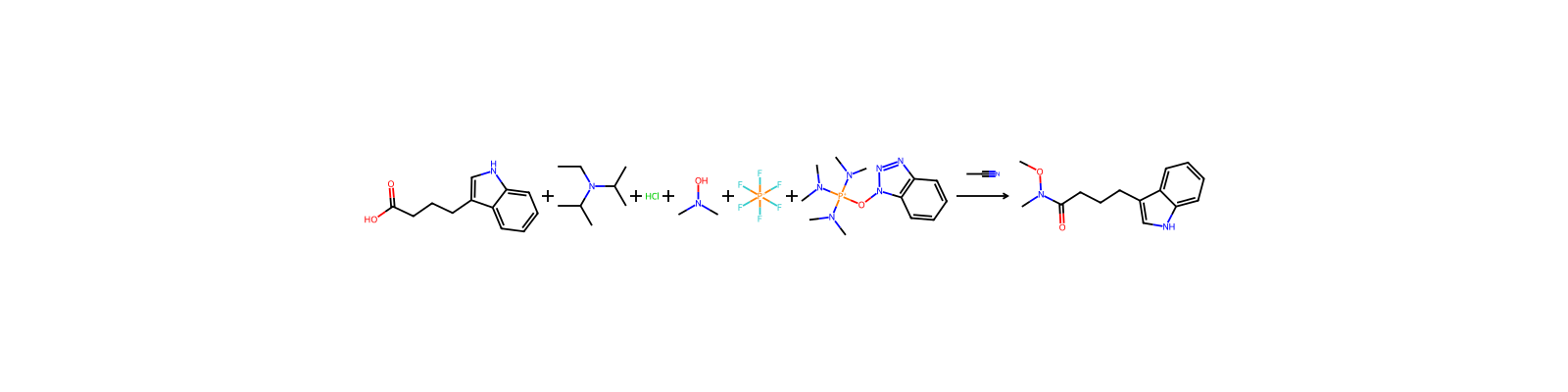
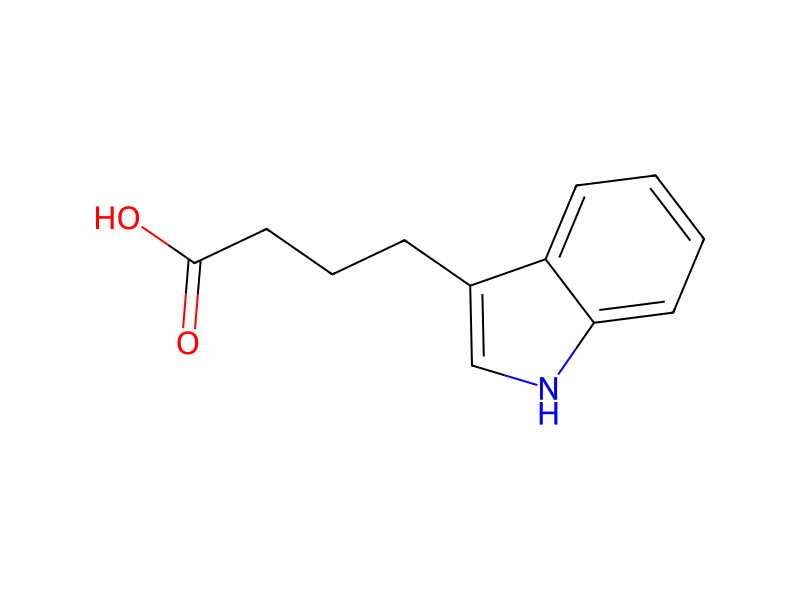
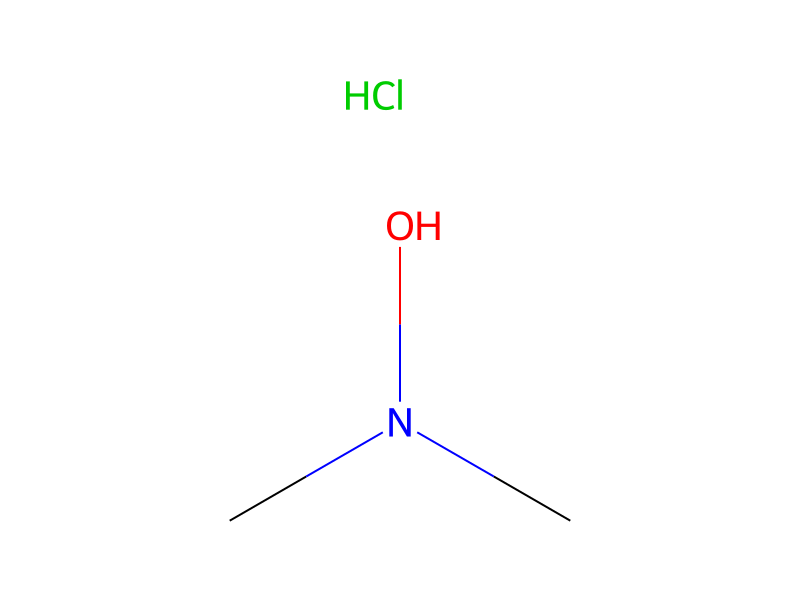
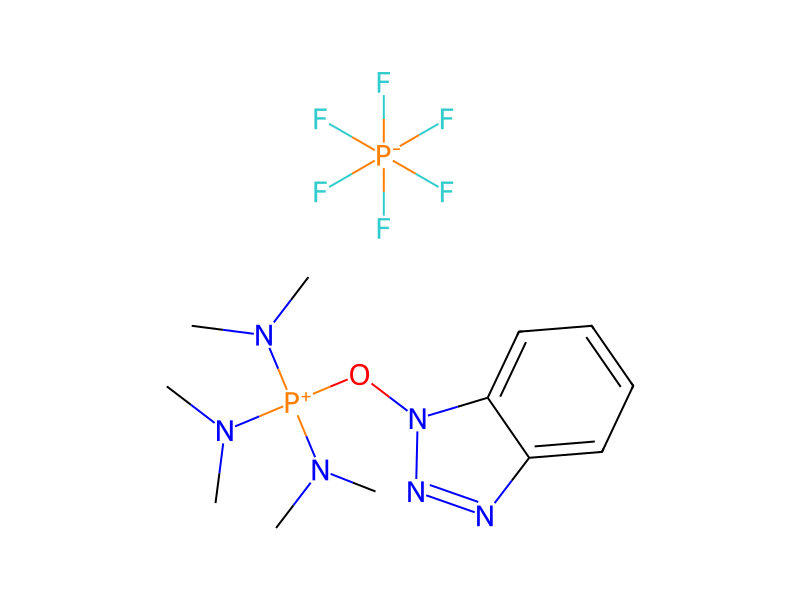
[NH:1]1[C:9]2[C:4](=[CH:5][CH:6]=[CH:7][CH:8]=2)[C:3]([CH2:10][CH2:11][CH2:12][C:13]([OH:15])=O)=[CH:2]1.[CH:16](N(CC)C(C)C)(C)C.Cl.[CH3:26][N:27](C)[OH:28].F[P-](F)(F)(F)(F)F.N1(O[P+](N(C)C)(N(C)C)N(C)C)C2C=CC=CC=2N=N1>C(#N)C>[CH3:26][N:27]([O:28][CH3:16])[C:13](=[O:15])[CH2:12][CH2:11][CH2:10][C:3]1[C:4]2[C:9](=[CH:8][CH:7]=[CH:6][CH:5]=2)[NH:1][CH:2]=1To a slurry of 1.75 g (8.61 mmol) of 3-indolebutyric acid (Aldrich Chemical Co.) in acetonitrile at room temperature was added 7.0 mL (40.2 mmol) of N,N-diisopropylethylamine, 1.0 g (10.3 mmol) of N,N-dimethylhydroxylamine hydrochloride and 4.19 g (9.5 mmol) of benzotriazol-1-yloxy-tris(dimethylamino)phosphonium hexafluorophosphate (BOP reagent) and the resulting mixture was allowed to stir at room temperature overnight and was then concentrated to dryness. The residue was dissolved into ethyl acetate and washed with water, 0.5N HCl, saturated NaHCO3 and brine and then dried over MgSO4 and concentrated. Flash chromatography (elution with a gradient of 2-10% ether in methylene chloride) provided 2.0 g of the amide 139. 1H NMR consistent with structure.
Wird geladen…