
2-Methylbutan-1-ol
2-Methyl-1-butanol

Grundinformationen
- CAS
137-32-6- Standard-SMILES
CCC(C)CO- InChIKey
QPRQEDXDYOZYLA-UHFFFAOYSA-N- Summenformel
- C5H12O
- Durchschnittliche Molmasse
- 88,15 g/mol
- Monoisotopische Masse
- 88,088815
Überblick
2-methylbutan-1-ol is a primary alcohol that is isopentane substituted by a hydroxy group at position 1. It has a role as a Saccharomyces cerevisiae metabolite. It is a primary alcohol and an alkyl alcohol. It derives from a hydride of an isopentane.
Namen und Bezeichner
- Bevorzugter Name
- 2-Methyl-1-butanol
- IUPAC
- 2-methylbutan-1-ol
- Lokaler Name
- 2-Methylbutan-1-ol
- Englischer Name
- 2-Methyl-1-butanol
- Summenformel
- C5H12O
- Molmasse
- 88.15
Namen und Synonyme
2-METHYL-1-BUTANOL2-Methylbutan-1-ol137-32-6Active amyl alcoholsec-Butylcarbinol2-Methylbutanol1-Butanol, 2-methyl-2-Methylbutyl alcohol2-Methyl-n-butanolPrimary active amyl alcohol2-Methyl butanol-1Active primary amyl alcohol
Weitere Namen anzeigen
2-METHYL BUTANOLFEMA 39981-Butanol,2-methyl-ACTIVE-AMYL ALCOHOL2-methyl-butan-1-olDL-2-METHYL-1-BUTANOL(±)-2-methyl-butan-1-ol(+/-)-2-Methyl-1-butanol
dl-sec-Butyl carbinolDTXSID50270697VTJ239ASUNSC-8431DTXCID107069FEMA NO. 3998CHEBI:48945RefChem:87986
Datenbank-Bezeichner
- CAS
137-32-6、1565-80-6、34713-94-5- PubChem CID
- 8723
- DTXSID
DTXSID5027069- ChEMBL
Eigenschaften
Berechnete Struktureigenschaften
- XLogP
- 1,2
- Polarare Oberfläche (TPSA)
- 20,2 Ų
- H-Brücken-Donoren
- 1
- H-Brücken-Akzeptoren
- 1
- Frei drehbare Bindungen
- 2
- Schwere Atome
- 6
- Formalladung
- 0
- Komplexität
- 27,1
Experimentelle und physikochemische Eigenschaften
LipidsFatty Acyls [FA] -> Fatty alcohols [FA05]
SolventsSolvents -> Alcohols (<C12)
FragrancesFragrance Ingredient (2-Methylbutanol) -> IFRA transparency List
LogP
log Kow= 1.29 (measured)
1.290
1.3/1.4
Food AdditivesFLAVORING AGENT OR ADJUVANT -> FDA Substance added to food
Density
0.816 @ 20 °C/4 °C
Relative density (water = 1): 0.8
0.815-0.820
Flavoring AgentsEU Flavoring substances
Color/FormCOLORLESS LIQ
Solubility
MISCIBLE WITH ALC & ETHER
Sol in acetone
Water solubility: 30,000 mg/l : 25 °C
Solubility in water, g/100ml at 25 °C: 3.0 (moderate)
Very slightly soluble in water; 50% soluble in heptane, triacetin
Sicherheit und Regulatorisches
Sicherheitsangaben dienen nur zur Orientierung und ersetzen weder das Sicherheitsdatenblatt (SDB) des Lieferanten noch geltende Vorschriften oder eine fachliche Bewertung.
GHS-Klassifizierung
GHS Classification
Danger
H226 (36.3%): Flammable liquid and vapor [Warning Flammable liquids]
P210, P233, P240, P241, P242, P243, P261, P264, P264+P265, P271, P280, P302+P352, P303+P361+P353, P304+P340, P305+P354+P338, P317, P319, P321, P332+P317, P362+P364, P370+P378, P403+P233, P403+P235, P405, and P501 (click each P-code to see the statement)
Aggregated GHS information provided per 2020 reports by companies from 32 notifications to the ECHA C&L Inventory. Each notification may be associated with multiple companies.
Danger
H226 (100%): Flammable liquid and vapor [Warning Flammable liquids]
Gefahrenhinweise
Regulatory Information
Chemical: 1-Butanol, 2-methyl-
Commission Regulation (EC) No 1565/2000 (Repealed by Com. Implementing Reg. (EU) No 872/2012)
1-Butanol, 2-methyl- is listed on the EPA's Chemical Data Reporting (CDR) system. Manufacturers and importers of 1-Butanol, 2-methyl- are required to report information about their production and use of this chemical to the EPA under the Toxic Substances Control Act (TSCA). (40 eCFR Part 711)
Status: Active Update: 15-12-2022 https://echa.europa.eu/registration-dossier/-/registered-dossier/12040
2-Methyl-1-butanol: Does not have an individual approval but may be used under an appropriate group standard
Other Safety InformationEvaluation - Chemicals that are unlikely to require further regulation to manage risks to environment
Fire HazardsFlammable. Above 50 °C explosive vapour/air mixtures may be formed.
Hazards Summary
A skin, eye, and respiratory tract irritant; May cause CNS effects; Swallowing the liquid may cause aspiration into the lungs with the risk of chemical pneumonitis. The liquid defats the skin. [ICSC] Safe when used as a flavoring agent; [JECFA] In oral lethal dose studies, animals have ataxia and prostration; [OECD SIDS] An irritant; Effects in high-dose animal studies include spastic paralysis with/without sensory change; [MSDSonline]
Chemie und Industrie
Pharmakologische Informationen
Cellular LocationsCytoplasm
Verwendung und Herstellung
Uses
Used as a solvent; for organic synthesis (introduction of active amyl group); in lubricants, plasticizers, and additives for oils and paints; as a frothing agent in ore flotation; as a chemical intermediate; [HSDB] Used to manufacture liquid crystals, plant protection agents, and fragrances; to catalyze polymerization of caprolactam; and to extract crude oil; [CHEMINFO]
Petroleum Production and Refining [Category: Industry]
SOLVENT; ORGANIC SYNTHESIS (INTRODUCTION OF ACTIVE AMYL GROUP); IN LUBRICANTS, PLASTICIZERS, ADDITIVES FOR OILS & PAINTS.
CHEM INT, EG, FOR ESTERS & ETHERS.
FROTHING AGENT IN ORE FLOTATION.
CHEM INT FOR DIAMYLDITHIOPHOSPHATES (CORROSION INHIBITOR).
U.S. Production
2023: 10,000,000 - <50,000,000 lb
(1979) PROBABLY GREATER THAN 2.27X10+6 GRAMS
(1981) 1.36-2.72X10+9 GRAMS (ESTIMATED PRODN)
Industry UsesSolvent
Methods of Manufacturing
BY FRACTIONATION OF FUSEL OIL AND VIA CHLORINATION OF PENTANES.
REACTION OF N-BUTENES WITH CARBON MONOXIDE & HYDROGEN IN THE PRESENCE OF COBALT HYDROCARBONYL (OXO PROCESS) FOLLOWED BY HYDROGENATION OF THE RESULTING C5 ALDEHYDES TO A MIXT OF AMYL ALCOHOLS WHICH CAN BE SEPARATED BY DISTILLATION
Formulations/PreparationsEXISTS IN COMMERCE LARGELY AS D-AMYL ALCOHOL.
Use Classification
Fragrance Ingredients
Flavouring Agent -> FLAVOURING_AGENT -> JECFA Functional Classes
Flavoring Agents -> JECFA Flavorings Index
Flavouring Agent -> FLAVOURING_AGENT -> JECFA Functional Classes
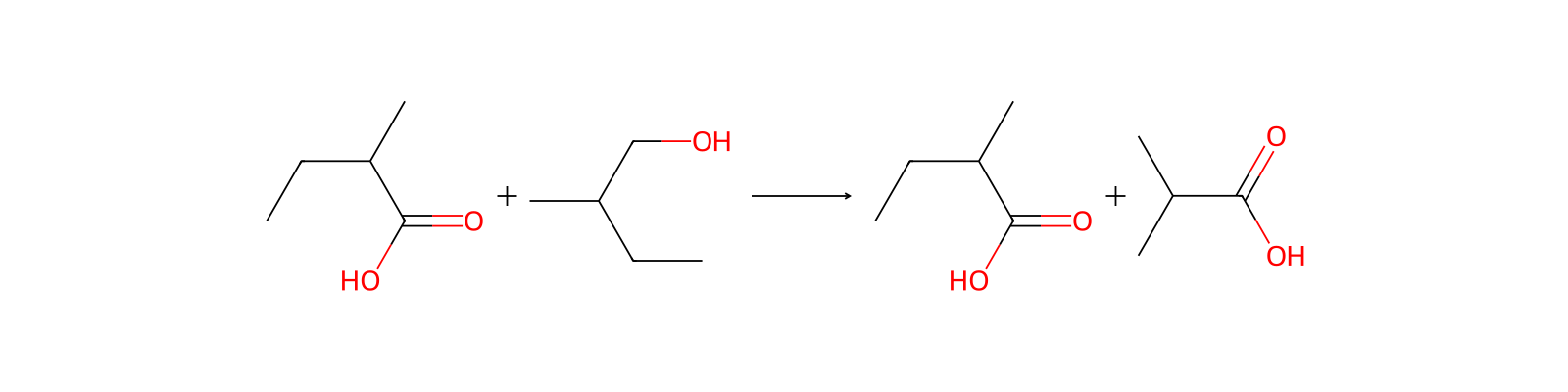
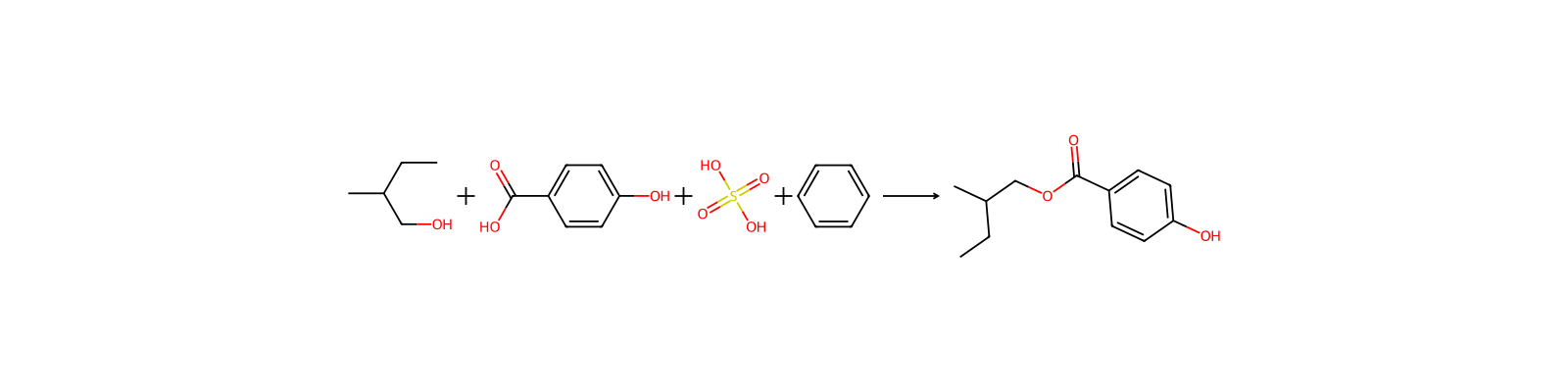
Zugehörige Reaktionen
44




Notizen zur Verbindung
Wird geladen…