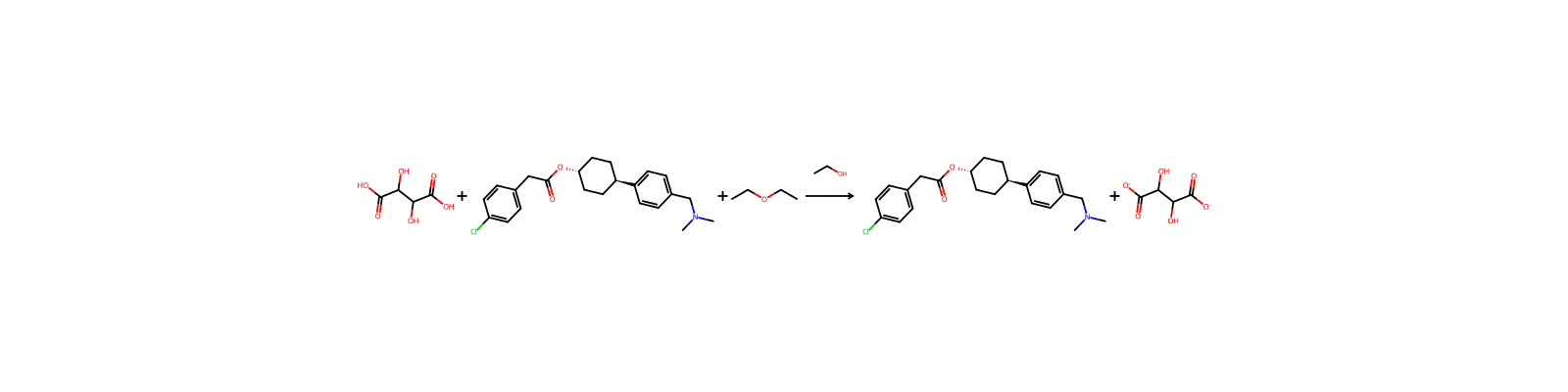
(+-)-Weinsure
2,3-Dihydroxybutanedioic Acid

Grundinformationen
- CAS
133-37-9- Standard-SMILES
O=C(O)C(O)C(O)C(=O)O- InChIKey
FEWJPZIEWOKRBE-UHFFFAOYSA-N- Summenformel
- C4H6O6
- Durchschnittliche Molmasse
- 150,09 g/mol
- Monoisotopische Masse
- 150,01643791
Überblick
2,3-dihydroxybutanedioic acid is a tetraric acid that is butanedioic acid substituted by hydroxy groups at positions 2 and 3. It has a role as a plant metabolite and a human xenobiotic metabolite. It is a conjugate acid of a 3-carboxy-2,3-dihydroxypropanoate.
Namen und Bezeichner
- Bevorzugter Name
- 2,3-Dihydroxybutanedioic Acid
- IUPAC
- 2,3-dihydroxybutanedioic acid
- Lokaler Name
- (+-)-Weinsure
- Englischer Name
- DL-Tartaric acid
- Summenformel
- C4H6O6
- Molmasse
- 150.09
Namen und Synonyme
2,3-Dihydroxybutanedioic acid526-83-0GlyTouCan:G35198MQDTXCID3026986CHEBI:15674DTXSID501031477RefChem:935304G35198MQ610-885-0DL-Tartaric acid133-37-9Racemic acid
Weitere Namen anzeigen
TARTARIC ACIDdl-Tartaric acid anhydrousDL-TartaricClopidogrel Impurity 45DL-Tartaric acid concentrateButanedioic acid, 2,3-dihydroxy-, (2R,3R)-rel-DL-Tartaric acid 133-37-9 pure 99% food additives Paratartaric acid kf-wang(at)kf-chem.com
Uvic acidTraubensaureRacemic tartaric acidParatartaric acidParatartaric aicdDL-TartrateBUTANEDIOIC ACID, 2,3-DIHYDROXY-MFCD00064206
Datenbank-Bezeichner
- CAS
133-37-9、526-83-0、87-69-4- PubChem CID
- 875
- DTXSID
DTXSID501031477
Eigenschaften
Berechnete Struktureigenschaften
- XLogP
- -1,9
- Polarare Oberfläche (TPSA)
- 115 Ų
- H-Brücken-Donoren
- 4
- H-Brücken-Akzeptoren
- 6
- Frei drehbare Bindungen
- 3
- Schwere Atome
- 10
- Formalladung
- 0
- Komplexität
- 134
Experimentelle und physikochemische Eigenschaften
Chemical ClassesOther Classes -> Organic Acids
DrugsPharmaceuticals
FragrancesFragrance Ingredient (Tartaric acid (d-, l-, dl-, meso-)) -> IFRA transparency List
Solubility
soluble in water and alcohol; 1 gm in 0.8 ml water
1 g in 3 ml 95% alcohol (in ethanol)
Physical Description
White solid; [ICSC] Colorless or white odorless solid; [JECFA] White odorless crystalline powder; [Acros Organics MSDS]
colourless or translucent crystals, or a white, fine to granular crystaline powder which is odourless with an acid taste
Collision Cross Section
115.46 Ų [M-H]- [CCS Type: DT; Method: single field calibrated with Agilent tune mix (Agilent)]
124.4 Ų [M+H]+ [CCS Type: TW; Method: calibrated with polyalanine and drug standards]
Physikochemische Eigenschaften
Sicherheit und Regulatorisches
Sicherheitsangaben dienen nur zur Orientierung und ersetzen weder das Sicherheitsdatenblatt (SDB) des Lieferanten noch geltende Vorschriften oder eine fachliche Bewertung.
GHS-Klassifizierung
GHS Classification
This chemical does not meet GHS hazard criteria for 5.1% (26 of 506) of reports.
Danger
H315 (22.1%): Causes skin irritation [Warning Skin corrosion/irritation]
P261, P264, P264+P265, P271, P280, P302+P352, P304+P340, P305+P351+P338, P305+P354+P338, P317, P319, P321, P332+P317, P337+P317, P362+P364, P403+P233, P405, and P501 (click each P-code to see the statement)
Aggregated GHS information provided per 506 reports by companies from 13 notifications to the ECHA C&L Inventory. Each notification may be associated with multiple companies.
Warning
Gefahrenhinweise
Regulatory Information
Chemical: Butanedioic acid, 2,3-dihydroxy-, (R*,R*)-(.+-.)-
REACH registered substance: (±)-tartaric acid (EC: 205-105-7)
Other Safety InformationIMAP assessments - Butanedioic acid, 2,3-dihydroxy-, (R*,R*)-(.+-.)-: Human health tier I assessment
Hazards SummaryCauses burns; Inhalation of aerosol may cause pulmonary edema; [ICSC] An irritant; [Acros Organics MSDS]
Hazard Classes and Categories
Skin Irrit. 2 (22.1%)
Skin Irrit. 2 (100%)
Toxikologische Informationen
Adverse EffectsDermatotoxin - Skin burns.
Carcinogen ClassificationNo indication of carcinogenicity to humans (not listed by IARC).
Chemie und Industrie
Verwendung und Herstellung
UsesUsed as a synergist for antioxidants, acid, emulsifier, sequestrant, and flavoring agent; [JECFA]
Household ProductsInformation on 7 consumer products that contain Tartaric acid in the following categories is provided:
Use Classification
Fragrance Ingredients
Flavouring Agent -> FLAVOURING_AGENT -> JECFA Functional Classes
Flavouring Agent -> FLAVOURING_AGENTFood Additives -> ACID; ANTIOXIDANT_SYNERGIST; EMULSIFIER; SEQUESTRANT; SYNERGIST -> JECFA Functional Classes
Flavoring Agents -> JECFA Flavorings Index
Anwendungen
Occurrenced-Tartaric acid occurs in many fruits or other parts of the plant, free or combined with potassium, calcium or magnesium. It is also reported found in raw, lean fish, white wine, red wine and port wine.
VerwendenDL-Tartaric acid is used as a synergist for antioxidants, emulsifier, sequestrant and flavoring agent. It is also added with citric acid to prepare effervescent salts, thereby enhancing the taste of oral medications. It is also utilized in pigments, processing aids, ink, toner and colorant products. It acts as a chelating agent in metal and farming industries. Further, it is used as lubricant and grease. It is mixed with sodium bicarbonate and used as a leavening agent in food preparation. In the pharmaceutical industry, it is utilized in the preparation of tartar emetic, which is used in cough syrup as an expectorant.
Darstellung
synthetischeThe tartrates used in commerce are obtained as a by-product of wine manufacture and have the L(+) configuration. Produced from argols or wine lees, which are formed in the manufacture of wine by extracting the potassium acid tartrate, transforming this into the calcium salt and then acidifying with dilute sulfuric acid; also by oxidation of d-glucose with nitric acid. The dl-tartaric acid is obtained by boiling the d-tartaric acid with an aqueous solution of NaOH or by oxidation of fumaric acid. The l- and the meso-tartaric acid are also known, but are less important.
Zugehörige Reaktionen
439






Notizen zur Verbindung
Wird geladen…