
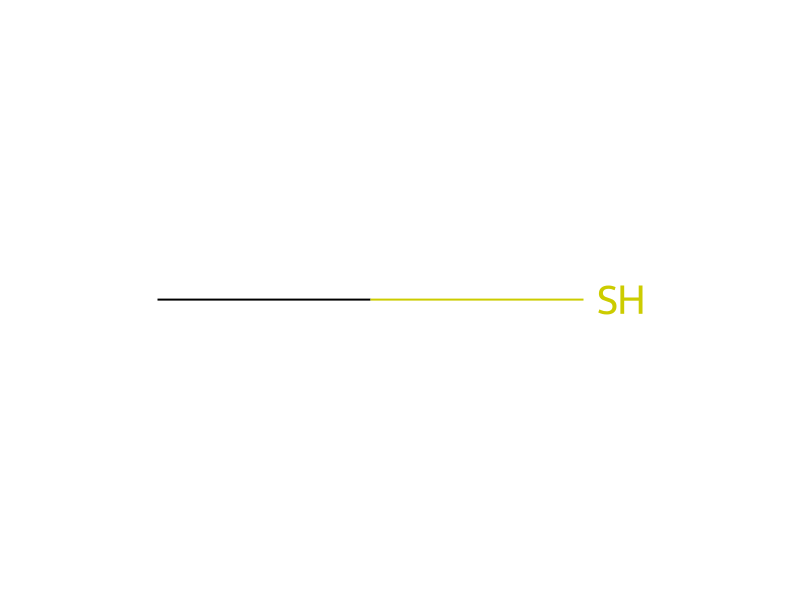
Grundinformationen
- Standard-SMILES
CS- InChIKey
LSDPWZHWYPCBBB-UHFFFAOYSA-N- Summenformel
- CH4S
- Durchschnittliche Molmasse
- 48,11 g/mol
- Monoisotopische Masse
- 48,00337113
Überblick
Methyl mercaptan is a colorless gas with a smell like rotten cabbage. It is a natural substance found in the blood, brain, and other tissues of people and animals. It is released from animal feces. It occurs naturally in certain foods, such as some nuts and cheese. Methyl mercaptan is released from decaying organic matter in marshes and is present in the natural gas of certain regions in the United States, in coal tar, and in some crude oils. It is manufactured for use in the plastics industry, in pesticides, and as a jet fuel additive. It is also released as a decay product of wood in pulp mills.
Namen und Bezeichner
- Bevorzugter Name
- Methanethiol
- IUPAC
- methanethiol
- Englischer Name
- Methanethiol
- Summenformel
- CH4S
- Molmasse
- 48.11
Namen und Synonyme
methanethiolMETHYL MERCAPTANMethylmercaptanMercaptomethaneThiomethanol74-93-1Thiomethyl alcoholMethvtioloMetilmercaptanoMethylmercaptaanMercaptan methyliqueMethaanthiol
Weitere Namen anzeigen
RCRA waste number U153FEMA No. 2716DTXSID50263822X8406WW9ICHEBI:16007RefChem:156950DTXCID406382200-822-1
Datenbank-Bezeichner
- CAS
17719-48-1、74-93-1- PubChem CID
- 878
- DTXSID
DTXSID5026382- ChEBI
CHEBI:16007- UNII
- 2X8406WW9I
- EC Number
- 200-822-1
- Nikkaji
- J1.432J
Eigenschaften
Berechnete Struktureigenschaften
- XLogP
- 0,5
- Polarare Oberfläche (TPSA)
- 1 Ų
- H-Brücken-Donoren
- 1
- H-Brücken-Akzeptoren
- 1
- Frei drehbare Bindungen
- 0
- Schwere Atome
- 2
- Formalladung
- 0
- Komplexität
- 2
Experimentelle und physikochemische Eigenschaften
Chemical Classes
Toxic Gases & Vapors -> Other Toxic Gases & Vapors
Flammable agents - 4th degree
SpringerMaterials PropertiesCoriolis coupling
FragrancesFragrance Ingredient (Methyl mercaptan) -> IFRA transparency List
Odor
Odor of rotten cabbage
Sulfidy
Powerful, unpleasant odor
Disagreeable odor like garlic
Pungent, decayed cabbage.
TasteUnpleasant cabbage taste
Food AdditivesFLAVOR ENHANCER, FLAVORING AGENT OR ADJUVANT -> FDA Substance added to food
Density
0.892 at 42.8 °F (USCG, 1999) - Less dense than water; will float
0.9600 at 25 °C/4 °C
Relative density (water = 1): 0.9
0.862-0.894 (gas); 1.032-1.040 (liquid)
0.90 at 42.8 °F
0.8665 @ 20°C
Flavoring AgentsEU Flavoring substances
Color/FormWater-white liquid when below boiling point, or colorless gas
Solubility
2 % (NIOSH, 2024)
Soluble in alcohol and ether; slightly soluble in chloroform
Soluble in petroleum naptha
In water, 15,400 mg/L at 25 °C
Very soluble in alcohol or in ether; soluble in water (23.3 g/L at 20 °C)
15.4 mg/mL at 25 °C
Flash Point
0 °F (EPA, 1998)
-18 °C
< -17.78 °Celsius, open cup
0 °F (Open cup) /Liquid/
0 °F (LESS THAN -18 °C) (OPEN CUP)
Flammable gas
Boiling Point
42.7 °F at 760 mmHg (EPA, 1998)
5.95 °C at 760 mm Hg
6.10 to 6.20 °C. @ 727.00 mm Hg
6 °C
5.9-6.0 °C
42.7 °F
Physikochemische Eigenschaften
- Schmelzpunkt
- -123 °C · -123 °C
- Siedepunkt
- 5.95 °C · 5.95 °C
- Dichte
- 0.96 g/cm3 · 0.9600 g/cm3(Temp: 25 °C)
- pka
- 10.09 · 10.09±0.10(Predicted)
Sicherheit und Regulatorisches
GHS-Klassifizierung
GHS Classification
Danger
H220: Extremely flammable gas [Danger Flammable gases]
P203, P210, P222, P261, P271, P273, P280, P304+P340, P316, P321, P377, P381, P391, P403, P403+P233, P405, and P501 (click each P-code to see the statement)
Danger
H220 (> 99.9%): Extremely flammable gas [Danger Flammable gases]
P203, P210, P222, P261, P271, P273, P280, P304+P340, P316, P321, P377, P381, P391, P403, P403+P233, P405, P410+P403, and P501 (click each P-code to see the statement)
Gefahrenhinweise
Hazards IdentificationToxic/poison by inhalation (TIH/PIH)
Regulatory Information
Chemical: Methanethiol
Hazard Traits - Neurotoxicity
Regulation (EC) No 1831/2003 (amended)
Methanethiol is listed on the EPA's Chemical Data Reporting (CDR) system. Manufacturers and importers of Methanethiol are required to report information about their production and use of this chemical to the EPA under the Toxic Substances Control Act (TSCA). (40 eCFR Part 711)
T - indicates a substance that is the subject of a final TSCA section 4 test rule.
Status: Active Update: 05-07-2013 https://echa.europa.eu/registration-dossier/-/registered-dossier/13716
DOT LabelPoison Gas Flammable Gas
Fire Hazards
Combustion produces irritating sulfur dioxide. Flash back along vapor track may occur. Very dangerous when exposed to heat, flame, or oxidizers. On decomposition it emits highly toxic fumes of sulfur oxides. It will react with water, steam or acids to produce toxic and flammable vapors; and can react vigorously with oxidizing materials. Irritating sulfur dioxide is produced upon combustion. When heated to decomposition, it emits highly toxic fumes and flammable vapors. Incompatible with mercuric oxide and oxidizing materials. Avoid direct sunlight, and areas of high fire hazards. Hazardous polymerization may not occur. (EPA, 1998)
· These materials are extremely flammable.
Extremely flammable. Gas/air mixtures are explosive.
Fire PotentialVery dangerous, when exposed to heat, flame; can react vigorously with oxidizing materials.
Health Hazards
Can cause death by respiratory paralysis. It is an eye and respiratory tract irritant. Exposure results in pulmonary edema and hepatic and renal damage. (EPA, 1998)
· TOXIC; Extremely Hazardous.
Hazards Summary
Methyl mercaptan is a colorless gas with a smell like rotten cabbage. It is a natural substance found in the blood, brain, and other tissues of people and animals. It is released from animal feces. It occurs naturally in certain foods, such as some nuts and cheese. Methyl mercaptan is released from decaying organic matter in marshes and is present in the natural gas of certain regions in the United States, in coal tar, and in some crude oils. It is manufactured for use in the plastics industry, in pesticides, and as a jet fuel additive. It is also released as a decay product of wood in pulp mills.
A pulmonary irritant that can cause pulmonary edema after inhalation of high concentrations; Liver injury has been documented after occupational exposure. In high concentrations methyl mercaptan can cause coma and death, acting as a chemical asphyxiant similar to hydrogen sulfide. [ACGIH] Methemoglobinemia has been reported after occupational exposure. [HSDB] Possible frostbite from contact with liquid; [NIOSH]
DOT ID and Guide
1064 117
1064 117
FDA Requirements
Methyl mercaptan is a food additive permitted for direct addition to food for human consumption as a synthetic flavoring substance and adjuvant in accordance with the following conditions: a) they are used in the minimum quantity required to produce their intended effect, and otherwise in accordance with all the principles of good manufacturing practice, and 2) they consist of one or more of the following, used alone or in combination with flavoring substances and adjuvants generally recognized as safe in food, prior-sanctioned for such use, or regulated by an appropriate section in this part.
Reactive GroupSulfides, Organic
EC ClassificationSymbol: F+, T, N; R: 12-23-50/53; S: (2)-16-25-60-61
UN ClassificationUN Hazard Class: 2.3; UN Subsidiary Risks: 2.1
Sicherheit und Schutzausrüstung
Fire Fighting
Keep unnecessary people away; isolate hazard area and deny entry. Stay upwind; keep out of low areas. Ventilate closed spaces before entering them. Wear positive pressure breathing apparatus and special protective clothing. Evacuate area endangered by gas. Isolate for 1/2 mile in all directions if tank car or truck is involved in fire.
Shut off supply; if not possible and no risk to surroundings, let the fire burn itself out. In other cases extinguish with powder, carbon dioxide. In case of fire: keep cylinder cool by spraying with water.
First Aid Measures
Fresh air, rest. Artificial respiration may be needed. Refer for medical attention.
Remove contaminated clothes. Refer for medical attention . ON FROSTBITE: rinse with plenty of water, do NOT remove clothes.
First rinse with plenty of water for several minutes (remove contact lenses if easily possible), then refer for medical attention.
Accidental Release Measures
· CALL 911. Then call emergency response telephone number on shipping paper. If shipping paper not available or no answer, refer to appropriate telephone number listed on the inside back cover.
· ELIMINATE all ignition sources (no smoking, flares, sparks or flames) from immediate area.
First Aid
Warning: Effects may be delayed. Caution is advised.
General First Aid:
(General first aid procedures)
Safe StorageFireproof. Separated from strong oxidants and acids. Cool. Store in an area without drain or sewer access.
Firefighting HazardsFlashback along vapor trail may occur.
Exposure Control and Personal Protection
· Wear positive pressure self-contained breathing apparatus (SCBA).
TIH (Toxic Inhalation Hazard) - Term used to describe gases and volatile liquids that are toxic when inhaled. Some are TIH materials themselves, e.g., chlorine, and some release TIH gases when spilled in water, e.g., chlorosilanes. [ERG 2016].
0.5 [ppm]
Fire Fighting Procedures
Stop flow of gas before extinguishing fire. Use water spray to control fire by preventing its spread and absorbing some of its heat.
Preferably let fire burn, stop gas flow. Fires may be extinguished with dry chemical, foam, or carbon dioxide. Water may be ineffective.
To fight fire: Alcohol foam, carbon dioxide, dry chemical.
Storage Conditions
Separate from oxidizing materials. Store in a cool, dry, well-ventilated location.
Store in a cool place.
Cleanup Methods
Stop or control the leak, if this can be done with undue risk. Use water spray to cool and disperse vapors, protect personnel, and dilute spills to form nonflammable mixtures. Control runoff and isolate discharged material for proper disposal.
Spills of thiols can be neutralized with a household bleach solution and flushed with an abundant flow of water. /Thiols/
A variety of methods and procedures, and also patents, are available with methods to absorb odors in scrubbers, by use of catalytic oxidizers or combined scrubber systems with oxidizing agents such as ozone or peroxides. /methyl mercaptans/
If methyl mercaptan is spilled or leaked, the following steps should be taken: 1. If methyl mercaptan is in the gaseous form, stop the flow of gas. If the source of the leak is a cylinder and the leak cannot be stopped in place, remove the leaking cylinder to a safe place in the open air and repair the leak or allow the cylinder to empty. 2. Remove all ignition sources. 3. Ventilate area of spill or leak. 4. For small quantities of liquids containing methyl mercaptan, absorb on paper towels and place in an appropriate container. Place towels in a safe place such as a fume hood for evaporation. Allow sufficient time for evaporation of the vapors so that the hood duct work is free from methyl mercaptan vapors. Burn the paper in a suitable location away from combustible material. 5. Large quantities of liquids containing methyl mercaptan may be absorbed in vermiculite, dry sand, earth, or a similar material and placed in an appropriate container. Methyl mercaptan should not be allowed to enter a confined space such as a sewer because of the possibility of an explosion. 6. Liquids containing methyl mercaptan may be collected by vacuuming with an appropriate system. If a vacuum system is used, there should be no sources of ignition in the vicinity of the spill, and flashback prevention devices should be provided.
Nonfire Spill ResponseExcerpt from ERG Guide 117 [Gases - Toxic - Flammable (Extreme Hazard)]:
Disposal Methods
Generators of waste (equal to or greater than 100 kg/mo) containing this contaminant, EPA hazardous waste number U153, must conform with USEPA regulations in storage, transportation, treatment and disposal of waste.
SRP: Wastewater from contaminant suppression, cleaning of protective clothing/equipment, or contaminated sites should be contained and evaluated for subject chemical or decomposition product concentrations. Concentrations shall be lower than applicable environmental discharge or disposal criteria. Alternatively, pretreatment and/or discharge to a permitted wastewater treatment facility is acceptable only after review by the governing authority and assurance that "pass through" violations will not occur. Due consideration shall be given to remediation worker exposure (inhalation, dermal and ingestion) as well as fate during treatment, transfer and disposal. If it is not practicable to manage the chemical in this fashion, it must be evaluated in accordance with EPA 40 CFR Part 261, specifically Subpart B, in order to determine the appropriate local, state and federal requirements for disposal.
Methyl mercaptan is a waste chemical stream constituent that may be subjected to ultimate disposal by controlled incineration, followed by effective scrubbing of the effluent gas.
A potential candidate for fluidized bed incineration at a temperature range of 450 to 980 °C and residence times of seconds for liquids and gases, and longer for solids. A potential candidate for rotary kiln incineration at a temperature range of 820 to 1,600 °C and residence times of seconds for liquids and gases, and hours for solids.
Toxikologische Informationen
Toxicological InformationCDC-ATSDR Toxicological Profile
Body BurdenMethyl mercaptan appears in urine within an hour after eating asparagus(1).
Interactions
Epigallocatechin gallate (EGCg), the main antimicrobial tea catechin, has been reported to inhibit growth and virulence factors of oral pathogens in vitro. Although the mechanism is unclear, the potential of EGCg in reducing halitosis caused by volatile sulfur compounds (VSCs) has been suggested. This study tested the hypothesis that EGCg reduces VSCs by suppressing mgl, the gene encoding L-methionine-alpha-deamino-gamma-mercaptomethane-lyase, responsible for methyl mercaptan (CH3SH) production by oral anaerobes. In this study, the effect of EGCg on in vitro growth, CH3SH production, and mgl gene expression in P. gingivalis W83 was investigated. EGCg inhibited growth of P. gingivalis W83 (MIC = 97.5 ug/mL) and was bactericidal (MBC = 187.5 ug/mL). At sub-MIC levels, EGCg inhibited CH3SH production, and mgl mRNA and protein expression (p < 0.05). /The authors/ conclude that EGCg may represent a natural and alternative agent to the antimicrobial chemicals currently available for halitosis control.
...The doses of ip injected ammonium acetate or sodium octanoate needed to induce hepatic coma (coma following acute necrosis of the liver) were greatly reduced when /rats/ were exposed to methyl mercaptan at 1,200 ppm within 1 minute after injection. /It was/ suggested that methyl mercaptan exposure may intensify the toxic effects of ammonia and fatty acids in human hepatic failure.
Methanethiol is associated with hepatic failure in humans and the synergistic action of methanethiol, ammonia and octanoate is sufficient to account for the coma of experimental hepatic necrosis. ...
Interactions between mercaptans, including methyl mercaptan, and ammonium acetate or sodium octanoate in the induction of coma in rats has been reported. ...Human exposure to methyl mercaptan in conjunction with hepatotoxins may result in exacerbated liver damage and/or neurotoxicity. There is a possibility of these multiple exposures in the workplace and in the vicinity of hazardous waste sites.
... Ammonia and fatty acids accentuated respiratory paralysis and coma due to exposure to methanethiol.
Target Organs
Hematological (Blood Forming), Neurological (Nervous System)
Eyes, skin, respiratory system, central nervous system, blood
Ecotoxicity ValuesLC50; Species: Salmonides; Concentration: 0.55-0.9 mg/L /Conditions of bioassay not specified/
Environmental Fate
TERRESTRIAL FATE: Based on a classification scheme(1), an estimated Koc value of 13(SRC), determined from a structure estimation method(2), indicates that methyl mercaptan is expected to have very high mobility in soil(SRC). Gaseous methyl mercaptan has been observed to partition to soils(3). For example, when gaseous methyl mercaptan was passed over six air-dried and moist (50% field capacity) soils, 2.4-32.1 mg/g and 2.2-21.4 mg/g of methyl mercaptan rapidly adsorbed to the dry and moist soils, respectively(3). It was suggested that adsorption to soil surfaces might be an environmental sink for gaseous methyl mercaptan(3). Volatilization of methyl mercaptan from moist soil surfaces is expected to be an important fate process(SRC) given an estimated Henry's Law constant of 0.0031 atm-cu m/mole(SRC), based upon its vapor pressure, 1,510 mm Hg at 25 °C(4), and water solubility, 15,400 mg/L(5). Methyl mercaptan is expected to volatilize rapidly from dry soil surfaces based upon its vapor pressure and because it is a gas a temperatures above 6 °C(SRC). However, the importance of volatilization from soil surfaces may be attenuated by gas-phase adsorption to soil surfaces(SRC). Methyl mercaptan is produced under anaerobic conditions (e.g., in salt marshes) by a variety of organisms and is often liberated during the decay of sulfur-containing organic matter(6). It may be formed by sulfate-reducing and methane-producing bacteria from methionine, or reversibly formed from dimethyl sulfide and dimethyl disulfide(6). Ultimately, methyl mercaptan may be mineralized to methane, carbon dioxide, and hydrogen sulfide(6). The oxidation and consequent dimerization of methyl mercaptan to dimethyl disulfide occurs for soils supplemented with methionine and its sulfoxide, and sulfone or S-methyl cysteine(7). This results in part from the formation of methyl mercaptan and subsequent dimerization to dimethyl disulfide(7).
AQUATIC FATE: Based on a classification scheme(1), an estimated Koc value of 13(SRC), determined from a structure estimation method(2) indicates that methyl mercaptan is not expected to adsorb to suspended solids and sediment(SRC). Volatilization from water surfaces is expected(3) based upon an estimated Henry's Law constant of 0.0031 atm-cu m/mole(SRC) derived from its vapor pressure, 1,510 mm Hg(4), and water solubility, 15,400 mg/L(5). Using this Henry's Law constant and an estimation method(3), volatilization half-lives for a model river and model lake are 0.8 hours and 2.8 days, respectively(SRC). According to a classification scheme(6), an estimated BCF of 3(SRC), from its estimated log Kow of 0.78(2) and a regression-derived equation(2), suggests the potential for bioconcentration in aquatic organisms is low(SRC). Methyl mercaptan is not expected to undergo hydrolysis in the environment due to the lack of functional groups that hydrolyze under environmental conditions(3). Methyl mercaptan is produced under anaerobic conditions (e.g. in salt marshes) by a variety of organisms and is often liberated during the decay of sulfur-containing organic matter(7). It may be formed by sulfate-reducing and methane-producing bacteria from methionine, or reversibly formed from dimethyl sulfide and dimethyldisulfide(7). Ultimately, methyl mercaptan may be mineralized to methane, carbon dioxide, and hydrogen sulfide(7). When incubated in anaerobic lake sediment from Lake Mendota, WI for 4 hr, methyl mercaptan was rapidly mineralized(8).
ATMOSPHERIC FATE: According to a model of gas/particle partitioning of semivolatile organic compounds in the atmosphere(1), methyl mercaptan, which has a vapor pressure of 1510 mm Hg at 25 °C(2) is expected to exist solely as a vapor/gas in the ambient atmosphere. Methyl mercaptan has a normal boiling point of 5.95 °C(2), so at temperatures above 5.95 °C, methyl mercaptan will exist as a gas in the atmosphere(SRC). Gas-phase methyl mercaptan is degraded in the atmosphere by reaction with photochemically-produced hydroxyl radicals(SRC); the half-life for this reaction in air is estimated to be 11.7 hours(SRC), calculated from its rate constant of 3.29X10⁻¹¹ cu cm/molecule-sec at 25 °C(3). The half-life for the reaction of methyl mercaptan with ozone in the atmosphere has been reported to be 140 hr(4). The rate constant for the gas-phase reaction of methyl mercaptan with nitrate radicals that exist in the night-time atmosphere ranged from 8.1X10⁻¹³ to 12.2X10⁻¹³ cu cm/molecule-sec(5); this corresponds to an average atmospheric half-life of about 1 hour(SRC) at an atmospheric concentration of 2.4X10+8 nitrate radicals per cu cm(5). The UV spectrum of methyl mercaptan shows a log epsilon of 0.7 at 290 nm(6) suggesting that methyl mercaptan may be susceptible to direct photolysis by sunlight(SRC).
Food Survey ValuesMethyl mercaptan has been identified as a volatile flavor compound in roasted filberts(1). It is also a volatile component of Beaufort cheese, a Gruyere type cheese manufactured in a limited area of the French Alps(2).
Adverse EffectsOccupational hepatotoxin - Secondary hepatotoxins: the potential for toxic effect in the occupational setting is based on cases of poisoning by human ingestion or animal experimentation.
Exposure Routes
The substance can be absorbed into the body by inhalation.
inhalation, skin and/or eye contact (liquid)
Ecotoxicity Excerpts
/AQUATIC SPECIES/ Fish are highly sensitive to methyl mercaptan. ... The no-effect level is 0.5 ppm and the minimum lethal concentration is 0.9 ppm for the coastal cutthroat trout and king and silver salmon. Methyl mercaptan was lethal at 1 ppm to white bass, yellow perch, large- and smallmouth bass, bluegills, and rock bass.
/AQUATIC SPECIES/ King salmon (Oncorhynchus tschawytscha) (10 fish) were exposed for 120 hours in static cylindrical glass jugs of 18 L capacity. The LC100 was 0.9 mg/L and the LC0 was 0.5 mg/L. The LC100 was 1.75 mg/L and the LC0 was 0.9 mg/L in similarly exposed silver salmon (Oncorhynchus kisutch) and the LC100 was 1.2 mg/L with an LC0 of 0.7 mg/L in coastal cutthroat trout (Salmo clarki).
Plant ConcentrationsTrace amounts of methyl mercaptan are present in the roots and leaves of some plants(1).
Signs and Symptoms
Cough. Sore throat. Dizziness. Headache. Nausea. Vomiting. Unconsciousness.
ON CONTACT WITH LIQUID: FROSTBITE.
Redness. Pain.
irritation eyes, skin, respiratory system; narcosis; cyanosis; convulsions; liquid: frostbite
Regulatorische Informationen
FDA Requirements
Methyl mercaptan is a food additive permitted for direct addition to food for human consumption as a synthetic flavoring substance and adjuvant in accordance with the following conditions: a) they are used in the minimum quantity required to produce their intended effect, and otherwise in accordance with all the principles of good manufacturing practice, and 2) they consist of one or more of the following, used alone or in combination with flavoring substances and adjuvants generally recognized as safe in food, prior-sanctioned for such use, or regulated by an appropriate section in this part.
RCRA Requirements
U153; As stipulated in 40 CFR 261.33, when methanethiol, as a commercial chemical product or manufacturing chemical intermediate or an off-specification commercial chemical product or a manufacturing chemical intermediate, becomes a waste, it must be managed according to Federal and/or State hazardous waste regulations. Also defined as a hazardous waste is any residue, contaminated soil, water, or other debris resulting from the cleanup of a spill, into water or on dry land, of this waste. Generators of small quantities of this waste may qualify for partial exclusion from hazardous waste regulations (40 CFR 261.5).
TSCA Requirements
All persons who manufacture (including import or manufacture as a byproduct) or process or intend to manufacture or process one or more of the substances in paragraph c of this section, other than as an impurity, after July 29, 1988, to the end of the reimbursement period shall submit letters of intent to conduct testing, submit study plans, conduct tests, and submit data, or submit exemption applications for those substances they manufacture or process, or intend to manufacture or process, as specified in this section, subpart A of this part, and parts 790 and 792 of this chapter for single-phase rulemaking. Methanethiol is included on this list. Required testing: soil adsorption.
CERCLA Reportable Quantities
Persons in charge of vessels or facilities are required to notify the National Response Center (NRC) immediately, when there is a release of this designated hazardous substance, in an amount equal to or greater than its reportable quantity of 100 lb or 45.4 kg. The toll free number of the NRC is (800) 424-8802. The rule for determining when notification is required is stated in 40 CFR 302.4 (section IV. D.3.b).
Releases of CERCLA hazardous substances are subject to the release reporting requirement of CERCLA section 103, codified at 40 CFR part 302, in addition to the requirements of 40 CFR part 355. Methyl mercaptan is an extremely hazardous substance (EHS) subject to reporting requirements when stored in amounts in excess of its threshold planning quantity (TPQ) of 500 lbs.
Clean Water Act Requirements
Methyl mercaptan is designated as a hazardous substance under section 311(b)(2)(A) of the Federal Water Pollution Control Act and further regulated by the Clean Water Act Amendments of 1977 and 1978. These regulations apply to discharges of this substance. This designation includes any isomers and hydrates, as well as any solutions and mixtures containing this substance.
DHS Chemicals of Interest (COI)
Methyl mercaptan
1
10000
45
500
Flammable chemical that can be released at a facility.
Sicherheitsdaten
- Alarmwort
- Achtung
- Gefahrenhinweise
- Code Gefahrenhinweise Gefahrenklasse Abteilung Alarmwort Symbol P-Code H220
Chemie und Industrie
Pharmakologische Informationen
Mechanism of Action
... The primary mechanisms by which methyl mercaptan has caused death and induces coma appear to reside with its reversible inhibition of cytochrome c oxidase (as in cyanide and hydrogen sulfide poisoning) and its inhibition of brain sodium and potassium ATPase activity.
Methanethiol (CH3SH) has been implicated in the pathogenesis of hepatic coma. Studies are presented to identify the possible biochemical basis of anesthesia-like effects of methanethiol and those features, which distinguish such effects from common anesthetics and may represent the basis of its toxicity. CH3SH was found to stabilize erythrocyte membranes against hypotonic hemolysis at relatively low concentrations. At 37 degrees C the AH25 value for human erythrocyte antihemolysis was observed at a concentration of 0.34 mumol of CH3SH bound per mg of erythrocyte protein. Similar results were obtained with rat erythrocytes. This property of CH3SH is in common with other anesthetic agents. Anesthetic agents also inhibit the membrane-associated Na+, K+-adenosine triphosphatase (ATPase); however, for effective and nontoxic agents of this type the inhibition of ATPase activity is elicited at concentrations which are at least an order of magnitude higher than those which influence the membrane stability characterized by the antihemolysis effect. CH3SH was also found to inhibit the membrane Na+,K+-ATPase activity. The I25 value for the inhibition of human erythrocyte ATPase activity was obtained at CH3SH concentration of 0.12 mM which corresponded to 0.3 umol of CH3SH bound per mg of erythrocyte membrane protein. Rat erythrocyte membrane ATPase was somewhat more sensitive to CH3SH. In all cases, the binding of CH3SH to erythrocytes occurred primarily on the membrane. These results indicate that no differential exists with respect to the dose-response of these two activities associated with human erythrocyte membrane.
Pulpal disease is intimately associated with the immune system's response to bacteria products. Clinical pathology is mediated in part by the production of pyrogenic cytokines, especially interleukin (IL)-1, tumor necrosis factor (TNF)-alpha, and IL-6. Methyl mercaptan (CH3SH), a volatile sulfur compound produced by anaerobic Gram-negative bacteria, has been shown to contribute to the production of IL-1 by human mononuclear cells. In this report, /the authors/ investigated the production of IL-1, TNF-alpha, and IL-6 by human pulp fibroblasts when stimulated for various periods of time with lipopolysaccharide (LPS) with or without the presence of CH3SH. We found that LPS and CH3SH had no effect on the production of IL-1 or TNF-alpha. However, LPS stimulated IL-6 production, and this production was augmented when CH3SH was present. /It was concluded/ that the volatile sulfur compound CH3SH plays a role in activation and modulation of the immune response through its role in production of IL-6.
Hydrogen sulfide (H2S) and methyl mercaptan (CH3SH) are the volatile sulfur compounds (VSC) that were investigated for a possible role in the etiology of periodontal disease. The results show that the permeability of porcine non-keratinized sublingual mucosa is increased by up to 75% or 103% following exposure to H2S and CH3SH, respectively. The effect may be attributed to VSC reaction with tissue components resulting in alteration in the integrity of the tissue barrier. The increase in permeability of the mucosa to (35)S-Na2SO4 was dependent on both the time of exposure and concentration of VSC in the head-space. The (35)S-H2S was retained by the mucosal tissue and was able to penetrate the intact layers consisting of non-keratinized epithelium, basal membrane, and connective tissue. Treatment of the mucosa with 0.22% ZnCl2, either prior to or after exposure to CH3SH, nullified the effect of CH3SH and restored the permeability to a state similar to that observed in control 95% air/5% CO2 systems.
For more Mechanism of Action (Complete) data for METHYL MERCAPTAN (10 total), please visit the HSDB record page.
Biological Half-Life
No reports found; [TDR, p. 893]
The first order rate constant for the conversion of intraperitoneally administered methanethiol to sulfate in the rat was found to be 0.571 hr-1. The first order rate constant for the urinary excretion of sulfate was 0.0818 hr-1. Thus, the half-life for the metabolism of methanethiol to sulfate was 1.21 hr and for the elimination of sulfate in the urine was 8.47 hr.
Metabolism/Metabolites
The metabolism of methanethiol was studied in rats. Administration of a noncomatogenic dose of methanethiol through inspired air or injection into the upper colon resulted in an elevation of the concentrations of methanethiol mixed disulfides in serum (protein--S--S--CH3 and X--S--S--CH3, X yet unknown) and in urine (X--S--S--CH3). The concentrations of methanethiol mixed disulfides proved to be a relative measure of exposure to methanethiol. The levels of volatile sulfur compounds methanethiol, dimethylsulfide and dimethyldisulfide in the air expired by rats exposed to a noncomatogenic dose of methanethiol through the colon were also elevated. Rats with acute hepatic encephalopathy caused by liver ischemia also showed elevation of methanethiol mixed disulfide levels on challenge of methanethiol through the colon or inspired air, but to a significantly smaller extent than did the corresponding sham-operated rats. This suggests that the liver is at least partly responsible for formation of methanethiol mixed disulfides. No additional toxic effects were observed in the rats with ischemic livers on methanethiol exposition when compared with normal rats, suggesting that the liver does not play an essential role in methanethiol detoxification. Metabolism of methanethiol by blood to sulfate, for example, might be more important. In rats with acute hepatic encephalopathy caused by liver ischemia and in dogs suffering from hepatic encephalopathy resulting from chronic liver disease, large and significant increases in ammonia levels were measured. However, the mean levels of methanethiol mixed disulfides in rats and dogs with hepatic encephalopathy were not different from the mean normal levels in these animals. ...
/Methanethiol/ is metabolized by oxidation to disulfides such as dimethyl disulfide or to sulfate, methylation to dimethyl sulfide, acetylation to thiolesters, and glucuronylation to thioglucuronides.
Mercaptans ... may undergo methylation to form methyl alkyl sulfides, which are oxidized to the corresponding sulfones. However, most of these sulfur compounds are eventually metabolized into sulfate. /Mercaptans/
Methyl mercaptan was metabolized to carbon dioxide and sulfate by rats. The sulfate was excreted in the urine and 94% of the sulfur of methanethiol was removed from the body within 21 hr. Ammonia had no effect on methanethiol metabolism. Rats in a coma from octanoate or due to heptic necrosis excreted little sulfate in the urine.
For more Metabolism/Metabolites (Complete) data for METHYL MERCAPTAN (6 total), please visit the HSDB record page.
Absorption, Distribution and Excretion
Methyl mercaptan appears in urine within an hour after eating asparagus.
Neither hydrogen sulfide nor any other volatile sulfur metabolites were found in the expired breath of mice given sodium sulfide intraperitoneally in doses up to the LD50. The detection system was sensitive to less than 0.1% of the sulfur in the given dose. The intraperitoneal administration of dimethyl disulfide resulted in its appearance in the expired breath of mice as well as much smaller amounts of both methanethiol and dimethyl sulfide. The intraperitoneal administration of methanethiol resulted in its pulmonary excretion as well as that of dimethyl sulfide. ... Mice pretreated with ammonium acetate and then injected with dimethyl disulfide excreted the same three compounds via the lungs as above, but there were complex changes in the proportions and in the time sequence of their appearance. The absolute amounts of all three were increased, and the peak excretion for each was delayed. The amount excreted as dimethyl sulfide was particularly increased.
Following intraperitoneal injection of methyl mercaptan in mice, the unchanged parent and its metabolite, dimethyl sulfide, appeared in exhaled air. By 6 hours after parenteral injection of radioactive methyl mercaptan in rats, 23% of the radioactivity was associated with plasma protein, with lesser amounts found in liver (18%), intestine (17%), lungs (12%), kidney (11%), spleen (10%), and testes (9%). No radioactivity from the injected methyl mercaptan was found in erythrocytes,a finding consistent with its rapid intraerythrocytic oxidation to formate and sulfate, which ultimately appeared in the urine. Of the amount eliminated in rat urine, 94% was present as the sulfate. ...
It is introduced exogenously into the mammalian system primarily by inhalation. Skin and eye absorption are minimal. The gas is absorbed rapidly through the respiratory system and directly translocated to the vascular system. Methyl mercaptan binds to protein and erythrocytes and is extremely effective in stabilizing erythrocyte membranes against hypotonic hemolysis. The compound reacts directly with collagen. Methyl mercaptan can be metabolized by serving as a methyl, sulfur, or methylthio donor for the synthesizing amino acids and proteins. The compound is readily oxidized to carbon dioxide and inorganic sulfates. Ip admin of radiolabeled materials to male rats resulted in approx 40% excretion as carbon dioxide in expired air within 6 hr of admin, and 6% in expired air as unchanged mercaptan in the first hr. Urinary excretion over an 8-hr period accounted for approx 30% of the admin dose. Tissue levels were notable in plasma protein, liver, kidney, lung, spleen, and testis.
About 40% /methyl mercaptan (MM)/ is excreted as /carbon dioxide/ and 30% MM in the urine as sulfates.
Tissue LocationsFibroblasts
Verwendung und Herstellung
Uses
Used as an odorant for some gases which are hazardous and odorless; used in the production of pesticides, jet fuel, plastics, and other organic chemicals; methyl mercaptan is a byproduct of the Kraft or sulfate process in paper and pulp production; [ACGIH] Produced from decaying organic matter and by pulp mills and oil refineries; [CAMEO]
Petroleum Production and Refining [Category: Industry]
... Used to give odor to natural gas. Methyl mercaptan has been reported to no longer be acceptable as an odorant for natural gas, but still has found similar use in certain odorless and hazardous gases.
Table: Reported uses (ppm): (FEMA, 1994) [Table#2199]
Catalyst
Intermediate in manufacture of jet fuels, pesticides, fungicides, plastics; synthesis of methionine
U.S. Production
2023: 100,000,000 - <250,000,000 lb
(1972) PROBABLY GREATER THAN 4.54X10+5 G
(1975) PROBABLY GREATER THAN 1.36X10+6 G
(1991) Exceeded 5000 lb or US $5000 in value
Methanethiol is listed as a High Production Volume (HPV) chemical (65FR81686). Chemicals listed as HPV were produced in or imported into the U.S. in >1 million pounds in 1990 and/or 1994. The HPV list is based on the 1990 Inventory Update Rule. (IUR) (40 CFR part 710 subpart B; 51FR21438).
For more U.S. Production (Complete) data for METHYL MERCAPTAN (6 total), please visit the HSDB record page.
Industry UsesIntermediate
Methods of Manufacturing
The reaction of hydrogen sulfide with alcohols is used mainly for industrial syntheses of low molecular mass thiols. Such reactions are carried out in the gas phase >300 °C, and generally require a catalyst. The thorium oxide once used for this purpose has now largely been replaced by basic catalysts on a carrier of basic aluminum oxide. These catalysts favor thiol formation, whereas disulfides are the main products in acidic medium. Promoters for thiol formation include a range of metal oxides, potassium and sodium tungstates, and heteropolyacids and their salts. Thioethers and ethers may form as byproducts, along with olefins (except in the case of methanol). The method ... is used mainly for the industrial production of methanethiol.
Methyl mercaptan has been produced commercially via methanol condensation with hydrogen sulfide.
Prepared from sodium methyl sulfate and KHS /potassium hydrosulfide/ ... catalytically from methanol and hydrogen sulfide; ... from methyl chloride and sodium hydrosulfide.
Formulations/Preparations
Grade: 98% pure
99.5% pure minimum grade /Matheson Gas Products/
Household ProductsCosmetics product ingredient: Methyl Mercaptan
Use Classification
Chemical Classes -> Volatile organic compounds
Fragrance Ingredients
Flavouring Agent -> FLAVOURING_AGENT -> JECFA Functional Classes
Flavoring Agents -> JECFA Flavorings Index
Flavouring Agent -> FLAVOURING_AGENT -> JECFA Functional Classes
Flavouring Agent -> FLAVOURING_AGENT -> JECFA Functional Classes
General Manufacturing Information
All Other Chemical Product and Preparation Manufacturing
Methanethiol: ACTIVE
Anbieter50 Anbieter
安徽旺山旺水特种气体有限公司15906197626 · [email protected]
江西核研院新材料有限公司18901398682 18901398682 · [email protected]
聊城信立新材料有限公司18963527911 18006357927 · [email protected]
合肥翰刚医药科技有限公司+8618062405514 · [email protected]
Hubei Lidu New Material Technology Co., Ltd+86-19307248857 +86-19307248857 · [email protected]
T&W GROUP021-61551611 13296011611 · [email protected]
江苏艾康生物医药研发有限公司025-025-66113011 15955137747 · [email protected]
湖南省华中特种气体有限公司0734-8755555 15674722888 · [email protected]
Syntechem Co.,Ltd[email protected]
上海迈瑞尔生化科技有限公司4006356688 18621169109 · [email protected]
江苏普乐司生物科技有限公司0513-66017706 18551496367 · [email protected]
武汉市恒久化工有限公司17317534732 17671758929 · [email protected]
成都梓永智研生物科技有限公司17780686372 · [email protected]
广东云星生物技术有限公司0751-18902340975/189023400307 18902340307 · [email protected]
上海瀚鸿科技股份有限公司021-54306202 13764082696 · [email protected]
尚澜气体(上海)有限公司4001882517 13323475516 · [email protected]
山东洛克化工有限公司17653113209 13065062079 · [email protected]
山东昱轩化工产品有限公司15315790065 15315790065 · [email protected]
上海景颜化工科技有限公司13817811078 · [email protected]
武汉市皇臻生物化工有限公司13795480948 · [email protected]
佛山宝诺生物科技有限公司0757-85921206 18520245316 · [email protected]
上海嘉斯保气体有限公司13218776790 13218776790 · [email protected]
上海瀚扬化工产品有限公司13356258271
山东西亚化学有限公司13355009207 13355009207 · [email protected]
广东大小化工有限公司1866-171603 18666171603 · [email protected]
济南市万理气体有限公司13245484555 · [email protected]
时美拓特种气体(上海)有限公司15757158480 · [email protected]
HONG KONG IPURE BIOLOGY CO.,LIMITED86 18062405514 18062405514 · [email protected]
四川库利南科技有限公司400-1166-196 18981987031 · [email protected]
淄博桓明新材料有限公司15264351707 15264351707 · [email protected]
斯百全化学(上海)有限公司021-021-021-67601398-809-809-809 15221380277 · [email protected]
艾科试剂4008-755-333 18080918076 · [email protected]
北京京土恒盛化工科技有限公司00-13911456598 13911456598 · [email protected]
上海丽康新材料有限公司+86-16631818819 +86-17736933208 · [email protected]
上海湄水化工科技有限公司021-60549325 18616193163
成都零六生物科技有限公司400-1166-196 13458535857 · [email protected]
上海麦克林生化科技股份有限公司15221275939 15221275939 · [email protected]
上海嵩爰化工科技有限公司010-1234567 18521000990 · [email protected]
陕西缔都医药化工有限公司029-81024372 17792795018 · [email protected]
成都润泽本土化工有限公司13096311329 028-88469284 616445927 · [email protected]
安徽进博香料有限公司15102127101 15556562013 · [email protected]
池州凯隆进出口贸易有限公司[email protected]
深圳振强药物研发有限公司+86-0755-66853366 +86-13670046396 · [email protected]
成都瑞欧克科技有限公司028-64353063 · [email protected]
常州安奈凯医药科技有限公司+86-0519-8359-8696 · [email protected]
杭州鼎燕化工有限公司0571-87157530-8003 18267553885 · [email protected]
昆山中莱特贸易有限公司0512-55170668 13913095008;13770601296 · [email protected]
山东智尚新材料有限公司+8617653113209 · [email protected]
上海玻尔化学试剂有限公司19102157732 · [email protected]
聊城信立新材料有限公司13370969071
Zugehörige Reaktionen
511


Verknüpfte Notizen
Wird geladen…