

Grundinformationen
- Standard-SMILES
CC(C)(C)C(=O)OCCl- InChIKey
GGRHYQCXXYLUTL-UHFFFAOYSA-N- Summenformel
- C6H11ClO2
- Durchschnittliche Molmasse
- 150,6 g/mol
- Monoisotopische Masse
- 150,04475727
Namen und Bezeichner
- Bevorzugter Name
- Chloromethyl pivalate
- IUPAC
- chloromethyl 2,2-dimethylpropanoate
- Lokaler Name
- Chlormethylpivalat
- Englischer Name
- Chloromethyl pivalate
- Summenformel
- C6H11ClO2
- Molmasse
- 150.6
Namen und Synonyme
Chloromethyl pivalate18997-19-8chloromethyl 2,2-dimethylpropanoatePivaloyloxymethyl chloridePropanoic acid, 2,2-dimethyl-, chloromethyl esterChloromethyl Trimethylacetate2,2-Dimethylpropionic Acid Chloromethyl EsterZQU16YZ6MFchloromethyl 2,2-dimethylpropionateEINECS 242-735-1DTXSID1066445GGRHYQCXXYLUTL-UHFFFAOYSA-
Weitere Namen anzeigen
POM-CLCMPVAdefovir Impurity 13hloromethyl pivalatechloromethylepivalateCHLOROMETHYL PIVARATEPivaloxymethylchlorde
((TERT-BUTYLCARBONYL)OXY)METHYL CHLORIDE(2,2-DIMETHYL-1-OXOPROPOXY)METHYL CHLORIDE.ALPHA.,.ALPHA.-DIMETHYLPROPIONYLOXYMETHYL CHLORIDERefChem:575896DTXCID6035992Propanoic acid, 2,2dimethyl, chloromethyl esterALPHA,ALPHA-DIMETHYLPROPIONYLOXYMETHYL CHLORIDE242-735-1
Datenbank-Bezeichner
- CAS
18997-19-8- PubChem CID
- 87885
- DTXSID
DTXSID1066445- UNII
- ZQU16YZ6MF
- EC Number
- 242-735-1
- Nikkaji
- J26.281A
Eigenschaften
Berechnete Struktureigenschaften
- XLogP
- 2,2
- Polarare Oberfläche (TPSA)
- 26,3 Ų
- H-Brücken-Donoren
- 0
- H-Brücken-Akzeptoren
- 2
- Frei drehbare Bindungen
- 3
- Schwere Atome
- 9
- Formalladung
- 0
- Komplexität
- 104
Experimentelle und physikochemische Eigenschaften
Chemical ClassesToxic Gases & Vapors -> Other Toxic Gases & Vapors
Physical DescriptionColorless to very faintly yellow clear liquid; [Acros Organics MSDS]
Physikochemische Eigenschaften
- Schmelzpunkt
- -40 °C · <-40°C
- Siedepunkt
- 146 · 146-148 °C (lit.)
- Dichte
- 1.045 g/mL · 1.045 g/mL at 25 °C (lit.)
- Brechungsindex
- 20 · n20/D 1.417(lit.)
- Flammpunkt
- 104 °F · 104 °F
- storage temp.
- 2 · Inert atmosphere,2-8°C
- Löslichkeit
- Chloroform (Slightly), Ethyl Acetate (Sparingly)
- Aggregatzustand
- Liquid
- Wichte
- 1.038 · 1.038
- Farbe
- Clear colorless to slightly yellow
- Wasserlöslichkeit
- Miscible with most organic solvents. Immiscible with water.
- BRN
- 1560838 · 1560838
- InChI
- 1S/C6H11ClO2/c1-6(2,3)5(8)9-4-7/h4H2,1-3H3
- InChIKey
- GGRHYQCXXYLUTL-UHFFFAOYSA-N
- SMILES
- CC(C)(C)C(=O)OCCl
- CAS Datenbank
- 18997 · 18997-19-8(CAS DataBase Reference)
- NIST chemische Informationen
- 2 · Propanoic acid, 2,2-dimethyl-, chloromethyl ester(18997-19-8)
- EPA chemische Informationen
- 2 · Propanoic acid, 2,2-dimethyl-, chloromethyl ester (18997-19-8)
Sicherheit und Regulatorisches
GHS-Klassifizierung
GHS Classification
Danger
H226 (100%): Flammable liquid and vapor [Warning Flammable liquids]
P210, P233, P240, P241, P242, P243, P260, P261, P264, P264+P265, P270, P271, P280, P301+P317, P301+P330+P331, P302+P352, P302+P361+P354, P303+P361+P353, P304+P340, P305+P351+P338, P305+P354+P338, P316, P317, P319, P321, P330, P332+P317, P337+P317, P362+P364, P363, P370+P378, P403+P233, P403+P235, P405, and P501 (click each P-code to see the statement)
Aggregated GHS information provided per 52 reports by companies from 8 notifications to the ECHA C&L Inventory. Each notification may be associated with multiple companies.
Gefahrenhinweise
Regulatory Information
Chemical: Propanoic acid, 2,2-dimethyl-, chloromethyl ester
Status: Active Update: 22-02-2018 https://echa.europa.eu/registration-dossier/-/registered-dossier/23716
Propanoic acid, 2,2-dimethyl-, chloromethyl ester: Does not have an individual approval but may be used as a component in a product covered by a group standard. It is not approved for use as a chemical in its own right.
Hazards SummaryAn irritant and lachrymator; May cause CNS depression; [Acros Organics MSDS] See Diphosgene and Chloromethyl methyl ether.
Hazard Classes and CategoriesFlam. Liq. 3 (100%)
Toxikologische Informationen
Adverse EffectsLacrimator (Lachrymator) - A substance that irritates the eyes and induces the flow of tears.
Sicherheitsdaten
- wgk
- 3
- tsca
- TSCA listed
- ridadr
- UN 3272 3/PG 3
- hs_code
- 29159000
- risk_code
- 10-20/21/22-36/37/38
- hazard_code
- Xn,Xi
- safety_code
- 16-26-36-41-36/37/39
- hazard_class
- 3
- packing_group
- III
- Speicherklasse
- 3 - Flammable liquids
- Hazard Classifications
- Acute Tox. 4 DermalAcute Tox. 4 InhalationAcute Tox. 4 OralEye Irrit. 2Flam. Liq. 3Skin Irrit. 2STOT SE 3
Chemie und Industrie
Verwendung und Herstellung
General Manufacturing InformationPropanoic acid, 2,2-dimethyl-, chloromethyl ester: ACTIVE
Anwendungen
BeschreibungChloromethyl pivalate (CP) is an electrolyte solvent used in novel lithium-oxygen (Li-O2) batteries. As the structure of CP does not contain any α-H atoms, CP-based electrolytes exhibit excellent chemical stability in both superoxide radical solutions and the actual Li-O2 battery environment, effectively resisting the corrosive effects of superoxide radicals. Furthermore, even without the use of a catalyst in the cathode of the Li-O2 battery, the battery demonstrates high specific capacity and good cycling stability[6].
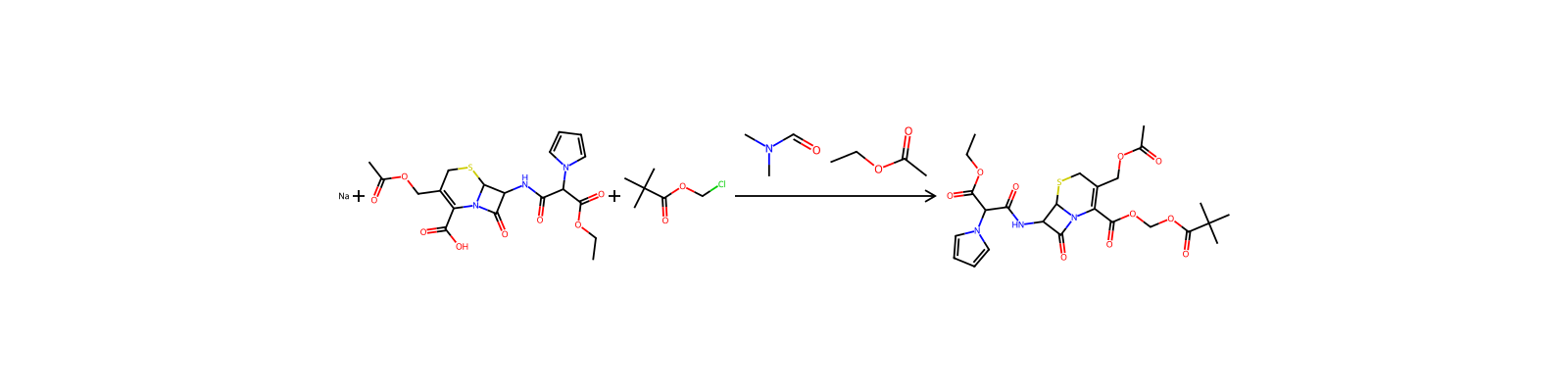
VerwendenChloromethyl pivalate was used in the synthesis of pivaloyloxy methyl ester of ofloxacin as prodrug. It was used as the reagent during the synthesis of an isoindoline-annulated, tricyclic sultam library via microwave-assisted, continuous-flow organic synthesis.
Vor- und nachgelagerte Produkte
Vorgelagerte Rohstoffe
Nachgelagerte Produkte
Anbieter50 Anbieter
国药集团化学试剂有限公司86-21-63210123 · [email protected]
梯希爱(上海)化成工业发展有限公司021-67121386 · [email protected]
衢州润东化工有限公司0570-8789886 18892685668 · [email protected]
上海阿拉丁生化科技股份有限公司400-6206333 13167063860 · [email protected]
河北立业化学制品有限公司0310-6697998 13930001710 · [email protected]
科瑞迪化学400-821-5857 021-64326257 · [email protected]
上海迈瑞尔生化科技有限公司4006356688 18621169109 · [email protected]
北京华威锐科化工有限公司0757-86329057 18934348241 · [email protected]
阿法埃莎(中国)化学有限公司400-6106006 · [email protected]
上海德默医药科技有限公司400-021-7337 2355568890 · [email protected]
安耐吉化学&3A(安徽泽升科技股份有限公司)400-0056266 · [email protected]
武汉凯威斯科技有限公司86-027-67849912 · [email protected]
上海瀚鸿科技股份有限公司021-54306202 13764082696 · [email protected]
邯郸市华骏化工有限公司13303008150 · [email protected]
上海柯维化学技术有限公司021-64609169 18901607656 · [email protected]
上海景颜化工科技有限公司13817811078 · [email protected]
嘉兴市艾森化工有限公司0573-85285100 18627885956 · [email protected]
上海攀鸿化工科技有限公司021-56491756 13512199871 · [email protected]
武汉丰泰威远科技有限公司027-87465837 19945049750 · [email protected]
孝感深远化工有限公司15527621225; 15527621225 · [email protected]
山东西亚化学有限公司13355009207 13355009207 · [email protected]
唐山默内德贸易有限公司0315-8309571 15633399667 · [email protected]
玛雅试剂+86 (573) 82222445 (0)18006601000 452520369 · [email protected]
四川库利南科技有限公司400-1166-196 18981987031 · [email protected]
天津希恩思生化科技有限公司400 638 7771 · [email protected]
泰州志诚化工科技有限公司0523-82837785 13914525028 · [email protected]
上海思域化工科技有限公司86-21-34053660 · [email protected]
赛默飞世尔科技(中国)有限公司800-810-5118 · [email protected]
北京伊诺凯科技有限公司400-810-7969 010-59572699 · [email protected]
上海遐瑞医药科技有限公司+86 21 61551611
TCI AMERICA800-4238616 · [email protected]
TOKYO CHEMICAL INDUSTRY CO., LTD.03-36680489 · [email protected]
TCI Europe320-37350700 · [email protected]
上海贤鼎生物科技有限公司4009209199 · [email protected]
深圳振强药物研发有限公司0755-66853366 13670046396 · [email protected]
深圳康特腾科技有限公司86-0755-86635001 · [email protected]
越林试剂021-62960152 · [email protected]
苏州安尼康药物研发有限公司0512-69369885 · [email protected]
河北傲格化工有限公司0310-4915333 · [email protected]
无锡中坤生化科技有限公司+86 0510-85629785
上海将来实业股份有限公司400-0066400 13621662912 · [email protected]
上海将来实业股份有限公司021-61552785 · [email protected]
HBCChem, Inc.+1-510-219-6317 · [email protected]
日照力德士化工有限公司010-51268198 · [email protected]
美岚实业(上海)有限公司021-58958189 · [email protected]
上海爱蝶实业有限公司021-58957966 18930537195 · [email protected]
广拓化学(上海)有限公司021-60899189-8001 18918189673 · [email protected]
雷丁试剂0510-85629785 18013409632 · [email protected]
上海创赛科技有限公司400-6087598 15021221957 · [email protected]
上海御略医药科技有限公司021-60345187 13671753212 · [email protected]
Zugehörige Reaktionen
364


Verknüpfte Notizen
Wird geladen…