

Grundinformationen
- Standard-SMILES
CCCCCCCCCCCCBr- InChIKey
PBLNBZIONSLZBU-UHFFFAOYSA-N- Summenformel
- C12H25Br
- Durchschnittliche Molmasse
- 249,23 g/mol
- Monoisotopische Masse
- 248,1139629
Namen und Bezeichner
- Bevorzugter Name
- 1-Bromododecane
- IUPAC
- 1-bromododecane
- Lokaler Name
- 1-Bromdodecan
- Englischer Name
- 1-Bromododecane
- Summenformel
- C12H25Br
- Molmasse
- 249.23
Namen und Synonyme
1-Bromododecane143-15-7Lauryl bromideDodecyl bromideDodecane, 1-bromo-DTXSID2044395DTXCID002439590T93TX09DNSC-6786RefChem:75159205-587-9n-Dodecyl bromide
Weitere Namen anzeigen
1-DodecylbromideBROMODODECANLaurlybromideJACS-143-15-7Lauroylbromide1-Dodecylbromid1-bromo-dodecan
Dodecane, bromo-bromododecane1-bromo dodecane1-bromo-dodecaneC12H25Br1-BROMO-N-DODECANEMFCD00000225NSC 6786
Datenbank-Bezeichner
- CAS
143-15-7- PubChem CID
- 8919
- DTXSID
DTXSID2044395- ChEMBL
CHEMBL3184907- UNII
- 90T93TX09D
- EC Number
- 205-587-9
- Nikkaji
- J2.029J
Eigenschaften
Berechnete Struktureigenschaften
- XLogP
- 7,1
- Polarare Oberfläche (TPSA)
- 0 Ų
- H-Brücken-Donoren
- 0
- H-Brücken-Akzeptoren
- 0
- Frei drehbare Bindungen
- 10
- Schwere Atome
- 13
- Formalladung
- 0
- Komplexität
- 81,2
Experimentelle und physikochemische Eigenschaften
Chemical ClassesOther Classes -> Halogenated Aliphatics, Saturated
SpringerMaterials PropertiesBoiling point
Density1.038 @25 °C
Physical Description
Liquid
Liquid; [Merck Index] Colorless liquid with a weak odor; [Alfa Aesar MSDS]
Physikochemische Eigenschaften
- Schmelzpunkt
- 11 · −11-−9 °C(lit.)
- Siedepunkt
- 134 · 134-135 °C6 mm Hg(lit.)
- Dichte
- 1.04 g/mL · 1.040 g/mL at 20 °C
- Dampfdichte
- 8.6 · 8.6 (vs air)
- Brechungsindex
- 20 · n20/D 1.458(lit.)
- Flammpunkt
- 230 °F · >230 °F
- storage temp.
- 2 · Sealed in dry,2-8°C
- Löslichkeit
- alcohol: soluble
- Aggregatzustand
- Liquid
- Farbe
- Clear
- Wasserlöslichkeit
- insoluble
- Merck
- 14 · 14,5389
- BRN
- 506159 · 506159
- Dielectric constant
- 4.07 · 4.0700000000000003
- Stabilität
- Stable. Combustible. Incompatible with strong oxidizing agents, strong bases.
- InChI
- 1S/C12H25Br/c1-2-3-4-5-6-7-8-9-10-11-12-13/h2-12H2,1H3
- InChIKey
- PBLNBZIONSLZBU-UHFFFAOYSA-N
- SMILES
- CCCCCCCCCCCCBr
- CAS Datenbank
- 143 · 143-15-7(CAS DataBase Reference)
- NIST chemische Informationen
- 1 · Dodecane, 1-bromo-(143-15-7)
- EPA chemische Informationen
- 1 · Dodecane, 1-bromo- (143-15-7)
Sicherheit und Regulatorisches
GHS-Klassifizierung
GHS Classification
This chemical does not meet GHS hazard criteria for 22.9% (58 of 253) of reports.
Danger
H304 (41.1%): May be fatal if swallowed and enters airways [Danger Aspiration hazard]
P261, P264, P264+P265, P271, P280, P301+P316, P302+P352, P304+P340, P305+P351+P338, P319, P321, P331, P332+P317, P337+P317, P362+P364, P403+P233, P405, and P501 (click each P-code to see the statement)
Aggregated GHS information provided per 253 reports by companies from 13 notifications to the ECHA C&L Inventory. Each notification may be associated with multiple companies.
Gefahrenhinweise
Regulatory Information
Chemical: Dodecane, 1-bromo-
Dodecane, 1-bromo- is listed on the EPA's Chemical Data Reporting (CDR) system. Manufacturers and importers of Dodecane, 1-bromo- are required to report information about their production and use of this chemical to the EPA under the Toxic Substances Control Act (TSCA). (40 eCFR Part 711)
Status: Active Update: 29-04-2021 https://echa.europa.eu/registration-dossier/-/registered-dossier/10302
Dodecane, 1-bromo-: Does not have an individual approval but may be used under an appropriate group standard
Hazards SummaryMay cause irritation; [Alfa Aesar MSDS] See 1-Bromopropane and 2-Bromopentane.
Hazard Classes and CategoriesAsp. Tox. 1 (41.1%)
Sicherheit und Schutzausrüstung
Protective Action Criteria (PAC)
12 [mg/m3]
130 [mg/m3]
790 [mg/m3]
Toxikologische Informationen
Adverse EffectsNeurotoxin - Acute solvent syndrome
Sicherheitsdaten
- F
- 19
- wgk
- 3
- tsca
- TSCA listed
- hs_code
- 29033036
- risk_code
- 36/37/38
- hazard_code
- Xi
- safety_code
- 26-36-24/25
- Speicherklasse
- 10 - Combustible liquids
- Hazard Classifications
- Skin Irrit. 2
Chemie und Industrie
Verwendung und Herstellung
U.S. Production2023: 250,000 - <550,000 lb
Consumer UsesAbrasives
Industry UsesAbrasives
General Manufacturing Information
Mining (except Oil and Gas) and support activities
Dodecane, 1-bromo-: ACTIVE
Anwendungen
Verwenden1-Bromododecane is used as a solvent. It is used as an intermediate to manufacture surfactant, pharmaceuticals and other organic compounds.
Verwenden1-Bromododecane have assumed considerable importance as starting materials for the production of many types of organic derivatives. The major use for 1-Bromododecane with 12 – 16 carbon atomsisinthe production of alkyldimethylamines by the nucleophilic displacement of bromide ion with dimethylamine. These amines are used as intermediates in the manufacture of fatty amine oxides and alkyl dimethyl benzyl quaternary ammonium salts, which are used in a wide range of products because of their biological (germicidal) or physical (cationic) properties. Minor amounts of 1-Bromododecane are used to produce insect pheromones, phasetransfer catalysts, and other useful specialty chemicals.
Darstellung
synthetische1-Bromododecane is synthesized by the action of 1-dodecanol and hydrobromic acid. The 1-dodecanol is added to the enameled glass reaction pot, stirred and cooled, and sulfuric acid is slowly added. Stir for 1h, then add hydrobromic acid. The temperature is gradually increased to 90-95℃, and the reaction is stirred for 8h. After the reaction, the temperature is lowered to 30℃ and left for 8h. The acid layer is separated, and the oil layer is adjusted to pH 8 with dilute alkali solution, and the alkali solution is separated and washed with 50% ethanol. Distill under reduced pressure and collect 140-200℃ (3.33kPa) fractions to obtain refined 1-bromododecane.
Vor- und nachgelagerte Produkte
Vorgelagerte Rohstoffe
Nachgelagerte Produkte
Anbieter50 Anbieter
国药集团化学试剂有限公司86-21-63210123 · [email protected]
梯希爱(上海)化成工业发展有限公司021-67121386 · [email protected]
上海阿拉丁生化科技股份有限公司400-6206333 13167063860 · [email protected]
爱斯特(成都)生物制药股份有限公司+86-28-85122536 85324413 · [email protected]
科瑞迪化学400-821-5857 021-64326257 · [email protected]
上海迈瑞尔生化科技有限公司4006356688 18621169109 · [email protected]
宁波亿诺化学品有限公司86-574-27787657 · [email protected]
阿法埃莎(中国)化学有限公司400-6106006 · [email protected]
上海德默医药科技有限公司400-021-7337 2355568890 · [email protected]
安耐吉化学&3A(安徽泽升科技股份有限公司)400-0056266 · [email protected]
北京绿百草科技发展有限公司010-61136123 · [email protected]
上海瀚鸿科技股份有限公司021-54306202 13764082696 · [email protected]
南通合润生物科技有限公司18362409333 · [email protected]
上海景颜化工科技有限公司13817811078 · [email protected]
嘉兴市艾森化工有限公司0573-85285100 18627885956 · [email protected]
山东西亚化学有限公司13355009207 13355009207 · [email protected]
玛雅试剂+86 (573) 82222445 (0)18006601000 452520369 · [email protected]
四川库利南科技有限公司400-1166-196 18981987031 · [email protected]
天津希恩思生化科技有限公司400 638 7771 · [email protected]
湖南汇百侍生物科技有限公司0731-85526065 13308475853 · [email protected]
南京成希化工科技有限公司15996471730 · [email protected]
艾科试剂4008-755-333 18080918076 · [email protected]
上海思域化工科技有限公司86-21-34053660 · [email protected]
赛默飞世尔科技(中国)有限公司800-810-5118 · [email protected]
北京伊诺凯科技有限公司400-810-7969 010-59572699 · [email protected]
TCI AMERICA800-4238616 · [email protected]
TOKYO CHEMICAL INDUSTRY CO., LTD.03-36680489 · [email protected]
TCI Europe320-37350700 · [email protected]
深圳振强药物研发有限公司0755-66853366 13670046396 · [email protected]
深圳康特腾科技有限公司86-0755-86635001 · [email protected]
越林试剂021-62960152 · [email protected]
上海倍卓生物科技有限公司021-61119791,13386096464 · [email protected]
北京环宇世纪化学科技有限公司hysj_bj.com
上海湄水化工科技有限公司021-60549325 18616193163
上海将来实业股份有限公司400-0066400 13621662912 · [email protected]
上海将来实业股份有限公司021-61552785 · [email protected]
HBCChem, Inc.+1-510-219-6317 · [email protected]
日照力德士化工有限公司010-51268198 · [email protected]
郑州阿尔法化工有限公司0371-53732842 15981811963 · [email protected]
美岚实业(上海)有限公司021-58958189 · [email protected]
上海石洋化工有限公司021-56795766 · [email protected]
上海爱蝶实业有限公司021-58957966 18930537195 · [email protected]
成都零六生物科技有限公司400-1166-196 13458535857 · [email protected]
广拓化学(上海)有限公司021-60899189-8001 18918189673 · [email protected]
上海创赛科技有限公司400-6087598 15021221957 · [email protected]
上海御略医药科技有限公司021-60345187 13671753212 · [email protected]
上海麦克林生化科技股份有限公司15221275939 15221275939 · [email protected]
杭州杰恒化工有限公司0571-87396432 · [email protected]
上海嵩爰化工科技有限公司010-1234567 18521000990 · [email protected]
上海有朋化工有限公司021-69005955 13701776567 · [email protected]
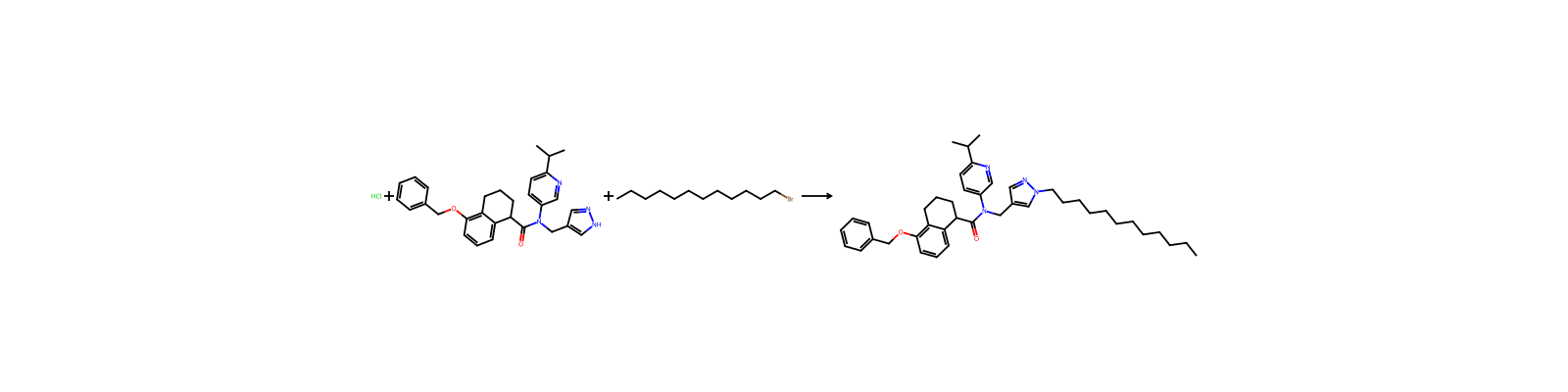
Zugehörige Reaktionen
192





Verknüpfte Notizen
Wird geladen…