2,2-Dimethoxyethylamin
Aminoacetaldehyde dimethyl acetal
Daten werden ergänzt – lade die Seite später neu, um den aktuellen Stand zu sehen

Grundinformationen
- CAS
22483-09-6- Standard-SMILES
COC(CN)OC- InChIKey
QKWWDTYDYOFRJL-UHFFFAOYSA-N- Summenformel
- C4H11NO2
- Durchschnittliche Molmasse
- 105,14 g/mol
- Monoisotopische Masse
- 105,07897859
Namen und Bezeichner
- Bevorzugter Name
- Aminoacetaldehyde dimethyl acetal
- IUPAC
- 2,2-dimethoxyethanamine
- Lokaler Name
- 2,2-Dimethoxyethylamin
- Englischer Name
- Aminoacetaldehyde dimethyl acetal
- Summenformel
- C4H11NO2
- Molmasse
- 105.14
Namen und Synonyme
22483-09-6Aminoacetaldehyde dimethyl acetal2,2-Dimethoxyethylamine2,2-DimethoxyethanamineEthanamine, 2,2-dimethoxy-Acetaldehyde, amino-, dimethyl acetalXF4JYB7VV5EINECS 245-026-5NSC 73701NSC-73701DTXSID7066803ETHYLAMINE, 2,2-DIMETHOXY-
Weitere Namen anzeigen
2,2-dimethoxy-ethanaminAMINOACETOLDEHYDE DIMETHYL ACETOL2,2-Dimethyethanamine2-AMINOACETALDEHYDE DIMETHYLACETALAminoacetaldehyde dimethyl acetal ,98%AMINOACETALDEHYDE DIMETHYL ACETAL (OR) 2,2- DIMETHOXYETHYLAMINE (ADMA)anjiahuanchun
RefChem:557526DTXCID1036709Acetaldehyde, amino-, dimethyl acetal (8CI)2,2-DIMETHOXYETHAN-1-AMINEGlycinal Dimethyl AcetalMFCD000081352,2-dimethoxy-ethylamine2-AMINOACETALDEHYDE DIMETHYL ACETAL
Datenbank-Bezeichner
- CAS
22483-09-6- PubChem CID
- 89728
- DTXSID
DTXSID7066803- UNII
- XF4JYB7VV5
- EC Number
- 245-026-5
- Nikkaji
- J26.136J
Eigenschaften
Berechnete StruktureigenschaftenWird ergänzt
- XLogP
- -0,8
- Polarare Oberfläche (TPSA)
- 44,5 Ų
- H-Brücken-Donoren
- 1
- H-Brücken-Akzeptoren
- 3
- Frei drehbare Bindungen
- 3
- Schwere Atome
- 7
- Formalladung
- 0
- Komplexität
- 36,7
Experimentelle und physikochemische Eigenschaften
SpringerMaterials PropertiesOptical coefficient
Density0.957 @25 °C
Boiling Point128 °C @760 [mm Hg]
Melting Point-45 °C
Vapor Pressure7.5 [mm Hg] @20 °C
Physikochemische Eigenschaften
- Schmelzpunkt
- -78 °C · -78°C
- Siedepunkt
- 135 · 135-139 °C/95 mmHg (lit.)
- Dichte
- 0.965 g/mL · 0.965 g/mL at 25 °C (lit.)
- Brechungsindex
- 20 · n20/D 1.417(lit.)
- Flammpunkt
- 128 °F · 128 °F
- storage temp.
- 2 · Keep in dark place,Inert atmosphere,2-8°C
- Löslichkeit
- soluble in Chloroform, Methanol
Sicherheit und Regulatorisches
Sicherheitsangaben dienen nur zur Orientierung und ersetzen weder das Sicherheitsdatenblatt (SDB) des Lieferanten noch geltende Vorschriften oder eine fachliche Bewertung.
GHS-Klassifizierung
GHS Classification
This chemical does not meet GHS hazard criteria for 1.4% (1 of 69) of reports.
Danger
H226 (98.6%): Flammable liquid and vapor [Warning Flammable liquids]
P210, P233, P240, P241, P242, P243, P260, P264, P280, P301+P330+P331, P302+P361+P354, P303+P361+P353, P304+P340, P305+P354+P338, P316, P321, P363, P370+P378, P403+P235, P405, and P501 (click each P-code to see the statement)
Aggregated GHS information provided per 69 reports by companies from 7 notifications to the ECHA C&L Inventory. Each notification may be associated with multiple companies.
Gefahrenhinweise
Regulatory Information
Chemical: Ethanamine, 2,2-dimethoxy-
Status: Active Update: 04-03-2021 https://echa.europa.eu/registration-dossier/-/registered-dossier/21032
Aminoacetaldehyde dimethyl acetal: Does not have an individual approval but may be used under an appropriate group standard
Hazard Classes and CategoriesFlam. Liq. 3 (98.6%)
Sicherheit und Schutzausrüstung
Protective Action Criteria (PAC)
12 [mg/m3]
130 [mg/m3]
790 [mg/m3]
Sicherheitsdaten
- wgk
- 2
- tsca
- TSCA listed
- ridadr
- UN 1993 3/PG 3
- hs_code
- 29225000
Chemie und Industrie
Verwendung und Herstellung
General Manufacturing InformationEthanamine, 2,2-dimethoxy-: ACTIVE
Anwendungen
BeschreibungAminoacetaldehyde dimethyl acetal, also known as 2,2-dimethoxy-ethylamine, is a critical intermediate in the synthesis of ivabradine hydrochloride, proline analogs, praziquantel, and other raw materials. The existing process for producing aminoacetal dimethyl acetate uses vinyl acetate as the starting material, and the target product is synthesized through bromination, Gabriel synthesis, and hydrazinolysis.
VerwendenAmino acetaldehyde dimethyl was used in preparation of chitosan- dendrimer hybrids having various functional groups such as carboxyl, ester and poly(ethylene glycol). It was used in an synthesis of a bicyclic proline analog from L-ascorbic acid and in 3-component reaction catalyzed by MgClO4 leading to α-aminophosphonates.
Vor- und nachgelagerte Produkte
Nachgelagerte Produkte
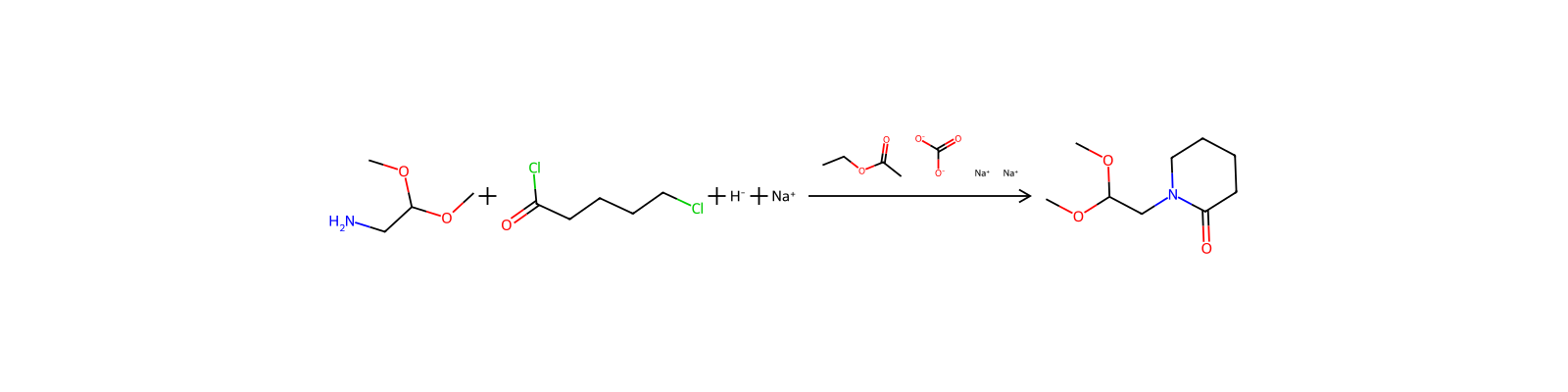
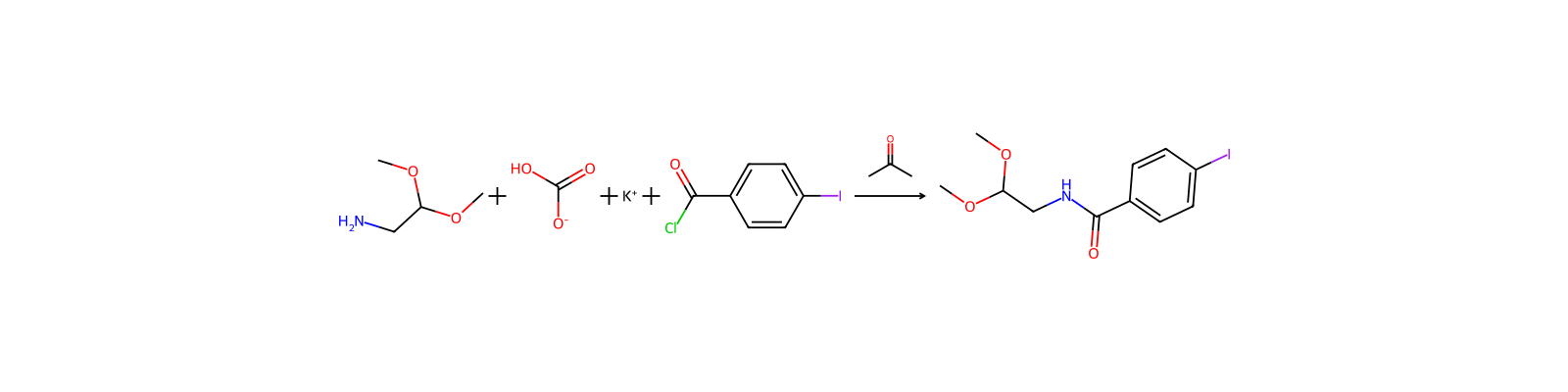
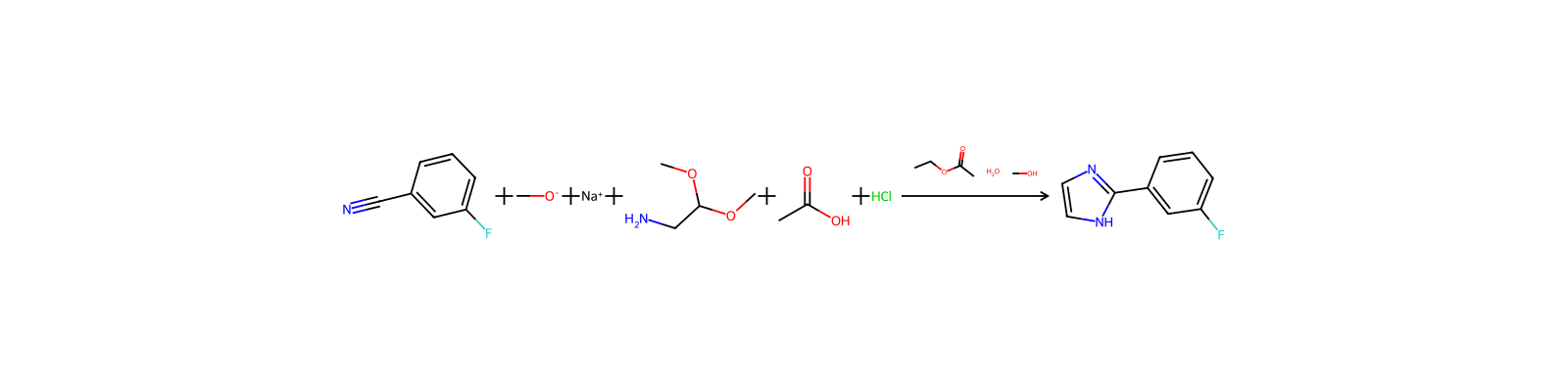
Zugehörige Reaktionen
548



Notizen zur Verbindung
Wird geladen…