D-(+)-Tryptophan
D-Tryptophan

Grundinformationen
- CAS
153-94-6- Standard-SMILES
N[C@H](Cc1c[nH]c2ccccc12)C(=O)O- InChIKey
QIVBCDIJIAJPQS-SECBINFHSA-N- Summenformel
- C11H12N2O2
- Durchschnittliche Molmasse
- 204,22 g/mol
- Monoisotopische Masse
- 204,08987762
Überblick
D(+)-tryptophan is a white solid. (NTP, 1992)
Namen und Bezeichner
- Bevorzugter Name
- D-Tryptophan
- IUPAC
- (2R)-2-amino-3-(1H-indol-3-yl)propanoic acid
- Lokaler Name
- D-(+)-Tryptophan
- Englischer Name
- D-Tryptophan
- Summenformel
- C11H12N2O2
- Molmasse
- 204.23
Namen und Synonyme
D-Tryptophan153-94-6D(+)-Tryptophan(2R)-2-amino-3-(1H-indol-3-yl)propanoic acid(R)-Tryptophan(+)-TryptophanD-TrytophaneTryptophan, D-D-(+)-TryptophanDTXSID00469897NS97N9H1GEINECS 205-819-9
Weitere Namen anzeigen
D-TRPH-D-TRP-OHLTRD-Trp-OHWVD-TriptophanD-2-AMINO-3-(3-INDOLYL)PROPIONIC ACIDTRP-01
NSC 97942CHEBI:16296NSC-97942DTXCID8026989DTryptophane(R)TryptophanTryptophan, DD(+)Tryptophan
Datenbank-Bezeichner
- CAS
153-94-6- PubChem CID
- 9060
- DTXSID
DTXSID0046989- ChEMBL
CHEMBL292303- ChEBI
CHEBI:16296- UNII
- 7NS97N9H1G
- EC Number
- 205-819-9
- Nikkaji
- J9.185E
Eigenschaften
Berechnete Struktureigenschaften
- XLogP
- -1,1
- Polarare Oberfläche (TPSA)
- 79,1 Ų
- H-Brücken-Donoren
- 3
- H-Brücken-Akzeptoren
- 3
- Frei drehbare Bindungen
- 3
- Schwere Atome
- 15
- Formalladung
- 0
- Komplexität
- 245
Experimentelle und physikochemische Eigenschaften
Chemical ClassesBiological Agents -> Amino Acids and Derivatives
DrugsPharmaceuticals -> Listed in ZINC15
Solubility1 to 5 mg/mL at 75 °F (NTP, 1992)
Melting Point
527 to 540 °F (NTP, 1992)
282-85 dec °C
282 - 85 °C
Physical Description
D(+)-tryptophan is a white solid. (NTP, 1992)
White solid; [CAMEO] White powder; [Alfa Aesar MSDS]
Solid
Collision Cross Section
151.5 Ų [M-H]- [CCS Type: DT; Buffer gas: N2; Ionization: ESI-; Dataset: TOXCAST; Source Identifier: DTXSID0046989]
142.6 Ų [M-H]-
Physikochemische Eigenschaften
- Schmelzpunkt
- 282 · 282-285 °C (dec.)(lit.)
- Siedepunkt
- 342.72 °C · 342.72°C (rough estimate)
Sicherheit und Regulatorisches
Sicherheitsangaben dienen nur zur Orientierung und ersetzen weder das Sicherheitsdatenblatt (SDB) des Lieferanten noch geltende Vorschriften oder eine fachliche Bewertung.
GHS-Klassifizierung
GHS Classification
This chemical does not meet GHS hazard criteria for 87.5% (7 of 8) of all reports.
Warning
H315 (12.5%): Causes skin irritation [Warning Skin corrosion/irritation]
P261, P264, P264+P265, P271, P280, P302+P352, P304+P340, P305+P351+P338, P319, P321, P332+P317, P337+P317, P362+P364, P403+P233, P405, and P501 (click each P-code to see the statement)
Aggregated GHS information provided per 8 reports by companies from 2 notifications to the ECHA C&L Inventory. Each notification may be associated with multiple companies.
Gefahrenhinweise
Regulatory InformationD-Tryptophan: Does not have an individual approval but may be used under an appropriate group standard
Fire HazardsFlash point data are not available for this chemical, but it is probably combustible. (NTP, 1992)
Hazards SummaryCauses altered sleep time (including change in righting reflex), dyspnea, and decreased body temperature in intraperitoneal lethal-dose studies of rats (LD50 = 4,289 mg/kg); [RTECS] May cause irritation; [Alfa Aesar MSDS]
Reactive GroupSalts, Acidic
Reactivity Profile
Acidic salts, such as D(+)-TRYPTOPHAN, are generally soluble in water. The resulting solutions contain moderate concentrations of hydrogen ions and have pH's of less than 7.0. They react as acids to neutralize bases. These neutralizations generate heat, but less or far less than is generated by neutralization of inorganic acids, inorganic oxoacids, and carboxylic acid. They usually do not react as either oxidizing agents or reducing agents but such behavior is not impossible. Many of these compounds catalyze organic reactions.
Chemie und Industrie
Verwendung und Herstellung
UsesTryptophan is an essential amino acid; [Merck Index] Used as a dietary supplement and for nutrition research; [NTP]
General Manufacturing InformationD-Tryptophan: ACTIVE
Anwendungen
VerwendenAn essential amino acid found in naturally produced pedtides. Unlike its stereoisomer, L-tryptophan, it is not used in structural or enzyme proteins.
Vor- und nachgelagerte Produkte
Vorgelagerte Rohstoffe
Nachgelagerte Produkte
Ergänzende Hinweise
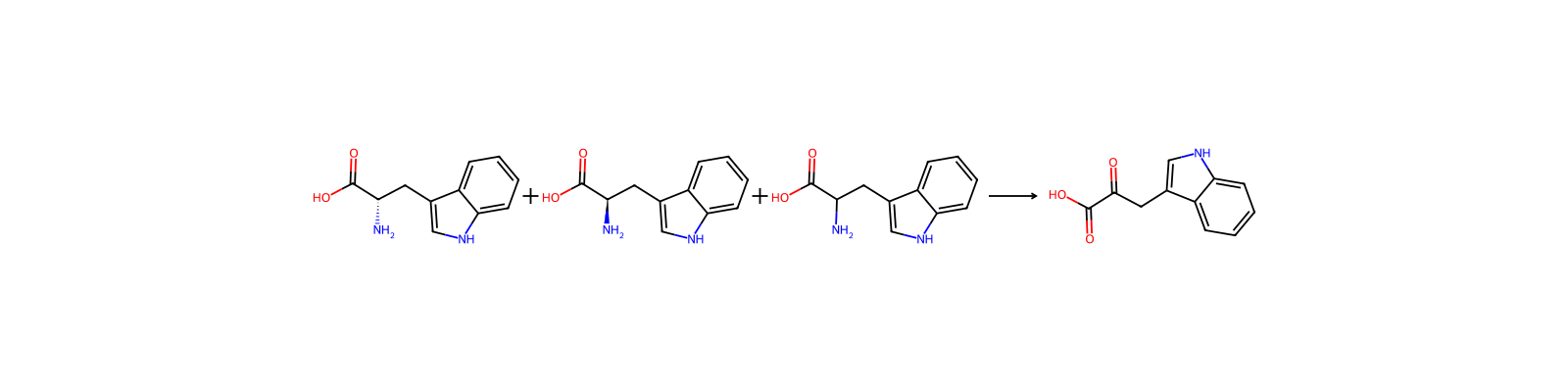
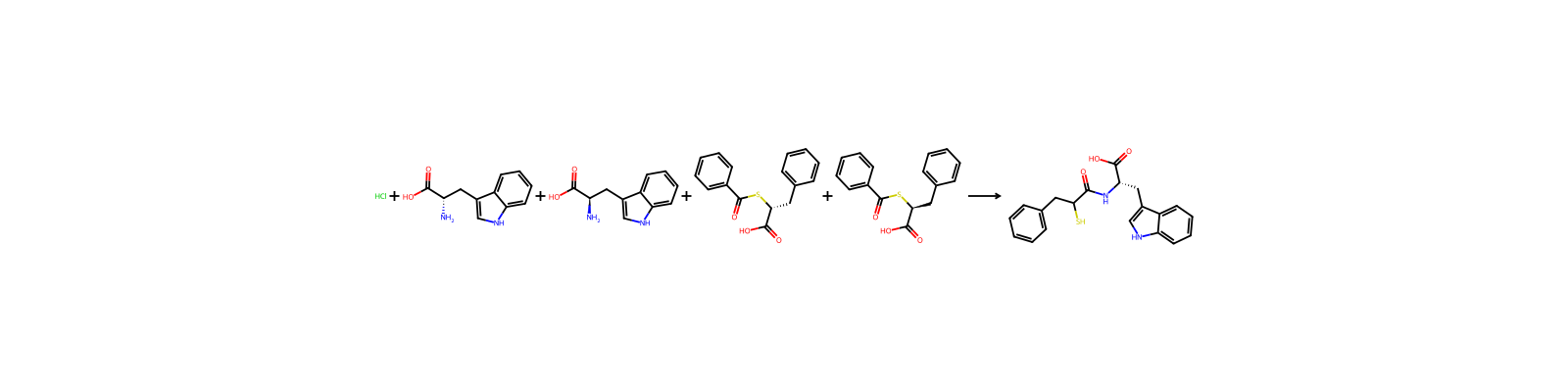
Zugehörige Reaktionen
53



Notizen zur Verbindung
Wird geladen…