StartseiteMCPWorkbenchSkills
StartseiteWorkbenchBenachrichtigungenMein Bereich
llms.txt · MCP-AnleitungDatenschutz · Nutzungsbedingungen · Supportv1.8.0
  1. Startseite
  2. /Verbindung

4-Nitroso-N-phenylanilin

4-Nitrosodiphenylamine

HCID 9074
Neue NotizNeue ReaktionAnfrage stellen
Druckvorschau

Daten werden ergänzt – lade die Seite später neu, um den aktuellen Stand zu sehen

GrundinformationenÜberblickNamen und BezeichnerEigenschaftenSicherheit und RegulatorischesChemie und IndustrieZugehörige ReaktionenNotizen zur Verbindung
TeilstruktursucheÄhnliche Strukturen suchen

Grundinformationen

CAS
156-10-5
Standard-SMILES
O=Nc1ccc(Nc2ccccc2)cc1
InChIKey
OIJHFHYPXWSVPF-UHFFFAOYSA-N
Summenformel
C12H10N2O
Durchschnittliche Molmasse
198,22 g/mol
Monoisotopische Masse
198,07931294

Überblick

p-Nitrosodiphenylamine can cause cancer according to an independent committee of scientific and health experts.

Namen und Bezeichner

Bevorzugter Name
4-Nitrosodiphenylamine
IUPAC
4-nitroso-N-phenylaniline
Lokaler Name
4-Nitroso-N-phenylanilin
Englischer Name
4-NITROSODIPHENYLAMINE
Summenformel
C12H10N2O
Molmasse
198.22

Namen und Synonyme

4-NITROSODIPHENYLAMINE156-10-54-Nitroso-N-phenylanilinep-NitrosodiphenylamineNaugard TKBN-Phenyl-p-nitrosoanilineDiphenylamine, 4-nitroso-p-Nitrosodifenylamin4-Nitroso-N-phenylbenzenaminep-Nitroso-N-phenylanilinep-PhenylaminonitrosobenzeneNCI-C02244
Weitere Namen anzeigen
TKBnaugardtkb4-Niinylamine4-Nitrosophenylaminenitrousdiphenylamide
Nitrous diphenylamideN-Phenyl-para-nitrosoanilinepara-Nitroso-N-phenylanilineAmine, diphenyl, 4-nitroso-DTXSID1021031NSC-5041F7052989CVDTXCID401031

Datenbank-Bezeichner

CAS
156-10-5
PubChem CID
9074
DTXSID
DTXSID1021031
ChEMBL
CHEMBL1600998
ChEBI
CHEBI:82509
UNII
F7052989CV
EC Number

Eigenschaften

Berechnete StruktureigenschaftenWird ergänzt

XLogP
2,5
Polarare Oberfläche (TPSA)
41,5 Ų
H-Brücken-Donoren
1
H-Brücken-Akzeptoren
3
Frei drehbare Bindungen
2
Schwere Atome
15
Formalladung
0
Komplexität
194

Experimentelle und physikochemische Eigenschaften

Chemical ClassesNitrogen Compounds -> Other Aromatics (Nitrogen)
Color/Form · 3 Einträge

GREEN PLATES WITH BLUISH LUSTER (FROM BENZENE) OR STEEL-BLUE PRISMS OR PLATES (FROM ETHER + WATER)

YELLOW LIQUID PLATES

Greenish crystals

Solubility · 2 Einträge

less than 0.1 mg/mL at 70.7 °F (NTP, 1992)

SLIGHTLY SOL IN WATER OR PETROLEUM ETHER; FREELY SOL IN ALCOHOL, ETHER, CHLOROFORM, BENZENE

Endocrine DisruptorsPotential endocrine disrupting compound
DecompositionWHEN HEATED TO DECOMPOSITION, IT EMITS TOXIC FUMES OF NITROGEN OXIDES.
Melting Point · 2 Einträge

291 °F (Decomposes) (NTP, 1992)

144-145 °C

Vapor Pressure0.000185 [mmHg]
Physical Description · 2 Einträge

P-nitrosodiphenylamine appears as green plates with bluish luster or a black powder. (NTP, 1992)

Sicherheit und Regulatorisches

Sicherheitsangaben dienen nur zur Orientierung und ersetzen weder das Sicherheitsdatenblatt (SDB) des Lieferanten noch geltende Vorschriften oder eine fachliche Bewertung.

GHS-Klassifizierung

GHS Classification · 5 Einträge

This chemical does not meet GHS hazard criteria for 3.7% (3 of 80) of reports.

Warning

H302 (95%): Harmful if swallowed [Warning Acute toxicity, oral]

P264, P264+P265, P270, P280, P301+P317, P302+P352, P305+P351+P338, P321, P330, P332+P317, P337+P317, P362+P364, and P501 (click each P-code to see the statement)

Aggregated GHS information provided per 80 reports by companies from 3 notifications to the ECHA C&L Inventory. Each notification may be associated with multiple companies.

Gefahrenhinweise

Regulatory InformationHazard Traits - Carcinogenicity
DOT LabelPoison
Fire HazardsFlash point data for this chemical are not available; however, it is probably combustible. (NTP, 1992)
Health HazardsSYMPTOMS: Symptoms of exposure to this compound include skin and eye irritation.
Hazards Summary · 1 Eintrag

A skin and eye irritant; Highly toxic by inhalation, ingestion, and skin absorption; [CAMEO] Causes liver cancer in high-dose feeding studies of experimental animals; [HSDB] A skin and eye irritant; May cause liver and kidney damage; [MSDSonline]

Reactive GroupNitro, Nitroso, Nitrate, and Nitrite Compounds, Organic
Special Reports · 2 Einträge

DHEW/NCI; Bioassay of p-Nitrosodiphenylamine for Possible Carcinogenicity (1979) Technical Rpt Series No. 190 DHEW Pub No. (NIH) 79-1746

National Toxicology Program. Eleventh Report on Carcinogens (2005). The Report on Carcinogens is an informational scientific and public health document that identifies and discusses substances (including agents, mixtures, or exposure circumstances) that may pose a carcinogenic hazard to human health. 4-Nitrosodiphenylamine (156-10-5) is delisted as reasonably anticipated to be a human carcinogen.[Available from, as of July 31, 2009: http://ntp.niehs.nih.gov/ntp/roc/eleventh/append/appb.pdf]

Chemie und Industrie

Pharmakologische Informationen

Metabolism/Metabolites · 1 Eintrag

THE INTESTINES OF RATS TREATED IP WITH 1 G N-NITROSODIPHENYLAMINE WERE STAINED AND DILATED AFTER 24 HOURS. N-NITROSODIPHENYLAMINE WAS RAPIDLY REMOVED FROM THE LIVER AND KIDNEY WITH DIPHENYLAMINE AS AN IMPORTANT DEGRADATION PRODUCT. /N-NITROSODIPHENYLAMINE/

Verwendung und Herstellung

Uses · 3 Einträge

Used as a rubber accelerator, chemical intermediate (dyes and pharmaceuticals), and polymerization inhibitor in vinyl monomer production; [HSDB]

ACCELERATOR FOR RUBBER VULCANIZATION

USED AS A CHEMICAL INTERMEDIATE FOR DYES AND PHARMACEUTICALS AND AS A POLYMERIZATION INHIBITOR DURING THE MANUFACTURE OF VINYL MONOMERS SUCH AS STYRENE.

U.S. Production · 2 Einträge

(1975) PROBABLY GREATER THAN 9.08X10+5 G

(1977) PROBABLY GREATER THAN 9.08X10+5 G

Consumption PatternsESSENTIALLY 100% AS ACCELERATOR FOR RUBBER VULCANIZATION
Methods of Manufacturing · 2 Einträge

PROBABLY BY REACTION OF AN ALKYL ETHER OF 4-NITROSOPHENOL WITH ANILINE.

PARA-NITROSODIPHENYLAMINE CAN BE PREPARED BY THE FISCHER-HEPP REARRANGEMENT OF N-NITROSODIPHENYLAMINE; THIS IS BELIEVED TO BE THE METHOD USED FOR ITS COMMERCIAL PRODUCTION.

Formulations/PreparationsPARA-NITROSODIPHENYLAMINE IS AVAILABLE IN THE USA AS A PURPLE SOLID, TYPICALLY CONTAINING 95% ACTIVE INGREDIENT, 0.25% ASH, AND WITH A MELTING RANGE OF 140 TO 145 °C.
General Manufacturing Information · 2 Einträge

Benzenamine, 4-nitroso-N-phenyl-: ACTIVE

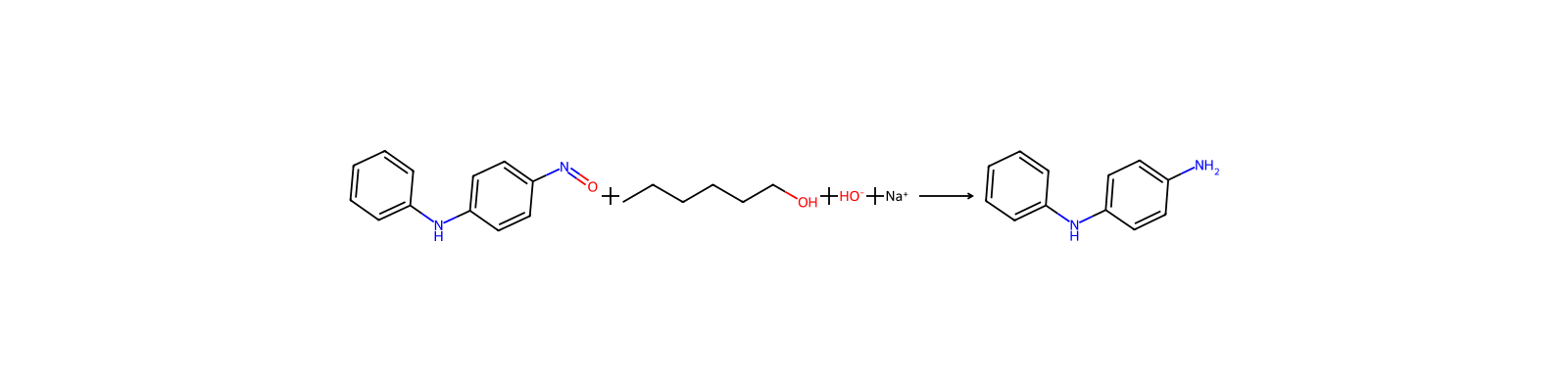
USE OF PARA-NITROSODIPHENYLAMINE AS A CHEMICAL INTERMEDIATE IS BELIEVED TO BE LIMITED PRIMARILY TO THE PRODUCTION OF N-PHENYL-PARA-PHENYLENEDIAMINE AND ITS DERIVATIVES. THIS DIAMINE SERVES AS AN AZOIC DIAZO COMPONENT, AS AN OXIDATION BASE, AS A DEVELOPER OF DIAZOTIZED DIRECT DYES, AND AS AN INTERMEDIATE IN THE MANUFACTURE OF OTHER DYES. IT IS ALSO BELIEVED TO BE USED AS AN ANTIOXIDANT IN RUBBER AND AS AN INTERMEDIATE IN THE SYNTHESIS OF OTHER ANTIOXIDANTS.

Zugehörige Reaktionen

5
Reaktionsaufzeichnung erstellen
Reaktionsgleichung von HRID 3980
HRID 3980als Eduktuspto-grants-1988_02
Reaktionsgleichung von HRID 121474
HRID 121474als EduktTraining data from https://doi.org/10.1039/C8SC04228D (2/10)
Reaktionsgleichung von HRID 1071780
HRID 1071780als Eduktuspto-grants-2005_06
Reaktionsgleichung von HRID 1071781
HRID 1071781als Eduktuspto-grants-2005_06
Reaktionsgleichung von HRID 1106297
HRID 1106297als Eduktuspto-grants-1982_01

Notizen zur Verbindung

Wird geladen…

Auf dieser SeiteGrundinformationenÜberblickNamen und BezeichnerEigenschaftenSicherheit und RegulatorischesChemie und IndustrieZugehörige ReaktionenNotizen zur Verbindung
Weitere Aktionen
Neue NotizNeue ReaktionAnfrage stellen
205-848-7
Nikkaji
J2.557G

Green solid with bluish luster or steel-blue solid; [Merck Index]

Stability/Shelf LifeAN UNUSUALLY STABLE NITROSO COMPOUND
Collision Cross Section144.2 Ų [M+H]+ [CCS Type: DT; Buffer gas: N2; Ionization: ESI+; Dataset: TOXCAST; Source Identifier: DTXSID1021031]
Other Experimental PropertiesUNDERGOES REDUCTION, ALKYLATION AND NITROSATION; FORMS SALTS WITH STRONG ACIDS AND BASES; THE BASIC SALTS REARRANGE TO A QUINOID STRUCTURE.

Physikochemische Eigenschaften

Schmelzpunkt
144 °C · 144 °C (dec.)(lit.)
Siedepunkt
335.53 °C · 335.53°C (rough estimate)
Dichte
1.1447 · 1.1447 (rough estimate)
Brechungsindex
1.633 · 1.6330 (estimate)
storage temp.
-20 °C · -20°C Freezer, Under inert atmosphere
Löslichkeit
Chloroform (Slightly, Heated, Sonicated), DMSO (Slightly, Sonicated)
pka
-3.56 · -3.56±0.20(Predicted)
Aggregatzustand
Solid
Farbe
Green plates with bluish luster (from benzene) orsteel-blue prisms or plates (from ether + H2O)
Merck
14 · 14,6639
CAS Datenbank
156 · 156-10-5(CAS DataBase Reference)
EPA chemische Informationen
p-Nitrosodiphenylamine (156-10-5)
Reactivity Profile · 1 Eintrag

P-NITROSODIPHENYLAMINE neutralizes acids in exothermic reactions to form salts plus water. May be incompatible with isocyanates, halogenated organics, peroxides, phenols (acidic), epoxides, anhydrides, and acid halides. May generate hydrogen, a flammable gas, in combination with strong reducing agents such as hydrides. May react with strong oxidizing agents (NTP, 1992).

Air and Water ReactionsInsoluble in water.
Hazard Classes and CategoriesAcute Tox. 4 (95%)

Sicherheit und Schutzausrüstung

Fire FightingFires involving this chemical should be controlled with a dry chemical, carbon dioxide or Halon extinguisher. (NTP, 1992)
First Aid · 1 Eintrag

EYES: First check the victim for contact lenses and remove if present. Flush victim's eyes with water or normal saline solution for 20 to 30 minutes while simultaneously calling a hospital or poison control center. Do not put any ointments, oils, or medication in the victim's eyes without specific instructions from a physician. IMMEDIATELY transport the victim after flushing eyes to a hospital even if no symptoms (such as redness or irritation) develop.

Nonfire Spill Response · 1 Eintrag

SMALL SPILLS AND LEAKAGE: If you spill this chemical, FIRST REMOVE ALL SOURCES OF IGNITION, then dampen the solid spill material with toluene, then transfer the dampened material to a suitable container. Use absorbent paper dampened with toluene to pick up any remaining material. Your contaminated clothing and absorbent paper should be sealed in a vapor-tight plastic bag for eventual disposal. Solvent-wash all contaminated surfaces with toluene followed by washing with a soap and water solution. Do not reenter the contaminated area until the Safety Officer (or other responsible person) has verified that the area has been properly cleaned.

Isolation and EvacuationExcerpt from ERG Guide 154 [Substances - Toxic and/or Corrosive (Non-Combustible)]:
Protective Action Criteria (PAC) · 3 Einträge

0.58 [mg/m3]

6.4 [mg/m3]

39 [mg/m3]

Personal Protective Equipment (PPE) · 2 Einträge

MINIMUM PROTECTIVE CLOTHING: If Tyvek-type disposable protective clothing is not worn during handling of this chemical, wear disposable Tyvek-type sleeves taped to your gloves.

Wear nitrile rubber gloves, protective laboratory coat, self-contained breathing apparatus, eye protection and protective shoes. /Nitrosamines/

Toxikologische Informationen

Adverse EffectsOccupational hepatotoxin - Secondary hepatotoxins: the potential for toxic effect in the occupational setting is based on cases of poisoning by human ingestion or animal experimentation.
Ongoing Test Status · 1 Eintrag

The following link will take the user to the National Toxicology Program (NTP) Test Agent Search Results page, which tabulates all of the "Standard Toxicology & Carcinogenesis Studies", "Developmental Studies", and "Genetic Toxicity Studies" performed with this chemical. Clicking on the "Testing Status" link will take the user to the status (i.e., in review, in progress, in preparation, on test, completed, etc.) and results of all the studies that the NTP has done on this chemical. [http://ntp-apps.niehs.nih.gov/ntp_tox/index.cfm?fuseaction=ntpsearch.searchresults&searchterm=156-10-5]

Carcinogen Classification · 6 Einträge

para-Nitrosodiphenylamine

Group 3: Not classifiable as to its carcinogenicity to humans

Volume 27: (1982) Some Aromatic Amines, Anthraquinones and Nitroso Compounds, and Inorganic Fluorides Used in Drinking-water and Dental Preparations

1987

1987

p-Nitrosodi-phenylamine

Non-Human Toxicity Excerpts · 5 Einträge

TWO GROUPS OF 50 MALE AND 50 FEMALE B6C3F1 MICE, SIX WEEKS OF AGE, WERE FED DIETS CONTAINING PARA-NITROSODIPHENYLAMINE (TECHNICAL GRADE, 73% ACTIVE MATERIAL, 25% WATER, WITH UNSPECIFIED IMPURITIES). THE LOW DOSE GROUP RECEIVED 5000 MG/KG OF DIET FOR 40 WEEKS, THEN 2500 MG/KG FOR 17 WEEKS; THE HIGH DOSE GROUP RECEIVED 10000 MG/KG OF DIET FOR 40 WEEKS, THEN, AFTER A SEVEN WEEK INTERVAL, 5000 MG/KG FOR 10 WEEKS. BOTH GROUPS WERE OBSERVED FOR AN ADDITIONAL 35 WEEKS. A GROUP OF 20 ANIMALS OF EACH SEX SERVED AS MATCHED CONTROLS AND WERE KEPT UNDER OBSERVATION FOR 92 WEEKS. OF THE HIGH DOSE GROUP, 19 MALES AND 21 FEMALES DIED BEFORE 52 WEEKS DUE TO TOXICITY. BY THE END OF THE STUDY, 85, 88, AND 60% OF MALES AND 90, 84 AND 52% OF THE FEMALES WERE STILL ALIVE IN THE CONTROL, LOW DOSE AND HIGH DOSE GROUPS, RESPECTIVELY. A STATISTICALLY SIGNIFICANT INCREASE IN INCIDENCE OF LIVER TUMORS WAS OBSERVED IN TREATED MALE MICE ONLY: HEPATOCELLULAR CARCINOMA OR ADENOMA- 2/18 IN CONTROLS, 22/42 IN LOW DOSE ANIMALS (P= 0.002) AND 12/13 IN THE HIGH DOSE ANIMALS (P= 0.038); INCIDENCES OF HEPATOCELLULAR CARCINOMAS ALONE WERE 0/18, 10/42 (P= 0.02) AND 1/31 IN THE THREE GROUPS, RESPECTIVELY.

IN A FOUR WEEK SUBCHRONIC STUDY, FISCHER 344 RATS AND B6C3F1 MICE WERE FED DIETS CONTAINING UP TO 3.2% AND 2.6% PARA-NITROSODIPHENYLAMINE, RESPECTIVELY. THERE WAS DOSE RELATED MORTALITY IN MALE AND FEMALE MICE, BUT NOT IN RATS. THE RATS SHOWED A DOSE DEPENDENT DEPRESSION OF MEAN BODY WEIGHT GAIN OF UP TO 53%.

PARA-NITROSODIPHENYLAMINE DID NOT TRANSFORM CELLS OF EMBRYOS EXCISED FROM PREGNANT HAMSTERS TREATED INTRAPERITONEALLY WITH UP TO 20 MG/KG BODY WEIGHT.

A bioassay of N-nitrosodiphenylamine for possible carcinogenicity was /administered in/ feed to mice and rats. Rats of each sex received either 1000 or 4000 ppm for 100 weeks. Male mice received 10,000 or 20,000 ppm for 101 weeks. Female mice received either 2315 or 5741 ppm (Time-weighted average). Carcinogenesis occurred in both sexes of rats, with transitional cell carcinomas of the urinary bladder, but not in the mice. /N-Nitrosodiphenylamine/

p-Nitrosodiphenylamine showed no evidence of potential carcinogenicity in an in vivo-in vitro combination bioassay. Pregnant Syrian golden hamsters were given an intraperitoneal injection of 0.5 ml of a solution containing 0.5 to 2 mg of the chemical per 100 gm maternal weight on day 10 or 11 of gestation. Embryos were excised at day 13, and cells from these embryos were cultured and scored for transformation. No transformed cells were observed. Subcutaneous injection of the cultured cells into weanling, male hamsters produced no tumors.

Evidence for Carcinogenicity · 2 Einträge

No data are available in humans. Inadequate evidence of carcinogenicity in animals. OVERALL EVALUATION: Group 3: The agent is not classifiable as to its carcinogenicity to humans.

4-Nitrosodiphenylamine: delisted as reasonably anticipated to be a human carcinogen.

Probable Routes of Human ExposurePARA-NITROSODIPHENYLAMINE HAS BEEN PRODUCED COMMERCIALLY SINCE AT LEAST 1970. ITS USE AS A CHEMICAL INTERMEDIATE COULD RESULT IN OCCUPATIONAL EXPOSURE.
National Toxicology Program Studies · 1 Eintrag

A bioassay for the possible carcinogenicity of p-nitrosodiphenylamine was conducted using Fischer 344 rats and B6C3F1 mice. p-Nitrosodiphenylamine was administered in the feed ... /to/ 50 male and 50 female animals of each species. Twenty animals of each sex and species were placed on test as controls. The high and low dietary concentrations of p-nitrosodiphenylamine were, respectively, 5000 and 2500 ppm for rats. The high and low time-weighted average concentrations for mice were 9000 and 4254 ppm, respectively. The compound was administered for 78 weeks to rats, for 50 weeks to high dose mice and for 57 weeks to low dose mice. The period of compound administration was followed by an observation period of 27 weeks for rats and 35 weeks for mice. There were significant positive associations between the concentrations of p-nitrosodiphenylamine administered and mortality among male and female mice, but not for rats of either sex. ... Under the conditions of this bioassay, p-nitrosodiphylamine was carcinogenic when administered in the diet to male B6C3F1 mice, causing hepatocellular carcinomas. The chemical was also carcinogenic in male Fischer 344 rats, causing liver neoplasms. No evidence was provided for the carcinogenicity of p-nitrosodiphenylamine in female B6C3F1 mice or in female Fischer 344 rats.

RAIS Toxicity Values · 4 Einträge

6.3e-06

CALEPA

0.022

CALEPA

Sicherheitsdaten

wgk
3
tsca
TSCA listed
ridadr
2811
hs_code
29214200
RTECS-Nr.
JK0175000
risk_code
22-36/38
Toxizität
LD50 intravenous in mouse: 178mg/kg
hazard_code
Xn
safety_code
26-36/37
hazard_class
6.1(b)
packing_group
III
Giftige Stoffe Daten
156-10-5(Hazardous Substances Data)

Anwendungen

VerwendenHas been used as retardant in vulcanizing rubber.

Vor- und nachgelagerte Produkte

Vorgelagerte Rohstoffe

KohlenstoffdioxidDiphenylamin

Nachgelagerte Produkte

4-Aminodiphenylamine4-Amino-diphenylamin4-Anilinobenzoldiazoniumhydrogensulfat