StartseiteMCPWorkbenchSkills
StartseiteWorkbenchBenachrichtigungenMein Bereich
llms.txt · MCP-AnleitungDatenschutz · Nutzungsbedingungen · Supportv1.8.0
  1. Startseite
  2. /Verbindung

3-Amino-1-propanol

HCID 9086
Neue NotizNeue ReaktionAnfrage stellen
Druckvorschau

Daten werden ergänzt – lade die Seite später neu, um den aktuellen Stand zu sehen

GrundinformationenÜberblickNamen und BezeichnerEigenschaftenSicherheit und RegulatorischesChemie und IndustrieZugehörige ReaktionenNotizen zur Verbindung
TeilstruktursucheÄhnliche Strukturen suchen

Grundinformationen

CAS
156-87-6
Standard-SMILES
NCCCO
InChIKey
WUGQZFFCHPXWKQ-UHFFFAOYSA-N
Summenformel
C3H9NO
Durchschnittliche Molmasse
75,11 g/mol
Monoisotopische Masse
75,06841391

Überblick

N-propanolamine is a colorless to pale yellow liquid with a fishy odor. Less dense than water. Melting point 12.4 °C (54 °F). Moderately toxic by ingestion.

Namen und Bezeichner

Bevorzugter Name
3-Amino-1-propanol
IUPAC
3-aminopropan-1-ol
Lokaler Name
3-Amino-1-propanol
Englischer Name
3-Aminopropanol
Summenformel
C3H9NO
Molmasse
75.11

Namen und Synonyme

3-Aminopropan-1-ol3-Aminopropanol3-Amino-1-propanol156-87-61-Propanol, 3-amino-PROPANOLAMINE3-Propanolamine3-Aminopropyl alcohol3-Hydroxypropylamine1-Amino-3-propanol1,3-Propanolamine1-Amino-3-hydroxypropane
Weitere Namen anzeigen
monopropanolamine3-Hydroxy-1-aminopropane3-AIMNOPROPANOL
beta-Alaninolgamma-Aminopropanol3-Hydroxy-1-propylaminegamma-Hydroxy-1-propylamineYMA7C44XGYNSC-7766DTXSID0059746CHEBI:143408

Datenbank-Bezeichner

CAS
156-87-6
PubChem CID
9086
DTXSID
DTXSID0059746
ChEMBL
CHEMBL115530
ChEBI
CHEBI:143408
UNII
YMA7C44XGY
EC Number
205-864-4
Nikkaji
J2.560G

Eigenschaften

Berechnete StruktureigenschaftenWird ergänzt

XLogP
-1,1
Polarare Oberfläche (TPSA)
46,3 Ų
H-Brücken-Donoren
2
H-Brücken-Akzeptoren
2
Frei drehbare Bindungen
2
Schwere Atome
5
Formalladung
0
Komplexität
16,4

Experimentelle und physikochemische Eigenschaften

Chemical ClassesNitrogen Compounds -> Amino Alcohols, Other
SpringerMaterials Properties15N nuclear magnetic resonance spectrum
LogP-1.12
Density · 3 Einträge

0.982 at 68 °F (USCG, 1999) - Less dense than water; will float

0.9824 @ 26 °C/4 °C

0.985 @25 °C

Color/FormCOLORLESS LIQUID
Solubility · 2 Einträge

SOL IN WATER, ALCOHOL & ETHER

MISCIBLE WITH ACETONE & CHLOROFORM

Flash Point · 2 Einträge

175 °F (USCG, 1999)

175 °F

Boiling Point · 3 Einträge

369.5 °F at 760 mmHg (USCG, 1999)

187-188 °C @ 756 MM HG

187 °C @760 [mm Hg]

Melting Point · 3 Einträge

Sicherheit und Regulatorisches

Sicherheitsangaben dienen nur zur Orientierung und ersetzen weder das Sicherheitsdatenblatt (SDB) des Lieferanten noch geltende Vorschriften oder eine fachliche Bewertung.

GHS-Klassifizierung

GHS Classification · 6 Einträge

This chemical does not meet GHS hazard criteria for 0.4% (1 of 259) of reports.

Danger

H302 (92.7%): Harmful if swallowed [Warning Acute toxicity, oral]

P260, P264, P264+P265, P270, P280, P301+P317, P301+P330+P331, P302+P352, P302+P361+P354, P304+P340, P305+P354+P338, P316, P317, P321, P330, P362+P364, P363, P405, and P501 (click each P-code to see the statement)

Aggregated GHS information provided per 259 reports by companies from 12 notifications to the ECHA C&L Inventory. Each notification may be associated with multiple companies.

Danger

Gefahrenhinweise

Regulatory Information · 4 Einträge

Chemical: 1-Propanol, 3-amino-

1-Propanol, 3-amino- is listed on the EPA's Chemical Data Reporting (CDR) system. Manufacturers and importers of 1-Propanol, 3-amino- are required to report information about their production and use of this chemical to the EPA under the Toxic Substances Control Act (TSCA). (40 eCFR Part 711)

REACH registered substance: 3-aminopropan-1-ol (EC: 205-864-4)

3-Amino-1-propanol: Does not have an individual approval but may be used under an appropriate group standard

DOT LabelCorrosive
Fire HazardsSpecial Hazards of Combustion Products: Toxic oxides of nitrogen may form in fire.
Health HazardsIf inhaled may be harmful. Contact may cause burns to skin and eyes. (Organic base.) (USCG, 1999)
Hazards Summary · 1 Eintrag

A severe eye and moderate to severe skin irritant; [RTECS] Moderately toxic by ingestion; [CAMEO] A moderate irritant; [HSDB] A fairly severe skin irritant that may cause second-degree burns following a few minutes contact; Causes irritation or burns to eyes; Vapors cause moderate irritation; [CHRIS] Causes burns; Inhalation may cause corrosive injuries to upper respiratory tract and lungs; Harmful by ingestion and skin absorption; [Alfa Aesar MSDS]

Chemie und Industrie

Verwendung und Herstellung

Uses · 3 Einträge

Used as a chemical intermediate; [HSDB]

CHEM INT FOR DEXPANTHENOL, A GASTROINTESTINAL DRUG

Organic intermediate

U.S. Exports · 2 Einträge

(1977) No Data

(1979) No Data

U.S. Imports · 2 Einträge

(1977) No Data

(1979) No Data

U.S. Production · 3 Einträge

2023: 100,000 - <250,000 lb

(1977) No Data

(1980) PROBABLY GREATER THAN 2.27X10+6 GRAMS

Industry UsesOther
Formulations/PreparationsGRADE: 99% PURE.
General Manufacturing Information · 2 Einträge

Oil and Gas Drilling, Extraction, and Support activities

1-Propanol, 3-amino-: ACTIVE

Anwendungen

VerwendenOrganic intermediate.

Vor- und nachgelagerte Produkte

Vorgelagerte Rohstoffe

L-Alanin

Nachgelagerte Produkte

Azetidin3-aminopropanalAminopropyl vinyl ether

Zugehörige Reaktionen

925
Reaktionsaufzeichnung erstellen
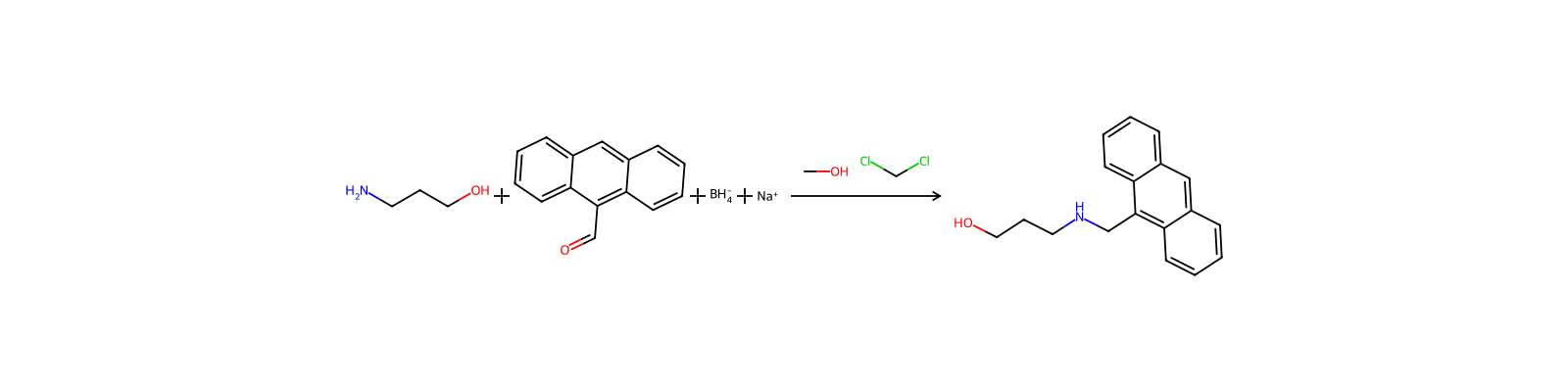
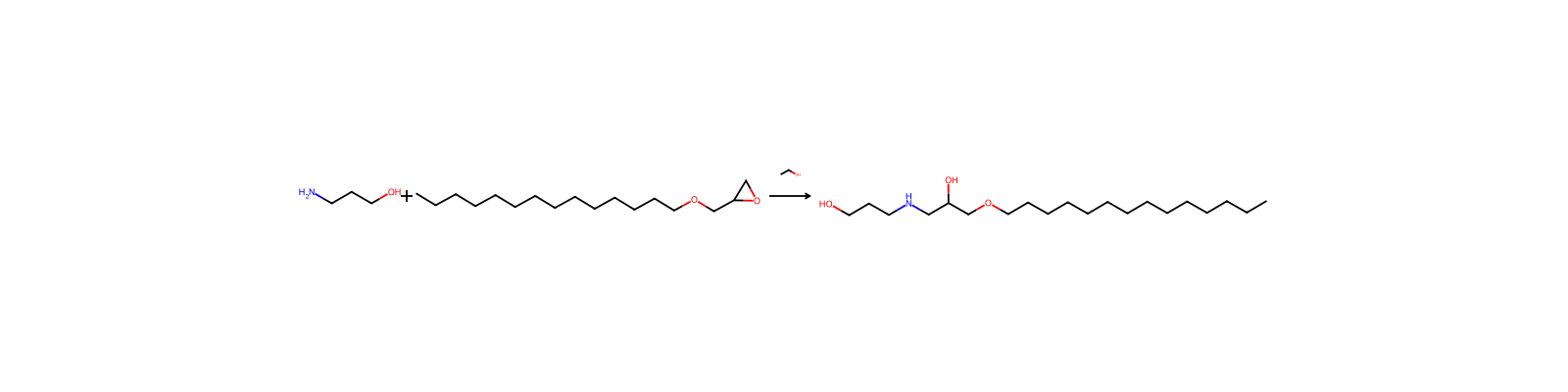
Reaktionsgleichung von HRID 1104
HRID 1104als Eduktuspto-grants-1998_03
Reaktionsgleichung von HRID 2150
HRID 2150als Eduktuspto-grants-1998_03
Reaktionsgleichung von HRID 5447
HRID 5447als Eduktuspto-grants-1993_09
Reaktionsgleichung von HRID 5471
HRID 5471als Eduktuspto-grants-1993_09
Reaktionsgleichung von HRID 8085
HRID 8085als Eduktuspto-grants-2006_08
Reaktionsgleichung von HRID 9900
HRID 9900als Eduktuspto-grants-2006_08
Reaktionsgleichung von HRID 12995
HRID 12995als Eduktuspto-grants-2010_06
Reaktionsgleichung von HRID 13002
HRID 13002als Eduktuspto-grants-2010_06
Seite 1 von 116

Notizen zur Verbindung

Wird geladen…

Auf dieser SeiteGrundinformationenÜberblickNamen und BezeichnerEigenschaftenSicherheit und RegulatorischesChemie und IndustrieZugehörige ReaktionenNotizen zur Verbindung
Weitere Aktionen
Neue NotizNeue ReaktionAnfrage stellen

52 °F (USCG, 1999)

12.4 °C

-2 °C

Vapor Pressure · 2 Einträge

0.07 [mmHg]

0.4 [mm Hg] @25 °C

Refractive IndexINDEX OF REFRACTION: 1.4617 @ 20 °C
Physical Description · 3 Einträge

N-propanolamine is a colorless to pale yellow liquid with a fishy odor. Less dense than water. Melting point 12.4 °C (54 °F). Moderately toxic by ingestion.

CBI; Liquid

Colorless to pale yellow liquid with a fishy odor; mp = 12.4 deg C; [CAMEO] Colorless liquid with an odor of amines; mp = 11 deg C; [Alfa Aesar MSDS]

Physikochemische Eigenschaften

Schmelzpunkt
10 · 10-12 °C (lit.)
Siedepunkt
184 · 184-187 °C (lit.)
Dichte
0.982 g/mL · 0.982 g/mL at 20 °C (lit.)
Dampfdichte
2.59 · 2.59 (vs air)
Dampfdruck
2.1 mm · 2.1 mm Hg ( 20 °C)
Brechungsindex
20 · n20/D 1.4598(lit.)
Flammpunkt
175 °F · 175 °F
storage temp.
30 °C · Store below +30°C.
Löslichkeit
water: soluble
Aggregatzustand
Liquid
pka
1 · pK1: 9.96(+1) (25°C)
Wichte
0.99 · 0.990 (20/4℃)
Farbe
Clear colorless to very slightly yellow
PH
11.6 · 11.6 (10g/l, H2O, 20℃)
Explosionsgrenze
2.5 · 2.5-10.6%(V)
Wasserlöslichkeit
miscible
BRN
741855 · 741855
Stabilität
Hygroscopic
InChI
1S/C3H9NO/c4-2-1-3-5/h5H,1-4H2
InChIKey
WUGQZFFCHPXWKQ-UHFFFAOYSA-N
SMILES
NCCCO
LogP
-1.1 at · -1.1 at 20℃
CAS Datenbank
156 · 156-87-6(CAS DataBase Reference)
NIST chemische Informationen
1 · 1-Propanol, 3-amino-(156-87-6)
EPA chemische Informationen
3 · 3-Aminopropanol (156-87-6)
Reactive GroupAlcohols and Polyols
Reactivity Profile · 1 Eintrag

N-PROPANOLAMINE neutralizes acids to form salts plus water in an exothermic reaction. May be incompatible with isocyanates, halogenated organics, peroxides, phenols (acidic), epoxides, anhydrides, and acid halides. Reacts with strong reducing agents, such as hydrides to generate flammable gaseous hydrogen.

Air and Water ReactionsWater soluble.
Hazard Classes and Categories · 2 Einträge

Acute Tox. 4 (92.7%)

Flammable liquids - Category 4

Sicherheit und Schutzausrüstung

Fire FightingFire Extinguishing Agents: Small fires: Dry chemical, CO2, water spray or alcohol foam. Large fires: Water spray, fog or alcohol foam. (USCG, 1999)
First AidINHALATION: Move victim to fresh air. If not breathing, give artificial respiration. If breathing is difficult, give oxygen.
Nonfire Spill ResponseNeutralizing Agents for Acids and Caustics: Cover spilled material with sodium bisulfate. Flush with water. (USCG, 1999)
Isolation and EvacuationExcerpt from ERG Guide 153 [Substances - Toxic and/or Corrosive (Combustible)]:
Protective Action Criteria (PAC) · 3 Einträge

4.0 [mg/m3]

44 [mg/m3]

270 [mg/m3]

Personal Protective Equipment (PPE)Wear butyl rubber gloves and face shield or all-purpose canister respirator for spills. Wear self-contained breathing apparatus and full protective clothing for fires. (USCG, 1999)

Toxikologische Informationen

Adverse EffectsDermatotoxin - Skin burns.
Human Toxicity ExcerptsMODERATELY TOXIC BY INGESTION; MODERATE IRRITANT TO TISSUE.

Sicherheitsdaten

wgk
1
tsca
TSCA listed
ridadr
UN 2735 8/PG 2
hs_code
29221980
RTECS-Nr.
UA5600000
risk_code
22-34-20/21/22
Toxizität
LD50 orally in Rabbit: 1300 mg/kg LD50 dermal Rat > 2000 mg/kg
hazard_code
C,Xn
safety_code
26-36/37/39-45
hazard_class
8
packing_group
II
Speicherklasse
8A - Combustible corrosive hazardous materials
Giftige Stoffe Daten
156-87-6(Hazardous Substances Data)
Hazard Classifications
Acute Tox. 4 OralEye Dam. 1Skin Corr. 1B
Selbstentzündungstemperatur
770 °F
3-(ISOPROPYLAMINO)-PROPAN-1-OL
3-(BENZYLOXY)PROPAN-1-AMINE
BENZYL N-(3-HYDROXYPROPYL)CARBAMATE
(3-OXO-PROPYL)-CARBAMIC ACID TERT-BUTYL ESTER
3-Chlorpropylamin