
Nickel
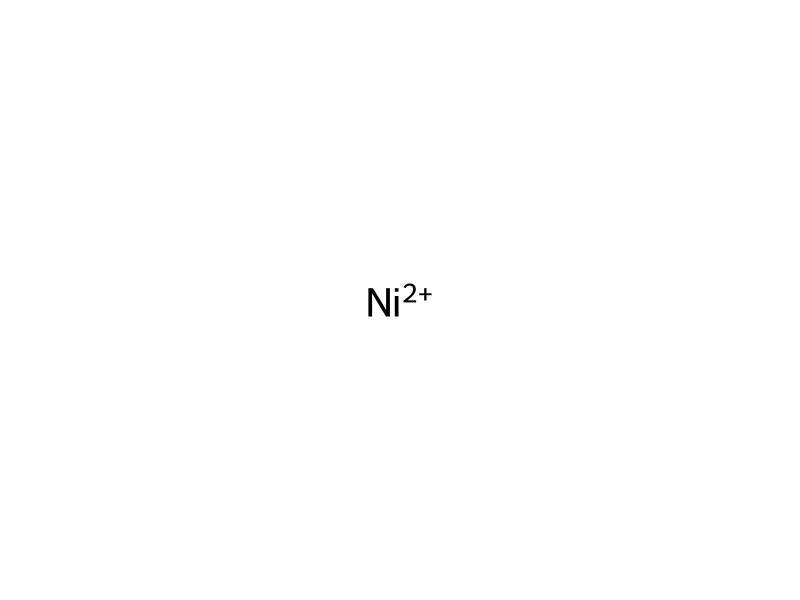
Nickel cation
Grundinformationen
- CAS
14701-22-5- Standard-SMILES
[Ni+2]- InChIKey
VEQPNABPJHWNSG-UHFFFAOYSA-N- Summenformel
- Ni+2
- Durchschnittliche Molmasse
- 58,693 g/mol
- Monoisotopische Masse
- 57,935342
Überblick
Nickel(2+) is a nickel cation in which the nickel carries a double positive charge. It has a role as a cofactor. It is a nickel cation, a monoatomic dication, a divalent metal cation and a metal cation allergen.
Namen und Bezeichner
- Bevorzugter Name
- Nickel cation
- IUPAC
- nickel(2+)
- Lokaler Name
- Nickel
- Englischer Name
- Nickel
- Summenformel
- Ni
- Molmasse
- 58.69
Namen und Synonyme
Nickel(2+)Nickel cationnickelous ionNICKEL (II) IONNickel, ion (Ni2+)nickel(2+) ionNickel ionsNickel(II) ionNickel(2+)ionsnickel(II) cationNi++Ni2+
Weitere Namen anzeigen
Niraney niRaney nickelNickel powderSILVER(I) NITRATENickel, p.a.Ranery NiNickel 270nickel atomNickel plate
Nickel ion(2+)14701-22-5Nickel cation (Ni2+)OIS2CXW7AMUNII-OIS2CXW7AMNiIICHEBI:49786Ni(2+)
Datenbank-Bezeichner
- CAS
14701-22-5、7440-02-0- PubChem CID
- 934
- DTXSID
DTXSID60163564- ChEBI
CHEBI:49786- UNII
- OIS2CXW7AM
- Nikkaji
- J2.510.549D
Eigenschaften
Berechnete Struktureigenschaften
- Polarare Oberfläche (TPSA)
- 0 Ų
- H-Brücken-Donoren
- 0
- H-Brücken-Akzeptoren
- 0
- Frei drehbare Bindungen
- 0
- Schwere Atome
- 1
- Formalladung
- 2
- Komplexität
- 0
Experimentelle und physikochemische Eigenschaften
Melting Point1455 °C
Physical DescriptionSolid
Physikochemische Eigenschaften
- Schmelzpunkt
- 1453 °C · 1453 °C (lit.)
- Siedepunkt
- 2732 °C · 2732 °C (lit.)
- Dichte
- 8.9 g/mL · 8.9 g/mL at 25 °C (lit.)
- Dampfdichte
- 5.8 · 5.8 (vs air)
- storage temp.
- no restrictions.
- Löslichkeit
- 2 O; · insoluble in H2O; slightly soluble in dilute acid solutions
- Aggregatzustand
- wire
- Farbe
- White to gray-white
- Wichte
- 8.9 · 8.9
- Geruch (Odor)
- Odorless
- PH
- 8.5 · 8.5-12.0
- Flame Color
- Colorless to silvery white
- Wasserlöslichkeit
- It is insoluble in water.
- Spezifische Wärmekapazität
- 0.44 J/ · Cp(crystal): 0.44 J/(g·K); Cp(gas): 0.4 J/(g·K), at 25℃
- Merck
- 14 · 14,8107
- Stabilität
- Stable in massive form. Powder is pyrophoric - can ignite spontaneously. May react violently with titanium, ammonium nitrate, potassium perchlorate, hydrazoic acid. Incompatible with acids, oxidizing agents, sulfur.
- InChI
- 1S/Ni
- InChIKey
- PXHVJJICTQNCMI-UHFFFAOYSA-N
- SMILES
- [Ni]
- Modulus of Elasticity
- 207 GPa · 207 GPa
- Poissons Ratio
- 0.31 · 0.31
- Shear Modulus
- 76 GPa · 76.0 GPa
- CAS Datenbank
- 7440 · 7440-02-0(CAS DataBase Reference)
- NIST chemische Informationen
- Nickel(7440-02-0)
- EPA chemische Informationen
- Nickel (7440-02-0)
Sicherheit und Regulatorisches
Sicherheitsangaben dienen nur zur Orientierung und ersetzen weder das Sicherheitsdatenblatt (SDB) des Lieferanten noch geltende Vorschriften oder eine fachliche Bewertung.
Sicherheit und Schutzausrüstung
Minimum Risk LevelIntermediate Inhalation: 0.0002 mg/m3 (L134)
Chronic Inhalation: 0.00009 mg/m3 (L134)
Toxikologische Informationen
TreatmentExcess exposure to nickel is usually handled by preventing further exposure and symptomatic treatment. Nickel poisoning may also be treated using chelation therapy with sodium diethyldithiocarbamate. (L42)
Health Effects
The most common harmful health effect of nickel in humans is an allergic reaction. This usually manifests as a skin rash, although some people experience asthma attacks. Long term inhahation of nickel causes chronic bronchitis and reduced lung function, as well as damage to the naval cavity. Ingestion of excess nickel results in damage to the stomach, blood, liver, kidneys, and immune system, as well as having adverse effects on reproduction and development. (L41)
Exposure RoutesOral (L41) ; inhalation (L41) ; dermal (L41)
Toxicity Summary
Nickel is known to substitute for other essential elements in certain enzmes, such as calcineurin. It is genotoxic, and some nickel compounds have been shown to promote cell proliferation. Nickel has a high affinity for chromatin proteins, particularly histones and protamines. The complexing of nickel ions with heterochromatin results in a number of alterations including condensation, DNA hypermethylation, gene silencing, and inhibition of histone acetylation, which have been shown to disturb gene expression. Nickel has also been shown to alter several transcription factors, including hypoxia-inducible transcription factor, activating transcription factor, and NF-KB transcription factor. There is also evidence that nickel ions inhibit DNA repair, either by directly inhibiting DNA repair enzymes or competing with zinc ions for binding to zinc-finger DNA binding proteins, resulting in structural changes in DNA that prevent repair enzymes from binding. Nickel ions can also complex with a number of cellular ligands including amino acids, peptides, and proteins resulting in the generation of oxygen radicals, which induce base damage, DNA strand breaks, and DNA protein crosslinks. (L41, A40)
Signs and SymptomsSymptoms of nickel poisoning include headache, nausea, vomiting, dizziness, irritability, and difficulty sleeping, followed by chest pains, sweating, rapid heart beat, and a dry cough. (L42)
Carcinogen ClassificationMetallic nickel is possibly carcinogenic to humons (Group 2B). Nickel compounds are carcinogenic to humans (Group 1). (L135)
Toxicity DataLD50: 250 mg/kg (Intraperitoneal, Rat) (T26)
Sicherheitsdaten
- F
- 8
- OEB
- D
- OEL
- TWA: 0.015 mg/m3 [*Note: The REL does not apply to Nickel carbonyl.]
- wgk
- 3
- IDLA
- 10 mg Ni/m3
- tsca
- TSCA listed
- ridadr
- UN 1493 5.1/PG 2
- hs_code
- 38151100
- RTECS-Nr.
- VW4725000
- risk_code
- 34-50/53-43-40-10-17-52/53-48/23
- Toxizität
- Occupational exposures may occur in its mining, smelting, and refining. The general population ingests nickel in food. Skin sensitization and dermatitis leading to chronic eczema, called “nickel itch,” frequently occurs, especially in wearers of pierced earrings. Nickel can also irritate the conjunctiva and respiratory tract mucous membranes. Absorption from the digestive tract is poor, so systemic poisoning is rare, but since it is an irritant it acts as an emetic. Systemic effects include hyperglycemia, capillary damage, CNS depression, myocardial weakness, and kidney damage. Nickel and its compounds are carcinogenic following inhalation, but not following ingestion or skin contact. Cancer of the lung and nasal passages results, with a latent period of about 25 years; smokers are at greater risk. In addition to irritation and carcinogenesis, nickel carbonyl (nickel tetracarbonyl, Ni(CO)4) exerts relatively mild, tran_x0002_sientinitial symptoms including headache, giddiness, nausea, and shortness of breath. These symptoms are followed by very serious symptoms hours to days later, consisting of tightness in the chest, shortness of breath, rapid respiration, pulmonary edema, cyanosis, and extreme weakness; this can be fatal. Heat decomposition of nickel carbonyl yields carbon monoxide. Chelating agents can be used to remove nickel from the body.
- hazard_code
- C,Xi,Xn,F,T
- safety_code
- 26-45-60-61-36-22-36/37-16-15-5-36/37/39-43-28
- hazard_class
- 4.1
- packing_group
- II
- Speicherklasse
- 6.1D - Non-combustible acute toxic Cat.3toxic hazardous materials or hazardous materials causing chronic effects
- Giftige Stoffe Daten
- 7440-02-0(Hazardous Substances Data)
- Hazard Classifications
- Carc. 2Skin Sens. 1STOT RE 1
- Selbstentzündungstemperatur
- 87 °C
Chemie und Industrie
Pharmakologische Informationen
Metabolism/Metabolites
Nickel is absorbed mainly through the lungs and gastrointestinal tract. Once in the body it enters the bloodstream, where it binds to albumin, L-histidine, and α2-macroglobulin. Nickel tends to accumulate in the lungs, thyroid, kidney, heart, and liver. Absorbed nickel is excreted in the urine, whereas unabsorbed nickel is excreted in the faeces. (L41)
Verwendung und Herstellung
UsesPure nickel is mainly used to make alloys, which are found in items such as coins, jewelry, valves and heat exchangers. Nickel compounds are used for nickel plating, to color ceramics, to make some batteries, and as catalysts. (L41)
Anwendungen
OccurrenceNickel is the 23rd most abundant element found in the Earth’s crust. It is somewhat plentiful but scattered and makes up one-hundredth of 1% of igneous rocks. Nickel metal is foundin meteorites (as are some other elements). It is believed that molten nickel, along with iron,makes up the central sphere that forms the core of the Earth.There are several types of nickel ores. One is the major ore for nickel called pentlandite(NiS 2FeS), which is iron/nickel sulfide. Another is a mineral called niccolite (NiAs), discovered in 1751 and first found in a mining area of Sweden. By far, the largest mining area fornickel is located in Ontario, Canada, where it is recovered from what is thought to be a verylarge meteorite that crashed into the Earth eons ago. This large nickel deposit is one reasonfor the theory of the Earth’s core being molten nickel and iron, given that both the Earth andmeteorites were formed during the early stages of the solar system. Some nickel ores are alsofound in Cuba, the Dominican Republic, and Scandinavia. Traces of nickel exist in soils, coal,plants, and animals.
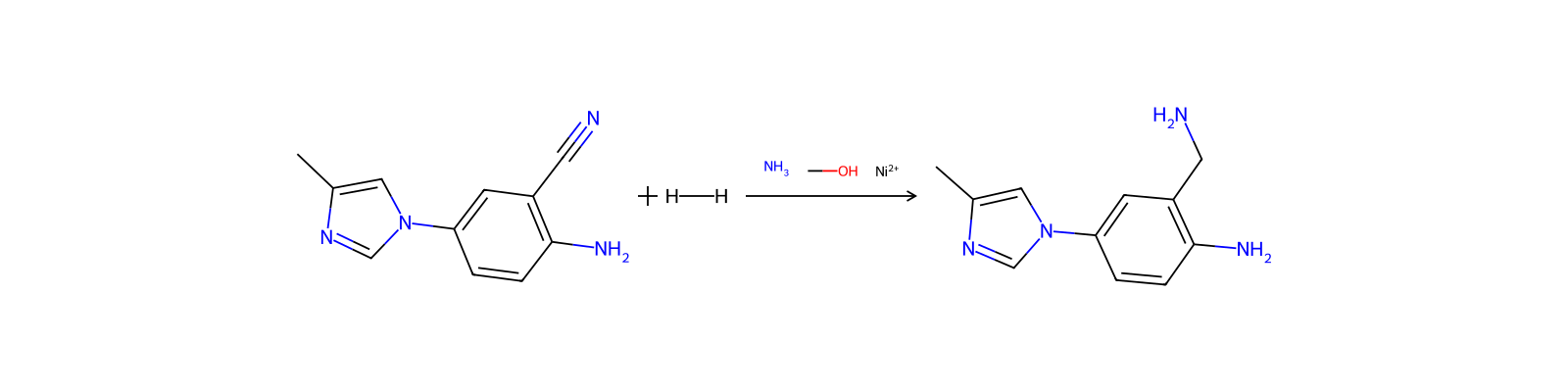
VerwendenNickel-plating; for various alloys such as new silver, Chinese silver, German silver; for coins, electrotypes, storage batteries; magnets, lightning-rod tips, electrical contacts and electrodes, spark plugs, machinery parts; catalyst for hydrogenation of oils and other organic substances. See also Raney nickel. manufacture of Monel metal, stainless steels, heat resistant steels, heat and corrosion resistant alloys, nickel-chrome resistance wire; in alloys for electronic and space applications.
Darstellung
synthetischeThe carbonyl process is most commonly employed when very pure nickel is required. The impure metal is reacted with pure carbon monoxide at 50° and the carbonyl produced fractionated several times prior to pyrolysis at around 200°. The nickel thus obtained has a purity of 99.90-99.99% depending upon the materials used. Electrolytic methods for producing high purity nickel depend upon the production of high purity nickel salts. The nickel obtained by the electrolysis of pure nickel chloride solution with inert platinum-iridium anodes is 99.99% pure.
Vor- und nachgelagerte Produkte
Vorgelagerte Rohstoffe
Nachgelagerte Produkte
Ergänzende Hinweise
DefinitionChEBI: Chemical element (nickel group element atom) with atomic number 28.
Zugehörige Reaktionen
29






Notizen zur Verbindung
Wird geladen…