
2-Amino-2-(hydroxymethyl)propan-1,3-diolhydrochlorid
Tromethamine hydrochloride
Daten werden ergänzt – lade die Seite später neu, um den aktuellen Stand zu sehen

Grundinformationen
- CAS
1185-53-1- Standard-SMILES
Cl.NC(CO)(CO)CO- InChIKey
QKNYBSVHEMOAJP-UHFFFAOYSA-N- Summenformel
- C4H11NO3.ClH
- Durchschnittliche Molmasse
- 157,59 g/mol
- Monoisotopische Masse
- 157,05057092
Namen und Bezeichner
- Bevorzugter Name
- Tromethamine hydrochloride
- IUPAC
- 2-amino-2-(hydroxymethyl)propane-1,3-diol;hydrochloride
- Lokaler Name
- 2-Amino-2-(hydroxymethyl)propan-1,3-diolhydrochlorid
- Englischer Name
- TRIS hydrochloride
- Summenformel
- C4H12ClNO3
- Molmasse
- 157.6
Namen und Synonyme
1185-53-1Tris hydrochlorideTris(hydroxymethyl)aminomethane hydrochlorideTromethamine hydrochloride2-Amino-2-(hydroxymethyl)propane-1,3-diol hydrochlorideTRIS HClTris-HClTrometamol hydrochlorideTrizma hydrochlorideTromethamine HCl1,3-Propanediol, 2-amino-2-(hydroxymethyl)-, hydrochlorideTris chloride
Weitere Namen anzeigen
Tris-HCITRIS-HCL BUFFERTris-HCTRIS-HC1Tris hydrochloric acid
DTXSID4044373Tris hydrochloride bufferUNII-383V75M34EEINECS 214-684-5383V75M34E2-Amino-2-hydroxymethyl-1,3-propanediol hydrochlorideDTXCID2024373TROMETAMOL HYDROCHLORIDE [WHO-DD]
Datenbank-Bezeichner
- CAS
1185-53-1- PubChem CID
- 93573
- DTXSID
DTXSID4044373- ChEMBL
CHEMBL3183206- UNII
- 383V75M34E
- EC Number
- 214-684-5
Eigenschaften
Berechnete StruktureigenschaftenWird ergänzt
- Polarare Oberfläche (TPSA)
- 86,7 Ų
- H-Brücken-Donoren
- 5
- H-Brücken-Akzeptoren
- 4
- Frei drehbare Bindungen
- 3
- Schwere Atome
- 9
- Formalladung
- 0
- Komplexität
- 54
Experimentelle und physikochemische Eigenschaften
Chemical ClassesNitrogen Compounds -> Amino Alcohols, Other
Physical Description
Dry Powder; Liquid; Other Solid; Dry Powder
Hygroscopic solid; [Sigma-Aldrich MSDS]
Physikochemische Eigenschaften
- Schmelzpunkt
- 150 · 150-152 °C
- Siedepunkt
- 225 ℃[at · 225℃[at 101 325 Pa]
- Dichte
- 1.05 g/mL · 1.05 g/mL at 20 °C
- Dampfdruck
- 0 Pa · 0Pa at 20℃
- storage temp.
- room temp
- Löslichkeit
- 2 O: · H2O: 4 M at 20 °C, clear, colorless
- Aggregatzustand
- crystalline
- Farbe
- clear colorless (40 % (w/w) in H2O) solution
- PH
- 2.5 · 2.5-4.0 (25℃, 4M in H2O)
- pka
- 8.1 · 8.1(at 25℃)
Sicherheit und Regulatorisches
Sicherheitsangaben dienen nur zur Orientierung und ersetzen weder das Sicherheitsdatenblatt (SDB) des Lieferanten noch geltende Vorschriften oder eine fachliche Bewertung.
GHS-Klassifizierung
GHS Classification
This chemical does not meet GHS hazard criteria for 57.2% (103 of 180) of all reports.
Warning
H315 (42.2%): Causes skin irritation [Warning Skin corrosion/irritation]
P261, P264, P264+P265, P271, P280, P302+P352, P304+P340, P305+P351+P338, P319, P321, P332+P317, P337+P317, P362+P364, P403+P233, P405, and P501 (click each P-code to see the statement)
Aggregated GHS information provided per 180 reports by companies from 16 notifications to the ECHA C&L Inventory. Each notification may be associated with multiple companies.
Gefahrenhinweise
Regulatory Information
Chemical: 1,3-Propanediol, 2-amino-2-(hydroxymethyl)-, hydrochloride
1,3-Propanediol, 2-amino-2-(hydroxymethyl)-, hydrochloride (1:1) is listed on the EPA's Chemical Data Reporting (CDR) system. Manufacturers and importers of 1,3-Propanediol, 2-amino-2-(hydroxymethyl)-, hydrochloride (1:1) are required to report information about their production and use of this chemical to the EPA under the Toxic Substances Control Act (TSCA). (40 eCFR Part 711)
Status: Active Update: 09-12-2022 https://echa.europa.eu/registration-dossier/-/registered-dossier/19306
2-amino-2-(hydroxymethyl)propane-1,3-diol: Does not have an individual approval but may be used under an appropriate group standard
Hazards SummaryA mild eye irritant in rabbits; Not a sensitizer in experimental animals; [Sigma-Aldrich MSDS] See Tromethamine.
Hazard Classes and CategoriesSkin Irrit. 2 (42.2%)
Sicherheit und Schutzausrüstung
Protective Action Criteria (PAC)
Chemie und Industrie
Verwendung und Herstellung
UsesUsed to make surface-active agents and pharmaceuticals, as an emulsifier (for cosmetic creams and lotions, mineral oil, and paraffin wax emulsions), as a biological buffer, and as an alkalizer; [ChemIDplus]
U.S. Production2023: 400,000 - <550,000 lb
Consumer UsesStabilizing agent
Industry UsesOther
General Manufacturing Information
All Other Chemical Product and Preparation Manufacturing
1,3-Propanediol, 2-amino-2-(hydroxymethyl)-, hydrochloride (1:1): ACTIVE
Anwendungen
BeschreibungAbbreviated as Tris HCl (TRIS hydrochloride), Tris (hydroxymethyl) aminomethane hydrochloride is an organic compound commonly utilized in buffer solutions such as TAE or TBE for electrophoresis gels. It boasts high solubility in water and offers utility within the pH range of 7.0-9.0.
VerwendenTris Hydrochloride is a buffering medium for electrophoresis, molecular biology, and cell culture applications. It may be combined with Tris Base to simplify Tris buffer preparation. Tris Hydrochloride has been incorporated in coelomic fluid and in Cortland medium to store unfertilized rainbow trout eggs. In immunohistochemistry, Tris Hydrochloride has also been used with urea as a method for antigen retrieval.
Darstellung
synthetischeThe preparation of TRIS hydrochloride is as follows:After reacting 2-amino-1,3-propanediol (2.50 g, 27.44 mmol) and formic acid (1.26 g, 27.44 mmol) in 50 ml of water at room temperature for 3 hours, water was distilled off under reduced pressure, A liquid was obtained. By washing the obtained liquid,An ammonium formate salt (3.76 g, 27.44 mmol) was obtained as a colorless transparent liquid.
Zugehörige Reaktionen
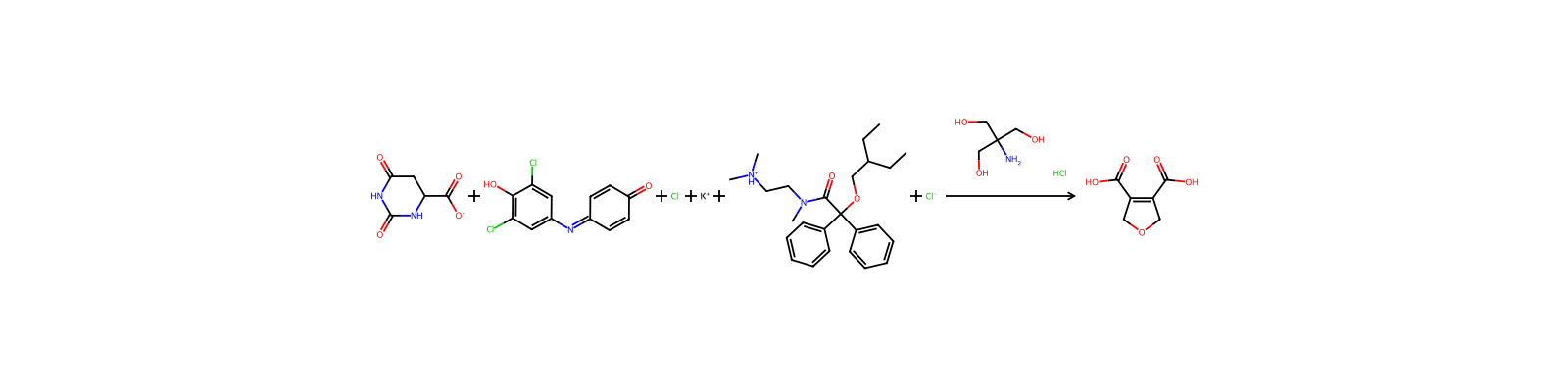
218






Notizen zur Verbindung
Wird geladen…