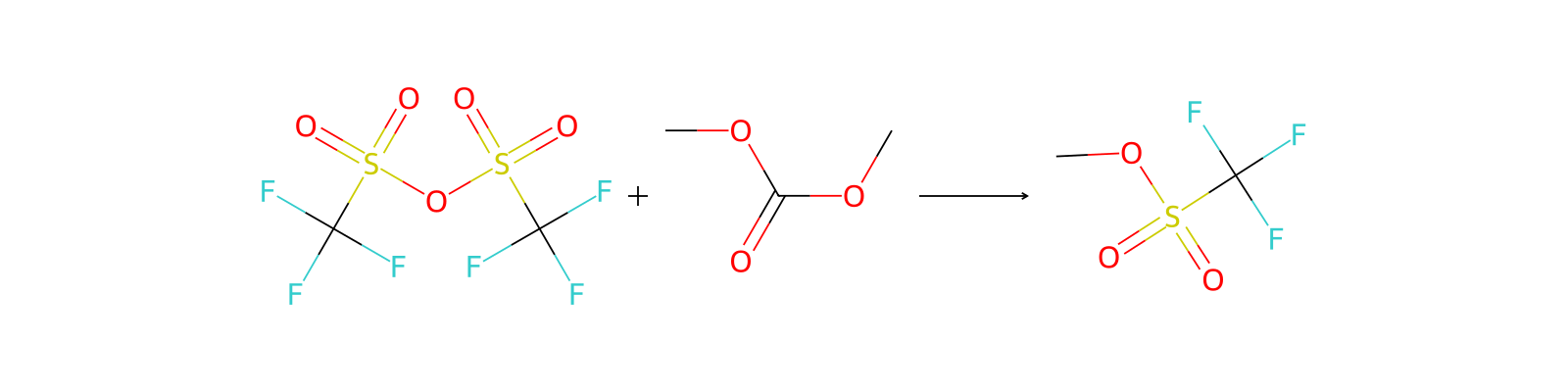
Methyltrifluormethansulfonat
Methyl triflate

Grundinformationen
- CAS
333-27-7- Standard-SMILES
COS(=O)(=O)C(F)(F)F- InChIKey
OIRDBPQYVWXNSJ-UHFFFAOYSA-N- Summenformel
- C2H3F3O3S
- Durchschnittliche Molmasse
- 164,11 g/mol
- Monoisotopische Masse
- 163,97549962
Überblick
Methyl trifluoromethane sulfonate is a brown liquid. Insoluble in water. (NTP, 1992) This material is a very reactive methylating agent, also known as methyl triflate.
Namen und Bezeichner
- Bevorzugter Name
- Methyl triflate
- IUPAC
- methyl trifluoromethanesulfonate
- Lokaler Name
- Methyltrifluormethansulfonat
- Englischer Name
- Methyl trifluoromethanesulfonate
- Summenformel
- C2H3F3O3S
- Molmasse
- 164.1
Namen und Synonyme
Methyl trifluoromethanesulfonate333-27-7Methyl triflateMethyl trifluoromethanesulphonateMethanesulfonic acid, trifluoro-, methyl esterDTXSID60492727B25Z22EPVNSC-270679DTXCID1029128Trifluoromethanesulfonic acid, methyl esterRefChem:158046206-371-7
Weitere Namen anzeigen
TfOMeMethyl trifluoromethanesulfateMethyl trifluoroMethanesulfonaMethyl trifluoromethanesulfotemethyltrifluoromethanesulfinateMETHYL TRIFLUROMETHANESULFONATE
Trifluoromethanesulfonic Acid Methyl EsterMethyl trifluoromethane sulfonateC2H3F3O3SMeOTfMFCD00000409methyl-13c trifluoromethanesulfonatetrifluoro-methanesulfonic acid methyl esterMethanesulfonic acid, 1,1,1-trifluoro-, methyl ester
Datenbank-Bezeichner
- CAS
333-27-7- PubChem CID
- 9526
- DTXSID
DTXSID6049272- ChEMBL
CHEMBL3185488- UNII
- 7B25Z22EPV
- EC Number
- 206-371-7
- Nikkaji
- J193.765K
Eigenschaften
Berechnete Struktureigenschaften
- XLogP
- 0,9
- Polarare Oberfläche (TPSA)
- 51,8 Ų
- H-Brücken-Donoren
- 0
- H-Brücken-Akzeptoren
- 6
- Frei drehbare Bindungen
- 1
- Schwere Atome
- 9
- Formalladung
- 0
- Komplexität
- 172
Experimentelle und physikochemische Eigenschaften
Chemical ClassesOther Classes -> Sulfur Compounds
SpringerMaterials PropertiesSchoenflies notation
Density
1.45 at 68 °F (NTP, 1992) - Denser than water; will sink
1.45 @25 °C
SolubilityInsoluble (NTP, 1992)
Flash Point101 °F (NTP, 1992)
Boiling Point201 to 210 °F at 760 mmHg (NTP, 1992)
Physical Description
Methyl trifluoromethane sulfonate is a brown liquid. Insoluble in water. (NTP, 1992) This material is a very reactive methylating agent, also known as methyl triflate.
Brown liquid; [CAMEO] Clear light yellow liquid; [Sigma-Aldrich MSDS]
Physikochemische Eigenschaften
- Siedepunkt
- 94 · 94-99 °C(lit.)
- Dichte
- 1.45 g/mL · 1.45 g/mL at 25 °C(lit.)
- Brechungsindex
- 20 · n20/D 1.326(lit.)
- Flammpunkt
- 101 °F · 101 °F
- storage temp.
- 2 · 2-8°C
- Löslichkeit
- Chloroform (Sparingly), Ethyl Acetate (Slightly)
- Aggregatzustand
- Liquid
- Wichte
- 1.45 · 1.450
- Farbe
- Clear colorless to yellow
- BRN
- 774772 · 774772
- Stabilität
- Hygroscopic, Moisture Sensitive, Volatile
- InChI
- InChI=1S/C2H3F3O3S/c1-8-9(6,7)2(3,4)5/h1H3
- InChIKey
- OIRDBPQYVWXNSJ-UHFFFAOYSA-N
- SMILES
- C(F)(F)(F)S(OC)(=O)=O
- CAS Datenbank
- 333 · 333-27-7(CAS DataBase Reference)
- EPA chemische Informationen
- Methyl trifluoromethanesulfonate (333-27-7)
Sicherheit und Regulatorisches
Sicherheitsangaben dienen nur zur Orientierung und ersetzen weder das Sicherheitsdatenblatt (SDB) des Lieferanten noch geltende Vorschriften oder eine fachliche Bewertung.
GHS-Klassifizierung
GHS Classification
Danger
H226 (100%): Flammable liquid and vapor [Warning Flammable liquids]
P210, P233, P240, P241, P242, P243, P260, P264, P280, P301+P330+P331, P302+P361+P354, P303+P361+P353, P304+P340, P305+P354+P338, P316, P321, P363, P370+P378, P403+P235, P405, and P501 (click each P-code to see the statement)
Aggregated GHS information provided per 62 reports by companies from 9 notifications to the ECHA C&L Inventory. Each notification may be associated with multiple companies.
Gefahrenhinweise
Regulatory Information
Chemical: Methanesulfonic acid, trifluoro-, methyl ester
Methyl trifluoromethanesulphonate: Does not have an individual approval but may be used under an appropriate group standard
DOT LabelFlammable Liquid Corrosive
Fire HazardsThis chemical is combustible. (NTP, 1992)
Health HazardsACUTE/CHRONIC HAZARDS: When heated to decomposition this compound emits toxic fumes. (NTP, 1992)
Hazards SummaryCauses burns; Inhalation may cause corrosive injuries to upper respiratory tract and lungs; [Sigma-Aldrich MSDS] See Trifluoromethanesulfonic acid. See Ethyl methanesulfonate.
Reactive GroupSulfonates, Phosphonates, and Thiophosphonates, Organic
Reactivity AlertsHighly Flammable
Reactivity Profile
METHYL TRIFLUOROMETHANE SULFONATE is sensitive to heat. (NTP, 1992). Esters react with acids to liberate heat along with alcohols and acids. Strong oxidizing acids may cause a vigorous reaction that is sufficiently exothermic to ignite the reaction products. Heat is also generated by the interaction of esters with caustic solutions. Flammable hydrogen is generated by mixing esters with alkali metals and hydrides.
Air and Water ReactionsHighly flammable. Insoluble in water.
Hazard Classes and CategoriesFlam. Liq. 3 (100%)
Sicherheit und Schutzausrüstung
Fire FightingFires involving this material should be controlled using a dry chemical, carbon dioxide or Halon extinguisher. (NTP, 1992)
First Aid
EYES: First check the victim for contact lenses and remove if present. Flush victim's eyes with water or normal saline solution for 20 to 30 minutes while simultaneously calling a hospital or poison control center. Do not put any ointments, oils, or medication in the victim's eyes without specific instructions from a physician. IMMEDIATELY transport the victim after flushing eyes to a hospital even if no symptoms (such as redness or irritation) develop.
Nonfire Spill Response
SMALL SPILLS AND LEAKAGE: If you spill this chemical, FIRST REMOVE ALL SOURCES OF IGNITION. Then, use absorbent paper to pick up all liquid spill material. Your contaminated clothing and absorbent paper should be sealed in a vapor-tight plastic bag for eventual disposal. Solvent wash all contaminated surfaces with ethanol followed by washing with a soap and water solution. Do not reenter the contaminated area until the Safety Officer (or other responsible person) has verified that the area has been properly cleaned.
Isolation and EvacuationExcerpt from ERG Guide 132 [Flammable Liquids - Corrosive]:
Protective Action Criteria (PAC)
22 [mg/m3]
240 [mg/m3]
1400 [mg/m3]
Personal Protective Equipment (PPE)
RECOMMENDED RESPIRATOR: When working with this chemical, wear a NIOSH-approved full face chemical cartridge respirator equipped with the appropriate organic vapor cartridges. If that is not available, a half face respirator similarly equipped plus airtight goggles can be substituted. However, please note that half face respirators provide a substantially lower level of protection than do full face respirators. (NTP, 1992)
Toxikologische Informationen
Adverse EffectsDermatotoxin - Skin burns.
Sicherheitsdaten
- F
- 10
- wgk
- 3
- tsca
- TSCA listed
- ridadr
- UN 2920 8/PG 2
- hs_code
- 29049020
- risk_code
- 10-34-20/21/22
- hazard_code
- C,T
- hazard_note
- Highly Toxic/Corrosive
- safety_code
- 26-36/37/39-45-16
- hazard_class
- 3.2
- packing_group
- III
- Speicherklasse
- 3 - Flammable liquids
- Hazard Classifications
- Acute Tox. 1 InhalationAcute Tox. 3 DermalAcute Tox. 3 OralEye Dam. 1Flam. Liq. 3Skin Corr. 1B
Chemie und Industrie
Verwendung und Herstellung
UsesUsed as a reagent for the methylation of sugars; [NTP]
General Manufacturing InformationMethanesulfonic acid, 1,1,1-trifluoro-, methyl ester: ACTIVE
Anwendungen
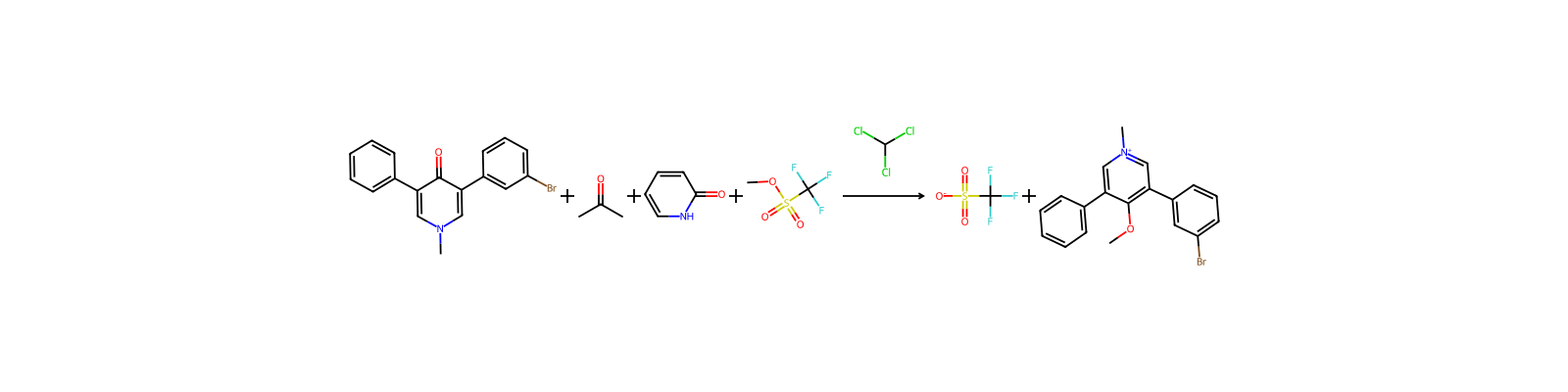
VerwendenMethyl trifluoromethanesulfonate is used as a powerful methylating reagent in chemistry. Further, it is used in the conversion of amines to methyl ammonium triflates. In addition, it is also used in Suzuki reaction.
Vor- und nachgelagerte Produkte
Vorgelagerte Rohstoffe
Nachgelagerte Produkte
Zugehörige Reaktionen
245



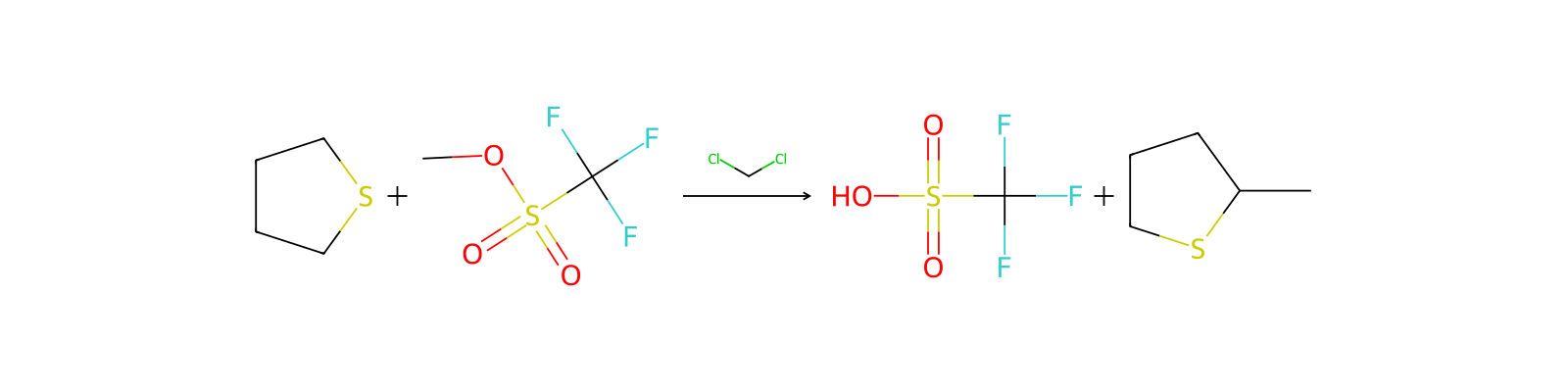
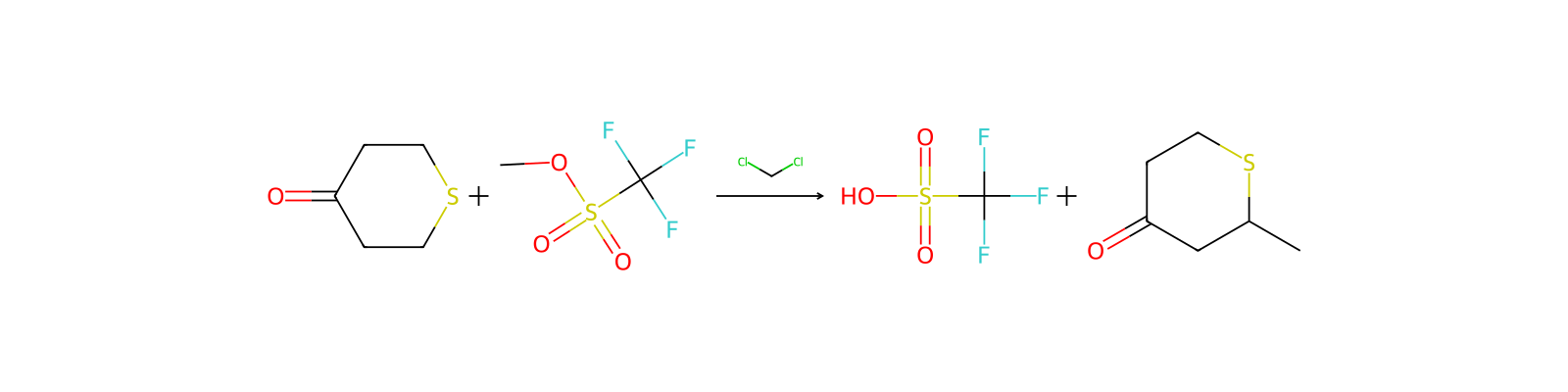
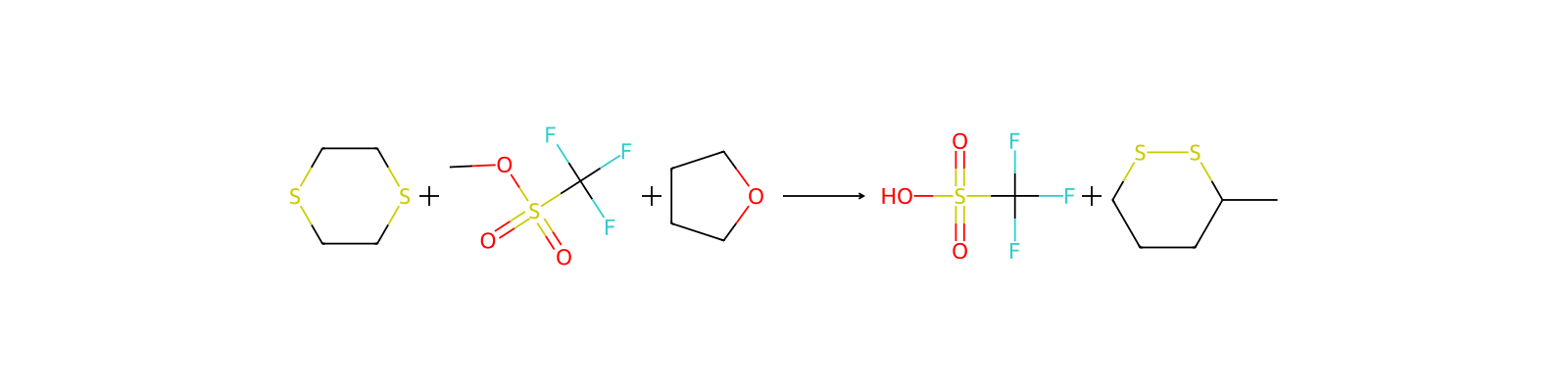
Notizen zur Verbindung
Wird geladen…