
2,4-Difluoranilin
2,4-Difluoroaniline
Daten werden ergänzt – lade die Seite später neu, um den aktuellen Stand zu sehen

Grundinformationen
- CAS
367-25-9- Standard-SMILES
Nc1ccc(F)cc1F- InChIKey
CEPCPXLLFXPZGW-UHFFFAOYSA-N- Summenformel
- C6H5F2N
- Durchschnittliche Molmasse
- 129,11 g/mol
- Monoisotopische Masse
- 129,0390056
Überblick
2,4-difluoroaniline is a dark reddish-purple liquid. (NTP, 1992)
Namen und Bezeichner
- Bevorzugter Name
- 2,4-Difluoroaniline
- IUPAC
- 2,4-difluoroaniline
- Lokaler Name
- 2,4-Difluoranilin
- Englischer Name
- 2,4-Difluoroaniline
- Summenformel
- C6H5F2N
- Molmasse
- 129.11
Namen und Synonyme
2,4-DIFLUOROANILINE367-25-92,4-DifluorobenzenamineBenzenamine, 2,4-difluoro-Aniline, 2,4-difluoro-DTXSID602506440P93L7KWDNSC-10297DTXCID905064RefChem:82418206-687-52,4-Difluroaniline
Weitere Namen anzeigen
Difluoroaniline4-Difluoroaniline2,4-difluoro-anilinAKOS 911272,4-Difluoranilin2,4-DIFLOUROANILINE
2,4-DifluorophenylamineMFCD000076482.4-difluoroaniline2,?4-?difluoro-BenzenamineFlurbiprofen Impurity 53CCRIS 46212,4-Difluoro AnilineEINECS 206-687-5
Datenbank-Bezeichner
- CAS
367-25-9- PubChem CID
- 9709
- DTXSID
DTXSID6025064- ChEMBL
CHEMBL1423658- UNII
- 40P93L7KWD
- EC Number
- 206-687-5
- Nikkaji
- J193.875D
Eigenschaften
Berechnete StruktureigenschaftenWird ergänzt
- XLogP
- 1,5
- Polarare Oberfläche (TPSA)
- 26 Ų
- H-Brücken-Donoren
- 1
- H-Brücken-Akzeptoren
- 3
- Frei drehbare Bindungen
- 0
- Schwere Atome
- 9
- Formalladung
- 0
- Komplexität
- 97,1
Experimentelle und physikochemische Eigenschaften
Density1.268 (NTP, 1992) - Denser than water; will sink
Solubility10 to 50 mg/mL at 68.9 °F (NTP, 1992)
Flash Point145 °F (NTP, 1992)
Boiling Point338 °F at 753 mmHg (NTP, 1992)
Melting Point18.5 °F (NTP, 1992)
Physical Description2,4-difluoroaniline is a dark reddish-purple liquid. (NTP, 1992)
Physikochemische Eigenschaften
- Schmelzpunkt
- -7.5 °C · -7.5 °C (lit.)
- Siedepunkt
- 170 °C/753 · 170 °C/753 mmHg (lit.)
- Dichte
- 1.268 g/mL · 1.268 g/mL at 25 °C (lit.)
- Brechungsindex
- 20 · n20/D 1.506(lit.)
- Flammpunkt
- 145 °F · 145 °F
Sicherheit und Regulatorisches
Sicherheitsangaben dienen nur zur Orientierung und ersetzen weder das Sicherheitsdatenblatt (SDB) des Lieferanten noch geltende Vorschriften oder eine fachliche Bewertung.
GHS-Klassifizierung
GHS Classification
Danger
H302 (99.4%): Harmful if swallowed [Warning Acute toxicity, oral]
P261, P262, P264, P264+P265, P270, P271, P273, P280, P301+P317, P302+P352, P304+P340, P305+P351+P338, P316, P319, P321, P330, P332+P317, P337+P317, P361+P364, P362+P364, P391, P403+P233, P405, and P501 (click each P-code to see the statement)
Aggregated GHS information provided per 157 reports by companies from 10 notifications to the ECHA C&L Inventory. Each notification may be associated with multiple companies.
Gefahrenhinweise
Regulatory Information
Chemical: Benzenamine, 2,4-difluoro-
Status: Active Update: 19-02-2019 https://echa.europa.eu/registration-dossier/-/registered-dossier/24338
Benzenamine, 2,4-difluoro-: Does not have an individual approval but may be used under an appropriate group standard
DOT LabelPoison
Fire HazardsThis compound is combustible. (NTP, 1992)
Health HazardsACUTE/CHRONIC HAZARDS: This compound may be irritating to tissues. (NTP, 1992)
Reactive GroupAryl Halides
Reactivity Profile
Anilines are chemical bases. They neutralize acids to form salts plus water. These acid-base reactions are exothermic. The amount of heat that is evolved per mole of amine in a neutralization is largely independent of the strength of the amine as a base. Amines may be incompatible with isocyanates, halogenated organics, peroxides, phenols (acidic), epoxides, anhydrides, and acid halides. Flammable gaseous hydrogen is generated by amines in combination with strong reducing agents, such as hydrides.
Chemie und Industrie
Verwendung und Herstellung
General Manufacturing InformationBenzenamine, 2,4-difluoro-: ACTIVE
Anwendungen
Verwenden2,4-Difluoroaniline is an important raw material and intermediate used in organic synthesis, pharmaceuticals agrochemicals and dyestuff fields.
Vor- und nachgelagerte Produkte
Vorgelagerte Rohstoffe
Nachgelagerte Produkte
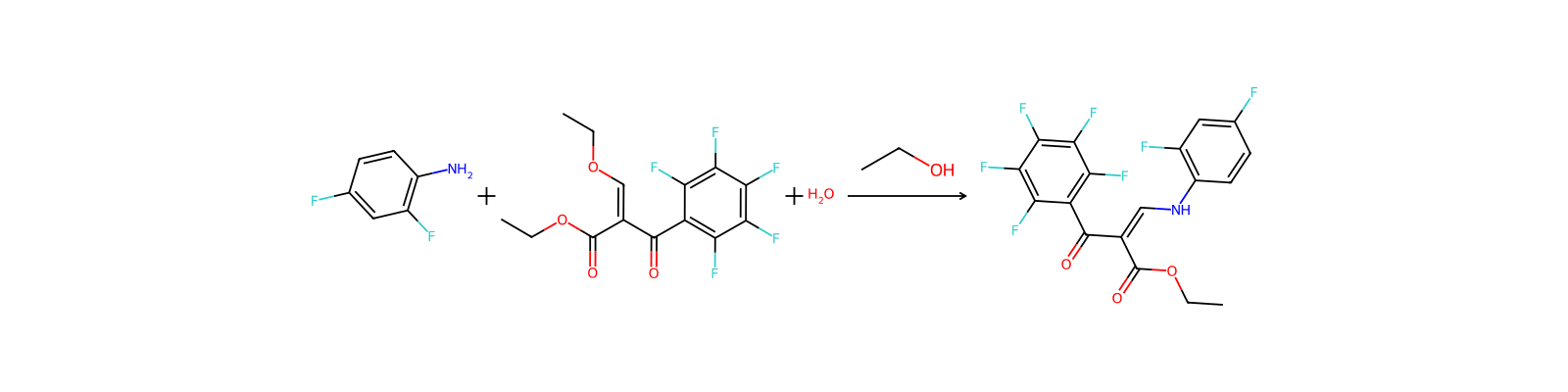
Zugehörige Reaktionen
373


Notizen zur Verbindung
Wird geladen…