HRID 18701als Produkt
Daten werden ergänzt – lade die Seite später neu, um den aktuellen Stand zu sehen

137052-08-5CC(=O)C1CCOCC1VNMXIOWPBADSIC-UHFFFAOYSA-N137052-08-5DTXSID40432149Sicherheitsangaben dienen nur zur Orientierung und ersetzen weder das Sicherheitsdatenblatt (SDB) des Lieferanten noch geltende Vorschriften oder eine fachliche Bewertung.
Warning
H302 (50%): Harmful if swallowed [Warning Acute toxicity, oral]
P261, P264, P264+P265, P270, P271, P280, P301+P317, P302+P352, P304+P340, P305+P351+P338, P317, P319, P321, P330, P332+P317, P337+P317, P362+P364, P403+P233, P405, and P501 (click each P-code to see the statement)
Aggregated GHS information provided per 4 reports by companies from 4 notifications to the ECHA C&L Inventory. Each notification may be associated with multiple companies.
Danger
H302 (100%): Harmful if swallowed [Warning Acute toxicity, oral]
Acute Tox. 4 (50%)
Acute Tox. 4 (100%)
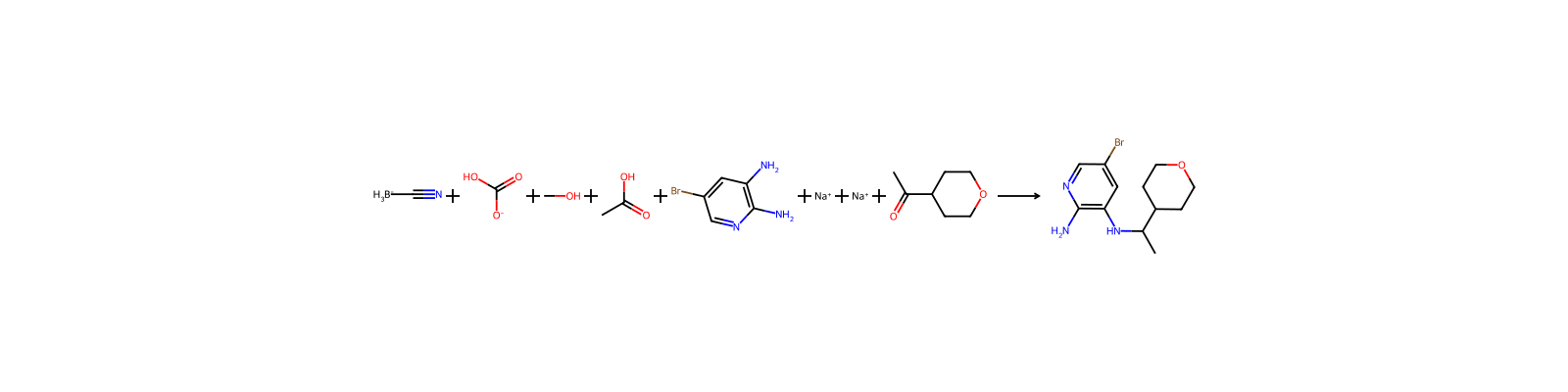
Verwenden1-(Tetrahydro-2H-pyran-4-yl)ethanone is mainly used as an intermediate in organic synthesis and medicinal chemistry, and can be used in the synthesis of cell biology detection reagents. In organic synthetic transformations, the keto carbonyl group in 1-(Tetrahydro-2H-pyran-4-yl)ethanone can be reacted with Wittig's reagent to prepare a variety of polysubstituted olefinic compounds, and in addition, the keto carbonyl group can be reduced to a hydroxyl group by the corresponding reducing agent.