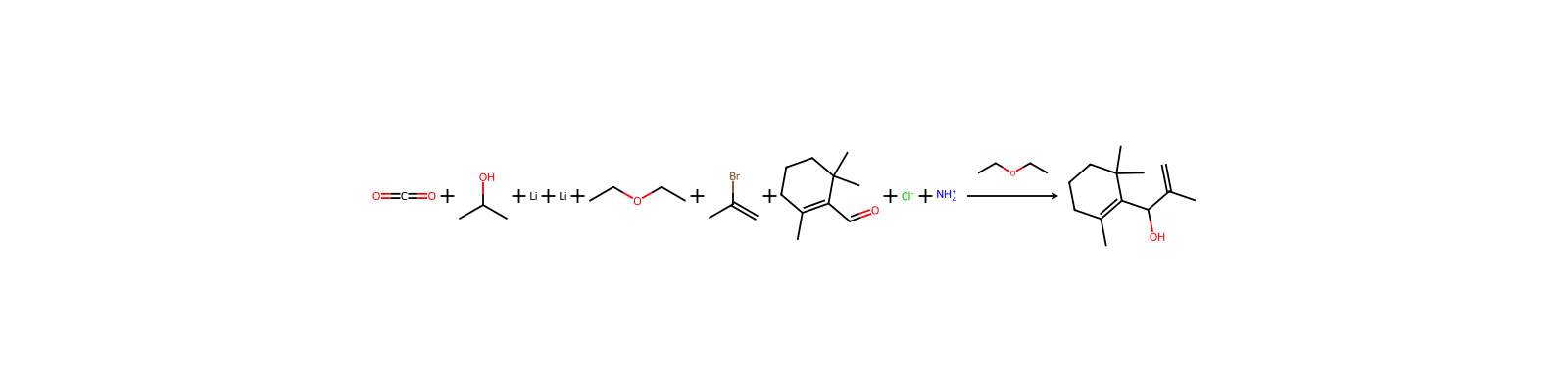
2,6,6-Trimethylcyclohexen-1-carbaldehyd
beta-Cyclocitral
Daten werden ergänzt – lade die Seite später neu, um den aktuellen Stand zu sehen

Grundinformationen
- CAS
432-25-7- Standard-SMILES
CC1=C(C=O)C(C)(C)CCC1- InChIKey
MOQGCGNUWBPGTQ-UHFFFAOYSA-N- Summenformel
- C10H16O
- Durchschnittliche Molmasse
- 152,23 g/mol
- Monoisotopische Masse
- 152,12011513
Überblick
Beta-cyclocitral is a monoterpenoid formally derived from citral by cyclisation. It is a volatile compound produced by a cyanobacteria. It has a role as a bacterial metabolite.
Namen und Bezeichner
- Bevorzugter Name
- beta-Cyclocitral
- IUPAC
- 2,6,6-trimethylcyclohexene-1-carbaldehyde
- Lokaler Name
- 2,6,6-Trimethylcyclohexen-1-carbaldehyd
- Englischer Name
- beta-Cyclocitral
- Summenformel
- C10H16O
- Molmasse
- 152.23
Namen und Synonyme
beta-Cyclocitral432-25-72,6,6-trimethylcyclohex-1-ene-1-carbaldehyde1-Cyclohexene-1-carboxaldehyde, 2,6,6-trimethyl-2,6,6-TRIMETHYL-1-CYCLOHEXENE-1-CARBOXALDEHYDEDTXSID704714277Y0U2X29GDTXCID5027142CHEBI:53177RefChem:567277FEMA NO. 3639, BETA-207-081-3
Weitere Namen anzeigen
β-cyclocitralβ-cyclocitralGradeFEMA 36392,2-Dimethyl-6-methylenecyclohexane-1-carbaldehyde
b-cyclocitral2,6,6-Trimethylcyclohexene-1-carbaldehyde.beta.-Cyclocitral1-Formyl-2,6,6-trimethyl-1-cyclohexeness-Cyclocitralbeta-cyclocitrol2,6,6-trimethylcyclohex-1-enecarbaldehydeMFCD00079078
Datenbank-Bezeichner
- CAS
432-25-7、52844-21-0- PubChem CID
- 9895
- DTXSID
DTXSID7047142
Eigenschaften
Berechnete StruktureigenschaftenWird ergänzt
- XLogP
- 2,4
- Polarare Oberfläche (TPSA)
- 17,1 Ų
- H-Brücken-Donoren
- 0
- H-Brücken-Akzeptoren
- 1
- Frei drehbare Bindungen
- 1
- Schwere Atome
- 11
- Formalladung
- 0
- Komplexität
- 199
Experimentelle und physikochemische Eigenschaften
FragrancesFragrance Ingredient (2,6,6-Trimethyl-1&2-cyclohexen-1-carboxaldehyde) -> IFRA transparency List
Flavoring AgentsEU Flavoring substances
Boiling Point62.00 to 63.00 °C. @ 3.00 mm Hg
Physikochemische Eigenschaften
- Schmelzpunkt
- 62 · 62-63 C
- Siedepunkt
- 62 · 62-63 °C3 mm Hg(lit.)
- Dichte
- 0.943 g/mL · 0.943 g/mL at 25 °C(lit.)
- Brechungsindex
- 20 · n20/D 1.497(lit.)
- FEMA
- 3639 · 3639 | 2,6,6-TRIMETHYL-1&2-CYCLOHEXEN-1-CARBOXALDEHYDE
- Flammpunkt
- 230 °F · >230 °F
- storage temp.
- -20 °C · Inert atmosphere,Store in freezer, under -20°C
- Löslichkeit
- Chloroform (Slightly), Dichloromethane, Ethyl Acetate (Slightly), Methanol (Slightly)
Sicherheit und Regulatorisches
Sicherheitsangaben dienen nur zur Orientierung und ersetzen weder das Sicherheitsdatenblatt (SDB) des Lieferanten noch geltende Vorschriften oder eine fachliche Bewertung.
GHS-Klassifizierung
GHS Classification
This chemical does not meet GHS hazard criteria for 53.3% (64 of 120) of all reports.
Warning
H302 (40.8%): Harmful if swallowed [Warning Acute toxicity, oral]
P261, P264, P264+P265, P270, P271, P280, P301+P317, P302+P352, P304+P340, P305+P351+P338, P317, P319, P321, P330, P332+P317, P337+P317, P362+P364, P403+P233, P405, and P501 (click each P-code to see the statement)
Aggregated GHS information provided per 120 reports by companies from 9 notifications to the ECHA C&L Inventory. Each notification may be associated with multiple companies.
Gefahrenhinweise
Regulatory Information
Chemical: 1-Cyclohexene-1-carboxaldehyde, 2,6,6-trimethyl-
Commission Regulation (EC) No 1565/2000 (Repealed by Com. Implementing Reg. (EU) No 872/2012)
1-Cyclohexene-1-carboxaldehyde, 2,6,6-trimethyl-: Does not have an individual approval but may be used under an appropriate group standard
Other Safety InformationIMAP assessments - 1-Cyclohexene-1-carboxaldehyde, 2,6,6-trimethyl-: Environment tier I assessment
Hazard Classes and CategoriesAcute Tox. 4 (40.8%)
Sicherheitsdaten
- wgk
- 3
- tsca
- TSCA listed
- ridadr
- 1760
- hs_code
- 29122990
- risk_code
- 20/21/22-36/37/38
- hazard_code
- Xn,Xi
- safety_code
Chemie und Industrie
Pharmakologische Informationen
Cellular LocationsMembrane
Verwendung und Herstellung
Use ClassificationFragrance Ingredients
General Manufacturing Information1-Cyclohexene-1-carboxaldehyde, 2,6,6-trimethyl-: ACTIVE
Anwendungen
OccurrenceReported found in tea, apricot, melon, tomato, tomato paste, ginger, rum, Japanese plum, plumcot, mango, apple brandy, calamus, buckwheat, Bourbon vanilla, cape gooseberry and maté.
Verwendenbeta-Cyclocitral is used as flavoring agent, nutrient, stabilizers, surfactants and emulsifiers.
Vor- und nachgelagerte Produkte
Vorgelagerte Rohstoffe
Zugehörige Reaktionen
22


Notizen zur Verbindung
Wird geladen…