(4-Aminobenzyl)phosphonic Acid → 1,8-Diazabicyclo(5.4.0)undec-7-ene
HRID 1003783
Reaktionsgleichung

[NH2:1][C:2]1[CH:12]=[CH:11][C:5]([CH2:6][P:7](=[O:10])([OH:9])[OH:8])=[CH:4][CH:3]=1>O1CCCC1>[NH2:1][C:2]1[CH:12]=[CH:11][C:5]([CH2:6][P:7](=[O:8])([OH:10])[OH:9])=[CH:4][CH:3]=1.[N:1]12[CH2:2][CH2:3][CH2:4][N:1]=[C:2]1[CH2:12][CH2:11][CH2:5][CH2:4][CH2:3]2Komponenten
4
Edukt 1

Produkt 2
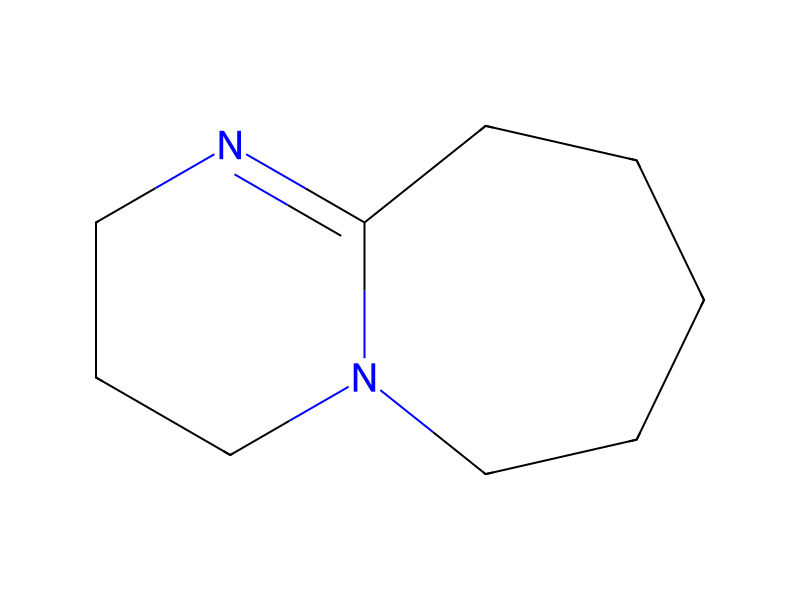
Reagenzien, Katalysatoren, Lösungsmittel 1

Versuchsvorschrift
A round-bottom reaction flask (25 ml) equipped with a magnetic stirrer was fitted with a septum and a cool-trap condenser. It was charged with C60 (NO2) (100 mg) and tetrahydrofuran (15 ml). The solution was added 4-aminobenzylphosphonic acid (150 mg) in tetrahydrofuran (5 ml) and treated under sonication conditions for 30 min at ambient temperatures. At the end of reaction, suspended solids in the solution were separated by a centrifuge technique and repeatedly washed with tetrahydrofuran and acetone. The resulting brown solids were dried in vacuum at 40° C. to afford the corresponding 4-aminobenzylphosphonic acid derivatives of C60, C60 [--NHC6H4CH2P(=O) (OH)3 ]n, (95 mg) and 1,8-diazabicyclo[5.4.0]undec-7-ene (DBU, 400 mg).