StartseiteMCPWorkbenchSkills
StartseiteWorkbenchBenachrichtigungenMein Bereich
llms.txt · MCP-AnleitungDatenschutz · Nutzungsbedingungen · Supportv1.8.3
  1. Startseite
  2. /Reaktion

2-(Dimethylamino)ethanol → Pyridin-3-YL-D-valine

HRID 1016196
Drucken

Reaktionsgleichung

Reaktionsgleichung von HRID 1016196
I[C:2]1[CH:3]=[N:4][CH:5]=[CH:6][CH:7]=1.[NH2:8][C@@H:9]([C:13]([OH:15])=[O:14])[CH:10]([CH3:12])[CH3:11].CN(CCO)C.[O-]P([O-])([O-])=O.[K+].[K+].[K+].CO.O.C(O)(C(F)(F)F)=O>[Cu]I.O>[CH3:11][CH:10]([CH3:12])[C@@H:9]([NH:8][C:2]1[CH:3]=[N:4][CH:5]=[CH:6][CH:7]=1)[C:13]([OH:15])=[O:14]
KomponentenVersuchsvorschriftAufarbeitungQuellen und NachweiseNotizen zur Reaktion

Komponenten

8

Edukt 5

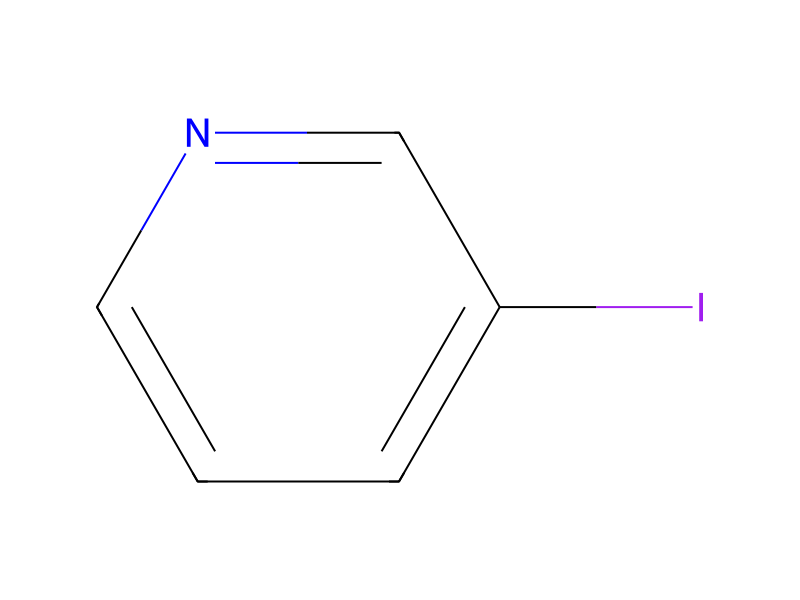
HCID 79022-(Dimethylamino)ethanolHCID 62657Potassium Phosphate, TribasicHCID 707143-IodopyridineHCID 71563D-ValineHCID 21999908MeOH water TFA

Produkt 1

HCID 57889332Pyridin-3-YL-D-valine

Reagenzien, Katalysatoren, Lösungsmittel 2

HCID 24350Copper(1+) iodide; Copper(I) iodide; Cuprous iodide; Cuprous iodide (CuI)KatalysatorHCID 962WaterLösungsmittel

Versuchsvorschrift

3-Iodopyridine (525 mg, 2.58 mmol), D-valine (250 mg, 2.13 mmol), copper(I) iodide (40.6 mg, 0.213 mmol), dimethylaminoethanol (400 mg, 4.49 mmol), potassium phosphate tribasic (1359 mg, 6.40 mmol), and water (2 mL) was stirred at 80° C. overnight. The reaction was washed with EtOAc, then the aqueous portion was concentrated. The residue was slurried with MeOH and the MeOH portion was concentrated. The product was isolated using preparative reverse phase HPLC (MeOH/water/TFA) and used in next step without further purification.

Aufarbeitung

  1. washThe reaction was washed with EtOAc
  2. concentrationthe aqueous portion was concentrated
  3. concentrationthe MeOH portion was concentrated
  4. customThe product was isolated
  5. customused in next step without further purification

Quellen und Nachweise

ORD-Eintrag
ord-23d9d80d2ed8492584bc3739cb0f7aad
Quelldatensatz
uspto-grants-2011_07
DOI
10.6084/m9.figshare.5104873.v1
Patentnummer
US07985861B2

Notizen zur Reaktion

Auf dieser SeiteKomponentenVersuchsvorschriftAufarbeitungQuellen und NachweiseNotizen zur Reaktion