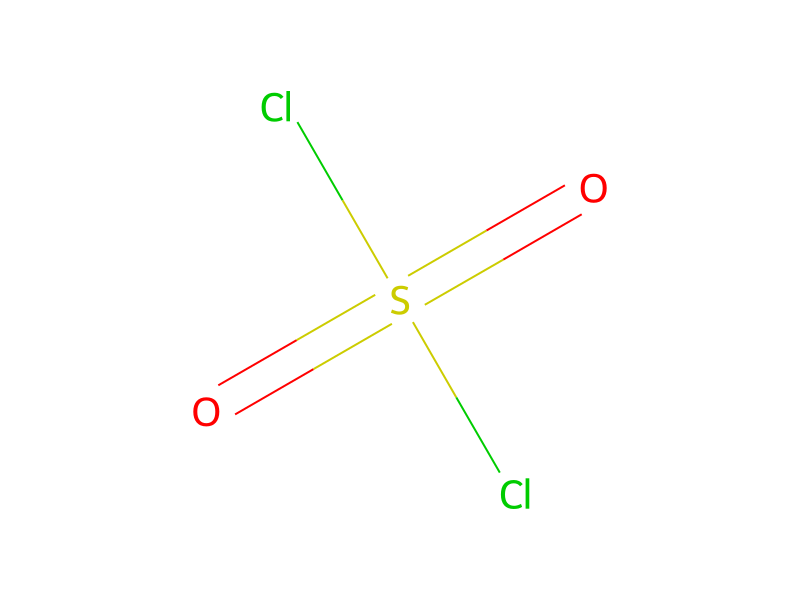
Sulfuryl chloride → 4-Propoxy-3-(5-methyl-4-oxo-7-cyclopentyl-3,4-dihydro-imidazo[5,1-f][1,2,4]-triazin-2-yl)-benzenesulphonyl chloride
HRID 1016352
Reaktionsgleichung

[CH2:1]([O:4][C:5]1[CH:10]=[CH:9][CH:8]=[CH:7][C:6]=1[C:11]1[NH:16][C:15](=[O:17])[C:14]2=[C:18]([CH3:26])[N:19]=[C:20]([CH:21]3[CH2:25][CH2:24][CH2:23][CH2:22]3)[N:13]2[N:12]=1)[CH2:2][CH3:3].[S:27](Cl)([Cl:30])(=[O:29])=[O:28]>>[CH2:1]([O:4][C:5]1[CH:10]=[CH:9][C:8]([S:27]([Cl:30])(=[O:29])=[O:28])=[CH:7][C:6]=1[C:11]1[NH:16][C:15](=[O:17])[C:14]2=[C:18]([CH3:26])[N:19]=[C:20]([CH:21]3[CH2:25][CH2:24][CH2:23][CH2:22]3)[N:13]2[N:12]=1)[CH2:2][CH3:3]Komponenten
3


Versuchsvorschrift
The preparation is carried out analogously to the procedure of Example 27A using 0.7 g (2 mmol) of 2-(2-propoxyphenyl)-5-methyl-7-cyclopentyl-3H-imidazo[5,1-f][12,4]triazin-4-one (Example 17A). This gives 0.8 g (89.3%) of sulphonyl chloride as a white foam which is directly reacted further.