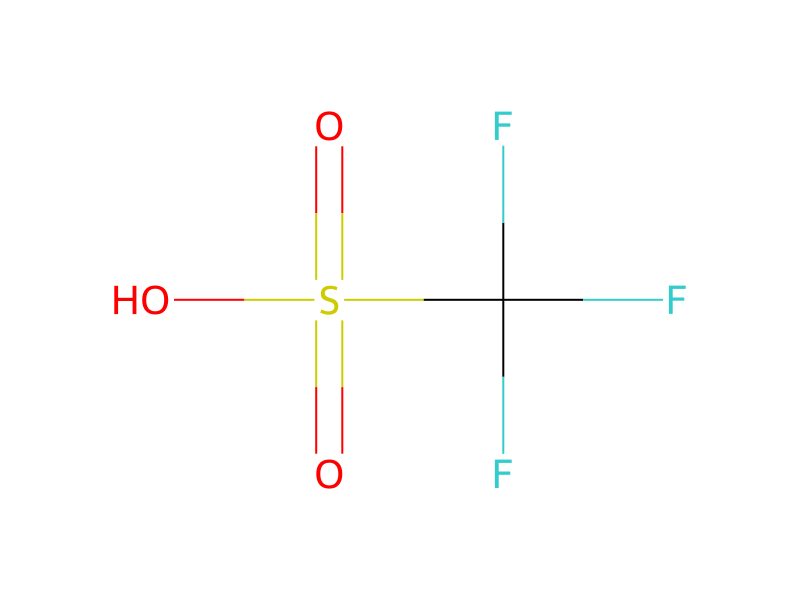
Sodium triflinate (2.37 g, 15 mmol), then 6 equivalents of triflic acid (21.65 g, 144 mmol), after stirring for a few minutes, more than one equivalent of 1,3-dichlorobenzene (3.22 g, 22 mmol) and finally one equivalent of triflic anhydride (4.32 g, 15 mmol) are introduced into a three-necked flask surmounted by a reflux condenser with a silica gel guard under an inert argon atmosphere. The mixture is stirred for 10 h at ambient temperature. It is hydrolyzed with a water-ice mixture (5 g) and then neutralized with a saturated sodium hydrogencarbonate solution to a pH of 6. The mixture is extracted with diethyl ether. The organic phase is dried and evaporated and the residue is recrystallized from pentane (the brown oils are purified by chromatography). White crystals are obtained (m=2.9 g, Yd=70%).