StartseiteMCPSkillsWorkbenchOpenChem
StartseiteWorkbenchBenachrichtigungenMein Bereich
llms.txt · skill.md · MCP-AnleitungDatenschutz · Nutzungsbedingungen · Supportv1.8.5
  1. Startseite
  2. /Reaktion

Sodium Cyanide → 2-(2-Bromo-4-chlorophenyl)acetonitrile

HRID 1021350
Drucken

Reaktionsgleichung

[Br:1][C:2]1[CH:7]=[C:6]([Cl:8])[CH:5]=[CH:4][C:3]=1[CH2:9]Br.[C-:11]#[N:12].[Na+]>C(O)C.O>[Br:1][C:2]1[CH:7]=[C:6]([Cl:8])[CH:5]=[CH:4][C:3]=1[CH2:9][C:11]#[N:12]
KomponentenVersuchsvorschriftAufarbeitungQuellen und NachweiseNotizen zur Reaktion

Komponenten

5

Edukt 2

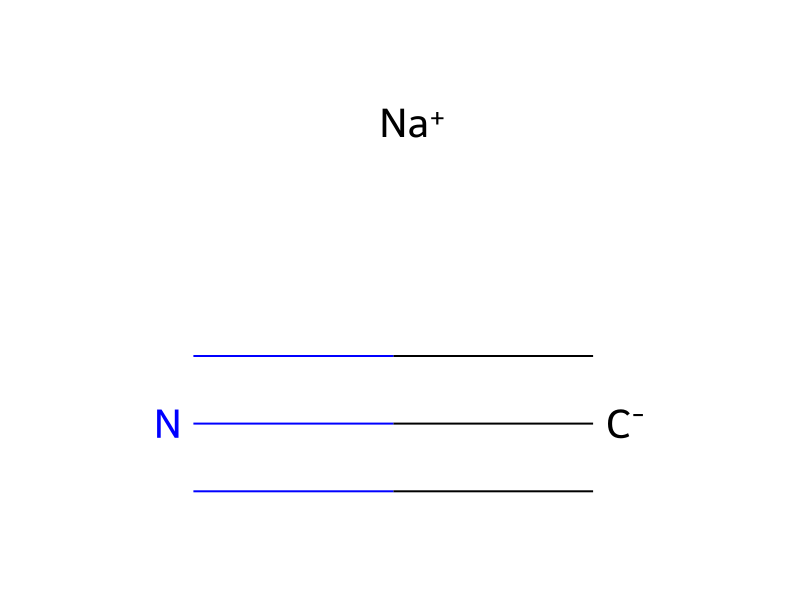
HCID 8929Sodium CyanideHCID 106130662-Bromo-1-(bromomethyl)-4-chlorobenzene

Produkt 1

HCID 218285012-(2-Bromo-4-chlorophenyl)acetonitrileAusbeute 60,6 %

Reagenzien, Katalysatoren, Lösungsmittel 2

HCID 702EthanolLösungsmittelHCID 962WaterLösungsmittel

Versuchsvorschrift

A mixture of 2-bromo-1-(bromomethyl)-4-chlorobenzene (9.8 g; 34.5 mmol) and sodium cyanide (2.0 g; 41.4 mmol) in 15 mL of 95% ethanol and 2.5 mL water was stirred and heated to reflux. After 30 minutes, the solvent was evaporated and the residue was partitioned between 100 mL ether and 50 mL water. The organic layer was dried over sodium sulfate and evaporated. The residual solid was washed out of the flask with hexane and collected by filtration, washed with hexane, and air-dried on the filter to give 4.82 g of 2-(2-bromo-4-chlorophenyl)acetonitrile as a light yellow solid.

Aufarbeitung

  1. temperatureheated to reflux
  2. customthe solvent was evaporated
  3. customthe residue was partitioned between 100 mL ether and 50 mL water
  4. dry with materialThe organic layer was dried over sodium sulfate
  5. customevaporated
  6. washThe residual solid was washed out of the flask with hexane
  7. filtrationcollected by filtration
  8. washwashed with hexane
  9. customair-dried on the
  10. filtrationfilter

Quellen und Nachweise

ORD-Eintrag
ord-32fdc4ae9d184e8cbc86b2a5508b876f
Quelldatensatz
uspto-grants-2014_05
DOI
10.6084/m9.figshare.5104873.v1
Patentnummer
US08716498B2

Notizen zur Reaktion

Auf dieser SeiteKomponentenVersuchsvorschriftAufarbeitungQuellen und NachweiseNotizen zur Reaktion

