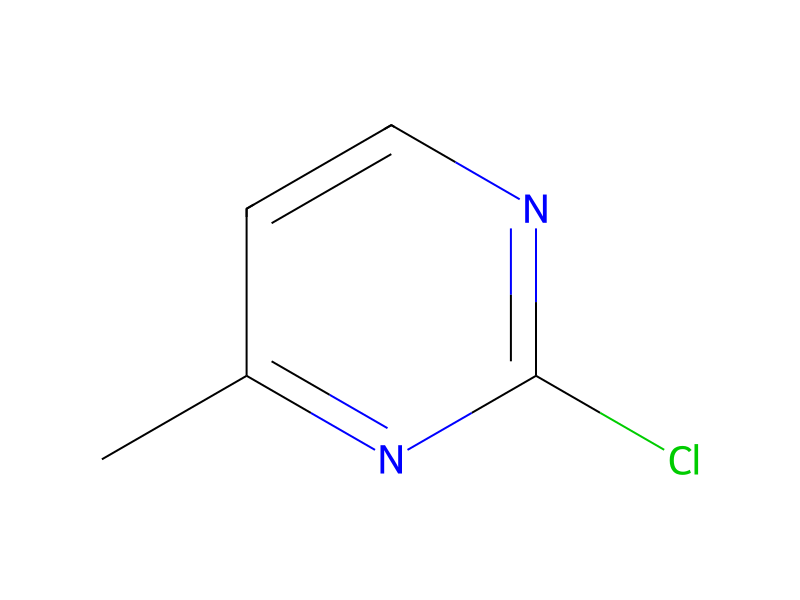
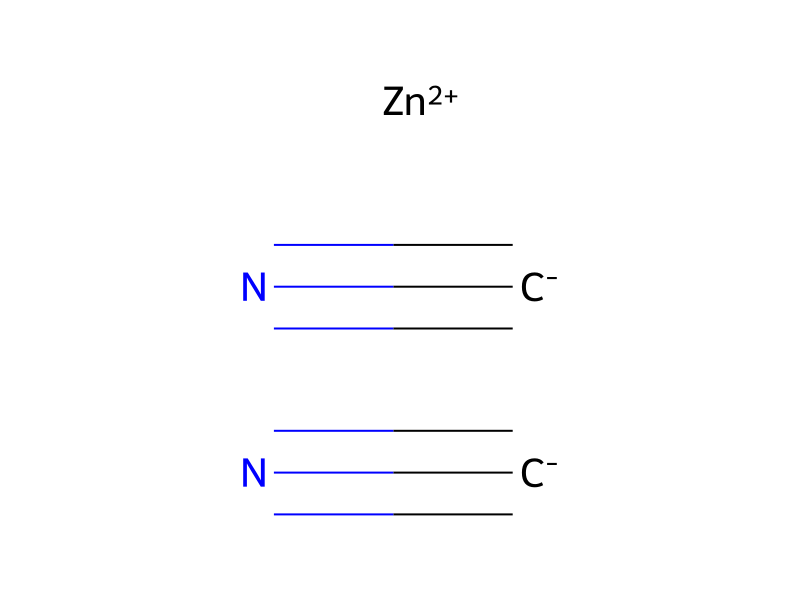
Cl[C:2]1[N:7]=[C:6]([CH3:8])[CH:5]=[CH:4][N:3]=1.[CH3:9][N:10](C=O)C>CCOC(C)=O.[C-]#N.[Zn+2].[C-]#N.C1C=CC([P]([Pd]([P](C2C=CC=CC=2)(C2C=CC=CC=2)C2C=CC=CC=2)([P](C2C=CC=CC=2)(C2C=CC=CC=2)C2C=CC=CC=2)[P](C2C=CC=CC=2)(C2C=CC=CC=2)C2C=CC=CC=2)(C2C=CC=CC=2)C2C=CC=CC=2)=CC=1>[CH3:8][C:6]1[CH:5]=[CH:4][N:3]=[C:2]([C:9]#[N:10])[N:7]=1A mixture of 2-chloro-4-methylpyrimidine (725 mg, 5.63 mmol, 1 eq), zinccyanide (396 mg, 3.38 mmol, 0.6 eq) and tetrakis(triphenylphosphine)palladium(0) (716 mg, 0.562, 0.1 eq) in DMF (10 ml) was heated at 110° C. under nitrogen for 1 hr. The mixture was cooled to r.t., diluted with EtOAc and washed twice with 2N ammonium hydroxide (50 ml). The organic layer was washed with brine (20 ml) dried over sodium sulphate and concentrated in vacuum to provide the crude mixture. The crude product was then purified by column chromatography (30% EtOAc in Hexane) to afford 4-methylpyrimidine-2-carbonitrile Yield: 380 mg (56%). 1H NMR (400 MHz, CDCl3): δ2.61 (s, 3H), 7.36 (d, 1H, J=5.2 Hz), 8.66 (d, 1H, J=5.2 Hz),